In 2010, I went to Egypt. What can I say about this amazing museum of a country? It’s hot, it’s dirty (don’t even dip your toothbrush in the tap water) and you should learn how to say ‘no thank you’ in Arabic, adding ‘I don’t want’, ‘I don’t need’, ‘It’s not possible’ and ‘please go away’ to your vocabulary before you leave Australia.
If you’re a woman, or a group of women, do not leave the tour group unless with a man. It’s stressful dealing with all the touts, hassle, lies and extortions that come with travelling around Egypt. You’ll need a holiday after you get home… having said that, I enjoyed the experience and the immersion in such a unique culture.
We did a three-night Nile River cruise as part of a nine-day Insight package tour entitled ‘Wonders of Egypt’. Highlights included Cairo, the Valley of the Kings, Luxor, the Pyramids of Giza(and the chance to go inside one) and Aswan Markets.
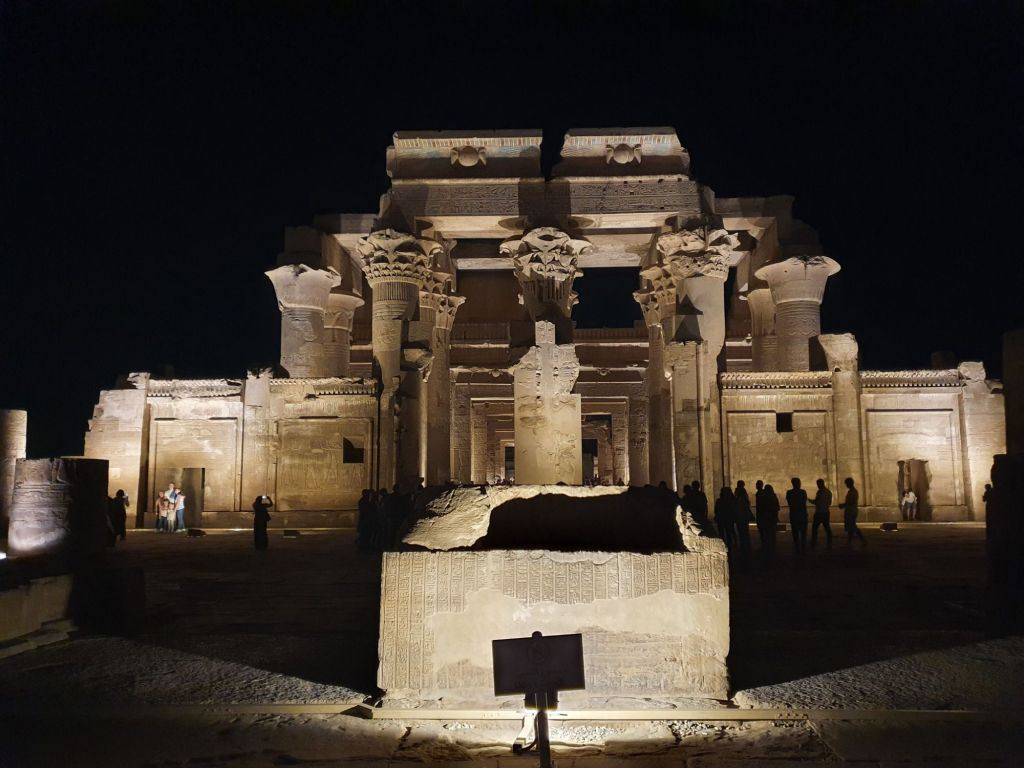
One of the most atmospheric sites we visited was the Temple of Kom Ombu, first built by Pharoah Tutmose III and rebuilt by one of the Ptolemies. It’s right beside the river. We arrived on dusk and it was floodlit and exciting with big embossed columns facing the water. Most reliefs in Egypt are flat, but these were kind of 3D.
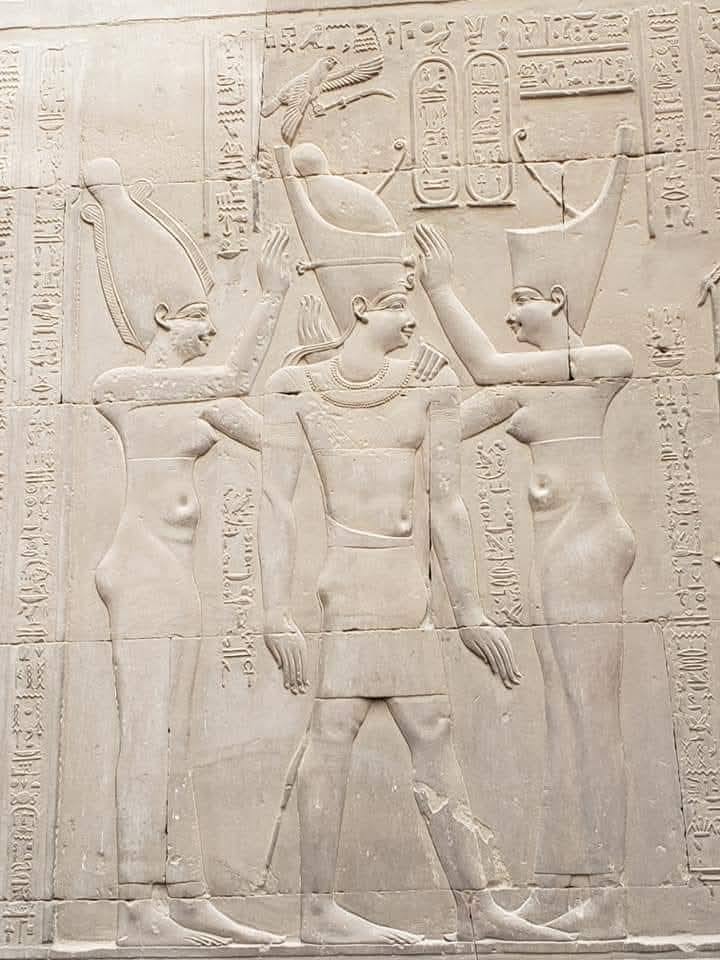
In the embossed relief below, the Goddesses of Upper and Lower Egypt are giving adoration to King Ptolemy the whatevereth. Notice anything wrong?? I didn’t when we were gazing up at this depiction, but the King has 2 left hands!
Workers at the site in the 19th Century, also found reliefs along the temple’s rear wall depicting about 40 Roman-era medical instruments. Carved representations of scalpels, forceps, scissors, catheters, bone saws, medicine bottles, specula, suction cups and dental tools are assembled between a basin and goddesses on birthing stools
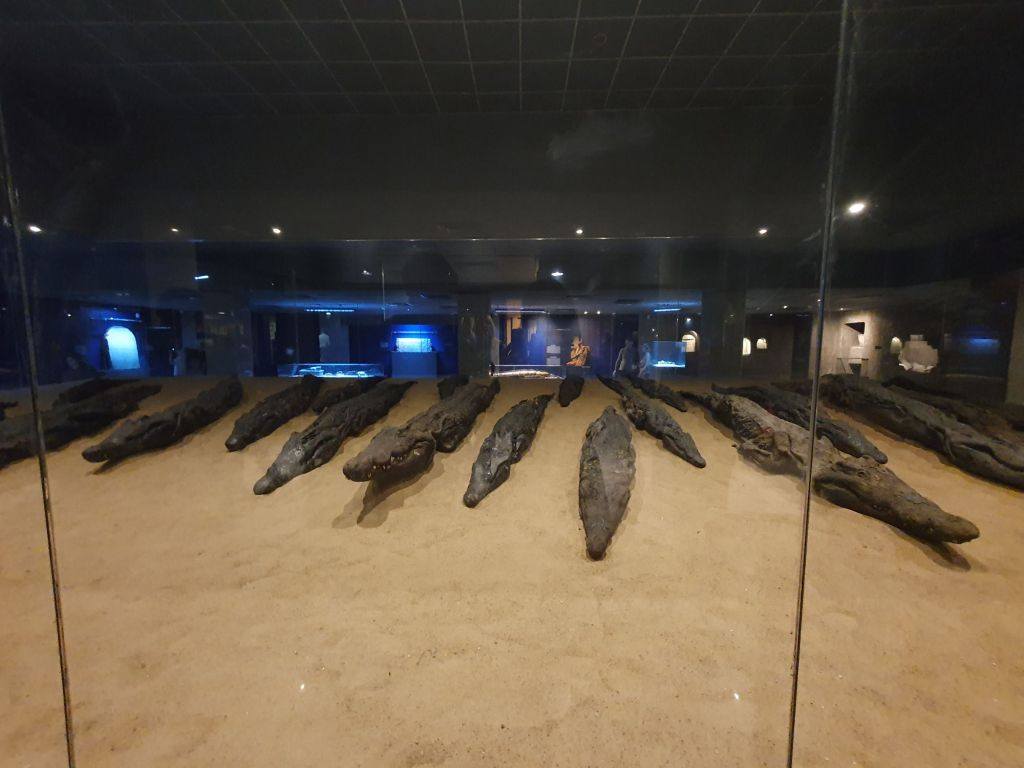
The temple is located near Aswan and is dedicated to two gods (unusual), Horus the Elder, a bird-headed god, and Sobek, the crocodile-head. There is also a museum of crocodile mummies, fetuses, eyes, and golden and ivory teeth of mummified crocodiles and their pottery coffins. The museum also has statues of different sizes of the god Sobek.
 Margaret R Kelly
Leave a comment