As a ‘taphophile’, I’m a tad excited to be going to learn the stories around an icon of Brisbane’s southwest suburbs, Toowong Cemetery, this weekend on a ghost tour. Sprawling across forty-four scenic hectares, it’s the biggest boneyard in Queensland! Steele Rudd (aka Arthur Hoey Davis), Jack-the-Ripper suspect, Walter Thomas Porriot, and Mary Kelly (no relation and not the 5th victim of Jack The Ripper), one of Ireland’s most famous poets, are buried there.
Let’s take a squiz at ‘taphophilia’—a gentle, soft word meaning a fondness for all things related to the rituals surrounding death. The term comes from the Greek ‘taphos’— for ‘tomb’, ‘funeral’, ‘grave’ — and ‘philia’ – meaning ‘strong love or admiration’.
Honestly, tombstone tourism’s no more macabre than cosplaying or hosting solve-a-fake- murder parties. For storytellers and story-lovers, cemeteries are a rich source of the stock in trade. Cemeteries are for the living if you think about it and meet a wide variety of needs and expectations. Also note, not every word ending in ‘-philia’ or ‘-phile’ means a pathological obsession. A bibliophile loves books, an antophile – flowers, and a hylophile’s all about forests.
Yes, there are final resting places that give me the heebie-jeebies. That’s how I know I don’t have ‘Coimetromania’— an abnormal compulsion to visit cemeteries, graveyards, etc. As with any mania, this coimetromania can cause people to experience unreasonable and intense feelings. I’m not there yet, by a long shot.
And, hey, just to clear things up: taphophilia’s a whole different kettle of funereal fish from ‘necrophilia’, which involves a sick, sexual attraction to dead bodies!
A ‘taphophile’ is a fluid label for a final-resting-place or final-rituals aficionado of some sort. A final resting place can be a memory forest, a family plot, a columbarium niche, a mausoleum crypt : a waymarking, a touchstone, a stepping-stone that leaves a physical legacy for future generations of taphophiles.
Poets, novelists, lyricists and dramatists have long lauded cemeteries. Think of scenes including Hamlet standing by the graveside with Yorrick’s skull, the St Pancras gravediggers in A Tale of Two Cities, and the lines from the band, ‘The Smiths’’ Cemetery Gates. Shakespeare and Dickens may well have described themselves as taphophiles. With Morrissey, the songwriter, I wouldn’t like to say! Who could go past Neil Gaiman’s The Graveyard Book, Stephen King’s Pet Sematary, and Audrey Niffenegger’s Her Fearful Symmetry when thinking of contemporary literature.People are drawn to settings involving cemeteries.
There was also, although maybe not in Australia, a school of poetry known as ‘graveyard poetry’. Its adherents were referred to as ‘churchyard poets’ or the more visceral ‘boneyard boys’. Among its number were the tragic Thomas Chatterton, Robert Blair and Thomas Gray,whose Elegy Written in a Country Churchyard can be seen as a fine example of literary taphophilia. When I was in fifth grade, I learned it to impress the rellies at the once-a-year family picnic. The words still roll off my tongue, even though I can’t remember what I had for dinner last week.
The venue for my childhood’s annual family get-together picnic was Port Macquarie Cemetery— a surreal sort of a play area for imaginative children. Hide-and-seek had a scary edge to it and Truth-or-Dare was ever more creative. We’d peer into the gaps in the crumbling concrete slabs, fancying we could see bones, and melodramatically sniff the air for whiffs of the decomposition we imagined was happening within. I even remember Cousin Thor poking around in the darkness with a handy stick and joking that he could feel an eye squishing. Then something came shooting out of the gaping hole—a rabbit from Hell. Maybe that was no less respectful than our fathers hitting golf balls towards target graves.
That cemetery, although it was of little consequence to us, is one of the oldest in Australia – consecrated in 1824. It contains the earthly remains of 1500 convicts, soldiers and settlers who helped forge the nation. There’s the elaborate grave of a Frenchman who claimed to be the illegitimate son of Napoleon Bonaparte, an Irish-born major who survived the battle of Waterloo and members of the family of the poet, Dorothea Mackellar. I can’t remember their names and it’s frustrating, but in hindsight, they were somewhat obscure really. The thing is that you can always imagine yourself having a brush with history in a cemetery.
Each year the graves at Port Macquarie became more collapsed and derelict and the iron-spike fences around them more rusted. Memories of these neglected graves may have cemented (no pun intended) my resolve to be cremated, scattered and dispersed. Noone should feel obliged to tenderly tend to this moribund old chook after I’m dead.
The weird thing about my picnicking parents (or one of the many weird things) is that they never visited cemeteries to pay respects at the final resting places of people they actually knew. Many relatives and friends were buried in my hometown, Barraba, but not once did we go to put flowers on Great Gran’s grave or get all nostalgic on the birthdays of dead friends.
The only times I remember visiting the cemetery in Barraba before I shot through for greener pastures were at night in search of the fabled glowing gravestone, and once on a class excursion when we were studying Evelyn Waugh’s satirical masterpiece, The Loved One. Best excursion ever and maybe also a contributing factor to my necropolitan delight.
Proof of this is that my mum’s headstone in Barraba Cemetery has her name, Dorothy, misspelled on it, although neither my brother nor I had observed this until we happened to be nearby for someone else’s funeral three or four years after the mistake had been set in stone. If you google the proper spelling of ‘Dorothy’ in find-a-grave sites, she’s not there. How ironic seeing she was always a bit of a spelling Nazi in life!
I often visit cemeteries for purely aesthetic reasons–to peer into mausolea, to admire the moss-work, which is magical; like a fairy garden except with stone angels, to read the inscriptions and to weep over the tiny lambs. I also find ‘tombstone tourism’ akin to visiting an art museum; an opportunity to enjoy rarely appreciated sculptures, intricate carvings and amazing architecture in a tranquil setting.
Japanese cemeteries are the bomb as far as tranquillity goes. They’re often surrounded by stunning trees, and contain narrow, vertical inscriptions and cultural monuments like sweet-faced Jizō statues outfitted with red bibs and sometimes little red handknitted bonnets. Stone lanterns and the five-layer karens (stacked stones), with their Earth, wind, water, fire and void symbolism too, seem to infuse Japanese resting places with more poignancy than you get with grandiose graves with angels. You feel connected to the cosmos just being near one; a little like summoning Captain Planet silently.
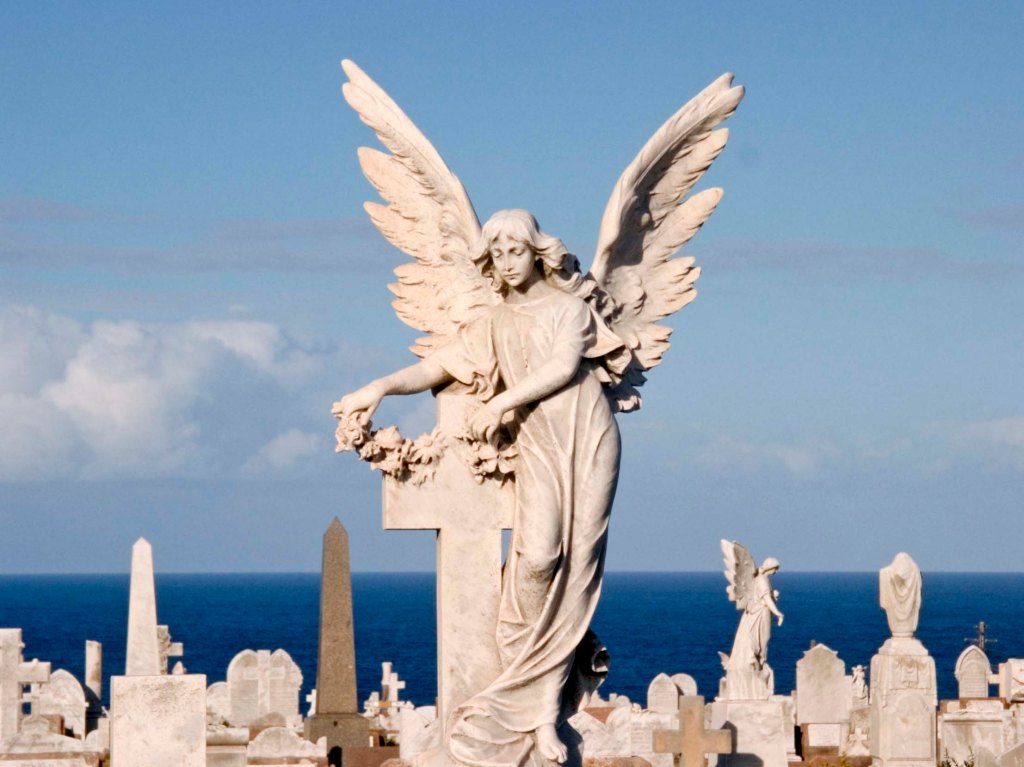
The cemetery with the most amazing views in the world would have to be Waverly Cemetery in Bronte, Sydney. Stunning blue sea provides an idyllic backdrop for the burial ground’s lily-white statues and monuments, making it a phenomenal sight for any cemetery enthusiast. Waverly graves to check out from a literary point of view include those of Henry Lawson, Dorothea Mackellar, Henry Kendall, Ethel Pedley (author of Dot and the Kangaroo) and William Dymock, founder of my favourite bookstore chain.
To wonder how people died or why their families chose interesting epitaphs or commissioned big marble statues is also a large part of taphophilia. There are people buried in cemeteries about whose lives I love to speculate. I have even used interesting names from graves as characters in short stories. Apparently, JK Rowling found some of her Harry Potter characters’ names in the haunted Greyfriars Kirkyard, so maybe I’m not that weird. I’m not as talented and rich as she is, for the record.
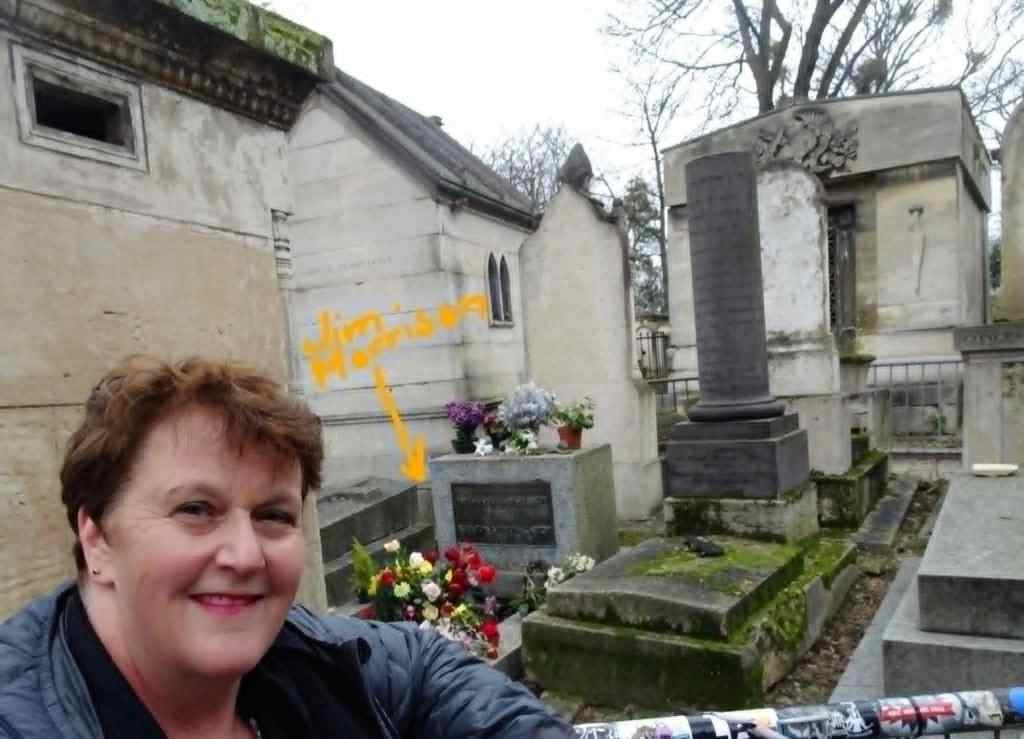
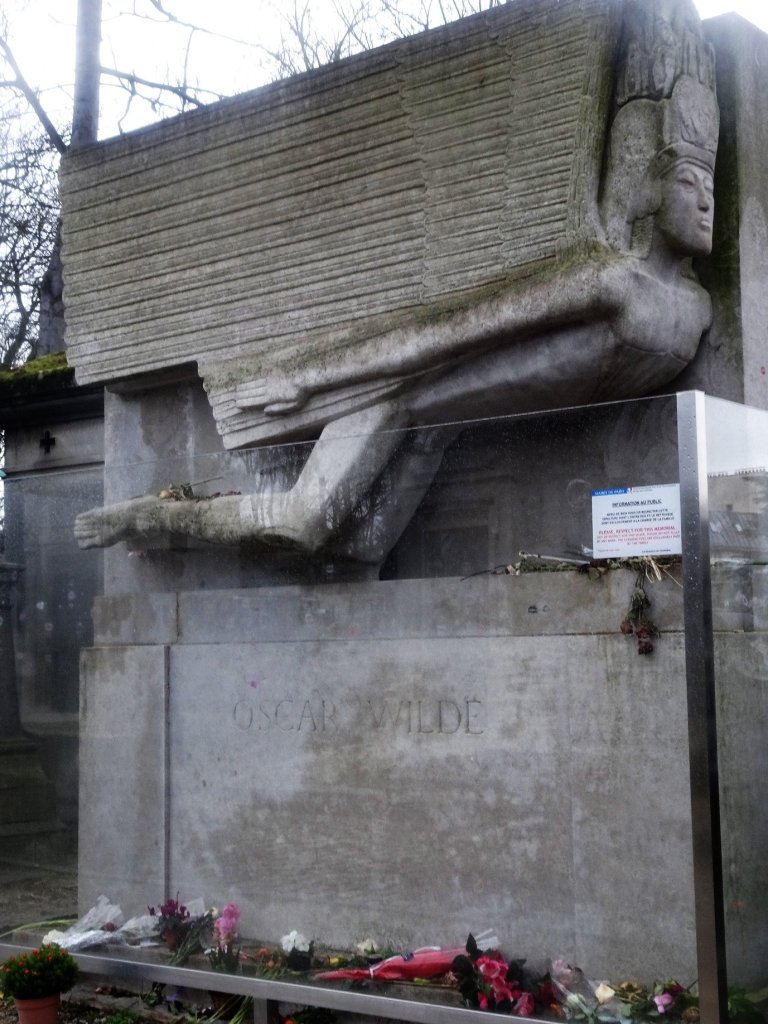
Greyfriars, with its famous doggy, gothic ambience and stories of grave robbers and ghosts, is one of the most visited sites in Edinburgh, but Pére Lachaise in Paris, established in the 1800s, is the most-visited cemetery in the world and one of my all-time favourites. It has its own metro station on lines 2 and 3. Outside of its gorgeous mossy greenery, millions flock each year to set foot in the final resting place of so many famous names. Jim Morrison, Oscar Wilde, Marcel Proust, Marcel Marceau, Edith Piaf and Frédéric Chopin are all buried here; just to name a few. Creativity and artistry seem to come alive amidst the stillness of the cemetery. Wilde’s biting satire of Victorian society carries through to many of the epitaphs on his flying-sphinx-with-genitals sarcophagus. My favourite is ‘Disgusted Beyond Expression’. People keep leaving doobies on Jim Morrison’s comparatively unremarkable grave which is a sort of a tribute to this frontman of the group, ‘The Doors’ whose biggest hit was C’mon Baby Light my Fire.
While in Paris, a visit to the Pantheon is only a slight deviation on the tombstone tourism trail. Educating yourself about history is another reason to visit the resting places of the rich and famous and this is the place to do it. Since 1885, the year of Victor Hugo’s death and burial in the Pantheon, its crypt has been the last resting place for the great writers, scientists, generals, churchmen and politicians of France. There’s a hushed awe infusing the stones and a reverence for the stories of the historical figures around you.
Not all the personalities honoured at the Panthéon are buried in the crypt. Tributes can be expressed by the presence of a cenotaph, for example for Joséphine Baker, or by an inscription, as for Aimé Césaire.
And of course, there are the Paris Catacombs, just a short yomp from there. Or, you can take the Metro, but it takes longer. Just be aware, that at the exit, the spiral staircases have a total of 243 steps. Corridors may be narrow, slippery, humid and dark. The visit takes about an hour and a half and is in one direction only; you will not be able to turn back.
The Catacombs are sewage tunnels which were threatening to collapse at about the same time as the main city cemetery was stinking up the growing French capital. Two problems solved. The sheer number of carefully arranged bones and skulls reinforcing the walls of those tunnels is sobering. The contrast between the vibrant life above and the silent, skeletal remains below is jarring and disorienting. There’s a silence broken only by the sounds of dripping water and shuffling footsteps. The darkness, narrow passages, and the presence of human remains contribute to a sense of unease, and for me, claustrophobia.
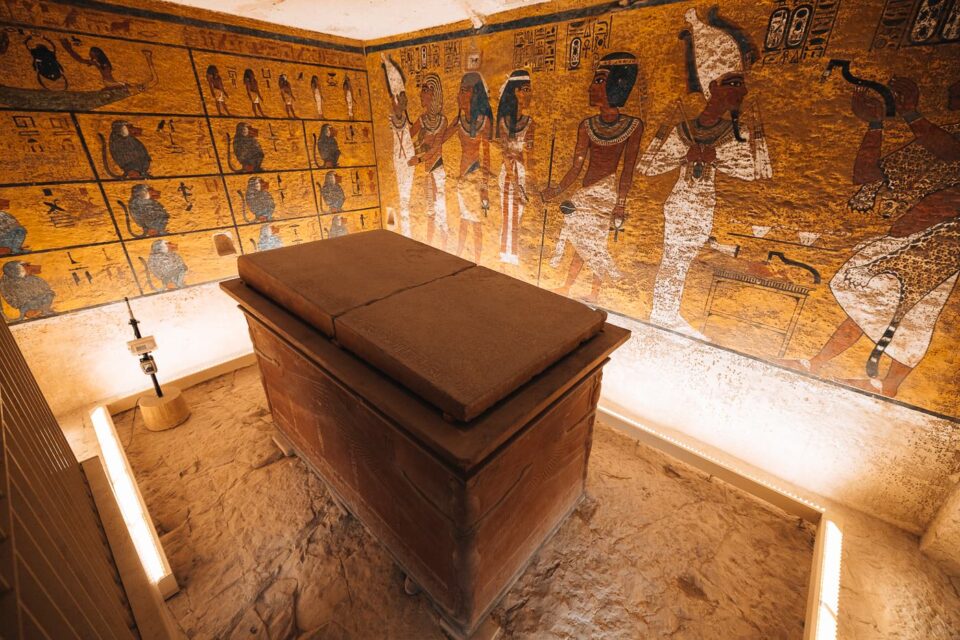
The whole of Egypt is like one big ancient cemetery, so I went there, of course—huge bucket-list item. I recommend doing a reputable tour. Taphophiles in Egypt may not see an everyday headstone with an epitaph (there’s that Greek root again!), but the Pyramids of Giza, the Catacombs of Alexandria and UNESCO World Heritage-listed Valley of the Kings near Luxor still have plenty to take in.
The ancients selected the site for the Valley of the Kings because it sits beneath the peak al-Qurn, a natural pyramid mountain dominating the landscape. Most of the tombs aren’t open to the general public. However, it’s very quiet in there, and cool and you can still get lost in the breathtaking artwork and hieroglyphics that adorn the walls of the ones which are. Currently, ten tombs are included on the main ticket. Your entrance ticket will allow you to visit three of these tombs. If you want to see more than three tombs, you will have to purchase an additional ticket. We visited the tombs our guide recommended which were Seti I, Ramesses III and Ramesses Ivand V. I came out and had no words. Just so much was involved with having a good death for the pharaohs.
As the final resting place of Percy Shelley, Karl Briullov, and John Keats, the Protestant Cemetery in Rome drew me when I had a free day before a tour. Its beautiful statues captivated me, with dozens of incredible carvings, a nearby pyramid and massive stone angels guarding the site. Getting there is relatively simple. The cemetery is near Piramide Metro station. The entrance is on Via Caio Cestio; ring a bell at the gates to gain admittance.
My biggest taphophilic buzz comes from tracking down and visiting the graves of forebears. The deepest experience comes when you have thoroughly researched the lives and relationships of these forebears and can feel a silk cord of attachment.
My favourite forebear find was that of Catherine Macleod (GGG grandmother) in pride of place with a sandstone memorial wall, no less, in the churchyard at Bacchus Marsh, Victoria. That led me to wonder why her husband, my GGG grandfather, only had a plaque on the wall of the church. Where was he? Why was the birthdate on her huge inscription different from that on Ancestry.com?
There are always intriguing questions, such as this for which it’s fun to find answers. You may know where your relative died but where were they actually interred? Was their body returned to their hometown for interment? I found that Major Donald Macleod had died on a trip to Sydney and was buried in Sydney’s original Devonshire Street Cemetery before it was decommissioned to make way for Central Railway Station and also Sydney Town Hall. Remains interred there were catalogued voluntarily by a taphophile, bless her little cotton socks, and I was able to read that GGG Grandfather had been moved to La Perouse’s Bunnerong Cemetery, now part of the Eastern Suburbs Complex. Individual graves weren’t marked, but I think of him every time I’m on a train between Central and Town Hall, not that I go to Sydney much these days.
Catherine Macleod’s parents—Alexander and Catherine Maclean— are in their own mausoleum overlooking the ocean on the Isle of Coll. Of course, I had to go there. Her cousin, Lachlan Macquarie, former colonial administrator of NSW after whom the starting point of my taphophilia was named, is in a mausoleum as well, on the nearby Isle of Mull.
When relatives were campaigning for funds to repair their graves, I visited those of Thomas Valentine and Christiana Blomfield—my great great grandparents—at Denim Court near Liverpool, NSW, and then, on Christmas Day about fifteen years ago, I had a serendipitous stumbling upon of the graves of my paternal great grandparents, Edwin Cordeaux and Katherina (nee Marsh) Blomfield in the Armidale cemetery when I was just wandering to find peace. I didn’t even know they were there. Even more stupendous is that they are buried not far from my mother’s great grandparents, Joseph and Ellen Scholes who built the notorious ‘Newie’—The New England Hotel.
Another forebear my brother and I came upon by accident is Bishop Charles Blomfield who has a reclining tomb effigy, no less, in St Paul’s Cathedral in London. He was Thomas Valentine’s maternal Great Grandfather (same surname because TV’s grandfather was illegitimate).
Some cemeteries are arranged by religious denomination; in neatly numbered rows. Many are not. Some cemeteries are well maintained, and easy to negotiate between the rows of graves. Others have the plots crammed together. Some are knee high (or worse) in grass and weeds. Some are flat and others are up hill and down dale. Some cemeteries are vast, others are not. Headstones may have been vandalised; others have toppled over.
I have been to war cemeteries in Normandy and on the River Kwai which were neat as a pin and mind-blowing in their attestations to loss of life. Graves of unidentified soldiers bear a solemn inscription such as: Here rests an Australian Soldier. Known to God. It’s a poignant epitaph representing the countless soldiers who have made the ultimate sacrifice, their identities forever lost to history, and a powerful reminder of the price paid for freedom. It’s also extremely moving to visit the grave of a relative who died in War.
Exploring cemeteries closer to home involves what my fellow Gravers and I call ‘road trips’. Usually, they are in support of a family history search. My most satisfying one was when I was still a ‘newb’ and before websites you could consult to find gravesites. I set out at a weekend to find the grave of my mother’s first husband, Charles Wentworth Wright. Mum had said he was buried in Murrurundi, NSW rather than Scone where they lived at the time of his death. Something to do and something to find out.
I was lucky, after scouring the Church of England portion of the Murrurundi Cemetery to no avail, that I struck an old-timer at the Information Centre there who knew about Rosedale—a private cemetery belonging to the Wilson family across some paddocks and up a hill. I remembered Mum saying that Charlie’s mother was connected to the Wilsons somehow, so I struck off through the December heat and found his grave in that cemetery. Sad to think he has no descendants, so I’m likely to his only deliberate visitor ever. Kind of warm and fuzzy on behalf of me really.
Sometimes, when you just want to escape everything, cemeteries can be the most tranquil places to be. What attracts me to them besides researching a particular person or someone else or from my own family tree, is the history they tell of their town, the love that is felt in the monuments and epitaphs, the stories they can tell us or send us searching for in the history of our nation.
I have speculated on a road trip, as to where Ned Kelly’s unmarked grave is in the Greta Cemetery in Victoria. Armed with several grainy newspaper photos of the secret Kelly family interment, I tried to work it out from the trees and gravestone shapes in those photos. I think I may have nailed it, so to speak.
And the local goss where I live now has it that Dan Kelly escaped the fire at Glenrowan, changed his name, moved to Queensland, and is buried in Ipswich Cemetery, once again in an unmarked grave because he was a pauper. As one of the few tenuous claims to fame or infamy of the local cemetery, there’s a kind of a totem pole with a Ned Kelly helmet plaque hanging off it.
Perhaps the most passionate descriptions of cemeteries come from the Romantic poets, linked to their obsession with death and the gothic. From the following lines of his poem, Adonais, it appears that Percy Bysshe Shelley (1792-1822) recognises the unique beauty of the cemetery, and was, therefore, a taphophile:
The cemetery is an open space among the ruins,
covered in winter with violets and daisies.
It might make one in love with death,
to think that one should be buried in so sweet a place.
Walking round a such a sweet place, it is hard not to be struck by the awesomeness of being alive when all these people aren’t. I always leave a cemetery feeling alive and happy to be still on this side of the grass, grateful for the brief time allotted. And then one day, I suppose I won’t be.

 Margaret R Kelly
Leave a comment