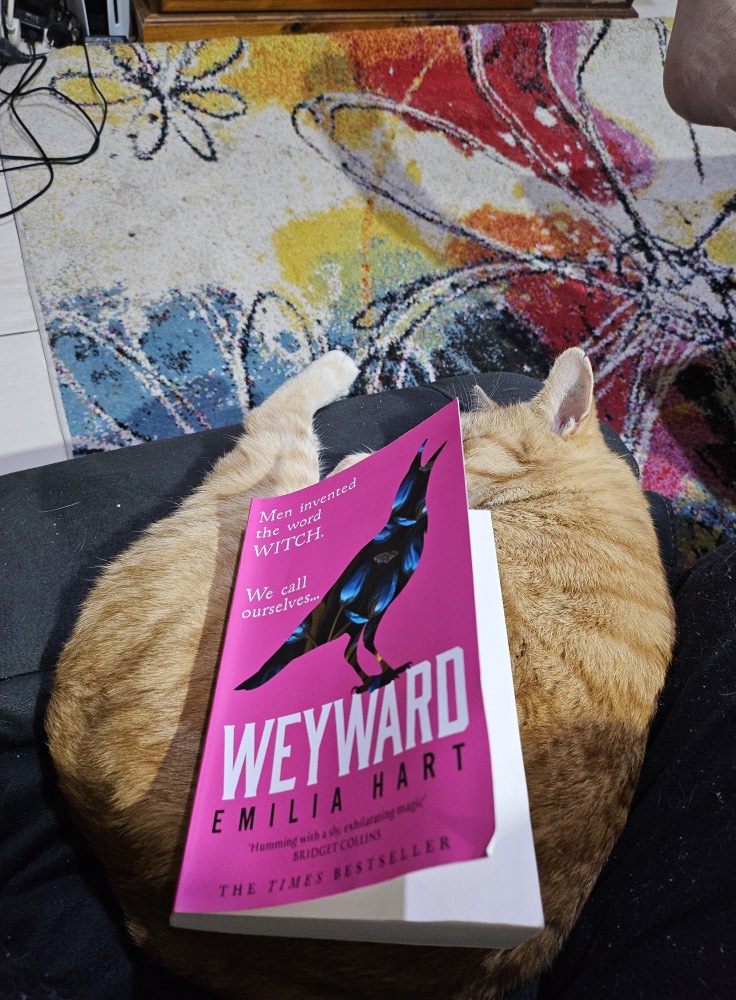
It’s as if this book, from an Australian author, with its three distinct storylines, should be in an emerging new genre labelled ‘witch lit’—a spin-off from the perky ‘chick lit’ scene rather than the fantasy genre which incorporates other recent releases such as Kirsty Logan’s ‘Now She is Witch’, Margaret Meyer’s ‘The Witching Trade’ and ‘The Revels’ by Stacey Thomas. Although it also has a component of historical fiction which is not intrusive enough to claim genre ownership, it’s not about a plot or colouring-in historical pictures but about painting the characters.
It had me spellbound with the themes of females overcoming gender persecution, and the importance of ancestry and a place to make your own, which are all themes in my own writing.
Its popularity also seems related to a social media Zeitgeist that amounts to a covert cultural move to reclaim the derogatory word “witch”.
‘Weyward’ is an archaic word meaning weird which Shakespeare used to describe the witches in Macbeth. There are no bubbling cauldrons in the stories of Altha from the 17th Century, Violet from the 20th Century and Kate from the 21st Century. They are part of an unbroken bloodline and there’s a quiet rhythm to the ebb and flow of the writing which incorporates the seasons and the constancy of the cottage which each protagonist in turn calls home, the ‘beck’ (stream) and the crows which also carry a genetic mutation.
Hart has nailed point-of-view writing. I am in turn heartbroken and exhilerated for them.The three women deal with no-punches-pulled trauma associated with male control, sexual violence and abortion. However, this book’s not just about what was done to them; it’s about their resilience—how they survive, how they reclaim their stories, and how they pass down strength alongside sorrow.
 Margaret R Kelly
Leave a comment