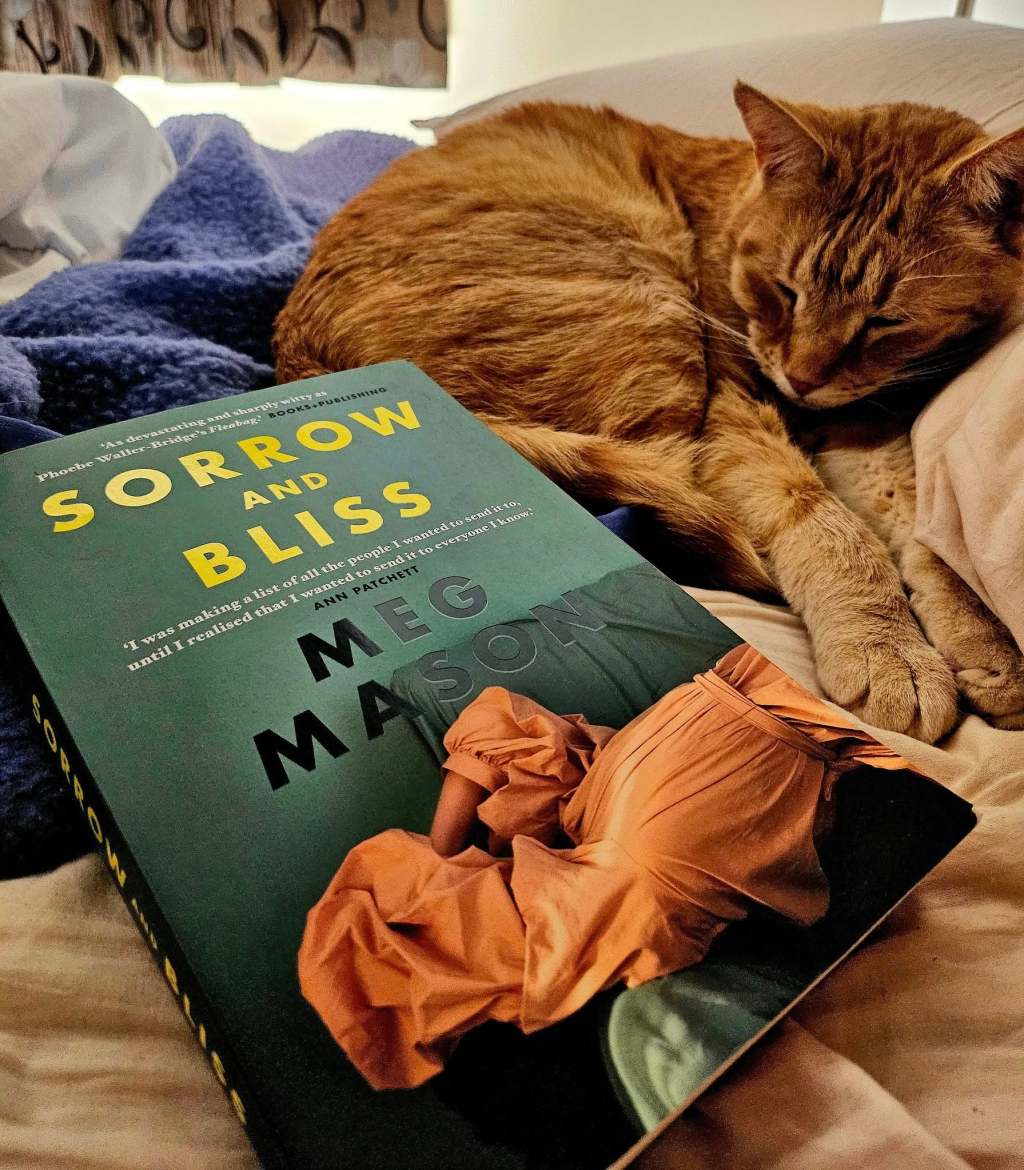
New Zealand wtiter, Meg Mason, strikes a chord in my heart, because she captures brilliantly that feeling of sticking out like a sore thumb.
The main character, Martha Friel is 40, the writer of a “funny food column” that, once her editor has cut out all the jokes, is – as she sardonically acknowledges – just a food column. She has few friends, but is close to her sister Ingrid. Her husband Patrick adores her.
Martha does not make things easy. Recalling a party not long after their wedding, she remembers Patrick suggesting that, instead of staring at a woman standing by herself and feeling sad on her behalf, she should go over and compliment her on her hat. “Even if I don’t like it?” she asks him. “Obviously, Martha,” Patrick replies. “You don’t like anything.”
Like so much in this gloriously tender and absorbing novel, Patrick’s remark manages to be both technically true and hopelessly wide of the mark.
Patrick has loved Martha most of his life. Eight years and several pages later, he leaves her. Martha is clever, compassionate, hilarious, fierce and devastatingly sharp-eyed. She is also sharp-tongued, cruel, careless and prone to bursts of white-hot rage that range over the people closest to her like searchlights, mercilessly picking out their failings. That she hurts the people who love her best is something that causes her great anguish. It is also something she cannot seem to stop.
Despite all this, people forgive Martha – until, like Patrick, they can’t do it any more. Her family sticks by her, Ingrid most of all. They understand she is not well, that ever since “a little bomb went off in my brain” at the age of 17, she has been crushed by a recurring depression that leaves her, for days, weeks or months at a time, exhausted, terrified and unable to function.
During these episodes, it is not, she says, that she wants to die. “It is that you know that you are not supposed to be alive … The unnatural fact of living is something you must eventually fix.” She sees doctor after doctor, accumulating diagnoses and pills, but none of it makes any difference.
Despite all this, people forgive Martha – until, like Patrick, they can’t do it any more. Her family sticks by her, Ingrid most of all. They understand she is not well, that ever since “a little bomb went off in my brain” at the age of 17, she has been crushed by a recurring depression that leaves her, for days, weeks or months at a time, exhausted, terrified and unable to function. During these episodes, it is not, she says, that she wants to die. “It is that you know that you are not supposed to be alive … The unnatural fact of living is something you must eventually fix.”
She sees doctor after doctor, accumulating diagnoses and pills, but none of it makes any difference. In the end, defeated by the process, she reaches her own diagnosis: “I seem to find it more difficult to be alive than other people.”
Mason is careful not to pigeonhole Martha by naming her particular condition (when it is finally diagnosed, it is referred to only as “–”), but she makes us see how mental illness carves its shapes not just into the people who live with it but into their families. It scars them all.
It is, even so, an incredibly funny novel, and one that’s enlivened, often, by Martha’s madcap energy. Yet it still manages to be sensitive and heartfelt, and to offer a nuanced portrayal of what it means to try to make amends and change, even when that involves “start[ing] again from nothing.”
 Margaret R Kelly
Leave a comment