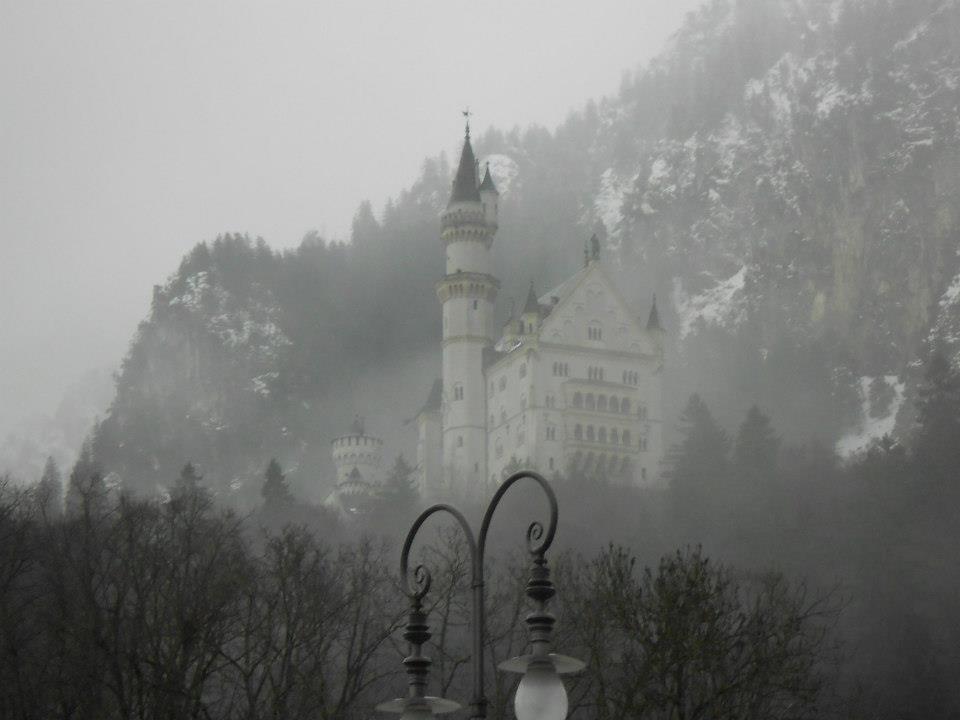
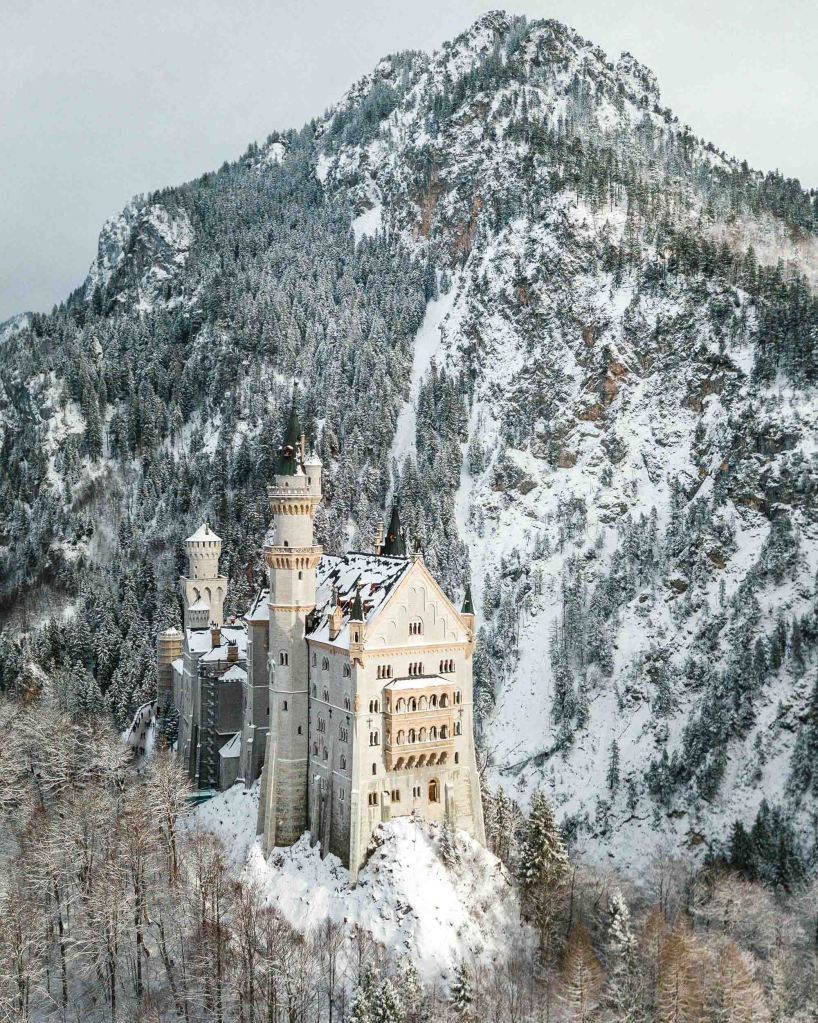
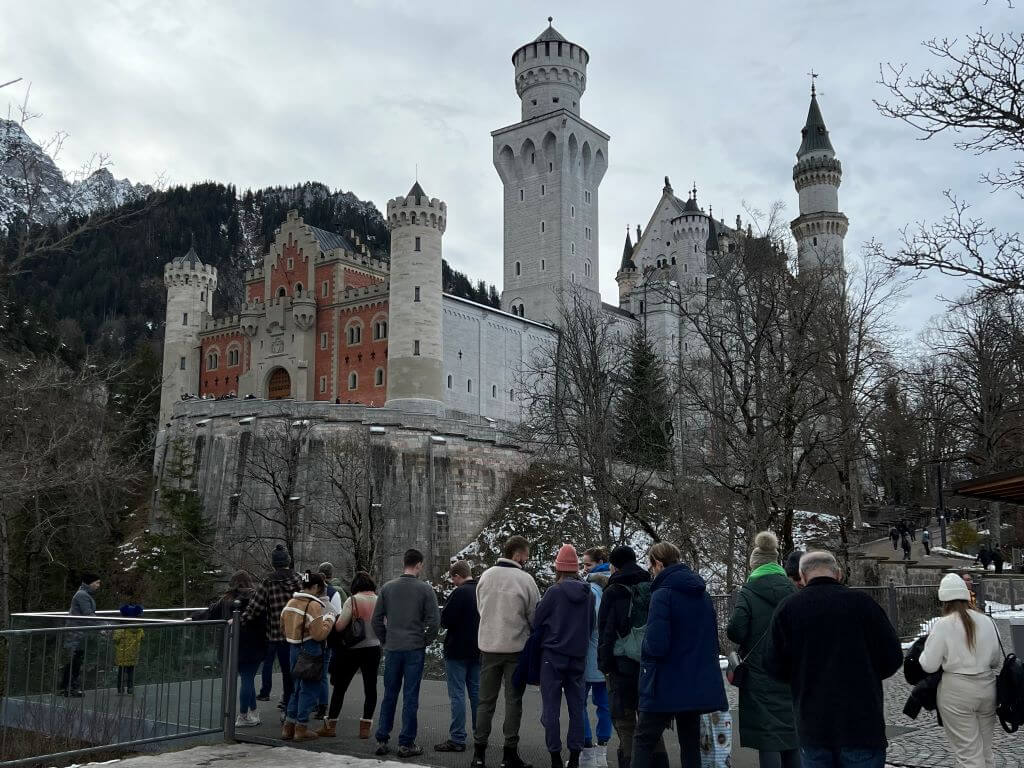
Sometimes, I wish I was an artist. I’d specialise in train-window vistas. We’ve just travelled through the snowy Bavarian countryside to Germany’s deep south, where Neuschwanstein (‘Noik-sh-wonn-sty-n’), the inspiration for Disneyland’s Sleeping Beauty castle, perches on the edge of a rugged gorge in the foothills of the Alps. It’s early January and the three ‘viewing areas’ are closed by snow, but Neuschwanstein looms picture-perfectly anyway, above the Schwangau, or Swan Valley, and the village surrounding Hohenschwangau Castle, built by King Maximilian II of Bavaria.
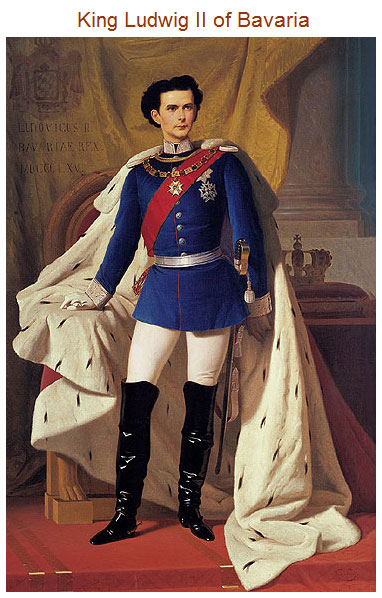
Maximilian’s son, Ludwig II, who reigned for twenty-two years, commissioned Neuschwanstein (‘New Swan Stone Castle’) in honour of composer Richard Wagner. Construction began in 1869 but was incomplete when the enigmatic king drowned in 1886, considerably in debt. His castle was opened to the public shortly after his death to recoup some of the money.
Ludwig identified with the ‘Swan Knight’, Lohengrin, from a Wagnerian opera. A knight of the Holy Grail, Lohengrin is sent in a boat pulled by swans to rescue a maiden who mustn’t ask his name. King Lud also avoided contact with people, despite being not too hard on the eye.
Admission to the castles can only be gained by booking a guided tour. Buy tickets with set admission times online at https://www.hohenschwangau.de/ or at the Visitors’ Centre.
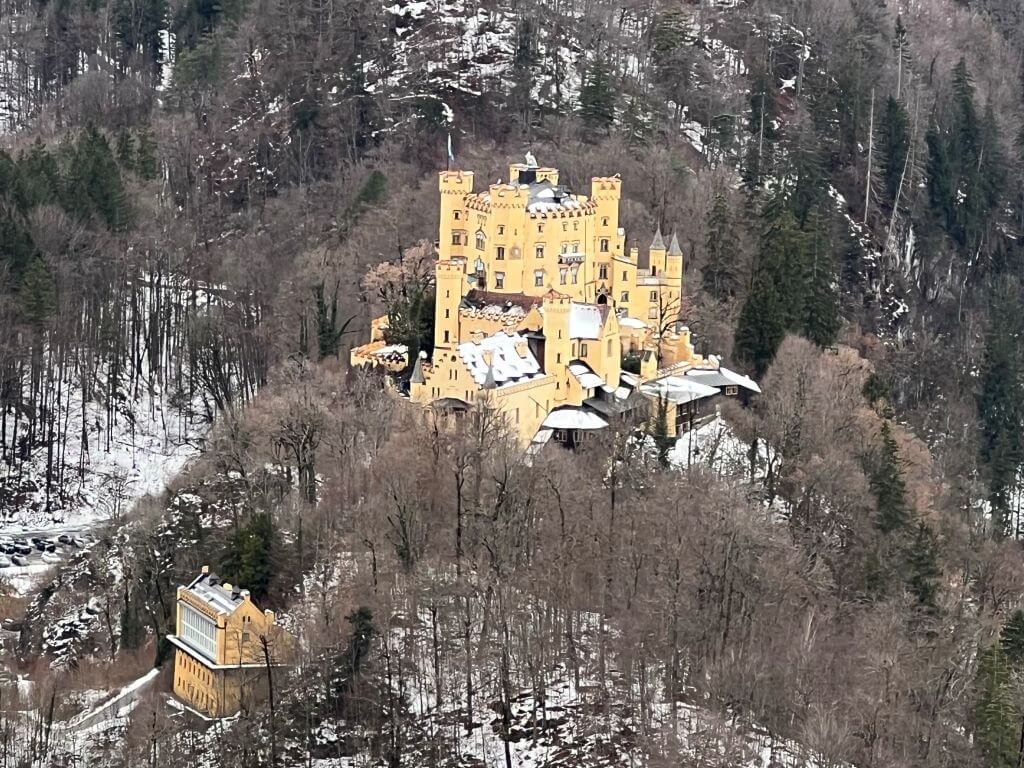
We visit the custard-toned Hohenschwangau Castle first. It’s where Ludwig grew up and whence he monitored the evolution of his escapist fantasy through a telescope. It is intricately decorated inside with murals and gold leaf. A guide leads our small group, pounces on sneaky photo-snappers and answers questions, but the tours are voiced by audio guides in both castles.
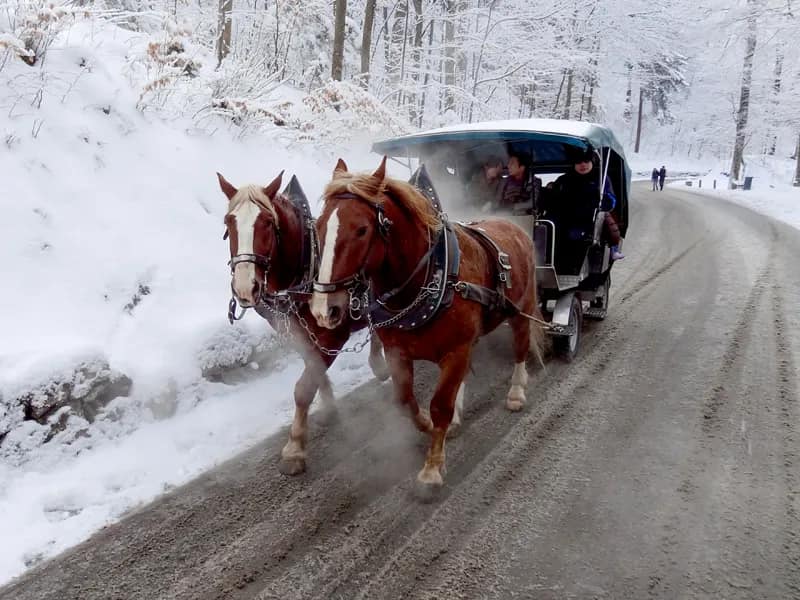
The shuttle-bus isn’t operating, so after touring Hohenschwangau Castle, we splurge on a horse-drawn carriage to travel up Neuschwanstein’s steep, tree-fringed path. The slog up the final slippery slope on foot is unavoidable.
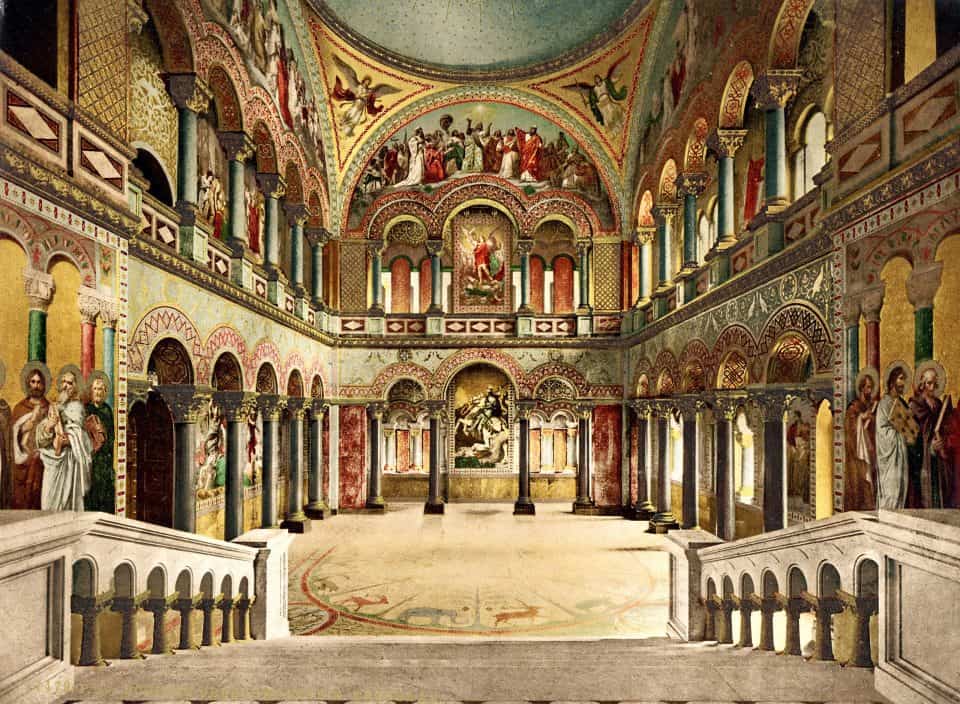
Photos are again verboten. Unadorned steep, stone staircases climb into turrets of cold limestone and the walls inside Neuschwanstein are generally undecorated. Several ornate rooms, however, are practically complete. Although lacking its eponymous seat of power, The Throne Room, for example, has a mosaic floor etched with plants and animals, steps and pillars of Carrara marble, images of Jesus and the apostles, and a cupola festooned with stars. It feels like marching up the aisle in a gaudy, Las Vegas wedding chapel.
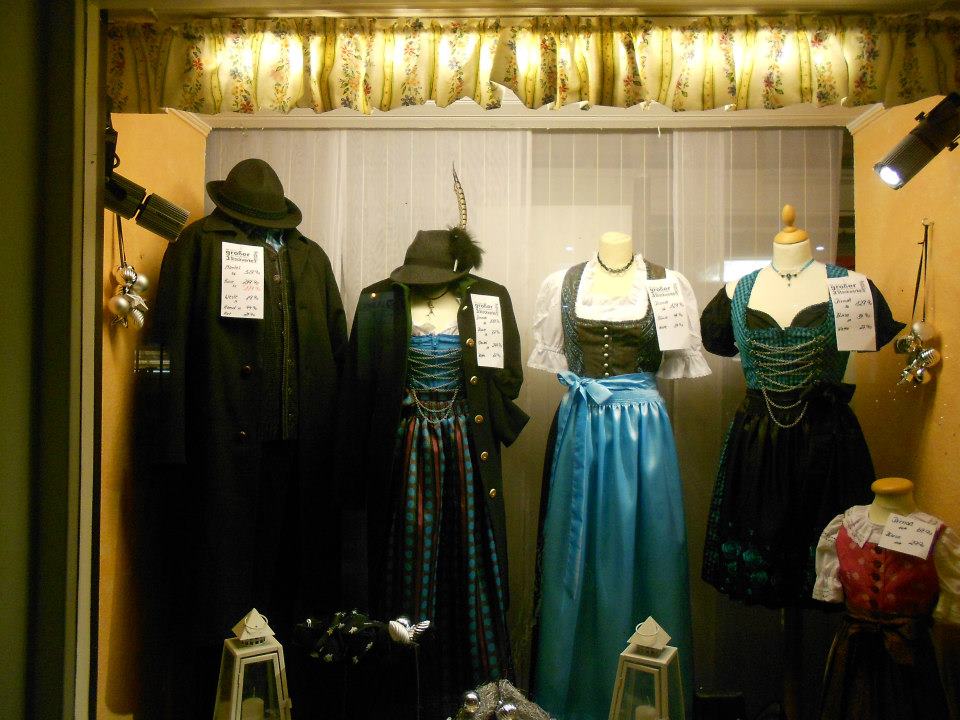
We exit both castles through the ubiquitous gift shop. There are reasonable-quality snow globes, magnets, postcards and ‘swan’ souvenirs, as well as topical books, linen, suits of armour and pocket watches. I buy a Bavarian woodcarved chess set for my son and drool over woollen Dirndls.
Beside tranquil Alpsee (Lake Alp), the sleek Museum of the Bavarian Kings is fascinating for its 3D multimedia displays of Ludwig’s pet projects. He was planning a cable car, powered by steam engines and decorated like a gilded peacock, as transportation between the castles.
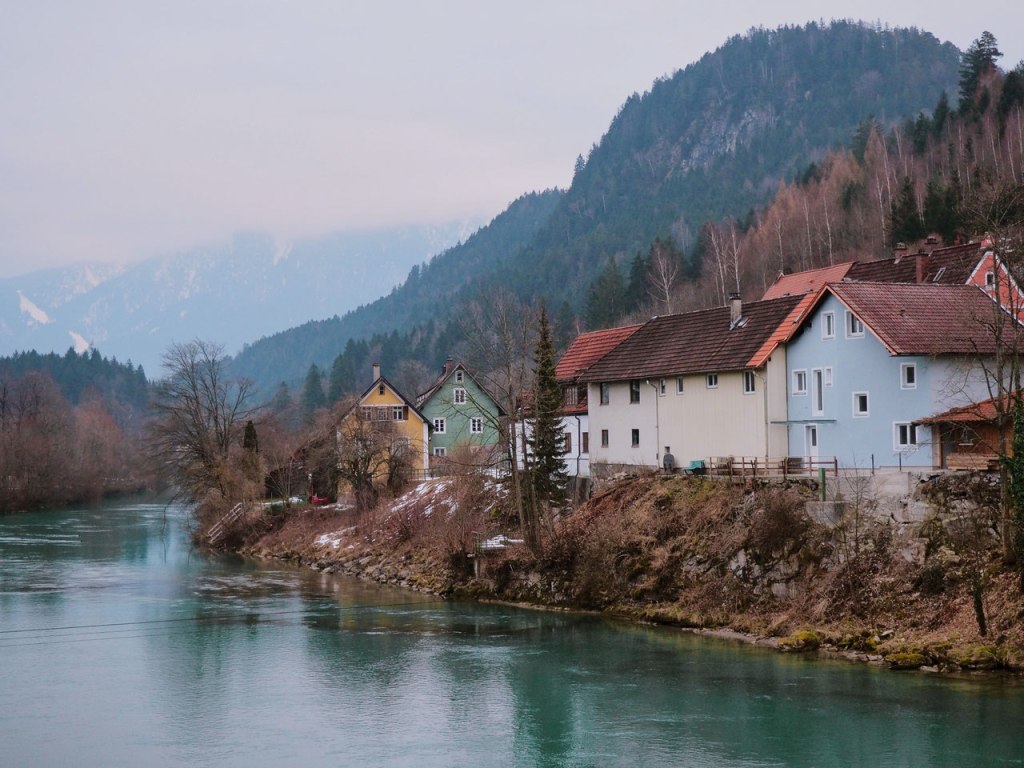
The castles’ closest town is Füssen, one kilometre from the Austrian border on the River Lech. Füssen’s old town (Altstadt) is wedding-cake pretty. ‘Luftmalerei’ —frescoes telling stories of traditional life and the deeply rooted beliefs of the inhabitants—adorn many buildings. Look especially for the Church of the Holy Ghost. Füssen’s skyline is dominated by the impressive former Benedictine abbey of St Mang and the mediaeval High Castle.

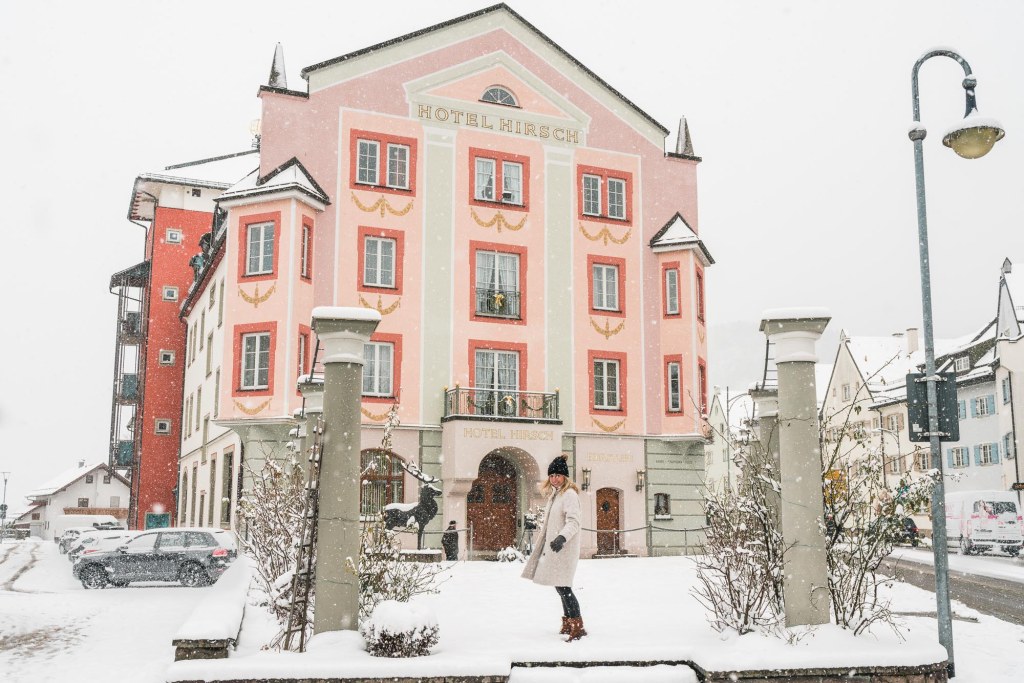
‘Hirsch’ is German for ‘deer’ and life-sized brass deer statues adorn the snowy ‘Deer Garden’ at the boutiquey, Hotel Hirsch, a short cobblestoned schlepp from the station.
The Hirsch’s spacious rooms’re a tasteful fusion of Bavarian charm and mod cons such as in-floor heating and the all-important wi-fi. The walls of our ‘Turm’ (turret) room are icing white with honey-coloured local-spruce motifs and ceilings.
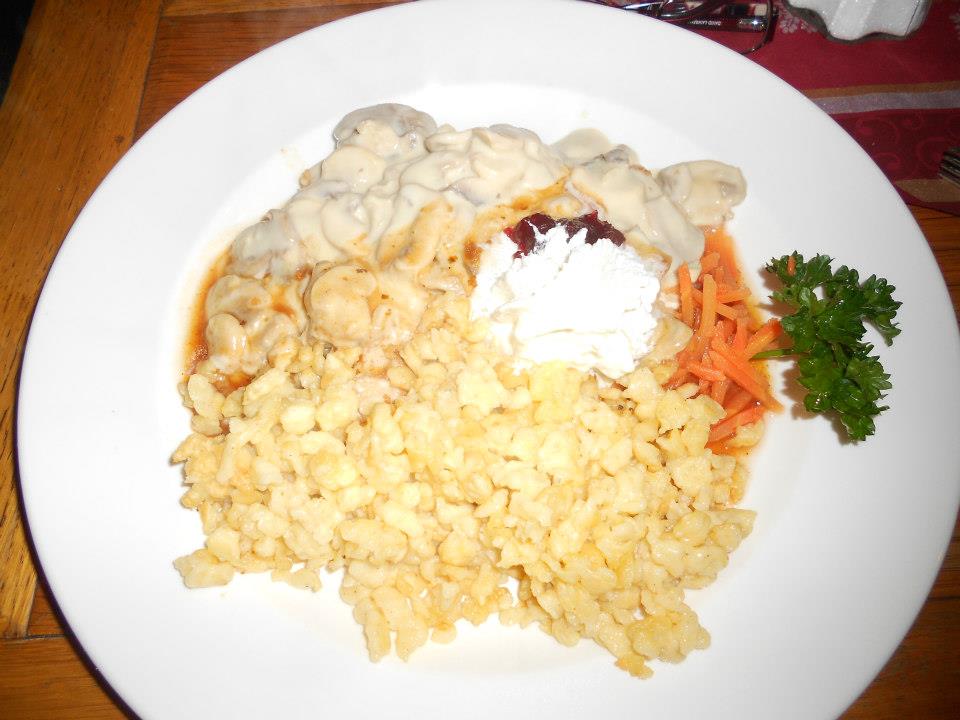
To be honest, Bavarian food is stodgy. I dine emblematically— burgundy (wine) venison goulash with dumplings. My companion has turkey and Spaetzle and drinks Pilsner from a tall stein in Hirsch’s cosy restaurant; an oompah band plays Bavarian folk-music in the remnant Christmas Market outside.
Our Neuschwanstein guide, Andrea, asks for a show of hands: do we think Ludwig was mad or misunderstood (a man born out of his time, perhaps)? I consider the solitary, white swan I’d seen hanging out by the cold lake before raising my hand.
“I want to remain an eternal mystery to myself and others” – King Ludwig II.
The writer travelled and stayed at her own expense.
Getting There:
Admission to either Schloss Neuschwanstein or Schloss Hohenschwangau is: Adults € 21,00 (7-17 year-olds €11,00). Tours last 20 minutes. No discounts for both tours.
Admission to Museum of Bavarian Kings: Adults: € 14,00 (children under 18 free).
Two (week)nights for two people in a ‘motif’ room at Hotel Hirsch: €232, not including breakfast.
Trains to Füssen leave from Munich’s central station (Munchen Hbf). Buses 78 and 73 from Füssen station drop you off near the Visitors’ Centre by the castles.
Cheapest Flights between Munich and Eastern state capitals, (except Hobart, sorry) are via Vancouver and Toronto with Air Canada; Otherwise, from Sydney, Melbourne, Brisbane and Perth, Emirates flies via Dubai; from Adelaide, Virgin/Qatar flies to Munich via Doha]
 Margaret R Kelly
Leave a comment