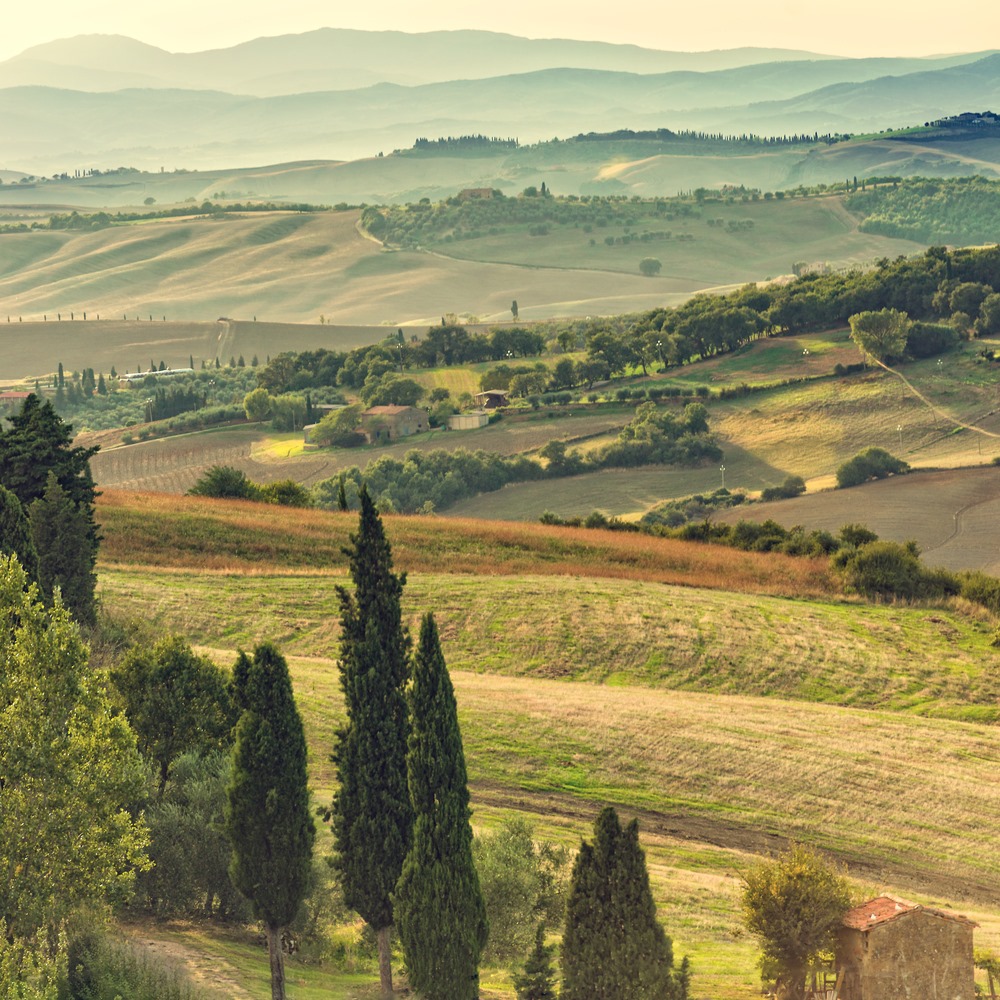
After Rome, the most bucket-listed part of Italy is probably Tuscany. I spent New Year’s Eve and New Year’s Day under the Tuscan sun — how special is that?
I was on a 12-day ‘Italian Delights’ tour with ExpatExplore (https://expatexplore.com/tours/italian-delights/). It was their last tour of the 2019 season and featured awakening on Christmas morning near Sorrento with my window framing Mt Vesuvius. It also turned out to be the last tour for several years because Covid was already looming.
On New Year’s Eve, we breakfasted at our hotel in Liguria, where I had the best yoghurt of my life, and where the maid told me her mother had coughed all night and she hoped it wasn’t the new virus. Part of the charm of Italy—older folk sitting round town squares just chewing the fat—was the reason that Covid spread so quickly when it jumped out of China into Northern Italy. By the time I got home to Australia, Italy was locking down.

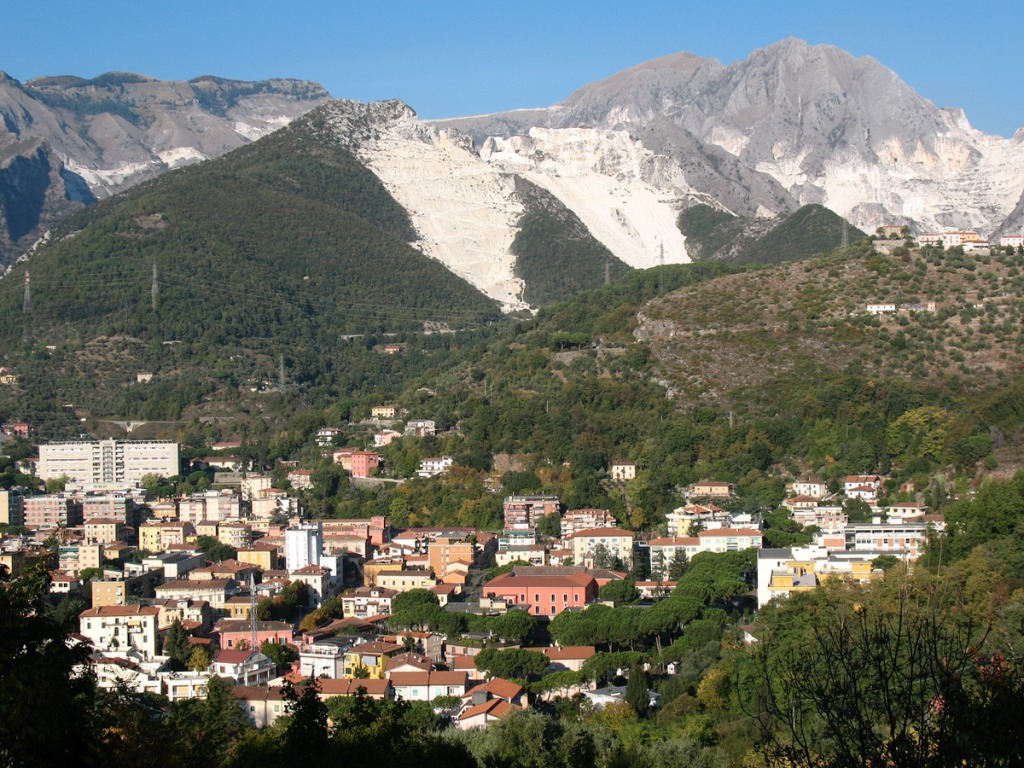
The pace of touring with Expat is unashamedly furious to fit as many experiences in as possible. We were off early, headed for Pisa to beat the crowds, seeing the hills of Tuscany against the sunrise on the way. My bus-window shots don’t do the scene justice. The white snow-like stuff on the mountains is Carrara marble — the finest in the World. Michelangelo’s wet nurse was raised in Carrara, so he reckoned that’s why he was such a brilliant sculptor of it. The Leaning Bell Tower is of this Marble and so are all the beautiful sculptures in Florence.
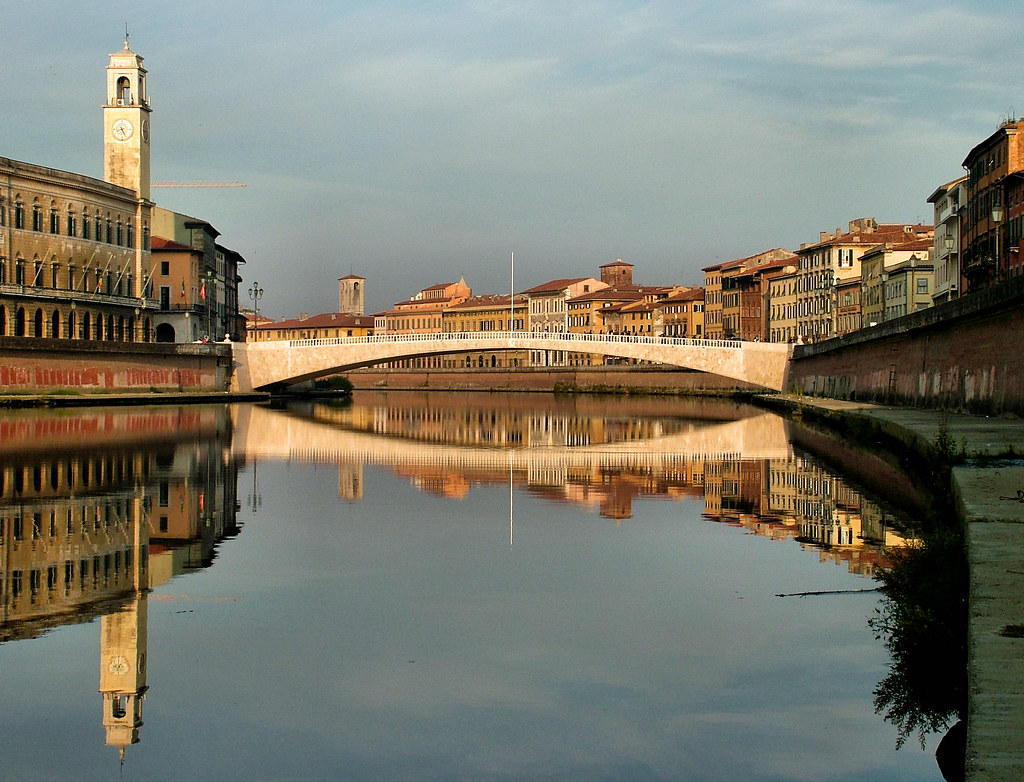
The bus parked on the opposite side of the river in Pisa (I think the Arno River, same as in Florence) and Roma, our tour leader set off at a furious pace to get to the UNESCO-listed Piazza dei Miracoli—the Leaning Tower Precinct. You don’t want to embark on an Expat tour if your legs can’t cut it or if, like me, you like to dawdle along and enjoy the scenery.
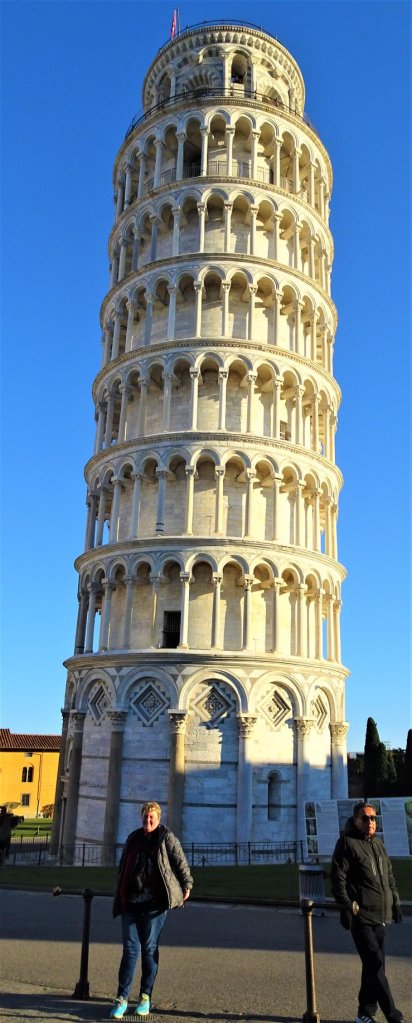
If you reduce Pisa to its globally acknowledged architectural error, you risk missing out on the rich heritage of this former city-state, which once ruled over a territory. I would have liked more time. Queuing to ascend the 251 steps to the top of the tower in a limited-size group of 45 may have taken longer than we had in Pisa, so I contented myself with a photo in front of it. The Tower is built on soft soil and an aquifer (underground stream) with only 10-feet-deep foundations, which is why it leans. It was propped up and made safe in the late 20th Century.
Pisa’s thousand-year-old Romanesque layer-cake cathedral, the Cattedrale di Santa Maria Assunta (Duomo di Pisa), stands beside the leaning tower as a powerful symbol of religious power. Construction of the Duomo began in 1063, celebrating a successful expedition by the Pisan navy to Sicily during which many of the building materials were acquired. With its lavish use of gray and white marble, it influenced the style of many later Tuscan churches. It houses the remains of St Ranieri, Pisa’s patron saint, and several popes. You can read all this on a plaque by the entrances—three bronze double doors which are alive with scenes from the Bible—but you can’t go in them. You have to use the side entrance facing the more famous tower. Inside, don’t miss the extraordinary 14th-century octagonal pulpit in the north aisle, sculpted from Carrara marble by Giovanni Pisano and Galileo’s lamp hanging above you. It is said that Pisa-born Galileo came up with the laws of motion governing pendulums while watching it swing. The sermons must have been boring.
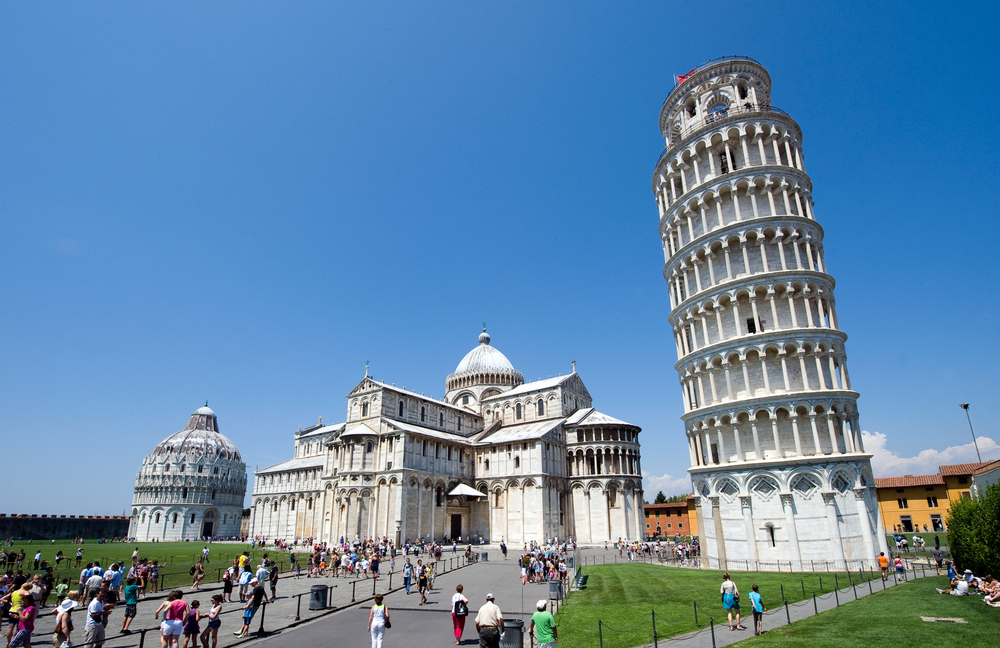
Behind the church The Battistero di San Giovanni, where Galileo was baptised, rises over manicured lawns. Once again, it is well worth entering. I tagged along behind another tour group and the guide demonstrated the acoustics on the upper level under the dome. Wow! Quality trattorias serving tasty Tuscan food made with fresh, local produce, line the streets near the Leaning Tower , but we grabbed snacks from street-food wagons and headed for our main port of call for New Year’s Eve—the city of Florence (“Firenze”). It was quite a walk once again from where the bus was parked to our rendez-vous point where we met our local guide for a walking tour.
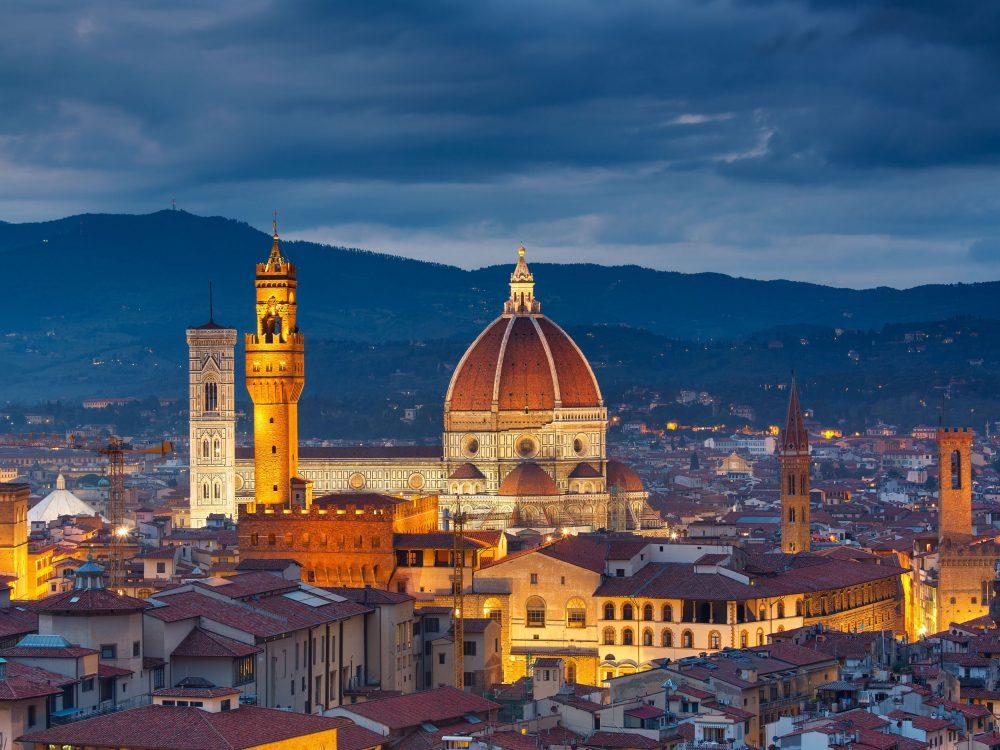
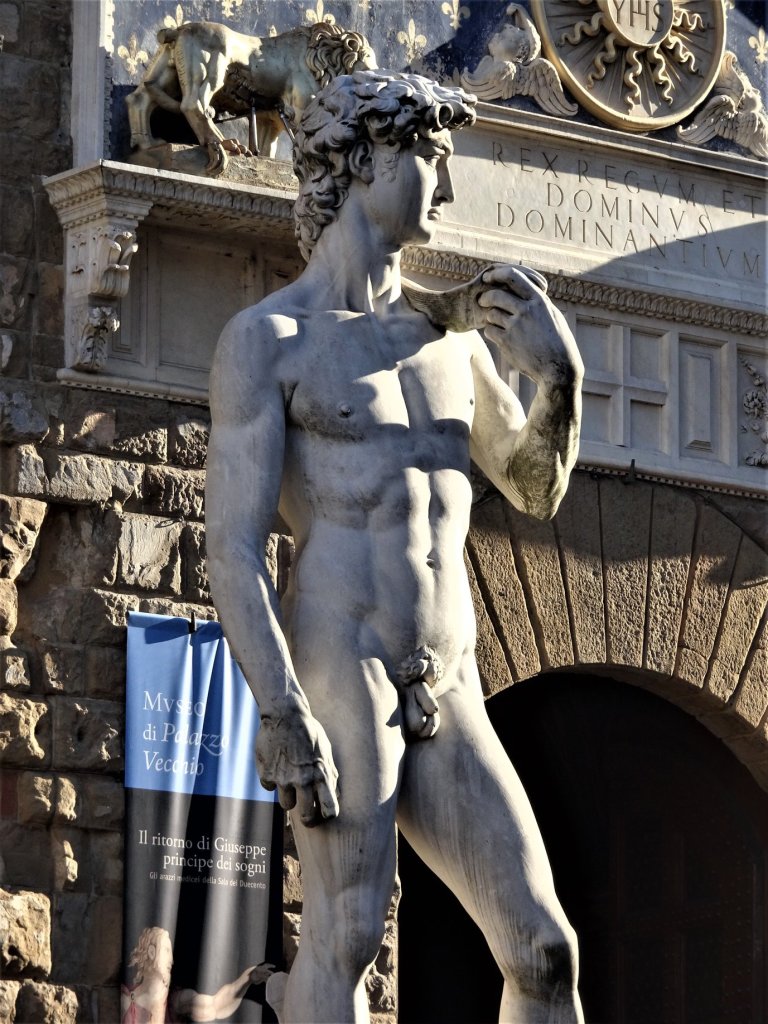
Florence is a walkable city with architectural delights and history galore. We learned a huge amount of information about the Medici clan who were the dominating family in Florence for centuries. The tour ended at the Fountain of Neptune, which was literally awash with male statues all looking particularly buff in their Carrera marble birthday suits. The one below appears to be a replica of a more famous statue.
Florence is known as the “cradle of the Renaissance” and that’s no small claim: this city changed the course of Western civilisation in the 15th and 16th centuries with its achievements in art, architecture, literature, and science.
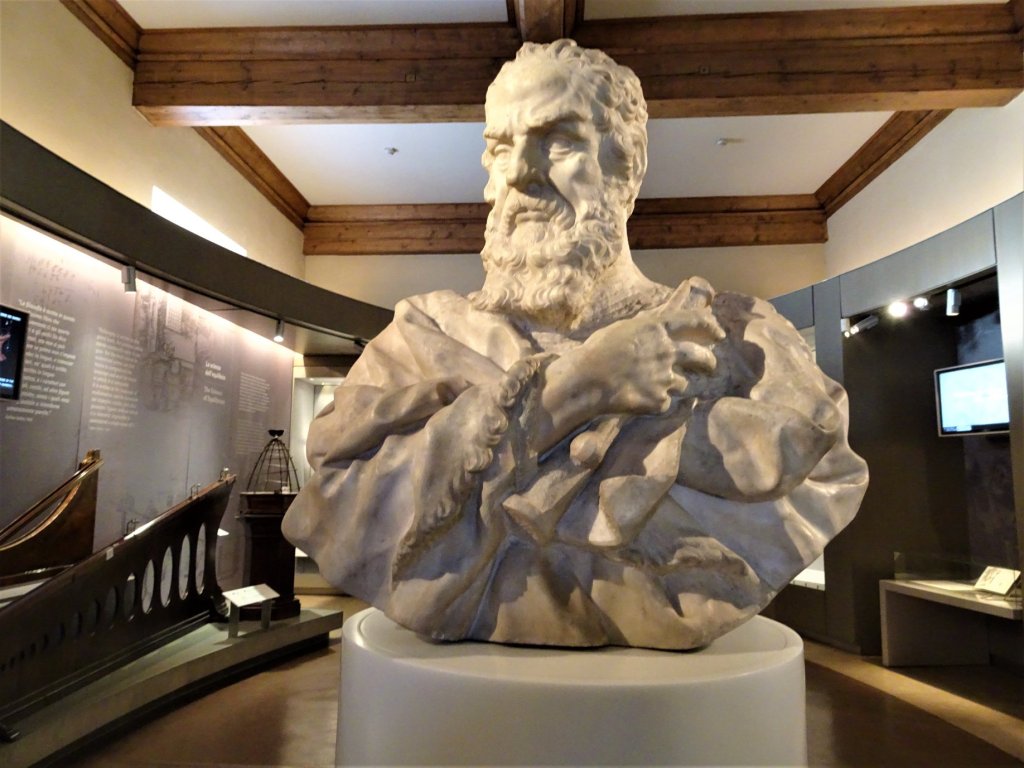
Witnessing the masterpieces and monuments of Leonardo da Vinci, Michelangelo, Giotto, Brunelleschi, Donatello and other geniuses in the city where they were created would be one of the world’s great travel experiences, but there wasn’t time to queue, and pay exorbitant amounts (especially in Lira) on New Year’s Eve when everything was closing early. Except for my fellow travellers who wanted to see Michelangelo’s ‘David’. The local guide was going to get them in fast. Having already seen that the fountain contained a replica of the famous statue, I decided to go, with another couple from our tour group, to the Galileo Museum. There is at least a marble bust of the great scientist there.
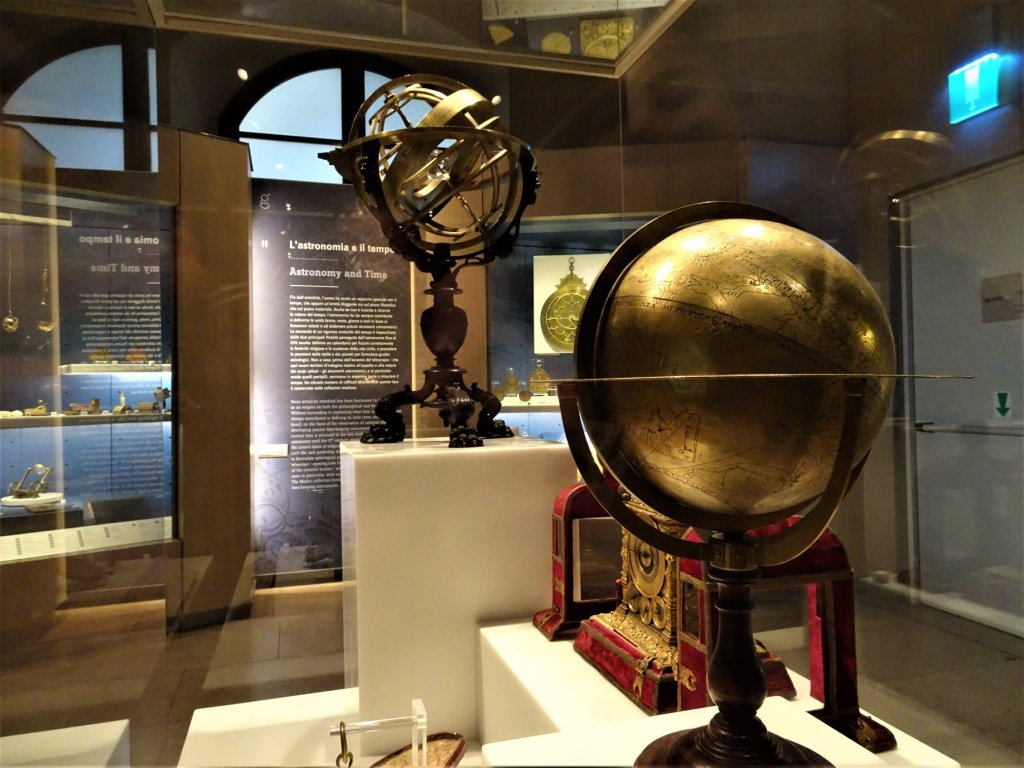
The collections of scientific instruments and Galileo memorabilia we saw there preserve an eloquent testimony to the promotion of scientific research carried out, first, by the members of the de Medici dynasty, then by the Grand Dukes of Lorraine. We left as it was closing, having discovered that we we three were the only ones not attending the tour group dinner.
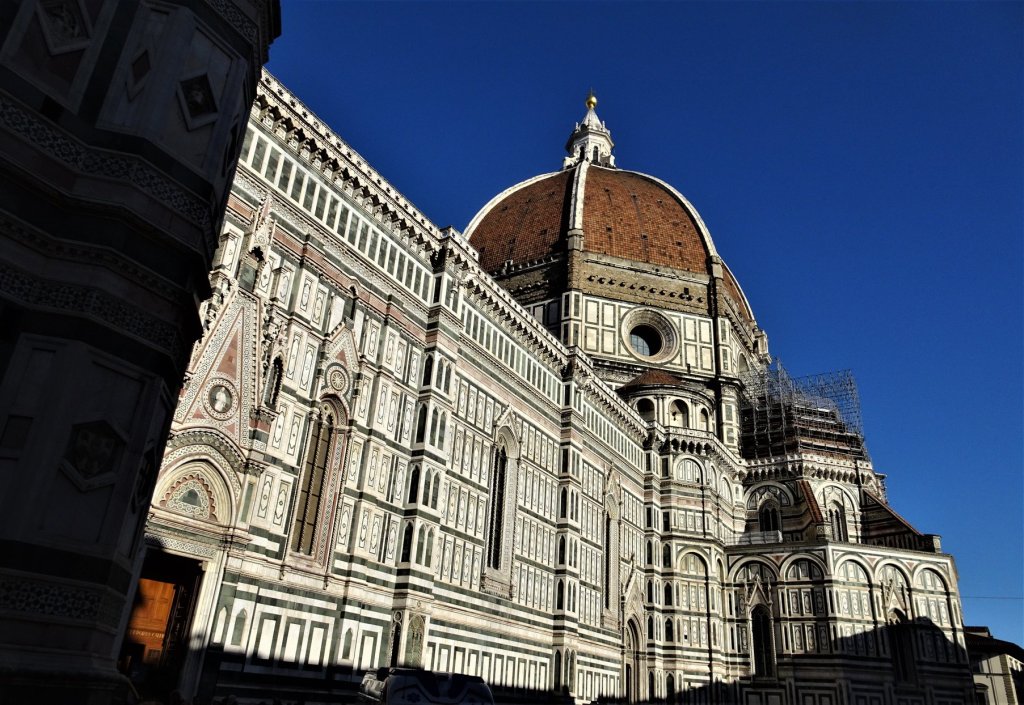
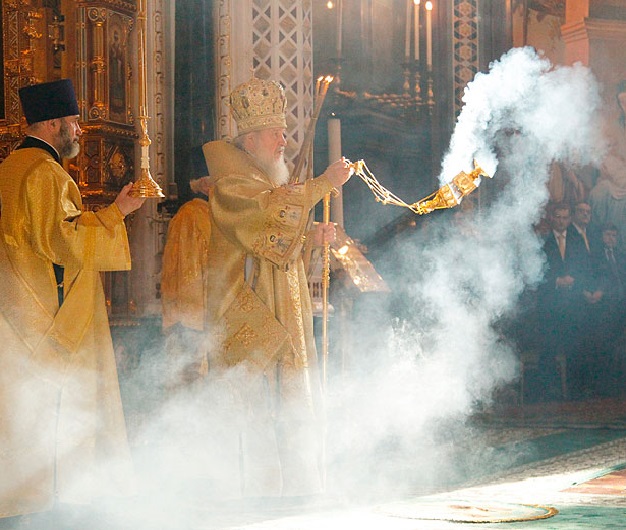
Sylvia wanted to go to Church. We headed to the magnificent marble-facade of the Duomo (cathedral) which dominates the skyline of Florence, and were deterred by the length of the queue to enter. We accidentally stumbled into a (Greek Orthodox?) church and they were having a smoking ceremony. The sing-song of the priests was melodic and the smoke smelled spiritual, so we just sat respectfully in the back of the church for a while inhaling the scent of gum and spices in the incense. The censer (smoke-pot thing) was on a system of three chains with 12 bells (maybe representing the disciples?). My guess would be that, like holy smoke all round the world, it was cleansing. All the evil of 2019 out. I don’t know though …
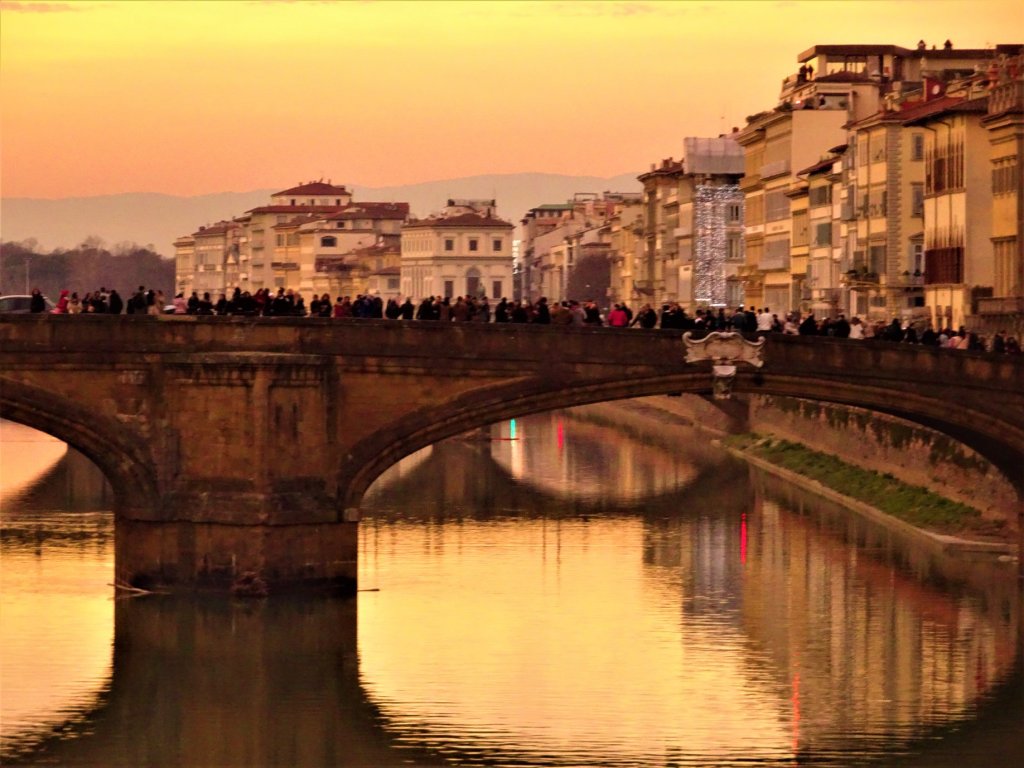
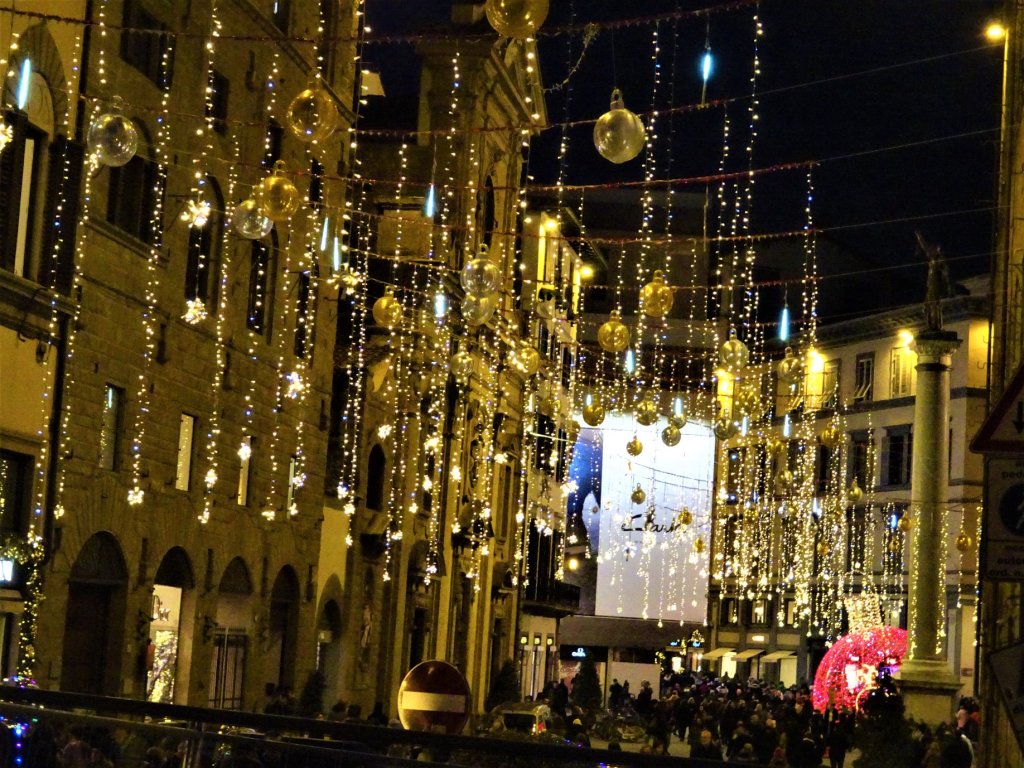
We wandered around amongst the milling crowds along the Arno River and the Ponte Vecchio (“Old Bridge”) area. People were singing: I believe hymns/ gospel tunes and some were dancing to folk tunes, in the ‘piazzas’ (squares). I think, from having seen it on TV, that one of the dances was the famous tarantella.
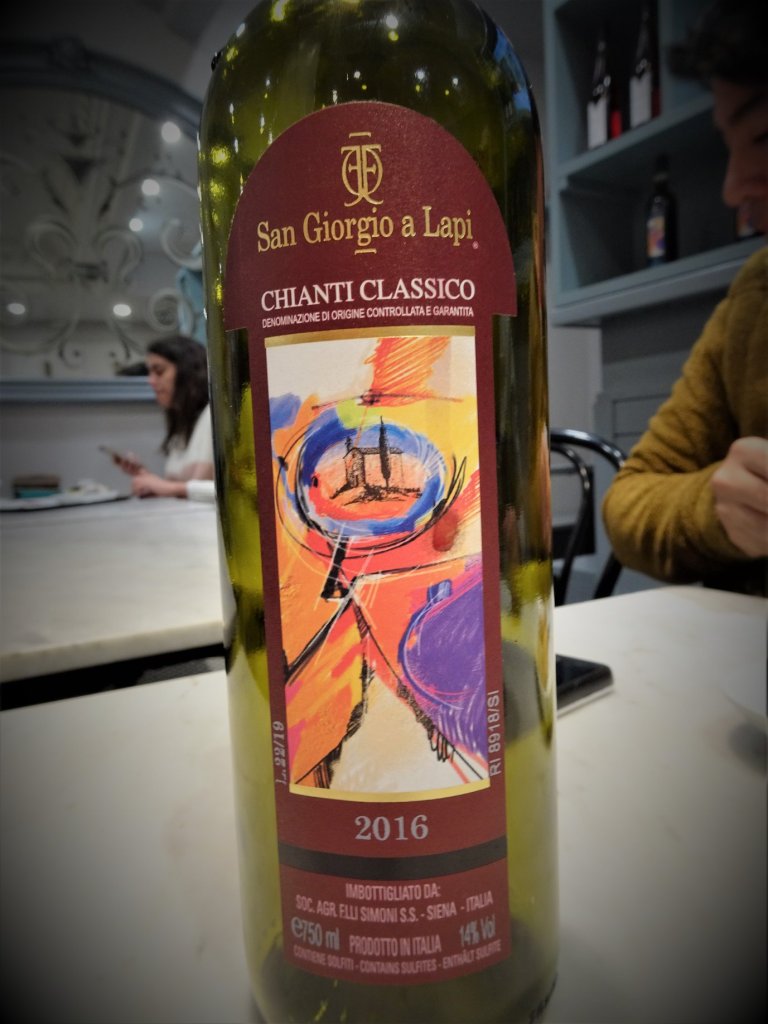
While the rest of our tour group were chowing down on mountains of pig meat, which I can’t stomach, at great expense, we found a local trattoria by the river. The basic decor was a little discomforting, but the staff were friendly and persevered with our basic Italian. Chianti is the go-to drink in Tuscany. Between three of us, we consumed several bottles. The food on the menu was mainly local specialities eg. Bistecca alla Fiorentina (steak), Lampredotto (sandwich), Papardelle al Cinghiale (pasta w/ boar), Tagliatelle Funghi Porcini e Tartufo (pasta with local truffles), Crostini Antipasto Toscano (a bread and spread starter), and Pane Toscano (bread). I, with my gluten intolerance, tried a truffle risotto. Mama Mia, it was good. Three of us ate and drank for the price of one of us to go on the tour group dinner.
At 7.30, we met up with our tour group at the bus for the trip back to our digs in Terme di Montecatini (somewhere in Tuscany about an hour and a half from Florence). You never know on tours what your accommodation will be like, but in Italy, there is always a bidet in the bathroom and often hard shiny floors. Rather than hit the village festivities, I lay awake listening to my neighbours crashing around on their hard shiny floors and people festivating in the street outside.
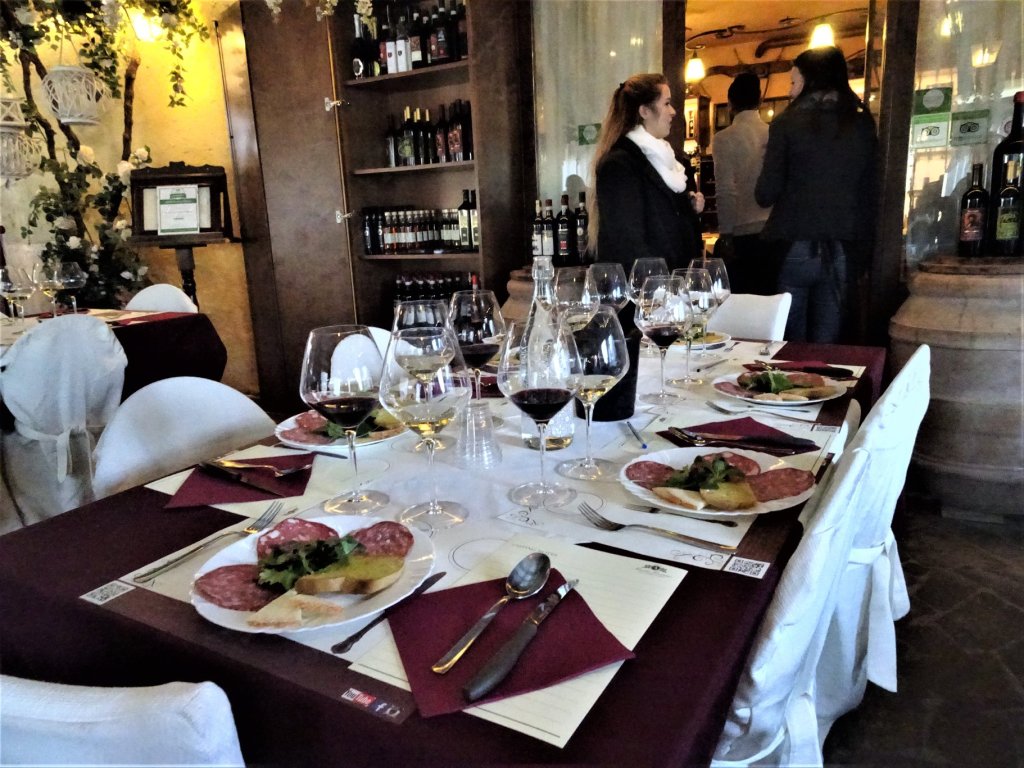
.On New Year’s Day, we explored two jewels of towns — Siena and San Gigmignano — and had a wine-tasting-enhanced lunch at the Tenuta Torciano winery. I did lots of “Wowing”.
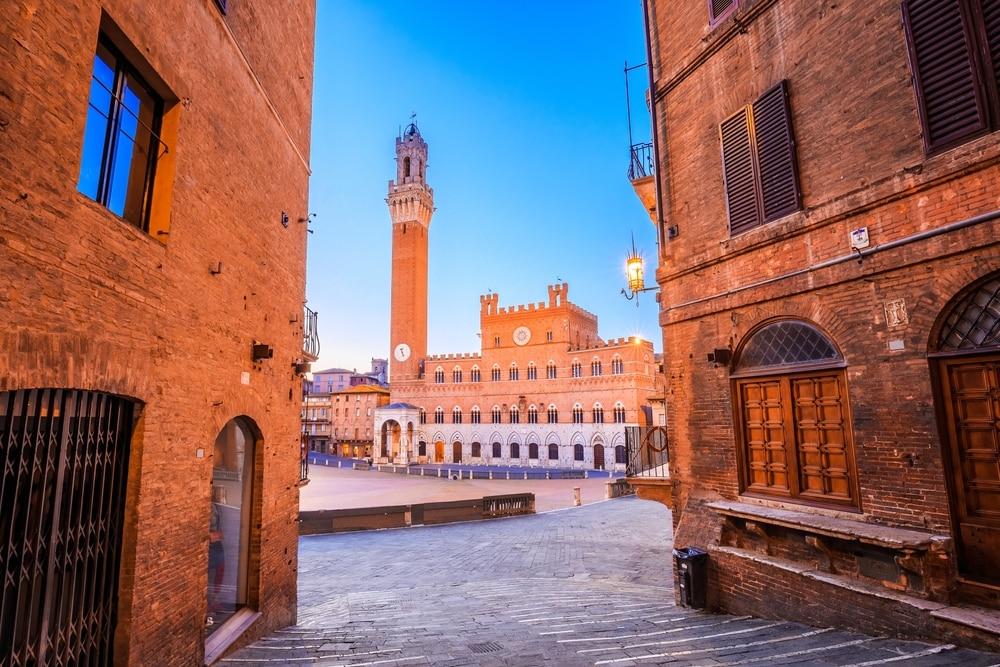
Siena, a Renaissance painting in 3D, was deserted after New Year’s festivities when we arrived, and it was rather time-consuming to score a coffee. Italians all drink espresso shots during the day, standing up at coffee bars. The bars were opening slowly, just a chink, to let out the waft of fresh baking.
About an hour from Florence (“Firenze”), Siena has remained provincial, even though it was built on banking. It has remarkably preserved its medieval character with distinctive Gothic flair; thus, it boasts of possessing a more genuine Tuscan charm than Florence.
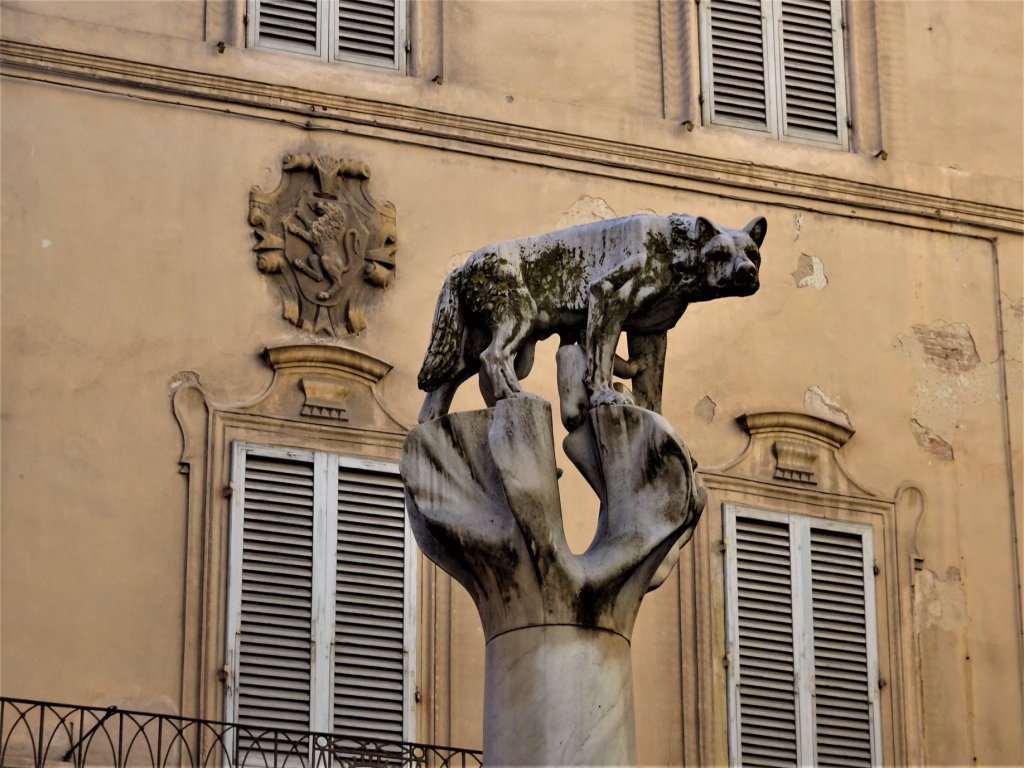
It was apparently founded by the son of Remus, who was one of the mythical start-up boys of Rome(you know the ones raised by a she-wolf?). Thus, there is a she-wolf statue on a stick with crude effigies of the famous babies hanging off her in one of the smaller confluences of streets. This son was called Sien (or something similar).
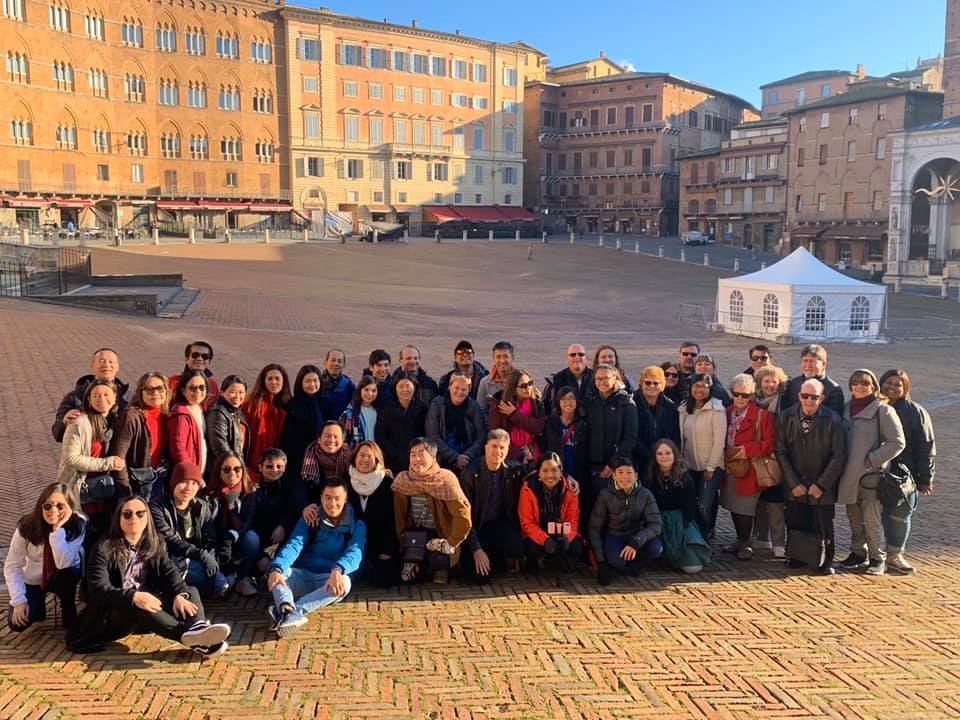
Siena’s main claim to notoriety today is that there is a “palio” horse race/stampede around the main square, Piazza del Campo, where our tour leader took the mandatory group photos. I am right in the middle of the one I lifted off the Facebook page if you are trying to spot me. Grey coat and usual daggy pose.
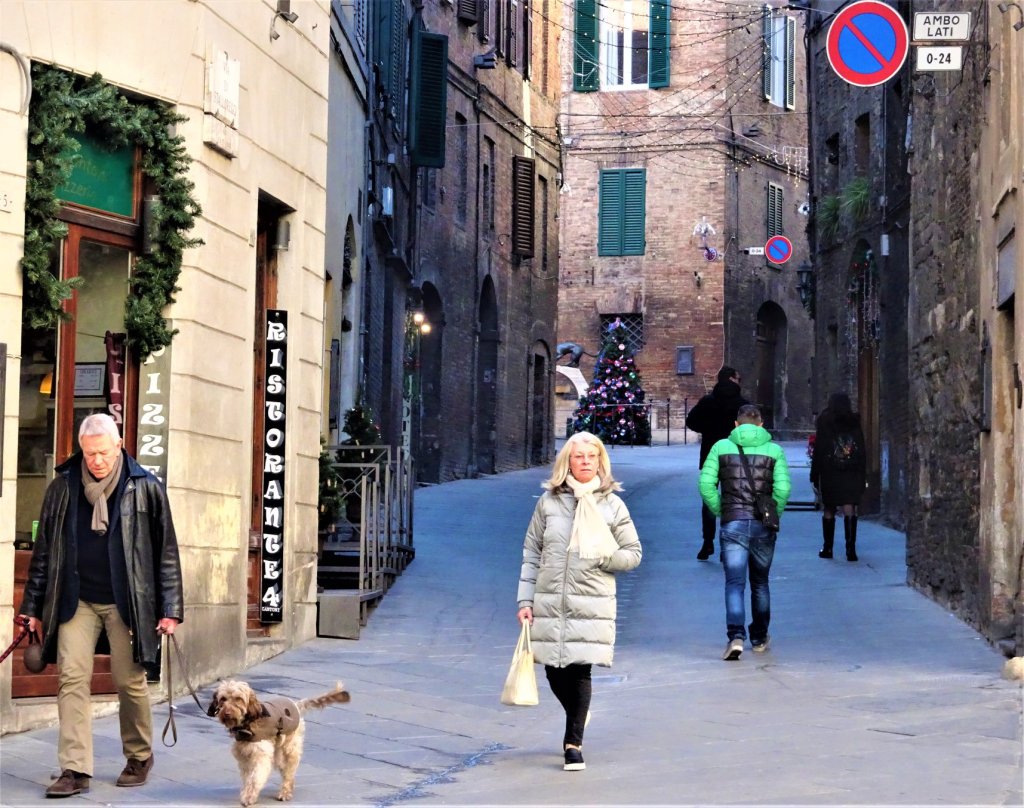
Lots of interesting twisty alleyways in Sienna. Sometimes, it’s like being somewhere else, one alley is completely decorated with plants, quiet and slightly eerie. Sometimes you can go into a narrow alley and listen to the people talking in the houses, smell what they are cooking and imagine how it would be to live here! There is chopping of cheeses and sliced meats, pici, wild boar, Cinta Senese.
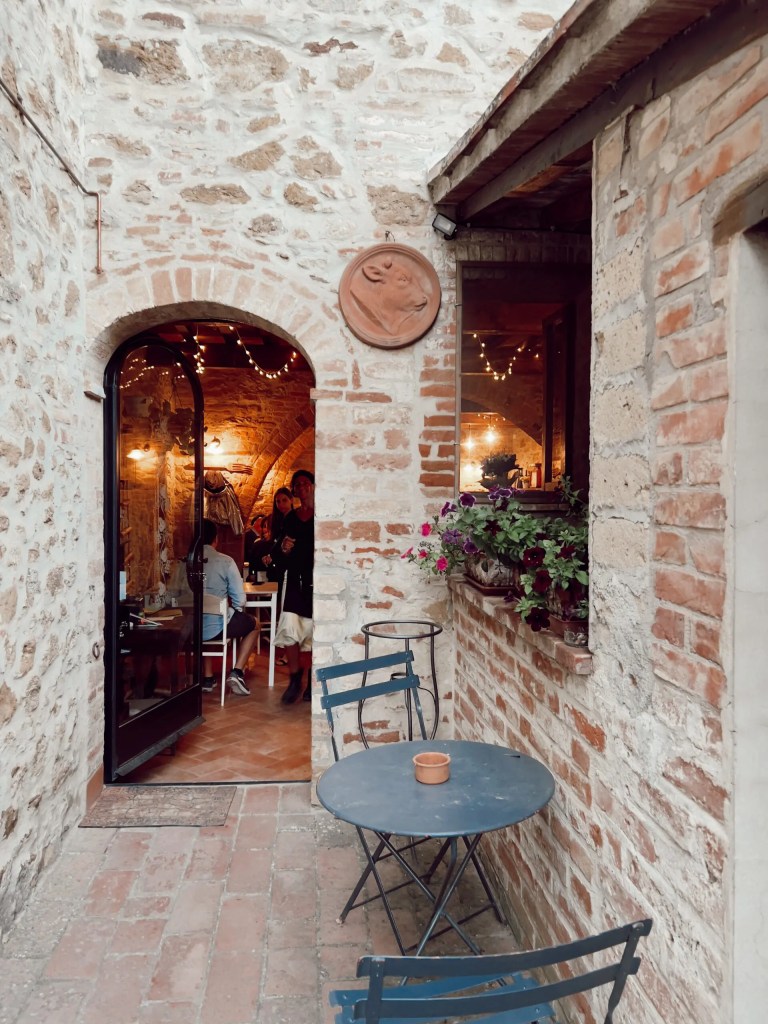
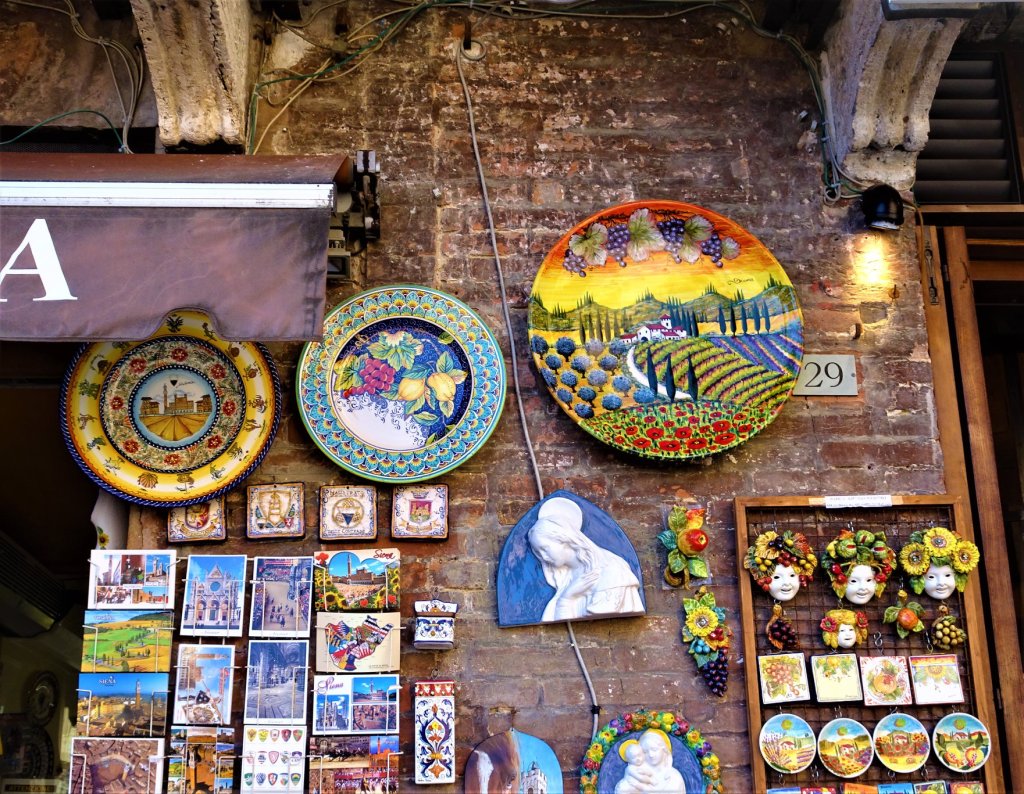
Yes, there seems to be a full-boar piggin’ and charcuterie culture in Tuscany, particularly in Siena, to rival that of Ivanhoe, as well as the leather bags, wine, olives and brightly coloured ceramics.

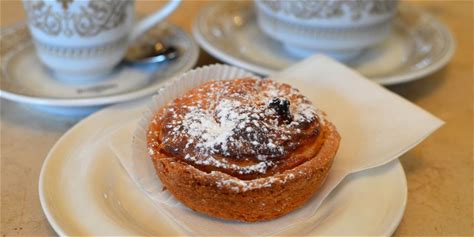
Then there’s the bakery— eclairs, Italian croissants with several fillings, delicate sandwiches and tiny panini with salmon and butter, anchovy paste and butter and the more traditional prosciutto crudo and cotto every kind of biscotti, pastries, Sienese sweet treats and candies. Damn the gluten thing! Imagine a cappuccino and a budino di riso (rice pudding tartlet), slightly warm, with a crumbly and fragrant pastry shell and a creamy rice filling. I bought one and ate the filling. Public toilets are few and far between in much of Italy, so the main reason for having a sit-down coffee and snack is so you can use the toilet at the shop. This toilet was down a very steep set of stairs and you turned the tap on with your foot. Forward thinking as Covid took hold, I imagine.
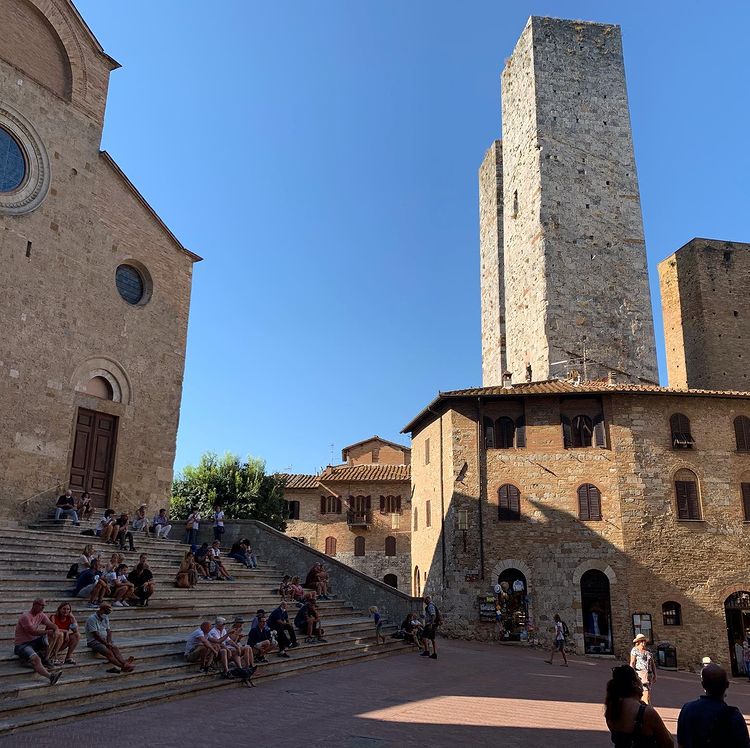
San Gigmignano is another one of these hilltop towns (read 16th-century fortress) which has fat tourists toiling up narrow streets in their ever-tightening jeans to take a selfy in the town square (which has the name of Piazza della Cisterna, obviously because there is a well in the middle of it) and to join the long queue to buy what claims to be the best gelato in the world, made in the least modest gelateria in the world.
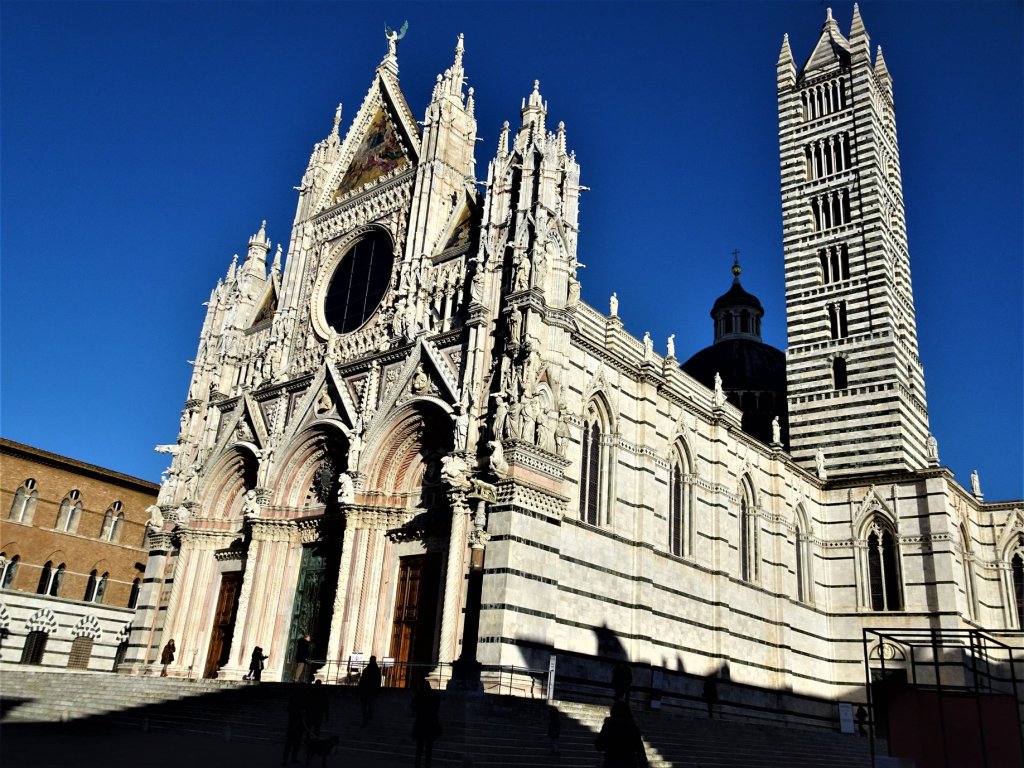
The place the locals tell you that you must see is the church, which sits high on a hill overlooking the rabbit-warren of streets below. The marble-clad exterior is certainly impressive, but the church was locked, so I couldn’t get inside. It’s also home to one of Europe’s most famous altarpieces: The Madonna and Child with St. Anne.
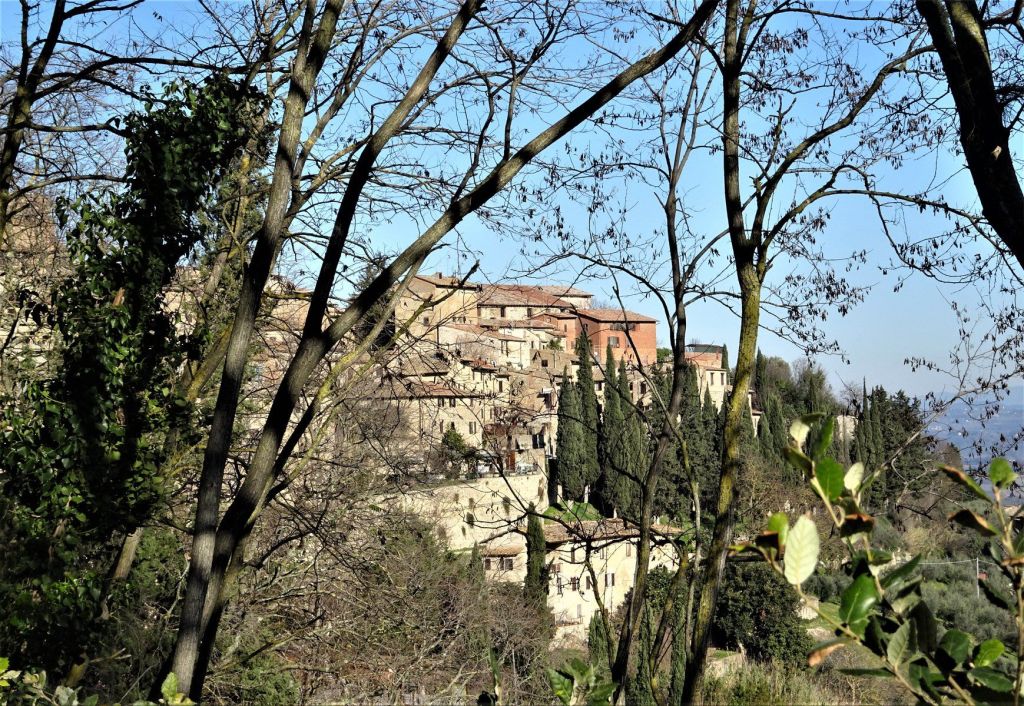
San Gigmignano is not the sort of shabby chic hilltop fort town beloved by Instagrammers with duck lips. It’s the real deal. I bet the patisseries mark the passage of time with different traditional goodies at each time of the year. There are several museums of torture and an apothecary store with wooden shelves and big glass jars containing mysterious tinctures.
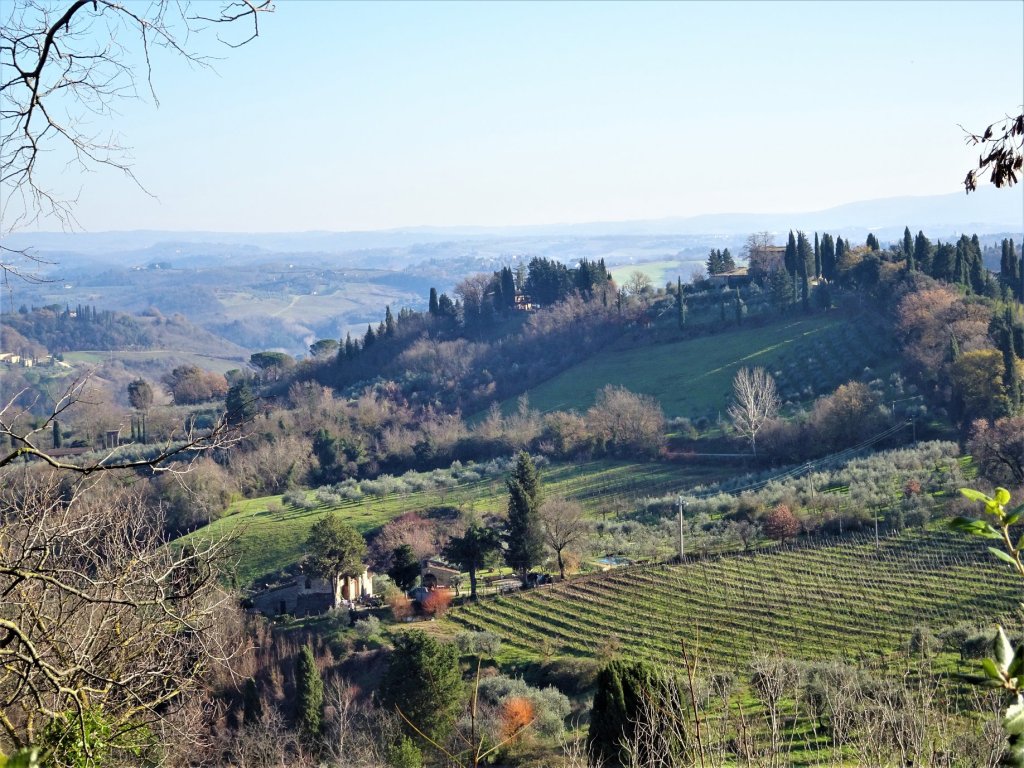
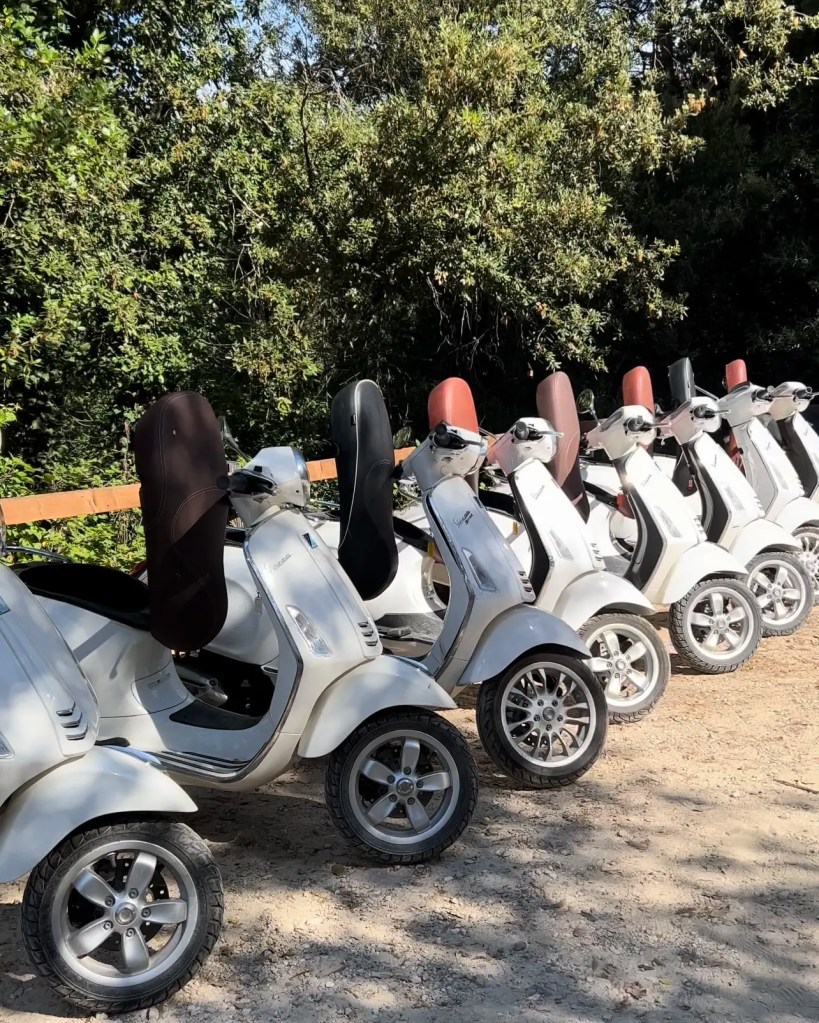
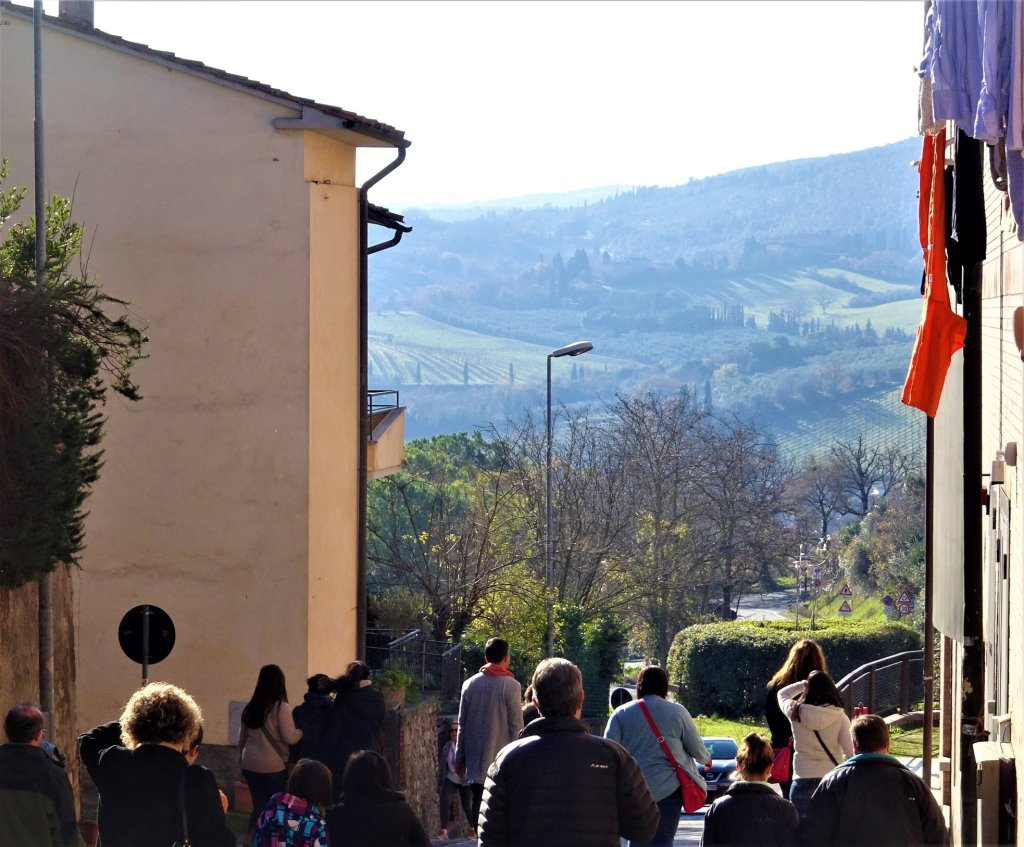
The views out over the ramparts, the olive trees and the pointy cypresses are quite impressive in S. Gig. too, and very green for mid-winter. I challenged myself to get photos without people, but even so, the mediaevil ambience is often modified somewhat by a Volkswagon or scooter. And sometimes the Italian ambience hits you with a whole nest of Vespas.
Roma told us we had to try Gelateria Dondoli (or Gelateria di Piazza) which is known worldwide as a gelato destination and certainly the best gelateria in Italy, the experience of visiting the shop is intimate and personal. You’ll find the gelateria tucked down a winding alleyway in Piazza della Cisterna in San Gimignano, one of Tuscany’s many piazzas. Step inside – or join the line – and be prepared to be delighted by the creations by Master Gelato Maker Sergio Dondoli.
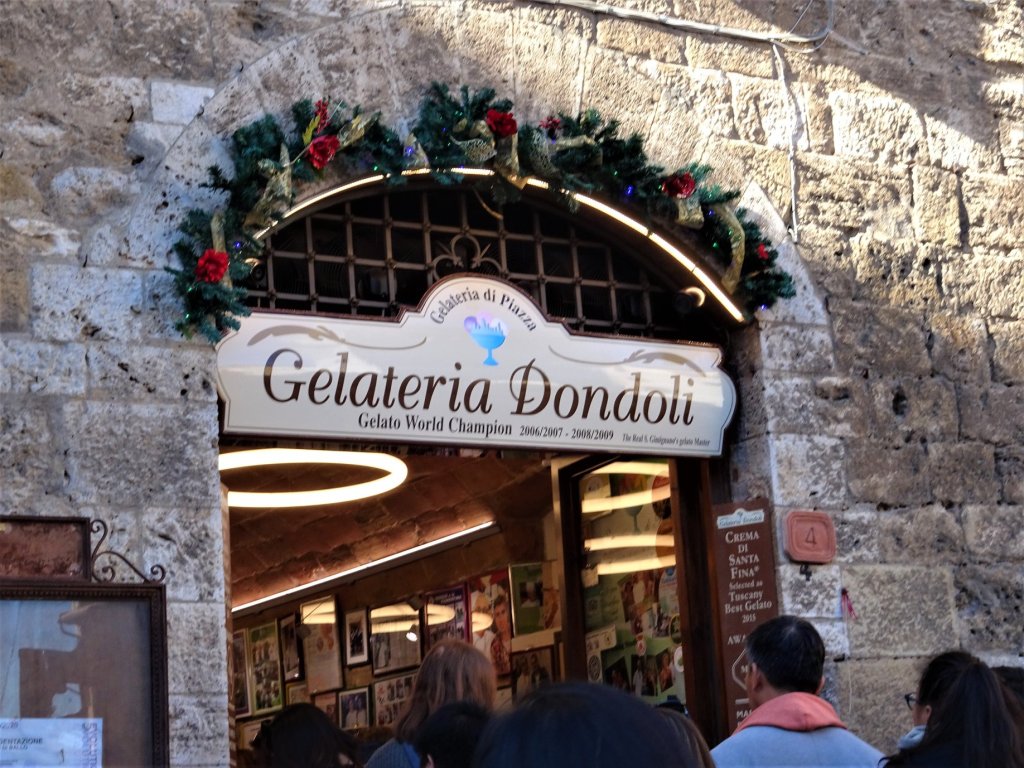
To understand Dondoli’s mastery, we must also understand the importance of homemade gelato in history. The first person to introduce gelato from Italy to France was Catherine de Medici, future wife of Henry II King of France, in the 16th century. Catherine had worked with alchemist Cosimo Ruggieri as part of a cooking contest to create this creamy dessert and the rest, as they say, is history. Today, Dondoli carries on the tradition as one of the 10 Master Gelato Makers in Italy.
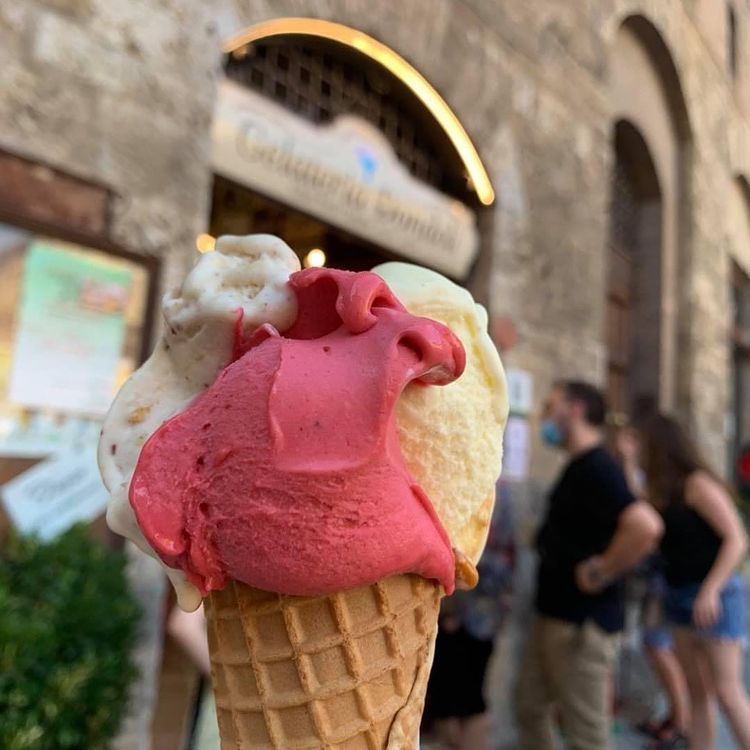
Dondoli is especially known for his experimental, original and unusual flavors. Some of the most notable include Crema di Santa Fina® (cream with saffron and pine nuts), Champelmo® (pink grapefruit and sparkling wine), Dolceamaro® (cream with aromatic herbs) and Vernaccia Sorbet. I had a scoop of butternut pumpkin gelato (! I kid you not) and a scoop of a Christmas gingerbread gelato. Twas pretty yummy, although not quite as sublime as anticipated and rather hard to photograph with one hand and short arms, so I took a photo of someone else’s.
Roma had given us some rules about gelati to ensure one is buying the best — ingredients must be in season (no strawberry gelato in September, for example), colours must be natural (avoid that blue gelato and that bright green pistachio, that looks radioactive!), and the gelato must be kept in refrigerated, sometimes even covered, containers. Do not trust a gelato that has been piled high! It was hot even in the middle of winter and people were everywhere shady in the small town eating gelato.
The vineyard experience was incredible. There were horses to pat and drinks for everyone under a pergola roofed with hanging white plastic wisteria.
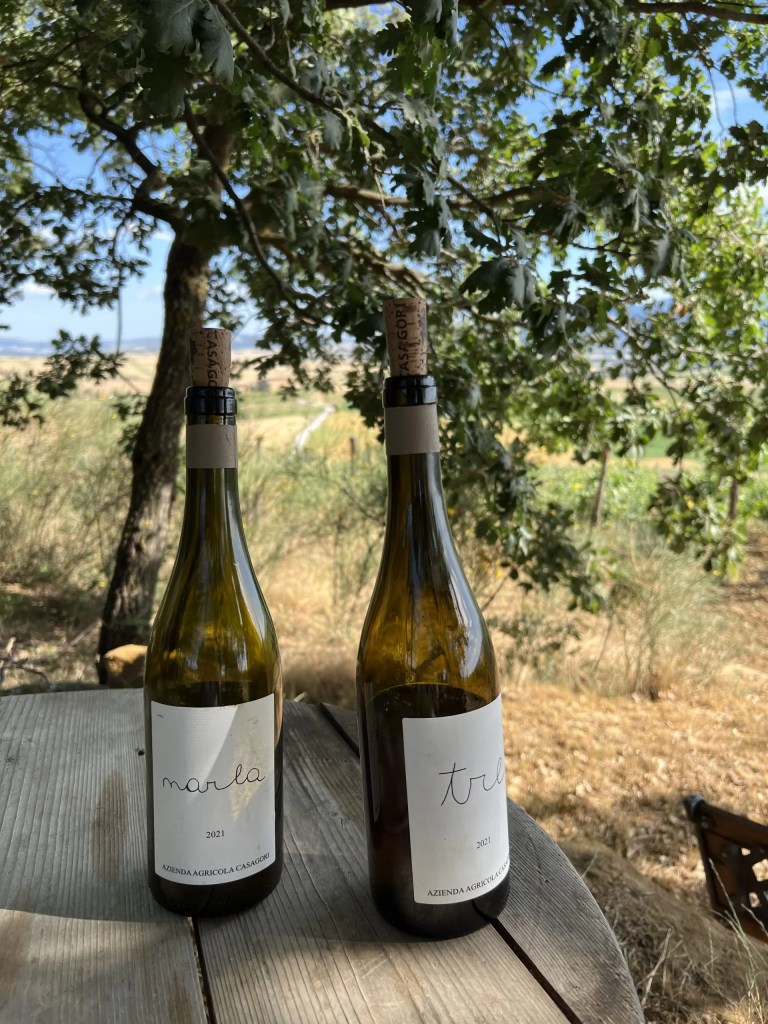
The lunch that came was a basic charcuterie platter. Lots on our tour group didn’t drink. I got very pissy helping them out. They ate my salami, so it was fair. I slept all the way back to Rome.
I have so much I could tell you about this land of trattorias, friggatorias, crostini, taverns, vinai, caffe espressos, apperitivos, Spritzes and Gusto. I couldn’t do justice to Roma (isn’t that a great name for a tour guide in Italy?) and Expat Explore in one blog though. It was a whirlwind ‘taster’ of a tour, mostly through Northern Italy, and Tuscany was just a small part of it, but so much was offered.
 Margaret R Kelly
Leave a comment