
It’s November and late autumn in Scotland. My brother and I are on a ‘Family Heritage Tour’ —a kind of pilgrimage— to the stomping ground of some of our ancestors—the Macleods of Dunvegan and Talisker on the Hebridean island of Skye, a popular holiday and tourist destination in summer.
The tempestuous Atlantic crashes against Skye’s rough rocks and cliffs. Inland, these huge mountains reach high above boggy moorland dotted with blue lochans, or little lakes. Visitors (such as Virginia Woolf, who said Skye was like being in a jellyfish lit up with green light) go home speaking of Skye’s unique light tones– the product of unusual weather patterns and the peculiar geography – which makes the island a photographer’s dream sometimes.
As well as finding the weather inclement (as in wet, wet, wet), we also found that many tourist attractions we’d planned to visit— Dunvegan Castle, Lake Coruisk cruises, seal cruises and the folk museums especially— are only open during the tourist season from April to October. This is also when accommodation is at a premium and popular tourist spots struggle to cope with the number of visitors.
There are two branches of the Macleod/Mcleod Clan—’seeds’ or sons or grandsons of the eponymous founder. Leod was a son of Olaf the Black, the Norse King of the Isle of Man. Olaf was himself descended from the Norwegian King, Harald Hardrada, remembered for being defeated by King Harold II of England at the Battle of Stamford Bridge in 1066, less than three weeks before the latter’s own defeat by William the Conqueror at the Battle of Hastings. [I’m a fan of the series on SBS, King and Conqueror, by the way.]
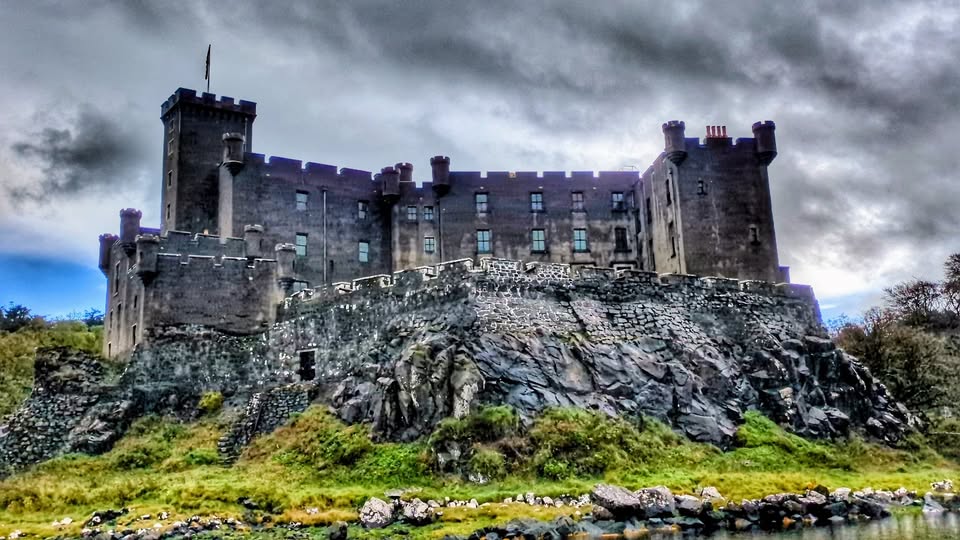
Leod’s oldest son, Tormod, (whose name translates as ‘Norman’) was given Dunvegan Castle, situated on Loch Dunvegan and the Minganish Peninsular, as a dowry when he married the daughter of an Irish chieftain named M’Crotan. Tormod became Chief of the Macleods of Dunvegan, Harris and Glenelg. The other Macleod (grand)son of Leod was Torquil, who founded the Lewis branch of Clan Macleod.
Moving forward a few centuries, Sir Roderick Macleod the 1st of Talisker, knighted because he was a fierce royalist, was the second son of Rory Mor Macleod, who owned the drinking horn from which every incoming laird of Macleod must drink on his succession to the title. He was also the narcissistic husband in the ‘Battle of the One-Eyed Woman’ incident.
Sir Roderick, being the second son, was not bespake for the clan chieftain role, so took up a lease on a smaller ‘estate’ on the Isle of Skye called ‘Talisker’ in the 17th Century. The name, which comes from the Norse word for ‘Big rock with water running down it’, may sound familiar to connoisseurs of fine whisky.
Our great great great grandfather, major Donald Macleod the 6th of Talisker, sold the estate to the MacAskill clan who started brewing whisky there in the 1820s. Major Donald and his wife, Catherina, emigrated to Van Diemen’s Land (Tasmania). Here are a couple of headshots of them from Genealogy of the Family MacLeod of Talisker in Australia, November 1820 – March 1990 / by Bruce Donald MacLeod

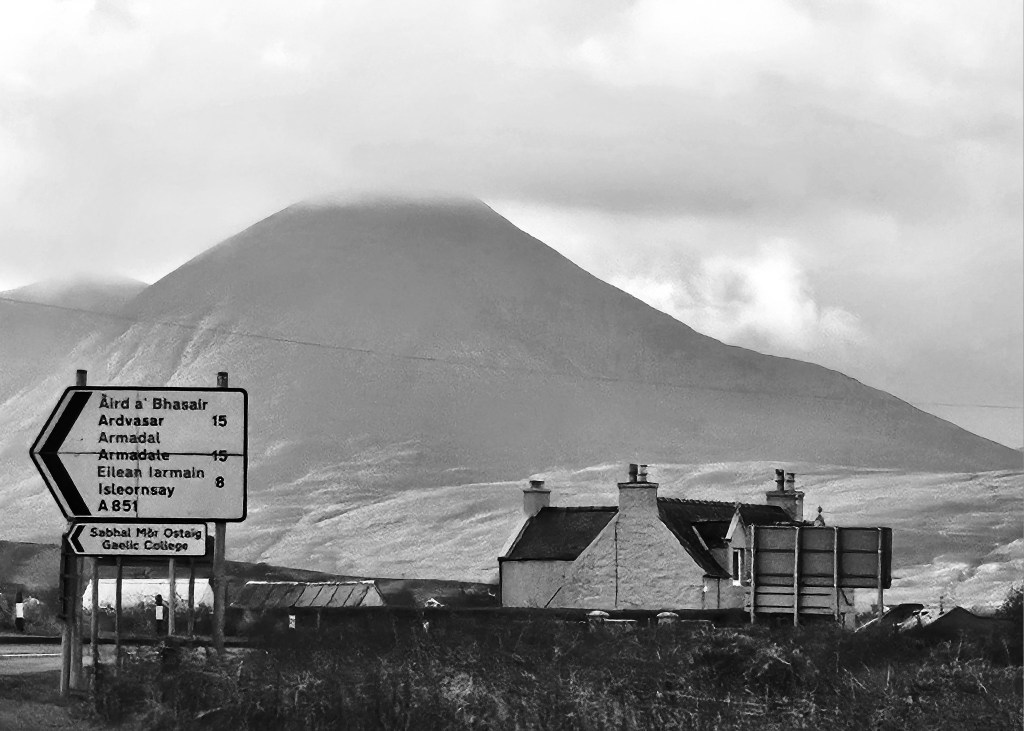
My brother and I cross the thirty-year-old Skye Bridge at Kylerhea and refuel our hire car at a ‘filling station’ in Broadford, the second town after the bridge. More like a long meandering village really, with a pretty view over the bay and lots of accommodation options, most of them only available in tourist season. We stop at a turn-in for a picturesque absorption of the wonder of being on Skye.
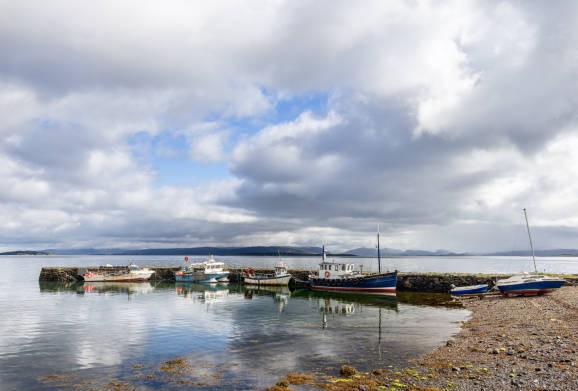
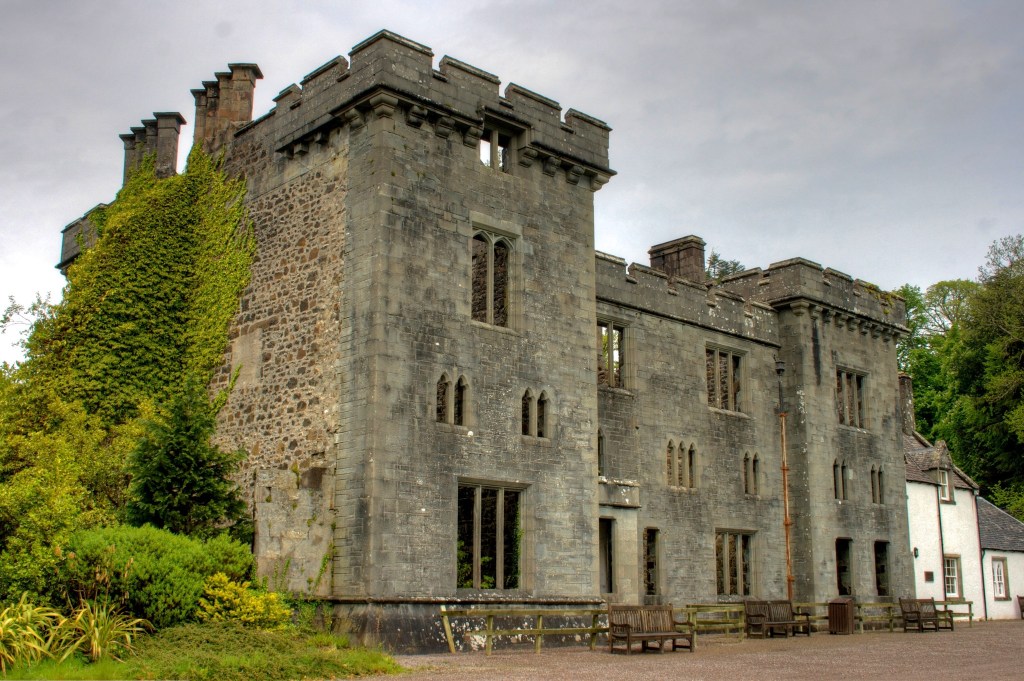
It is essential to have a vehicle to explore The Isle of Skye, especially if, like us, you only have two days. It no longer requires payment of a toll to go across the thirty-year-old Skye Bridge, but it is also possible still to catch a ferry from Mallaig to Armadale, original headquarters for Clan MacDonald, the other great clan on Skye. Despite constant warring over the centuries, a number of MacDonalds strategically married into the MacLeod Clan, so in many ways, Armadale Castle (below from the Armadale Castle website: http://www.armadalecastle.com) is also an ‘ancestral home’ of sorts for us.
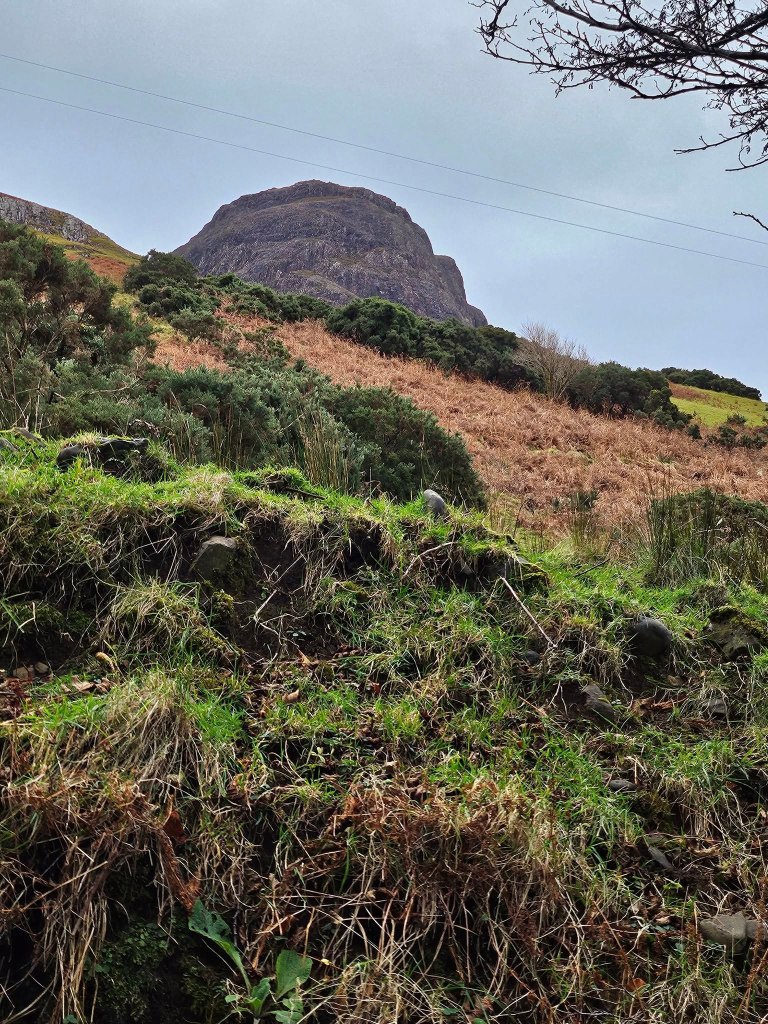
Our first, wonderful taste of Skye is the beguiling old bridge at Glen Sligachan. The Black Cuillins Mountains raise their 14-kilometre-long jagged summits on high, and sometimes cast elongated, serrated shadows over the surrounding bog and heather. With the fast-running river beneath the picture-perfect bridge, it is an enchanting (and some say enchanted) place. If you wash your face in the water under the bridge—like in fully immerse it—you are said to be granted eternal beauty. Just a hint—it’s ice-cold and doesn’t work (see below).
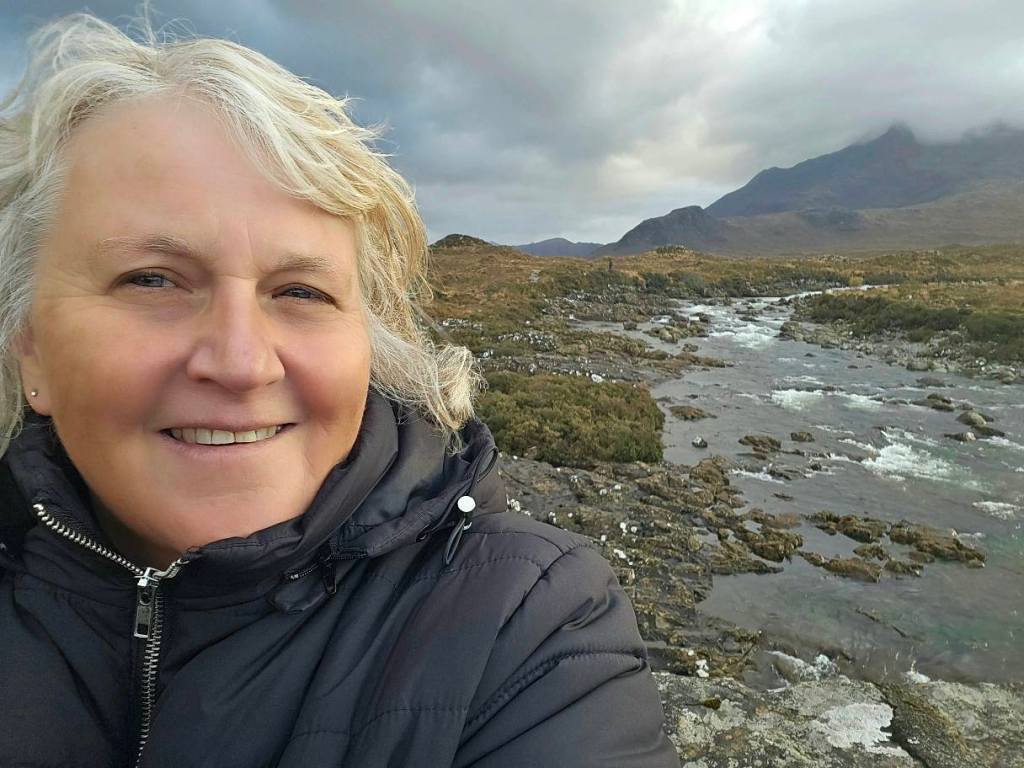
There’s a path up through the blanket peat bog at Sligachan. The bog is a conservation area and has a fascinating info-sign, even if it’s not as picturesque as the flowing water.

The waterlogged conditions and the bog’s acidity prevent vegetation from fully decaying when it dies. Instead, it builds up very slowly over thousands of years to become peat. Sometimes the peat can be metres deep (although they’re still using feet as the measurement in Scotland). Peatlands or bogs are the world’s largest terrestrial carbon store, capturing more than all of the Earth’s forests combined.
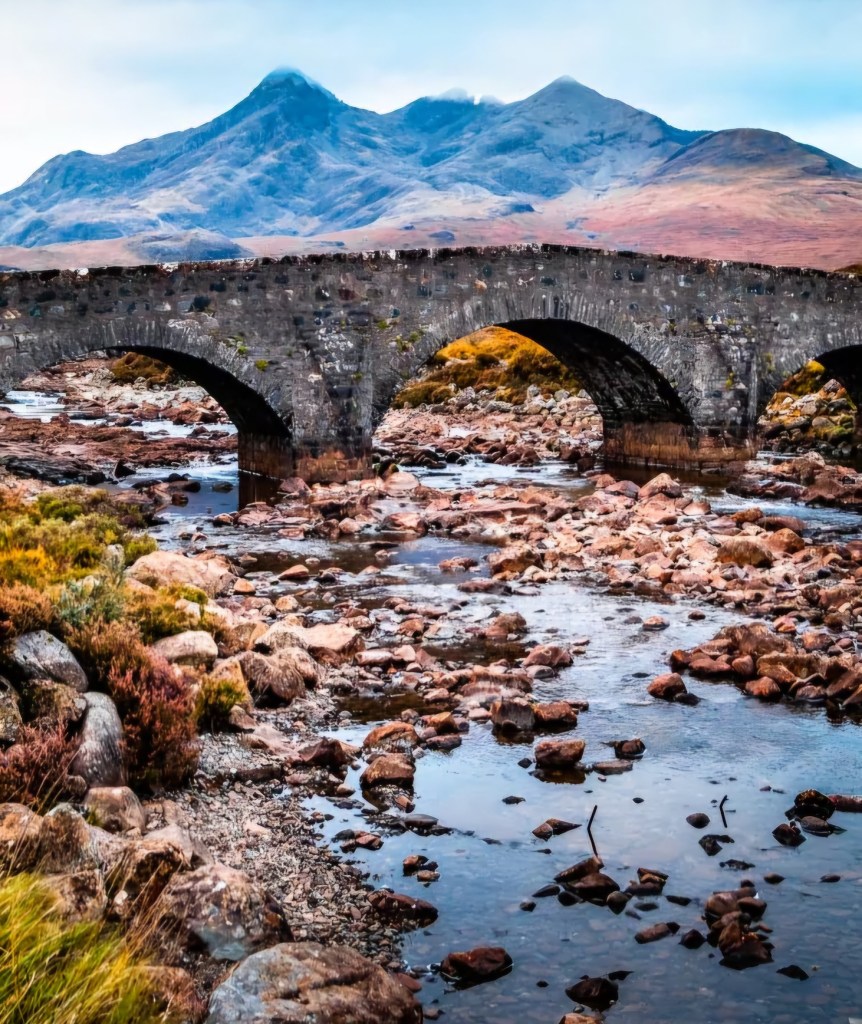
The Black Cuillins are distinguishable by colour from the granite Red Cuillins, to the east of Sligachan. These ones are dark, smooth basalt and gabbro which is a rough igneous rock, and form a semi-circular embrace around Loch Coruisk. That’s all the geological background I’m going to give you because it’s boring. Meteorologically, the sun kept shining through weakly and there was mist and rain and wind, all within about ten minutes.
The sharp, protruding, windswept peaks of the Black Cuillins are part of the ancestral Macleod Estate but the current clan chief, John, Number 29, put them up for sale to raise funds to fix the leaky roof at Dunvegan Castle. Shock! Horror! Outrage! I find it ironic that the clan motto is ‘hold fast’. I guess though that there’s nothing wrong with shaving off bits of unproductive land if you live in London and aren’t there most of the time to look out your window and gloat over owning so much.
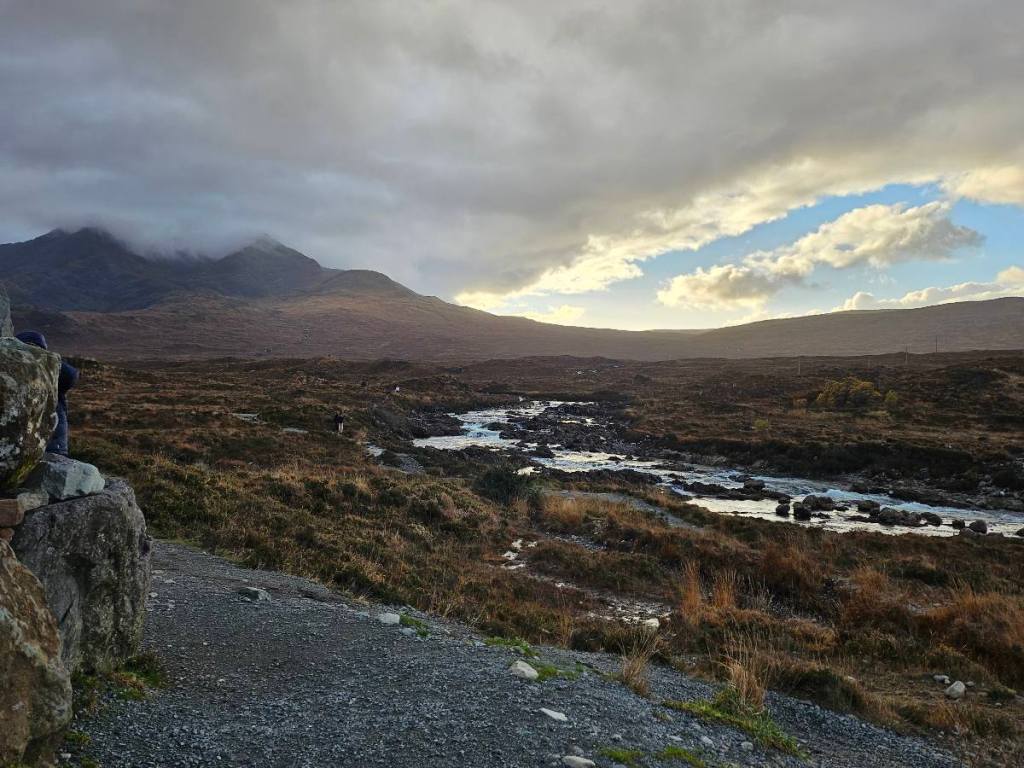
It’s said that where the Cuillins stand now was once entirely flat, a meadow where Scotland’s creator deity, the Cailleach, liked to relax after spreading snow across the countryside. As you do. I imagine it’s tiring, and she was getting on a bit. Her natural enemy, the King of Summer, asked the Sun for help in his fight against her.
The sun launched a spear at the Cailleach, but she’d been taking her fish-oil tablets and was surprisingly quick, rolling out of the way on the meadow. Where the fiery spear hit the land, it bubbled up like a giant blister, lava-pus spreading for miles, eventually bursting into the jagged black peaks of the Cuillins! Deadly, eh? Modern dating methods have established that this occurred 61 million years ago when there also happened to be a number of volcanic slit vents off the coast of Scotland.
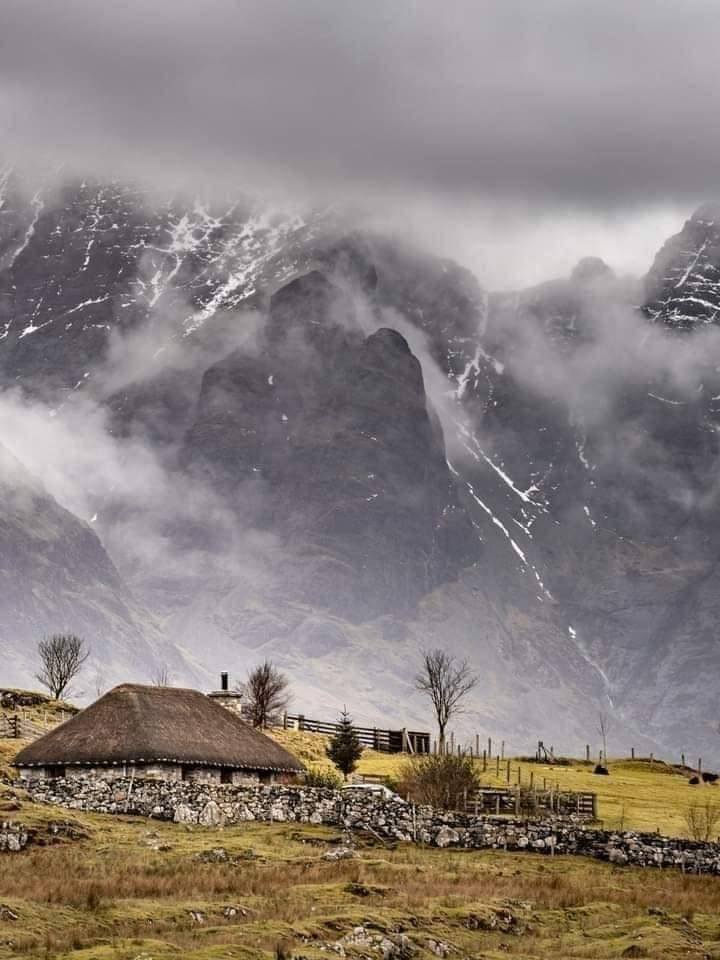
While there’s lots of theories for whence the name, ‘Cuillin’ comes, folklore has an answer again. Scotland’s greatest-ever warrior, Scàthach (don’t ask me to pronounce it, but she was female ) once trained her students amongst these mountains, with her reputation soon reaching the ears of the famous Irish hero, Cuchullin.
He was furious that this Scotswoman could be considered a match for him so leapt all the way to the mountains of Skye to duel with her. To cut a long story short, after battling for days, they called it a draw, having developed grudging mutual respect, so Scàthach named these the ‘Cuchullins’ in his honour. That is now shortened to ‘Cuillins’.
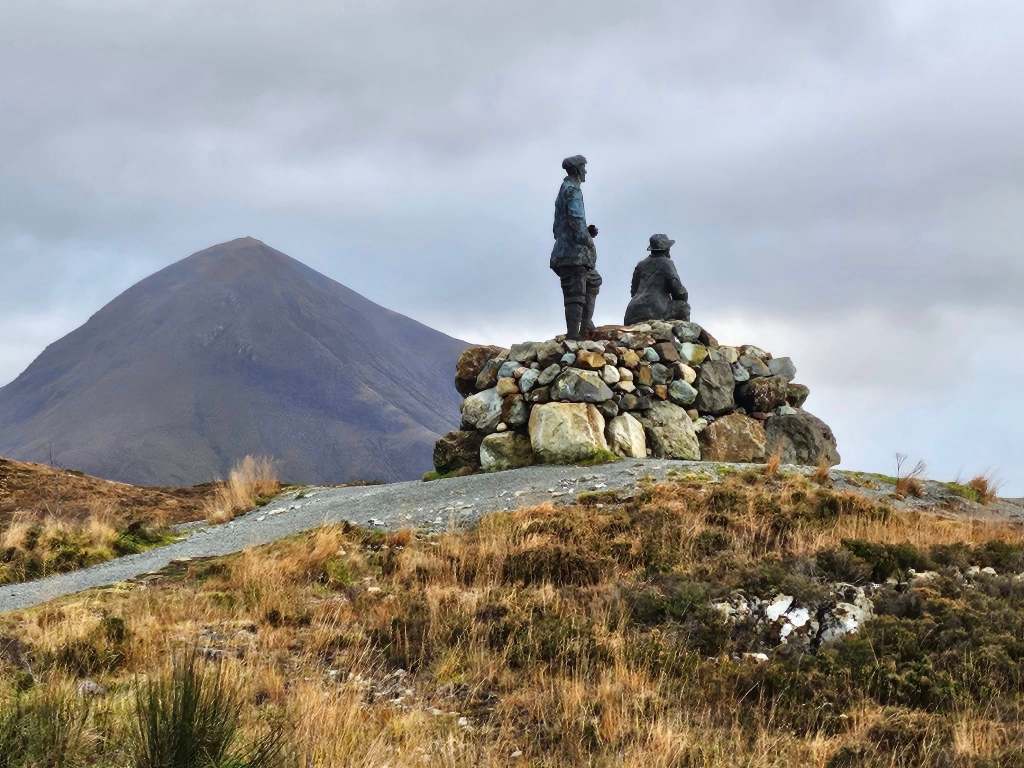
The Black Cuillins can be a dangerous place and routes to the summits weren’t mapped or many natural features named until John Mackenzie and Norman Collie conquered them in the late 1800s. Ah! They’re the dudes immortalised as statues at Sligachan.
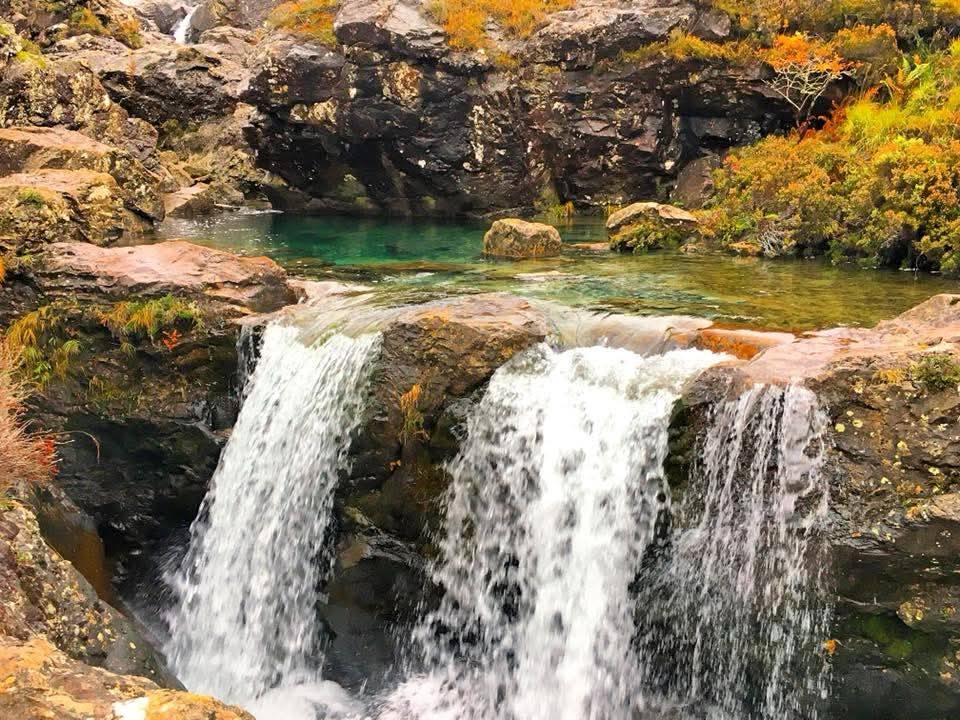
The Black Cuillins also have a claim to fame as the location of what’s called the last clan battle —- Coire na Creiche. It was part of the War of the One Eyed Woman (great name, terrible story — google it) in 1601 where a group of MacDonalds soundly defeated the MacLeods. It was said the Fairy Pools, a popular tourist spot a short schlepp from the village of Glenbrittle, ran red with Macleod blood. Mist continues to roll down from the Cuillins, giving Skye that surreal atmosphere of unreality and legendary-ness, just as it did then.
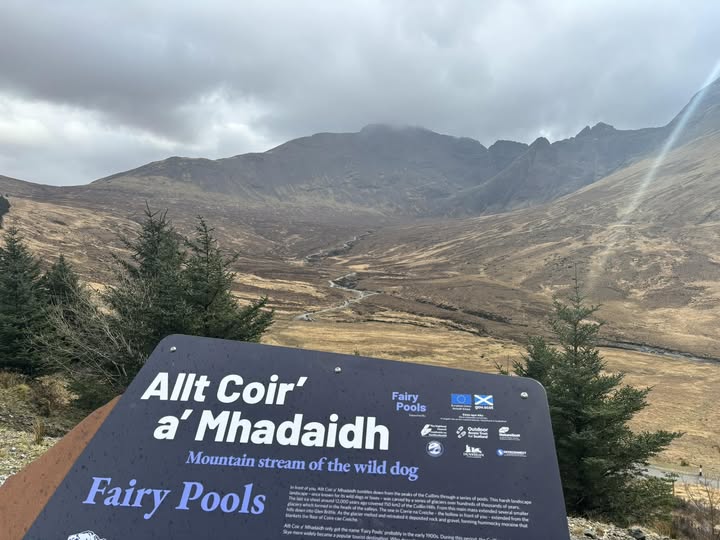
And of course there’s a ghost story. The Black Cuillins are haunted by the ghost of an outlaw named MacRaing ( which would be the sort of name you’d see on a mcmenu at a McCafe where they serve mini pavlovas, eh?). The infamous outlaw, said to have been Scotland’s last bandit, robbed and murdered a girl at the old well called ‘Tobar a’ Chinn’. When his shocked son threatened to expose him, MacRaing killed him too and put his severed head in the well. Anyone for a drink of Scottish well water?
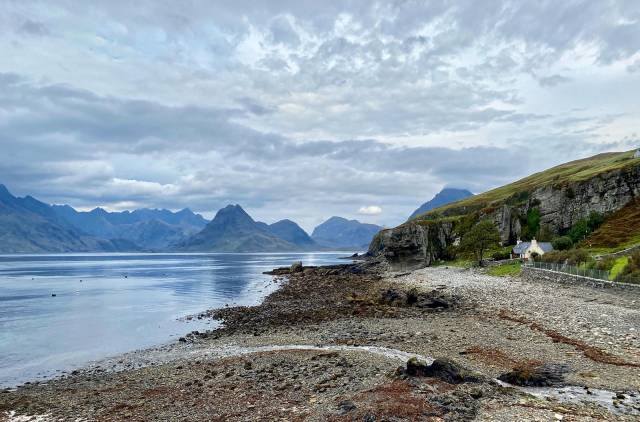
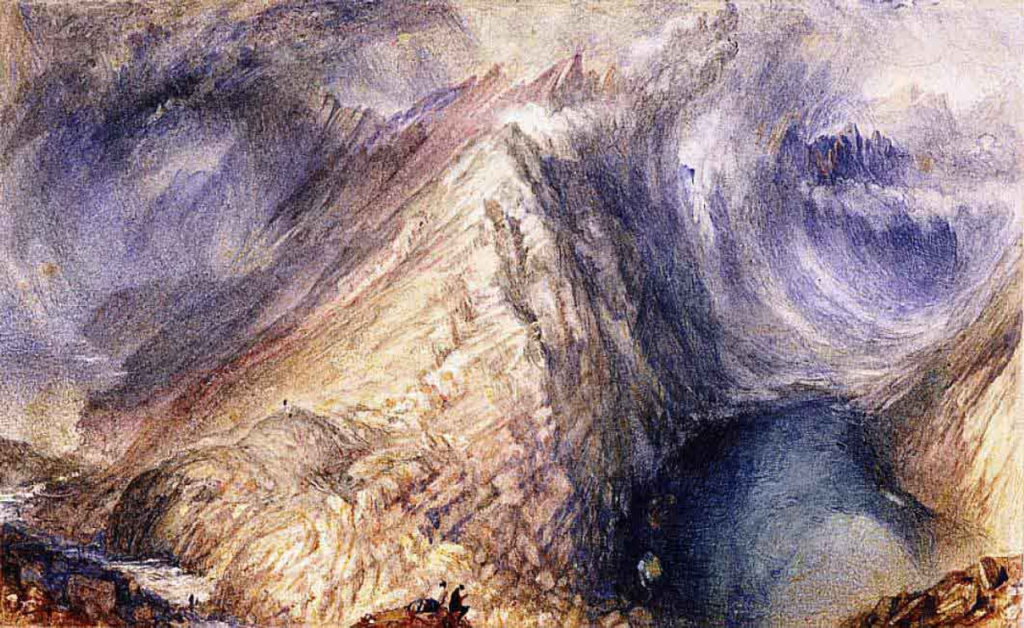
The 19th Century famous landscape artist, JW Turner painted, Loch Coruisk (above), the “cauldron of waters” where sea, mist and light mingle, a fresh water loch at the base of the Black Cuillins, which incidentally, like many of the lochs on Skye, has diatomite in it. Fishermen singing a local shanty on the lake provided the tune which Annie Macleod used to write the Skye Boat Song. The lake is also apparently home to the water horse known as a ‘kelpie’.
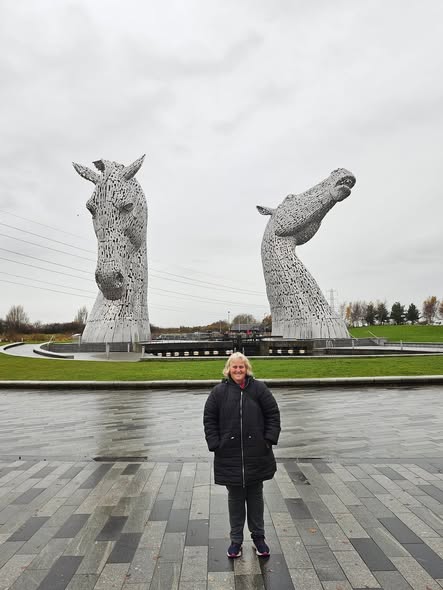
Kelpies are shape-shifting water spirits of the lochs and pools of Scotland. A kelpie appears as a horse, but is said to be able to take human form. Sometimes a kelpie is said to retain its hooves, hence the association with Satan, as described by our mate, Rabbie Burns in the poem ‘Address to the Devil’. You may be familiar with the spectacular sculptural representation of the kelpies at Falkirk. Not nice little horsies at all.
In beautiful Sligachan, with its rushing streams and bubbling springs, you can see the Cuillins, so this probably also counts as a Cuillinic ghost story: as far back as the 1940s reports were coming in of mysterious headlights which would come racing out of the darkness towards oncoming cars on the A87, between Sligachan and Portree, then disappear without a trace. The spectral car, a 1934 Austin, for the car-knowledgeable among readers, has been spotted numerous times over the years. One local policeman who saw the racing lights, tried to give chase, only for the car to vanish into thin air. It is claimed the ghost car is a result of a tragic accident that caused the driver, a church minister, to lose his mind with guilt.
We’re glad to get into Portree before that car thing happens. I would have liked to get a selfy with those lights though. Here’s a picture from in front of our waterfront digs (The Rosedale Hotel) instead:
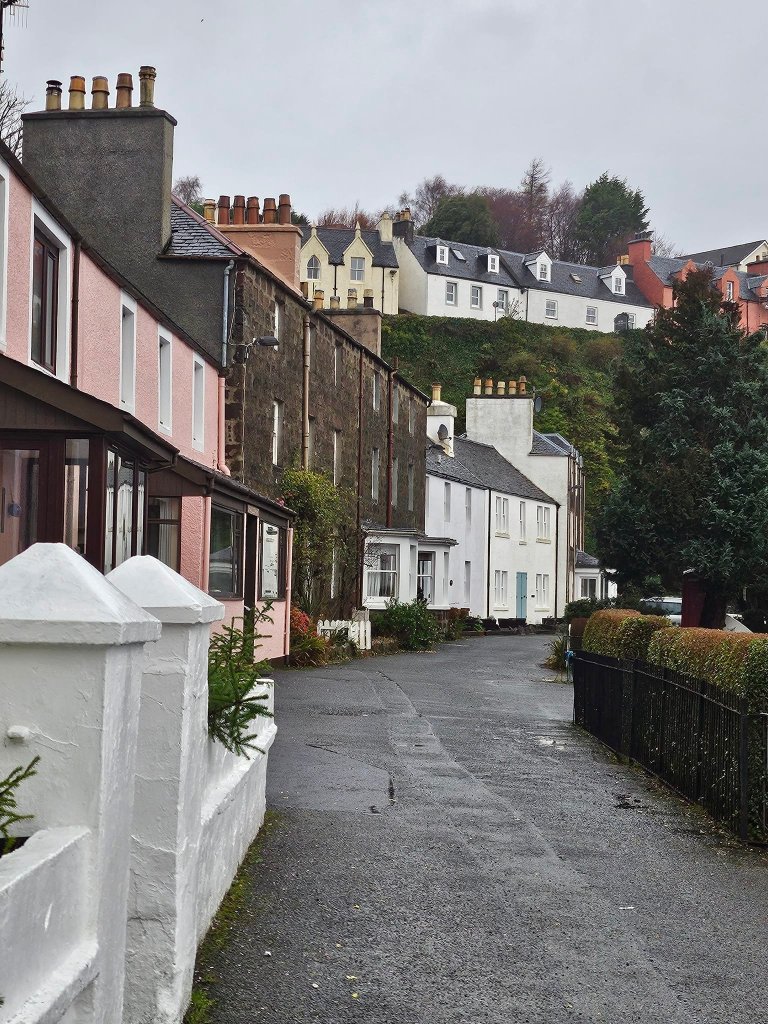
Legend says there’s a hidden cave in the Cuillins which is full of gold. There’s no guardian dragon, password or special trick to enter and you’re free to fill your pockets at will! However, every time you return for more, you lose a little more of your soul and become just a little bit more evil. Guess I’ll just keep buying Lotto tickets. This is most likely the only chance I’ll get to visit Skye.
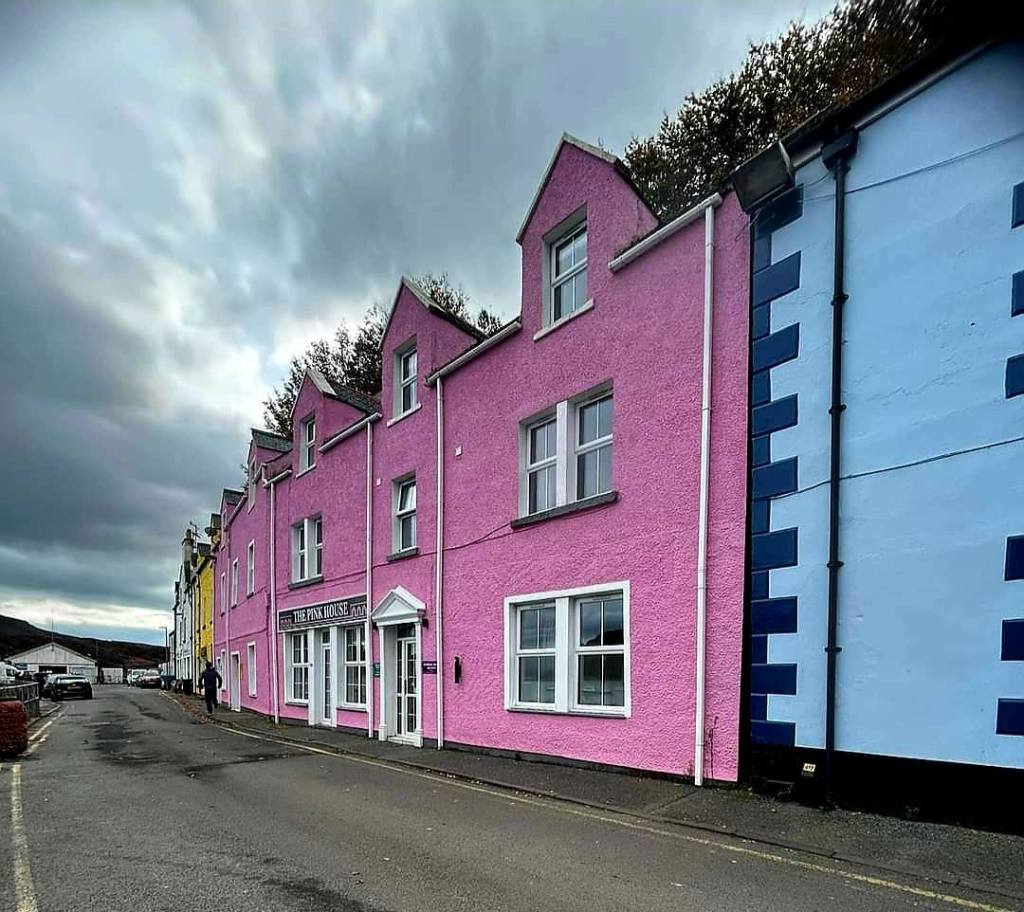
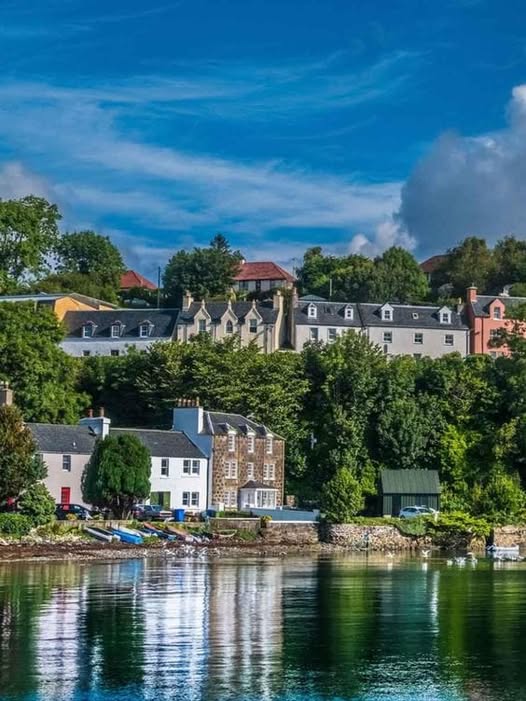
We park in the street right outside our ground-floor hotel room. The view is of the harbour and this row of multicoloured shopfronts, none of which are open in November. This ‘season’ thing should be a major factor in a decision about when to visit Skye. Here’s a picture from a brochure of the Rosedale Hotel in summer, but I’m glad we are visiting in the quiet season without the crowds, when things are softer and more authentic.
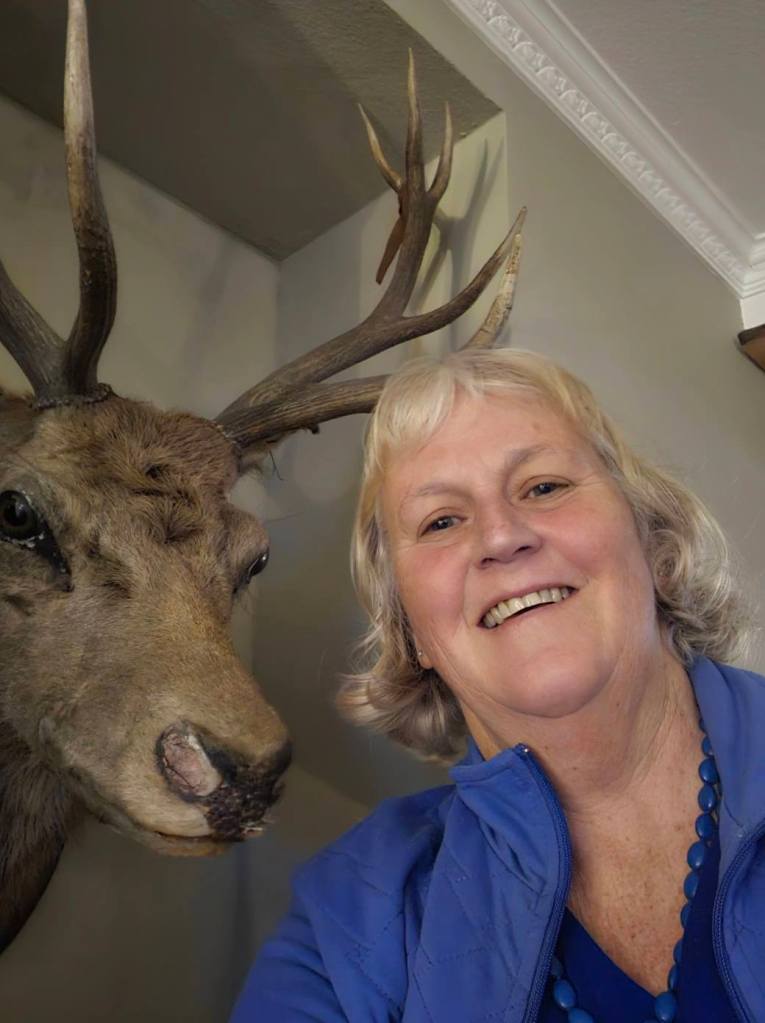
The hotel restaurant is open the first night we’re there, but then closes for the winter after that. The food is authentically good and the ambience is enhanced by the highland motif of taxidermy stags’ heads on the walls and some tartan soft furnishings. My brother enjoys the Skye Gold beer and I have Talisker whisky on ice. I took this selfy after enjoying the venison medallions:
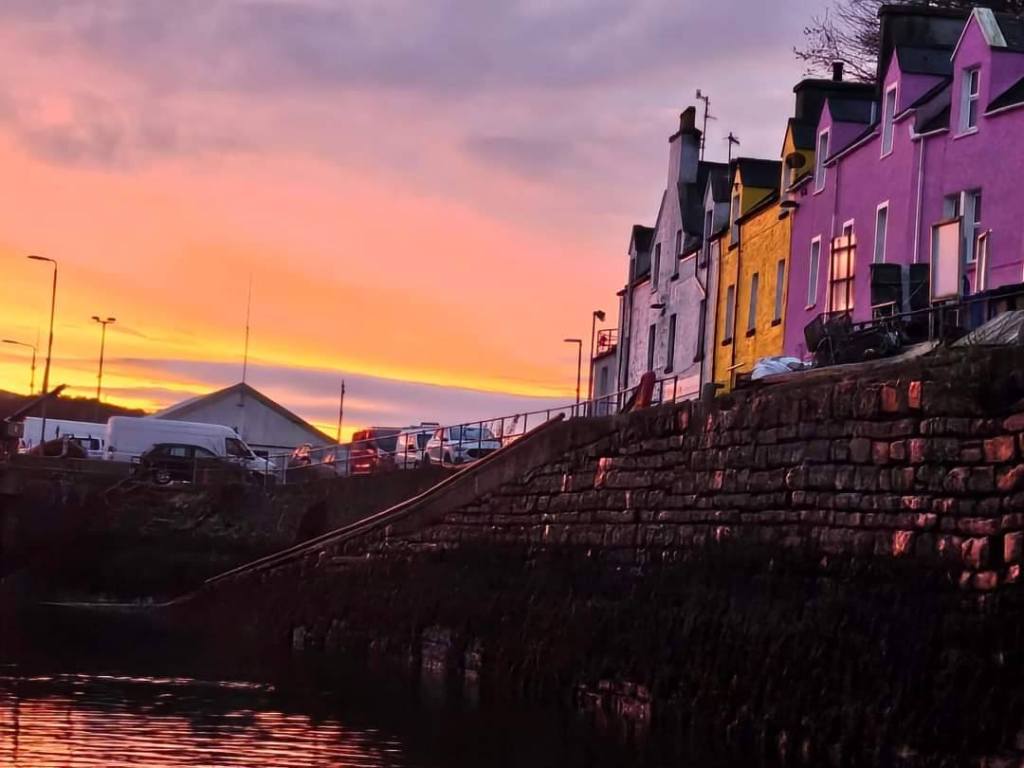
We wake to an amazing sunrise for our first day of exploring Skye and interpret it as the omen to do the Bucket-list family things first. ‘Red sky in morning, sailor’s warning …’ Rain was coming.
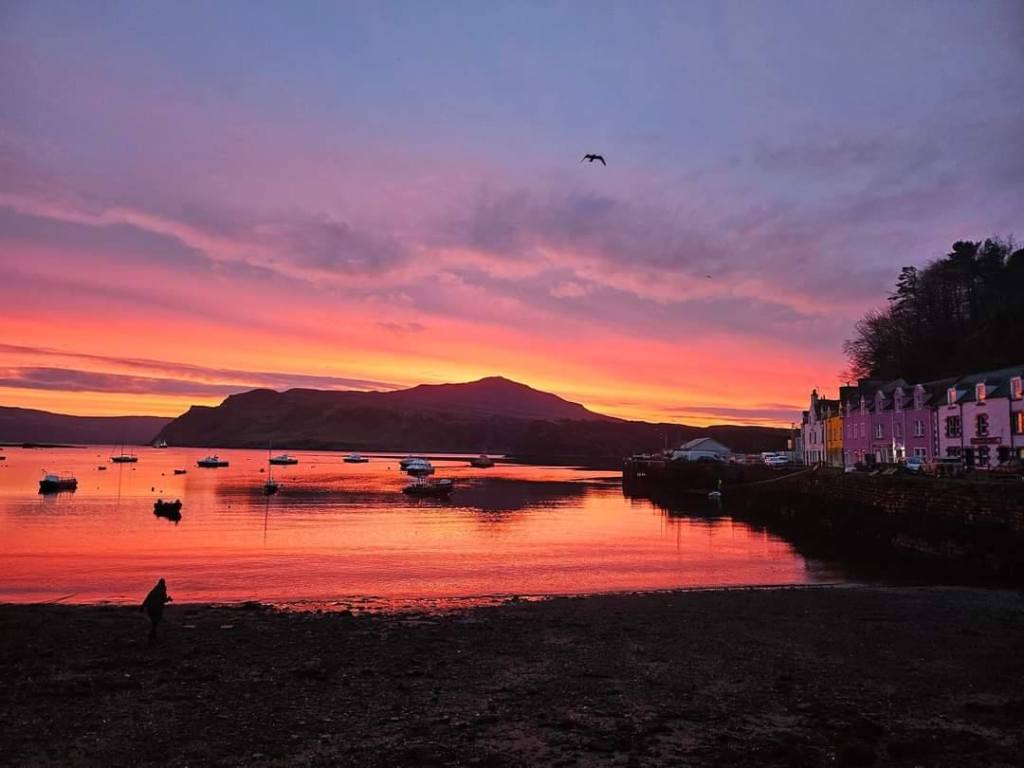
After a huge breakfast, we set off southward and turn once again at the crossroads just on the Portree side of Sligachan Hotel, heading towards Dunvegan.
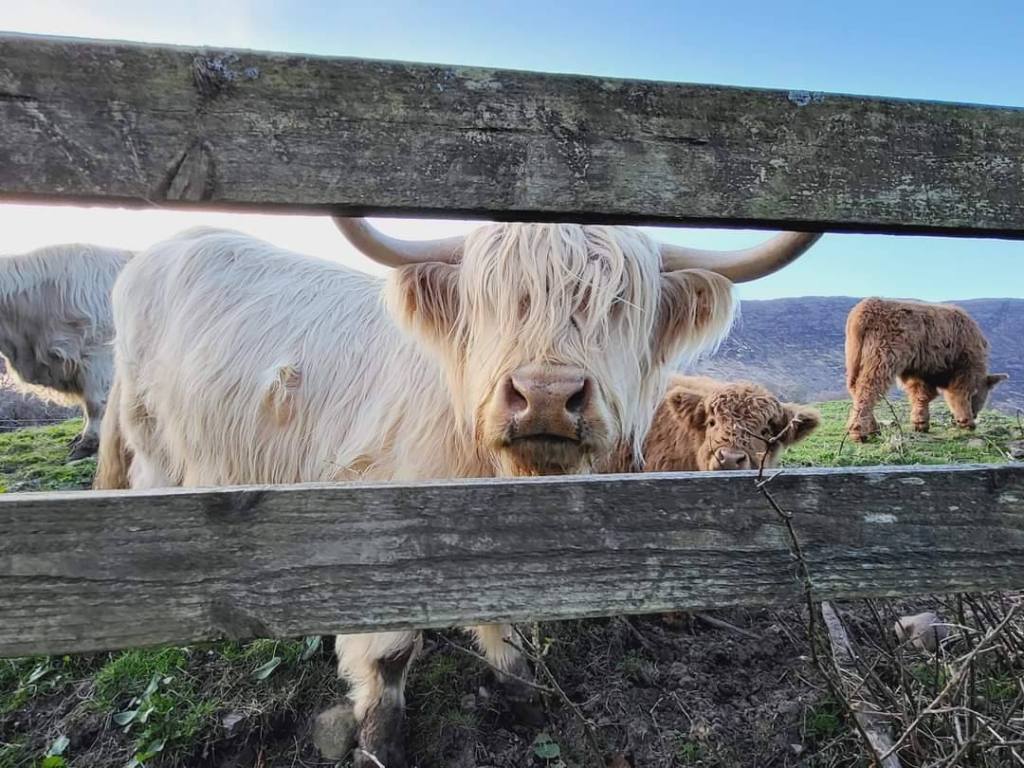
We see a wee enclave of what we’ve up to now assumed to be the mythical hairy coo in a very muddy paddock and stop for a cheesy photo opportunity. As you no doubt would too. The Scots word for cattle is ‘kyne’, just as a bit of trivia.
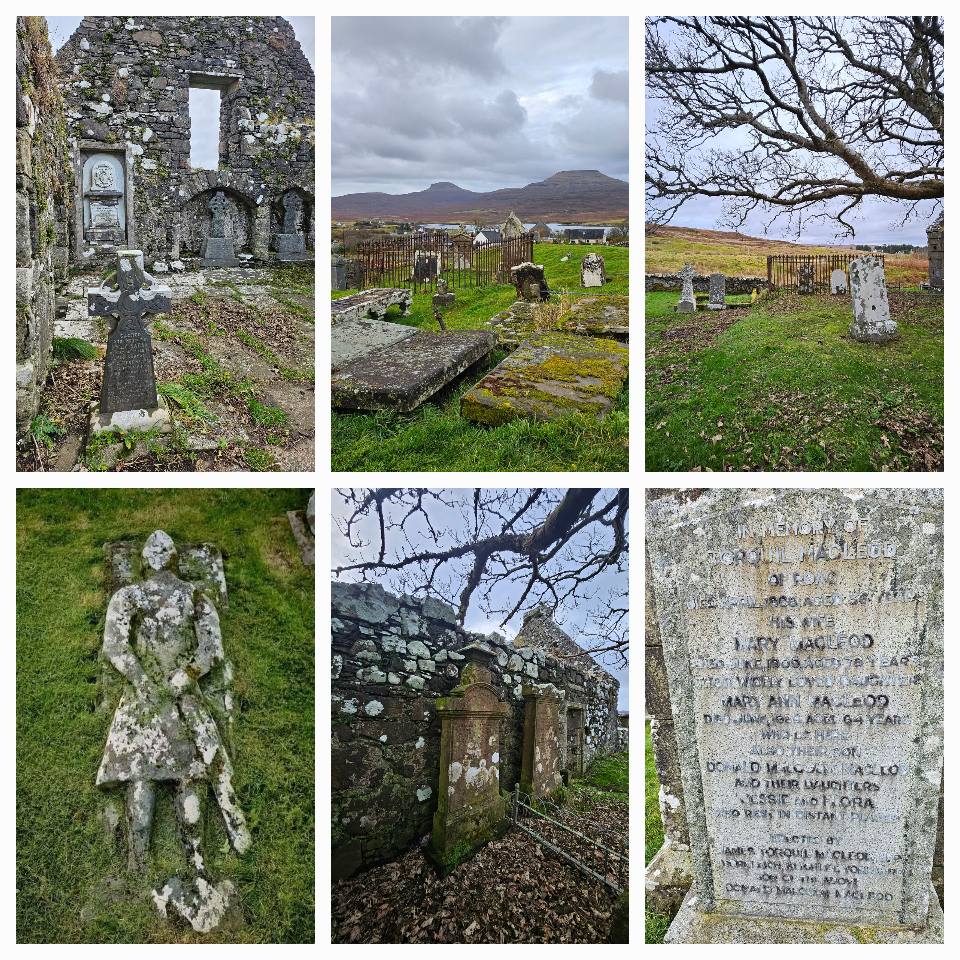
As we near the village of Dunvegan, we catch sight of the Dunvegan Cemetery up a hill to our right. It turns out a lot of the lairds of Clan Macleod are buried there; all in or as close to the ruined St Marys Church as they can cluster. Just outside the inner circle, are the graves of the Mackenzies, the pipers for the Macleod Clan and then we suppose that the other graves belong to other septs (associated families). Many of the inscriptions are illegible. The view out over the village, Loch Dunvegan and the two flat-topped mountains known as Macleod’s Tables, are well worth the climb to the graveyard, probably even if you aren’t a Macleod.
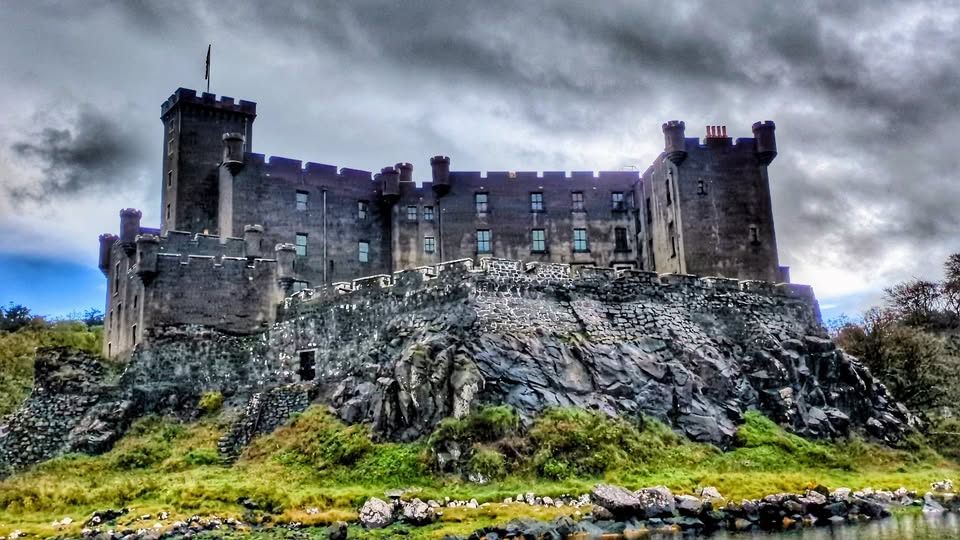
We push on towards Dunvegan Castle and are disappointed to discover that it closes from October to April and the front entrance is obscured mostly from view by orange scaffolding and yellow machinery. This is a photo taken by Torquil Macleod who is an author (also the name of a dude who, in 1960 is purported to have watched the Loch Ness Monster lounging on a beach for over nine minutes).
Catherina and Major Donald Macleod’s home was at Talisker House near Carbost, but they regularly fraternised with the Dunvegan mob. Catherina relates in her diary that she enjoyed the life of ‘the younger Mrs Macleod’.
It would have been nice to see the paintings of all the ancestors and more particularly the famous Fairy Flag which is claimed to have magical properties (in short, it grants three opportunities to save the clan’s bacon, but has already used two of them up in battles with the MacDonalds and when there was a fire at the castle), but my brother and I are not devastated to not get into Dunvegan, because it has undergone extensive renovation several times since then.
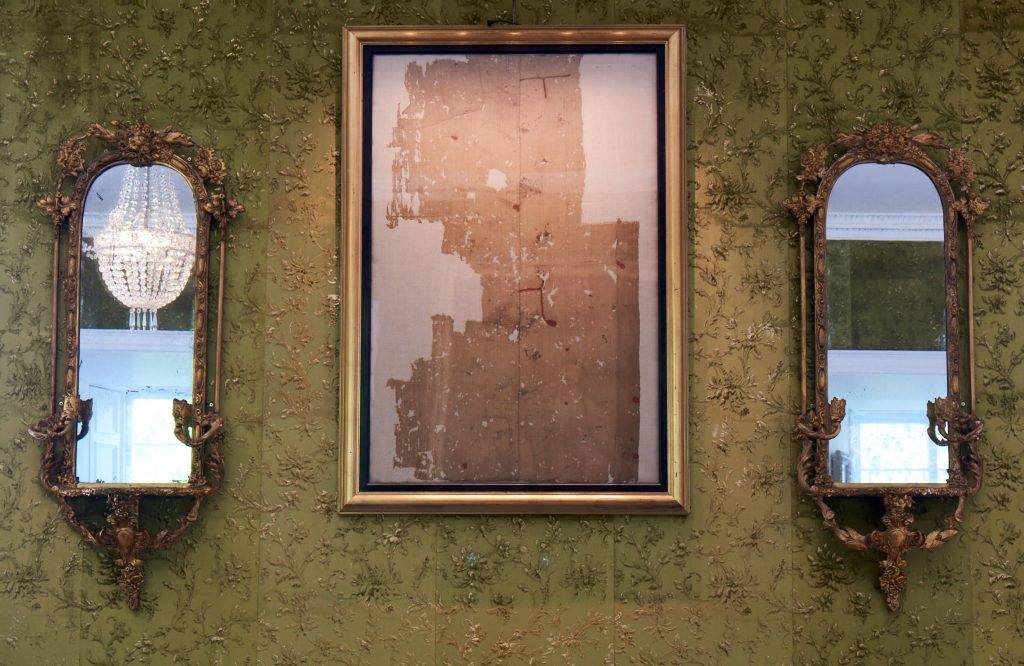
We follow a bush-track type road to a nearby promontory and have a good view back at the castle. I used AI to add the seals and the flowers into the picture because apparently, you can go on seal-watching tours in summer and the castle also has extensive beautiful gardens.

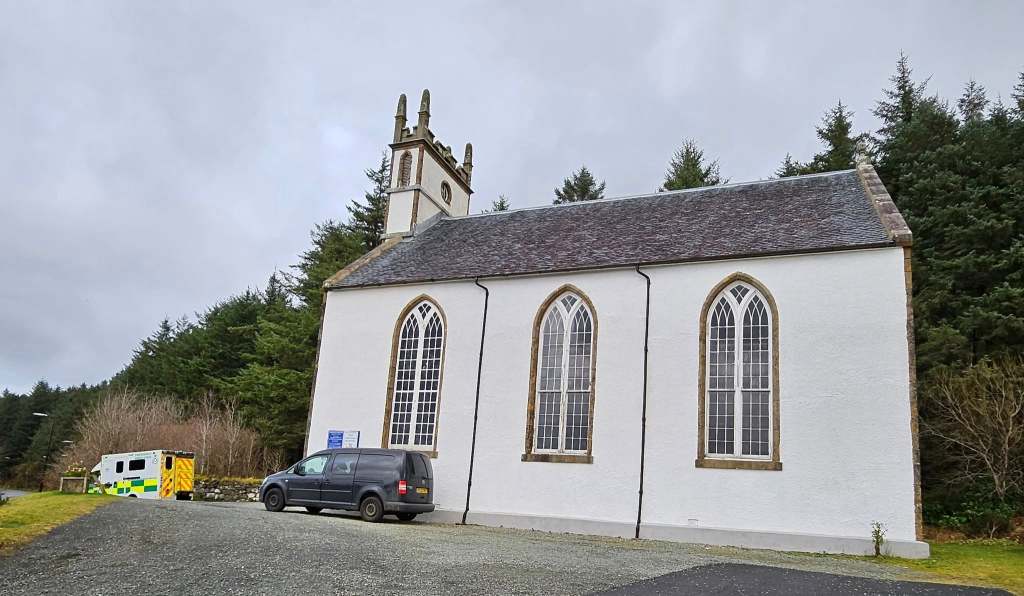
Back in the village, we stop to look at the local Church of Scotland, also known as Duirinish Parish Church. We note that some of the windows are painted on and ask a shop-owner in the next village about that. Apparently, windows used to be taxed. You’d think churches would be exempt, but the Macleod tacksmen have a reputation on Skye for being ruthless (and probably stingy Scots to boot).
The western peninsula of Durinish both sounds and looks like it escaped from a Tolkien novel. It is lonely and beautiful. The solitude and peace would be very compelling if we’d left ourselves time to enjoy it.
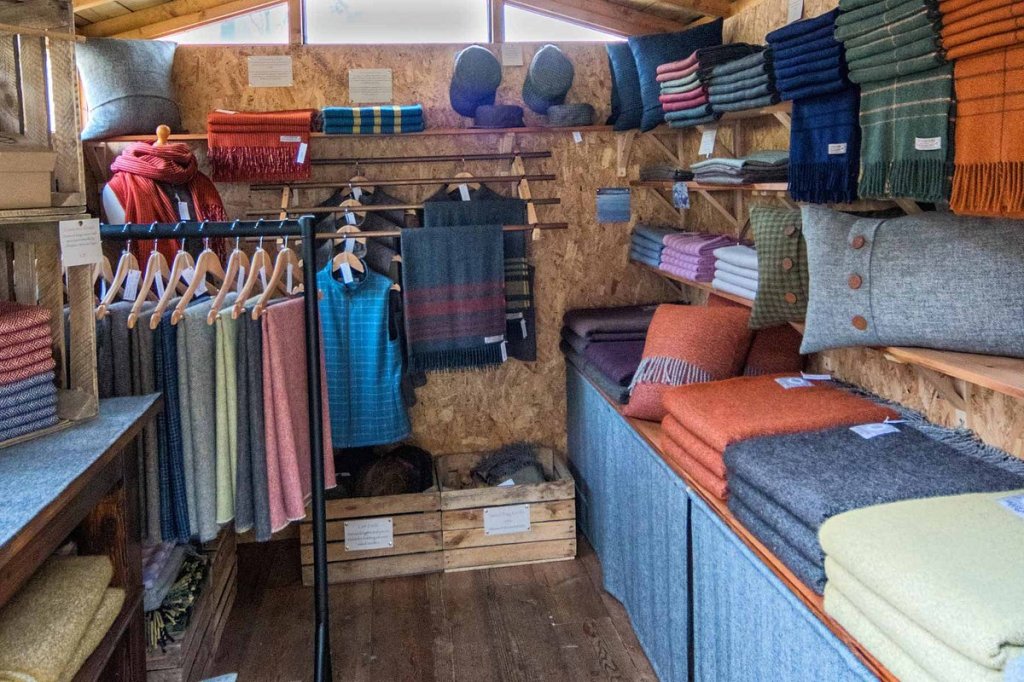
We stop in the village of Glendale. a wide and fertile township named ‘Valley’ twice— once from Gaelic (Glen) and once from Norse (Dalr). There’s a cafe with tables out but it isn’t open. My brother’s wife has asked him to buy some wool from Scotland, so we enter the Skye Spinners and Weavers’ shop. There are some beautiful things in there, but most of the wool, except that from local alpacas, is apparently imported.
At some stage, the wheels fell off the Talisker Macleod juggernaut. In 1820, Major Donald and Catherina Macleod with five children and twelve servants, set sail from Carbost on the steamer, ‘Skelton’ bound for van Diemen’s Land. Child #6, Donald Junior, was born three weeks into the 2-month voyage and the children all got measles and were quarantined off Capetown. Geez, that Catherina was resilient!
We decide to head for Carbost where the Talisker Distillery is now located (because, the man at the distillery tells us, the Macleods would not let the MacAskills build a wharf at Talisker Bay and they had to swim the barrels of whisky out to where ships could get in. The helpful man at the brewery is a wealth of information.

We refrain from any sampling, but buy a few wee souvenir drams for later and ask the helpful man for directions to the original Talisker. We have an amazing beef-pie lunch overlooking Loch Harport from an awesome wee coffee bothy across the road. It also has toilets.

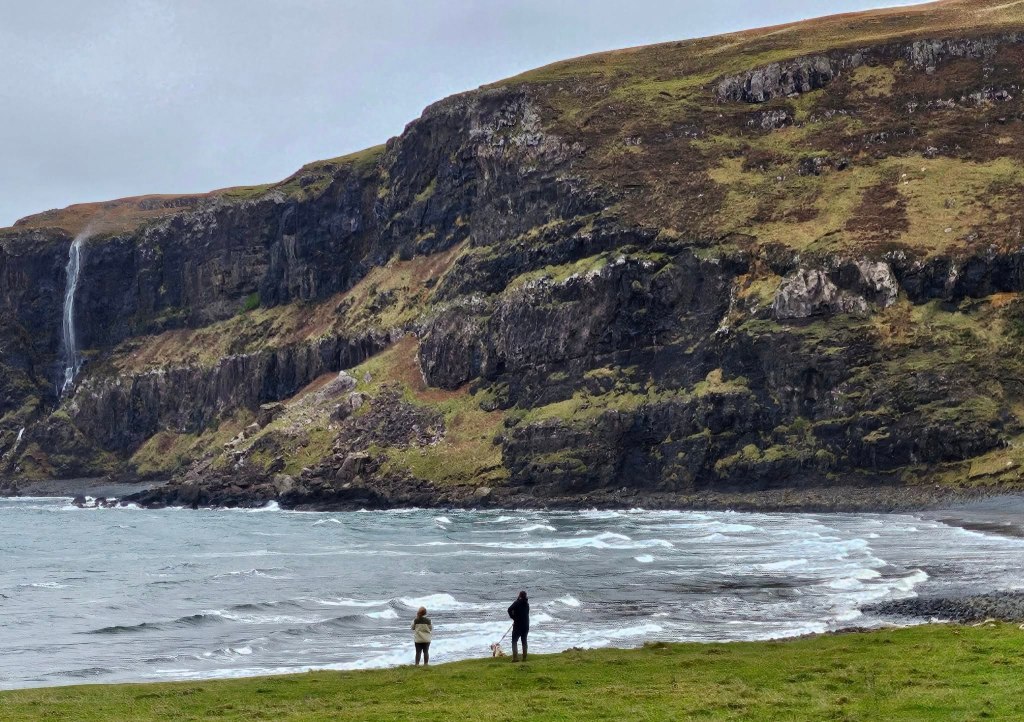
For a long time, since I started researching Catherine, I have wanted to stand on Talisker Beach and watch the wild Atlantic waves pound the black pebbles. Today, I achieve that dream. The photo is me blissing out. The road to Talisker Beach is literally a ‘sheep track’. It’s narrow but features waterfalls and snow-capped mountains.
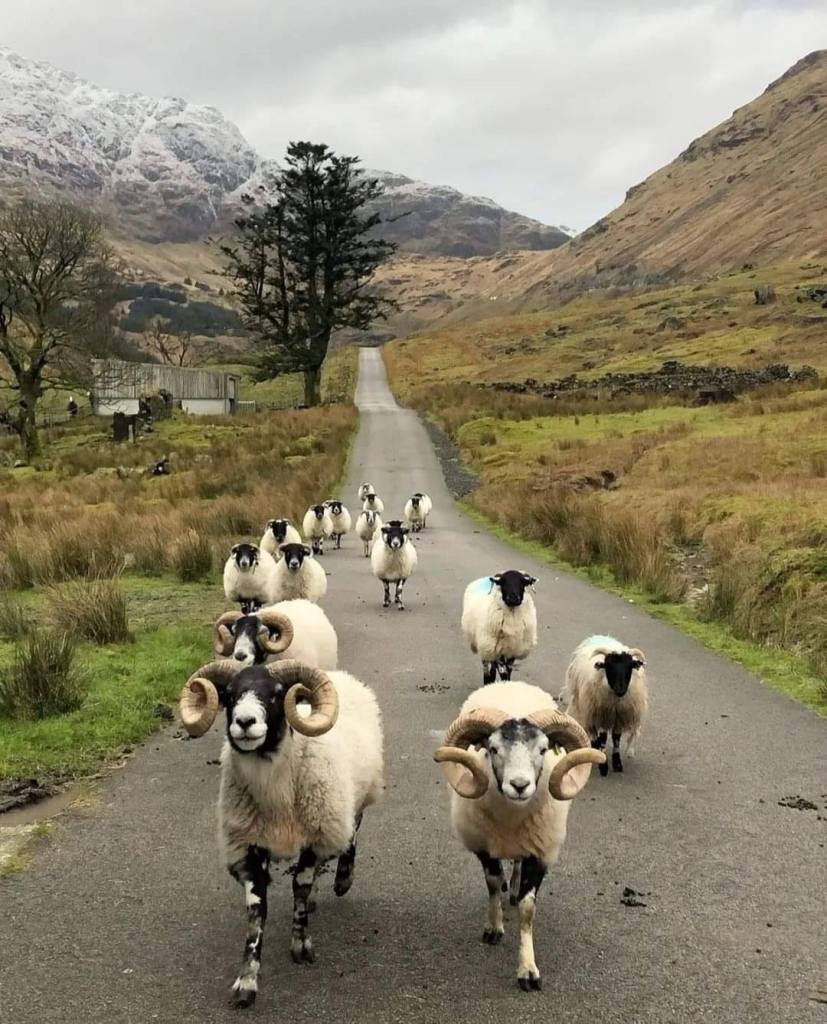
It’s a 2-mile rather muddy walk to Talisker Bay from where we have to park the car in a quarry, up a shaded lane and then RIGHT PAST Talisker House — through its backyard so to speak.
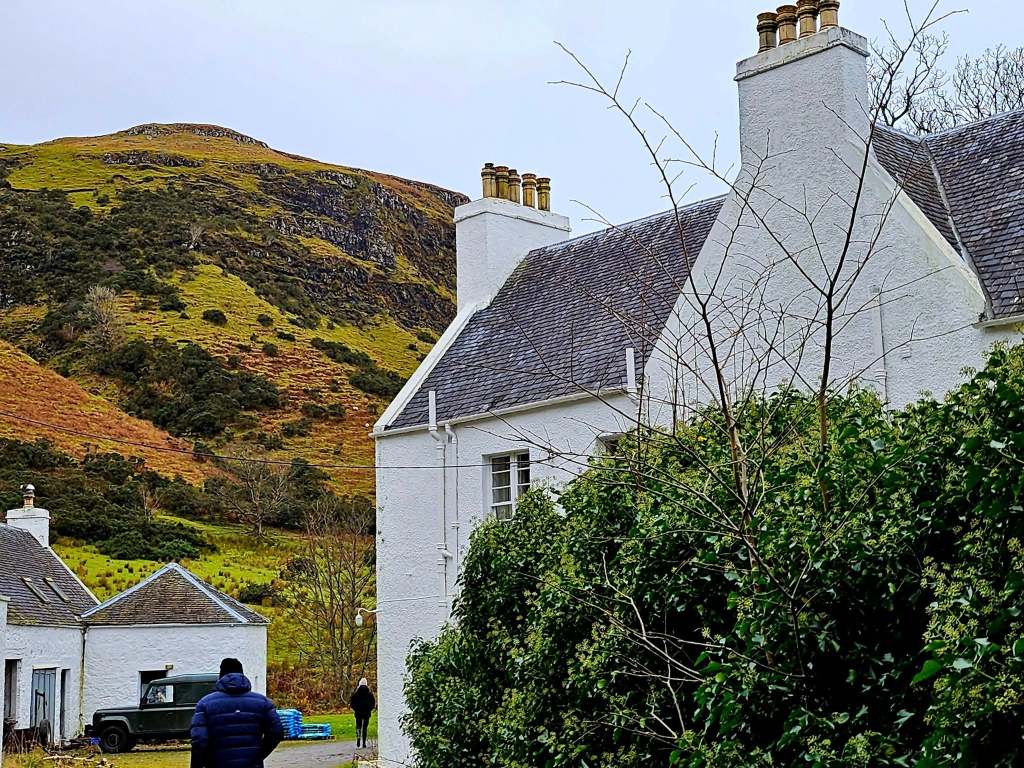
The feeling of knowing that once your ancestors lived in this building is unbelievable. Past the house, we cross a burn and then join other walkers moving down a wide glen with sheep grazing over peat.
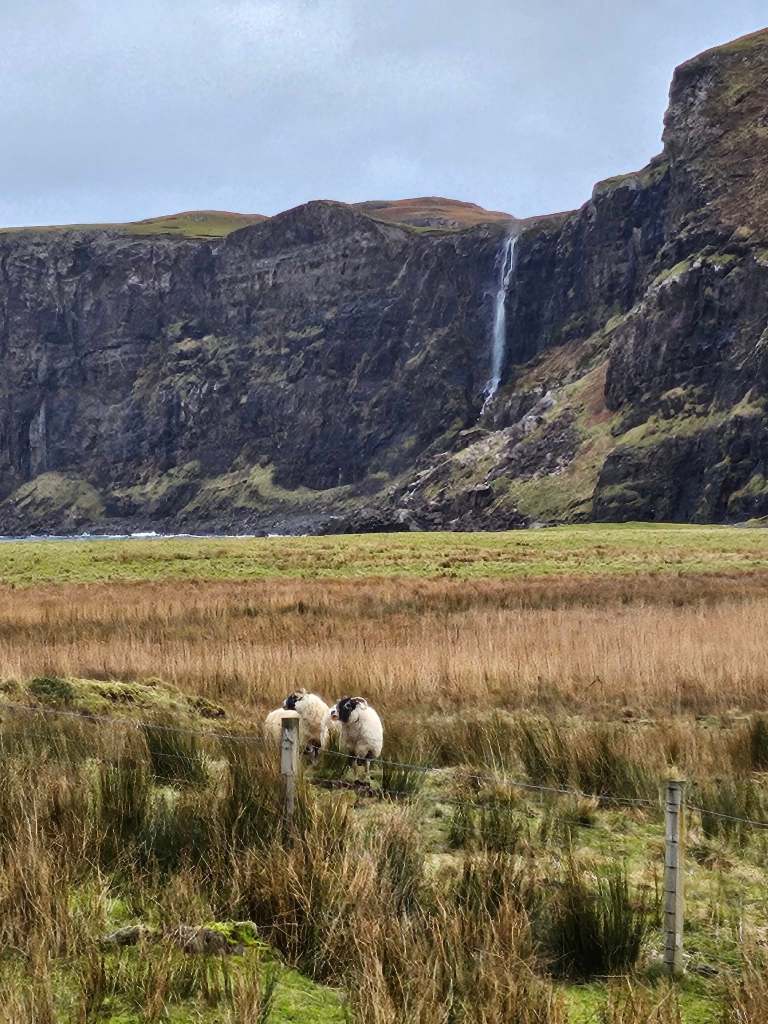
There is a waterfall at one side of the beach and a seastack at the other. I am so lucky!!!! My heart is full.
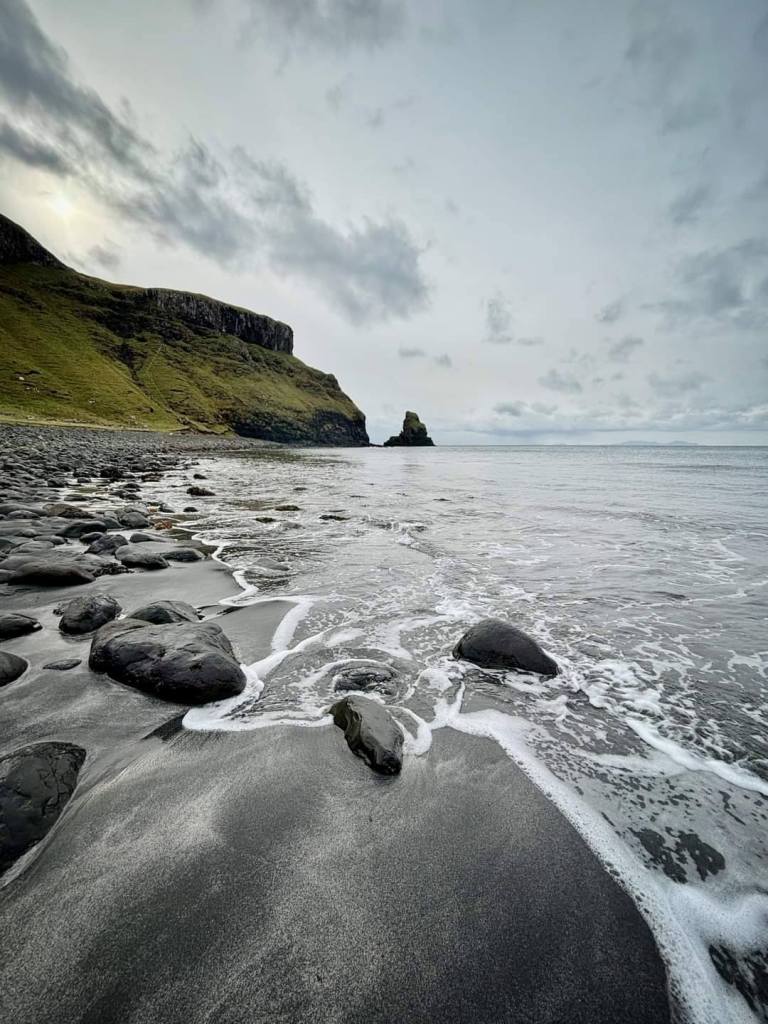
Other people are walking dogs and enjoying the bracing air. We have quite an extensive chat to one couple before returning to Portree. We have pizza at Caberfaidh Bar and Restaurant. Mine has mussels and some sort of saltbush, maybe from the sea, on it. Unique but delicious.
The famously unsettled weather can make Skye foreboding one moment, tranquil the next and, at other times, utterly mystical. Most frustratingly, it ruined our second planned day of sightseeing.
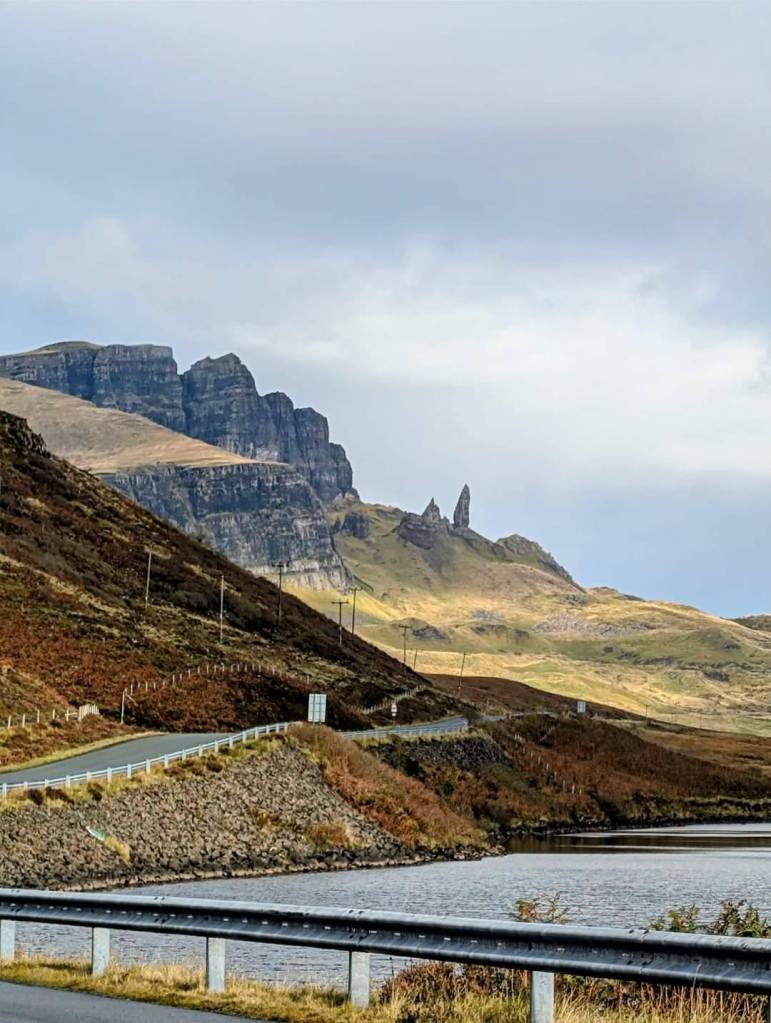
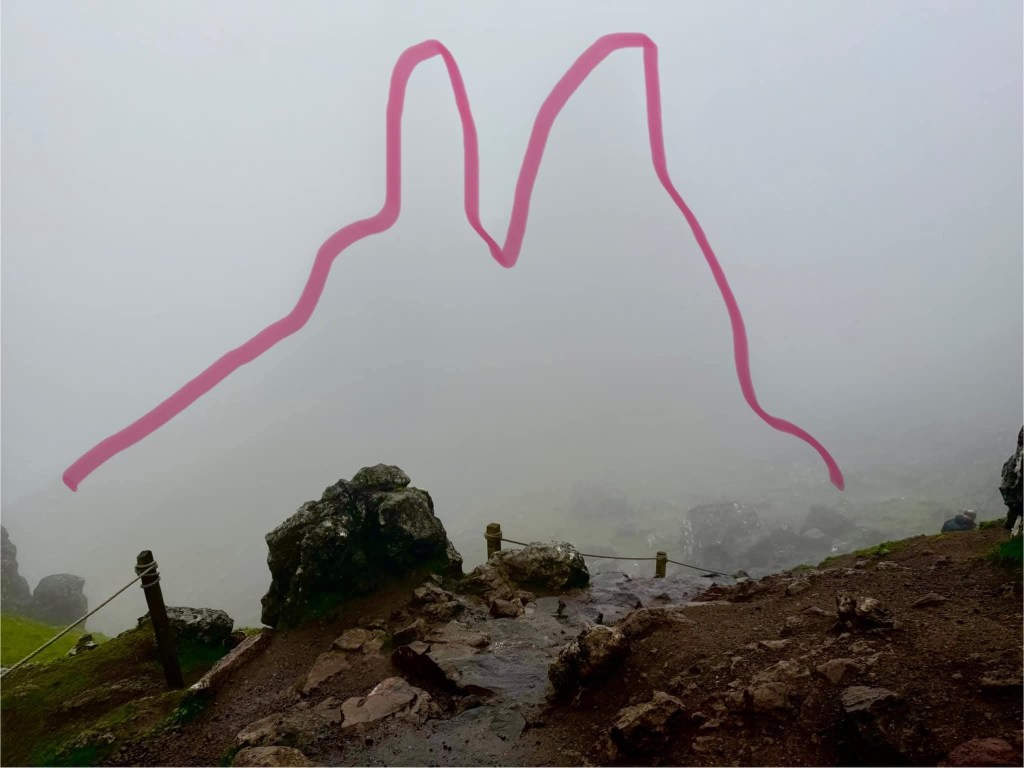
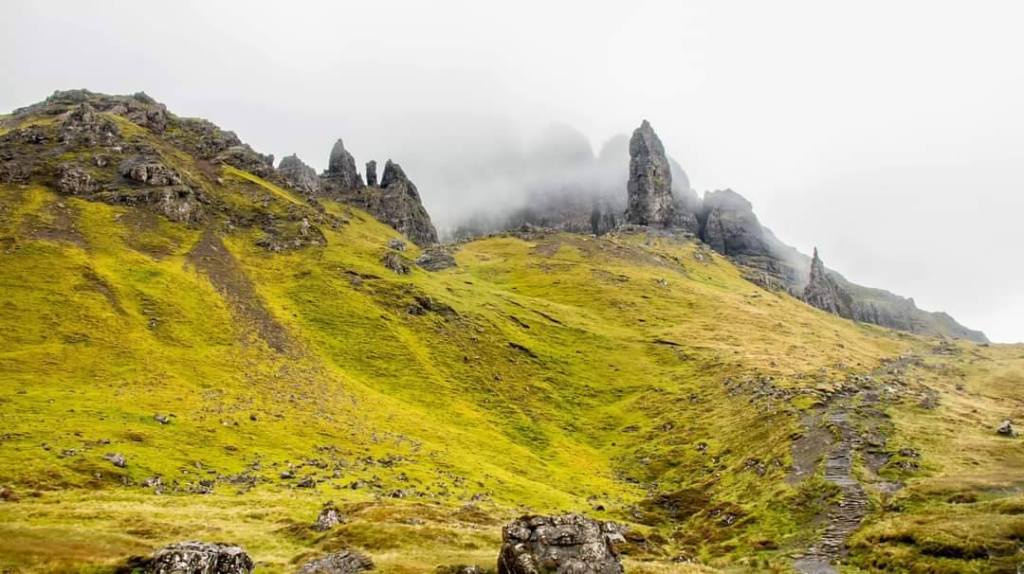
Our first stop on our loop up north around the Trotternish Peninsula is to be The Trotternish Ridge and The Storr — a rocky, chewed-looking hill that presents a jagged jawline to the Sound of Raasay [visible from carpark but better seen with a short hike, according to tourist info]. That’s when the skies opened and our view looked like this (Second photo is courtesy of Shutterstock):
The rain clears momentarily and we duck in to see Kilt Rock (a giant is believed to be buried there) and Mealt Loch and Mealt Falls, about 24 Kilometres from Portree. The carpark is just off the road. Water from the loch plunges over a cliff which appears to have pleats in the basalt, giving Kilt Rock its name. The wind’s incredibly strong up on the cliff. It’s blowing the rain back into the sky and hum-whistles eerily through the guardrail pipes.
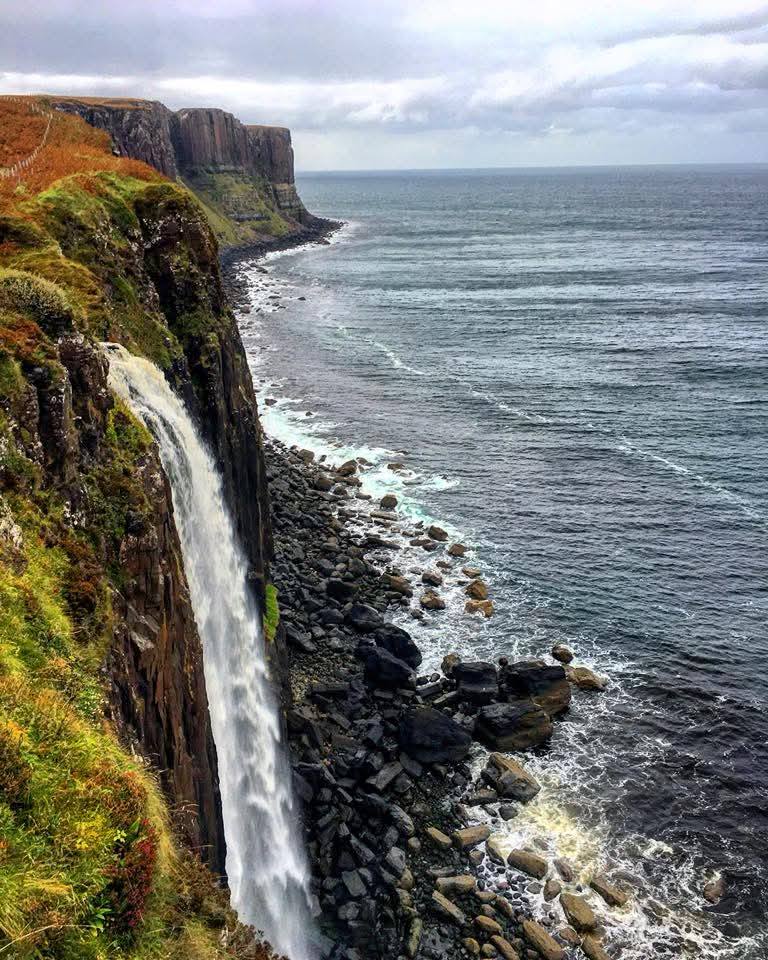
Our planned next stop is Corran Beach at Staffin, a rustic village surrounded by rolling green hills. Apparently. Forty-three years ago (1982) a scientific paper written by a young student revealed for the first time the presence of dinosaur fossils on the Isle of Skye.
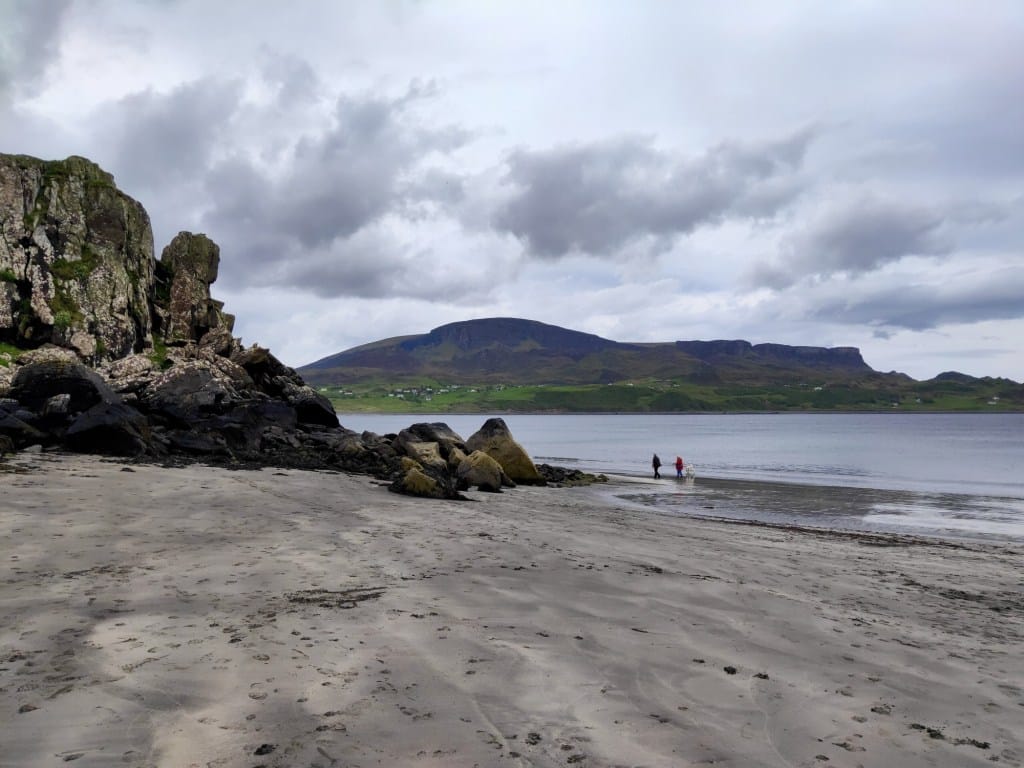
Since then, a whole host of discoveries have been made including a “dinosaur disco” made up of dozens of footprints, a bone from an ancestor of the T-rex and the fossils of winged reptiles called pterosaurs.They are from the Middle Jurassic, which was between 162 million and 175 million years ago. That period is not well represented on a worldwide basis, and that is why there is international attention. Very few places in the world have that age of rock on the surface.
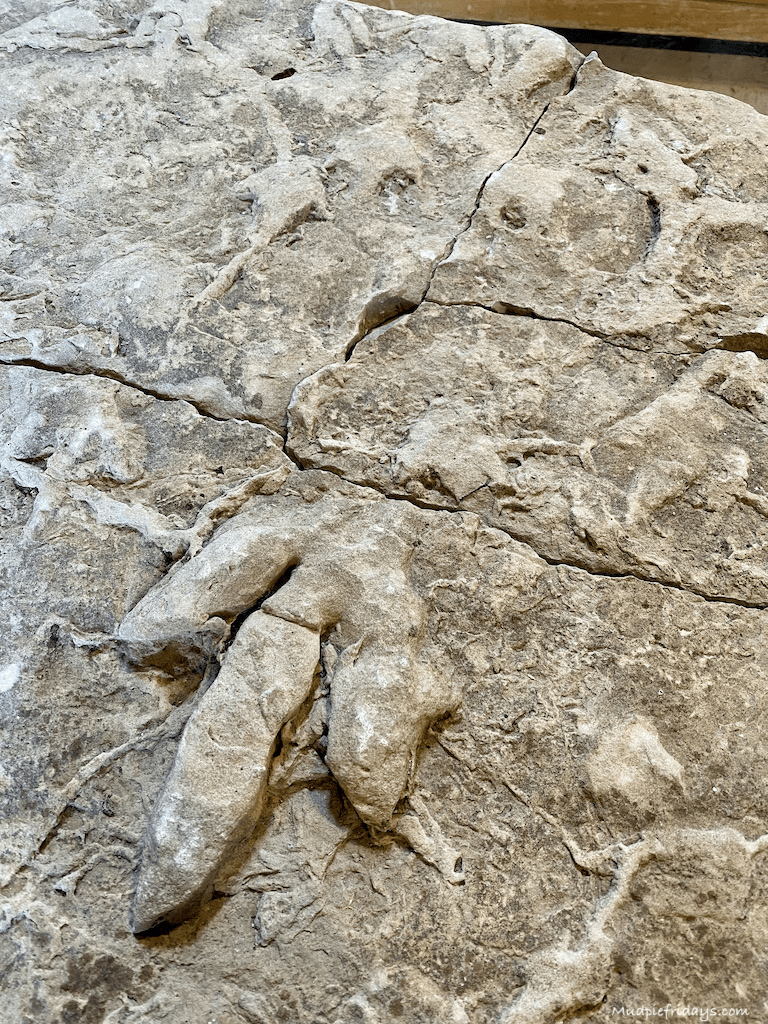
The Corran Beach is the most accessible place on Skye to see dinosaur prints. The rain is torrential so we sadly give it a miss and steal the pictures from Trip Advisor.
The Dinosaur Museum also is closed.
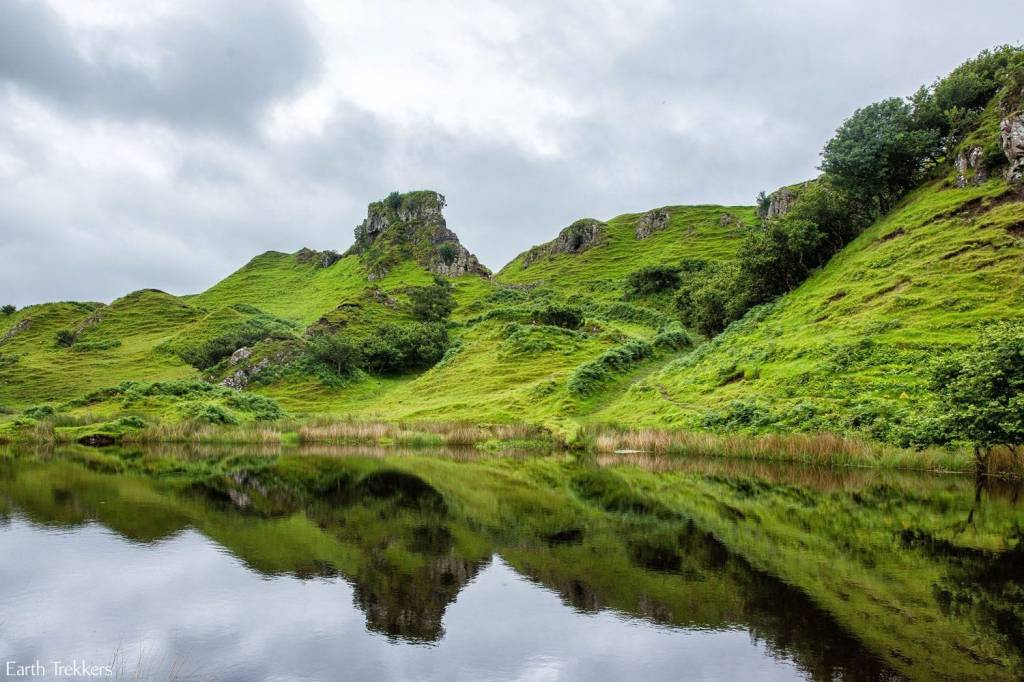
The Quirang, a massive landslip of half a mountain range into a glen, leaving jagged and towering crags raking the sky, is well signposted but the road through it and the Fairy Glen to Uig is narrow and not for the fainthearted. Once used to hide cattle from Viking raiders, this astonishing rock formation has more recently been the location of choice for numerous films; “Stardust”, “The Land that Time Forgot” and “Highlander” among them. Unfortunately we can make out very little except what is directly in front of us, so photos are stolen from the Earth Trekkers site.
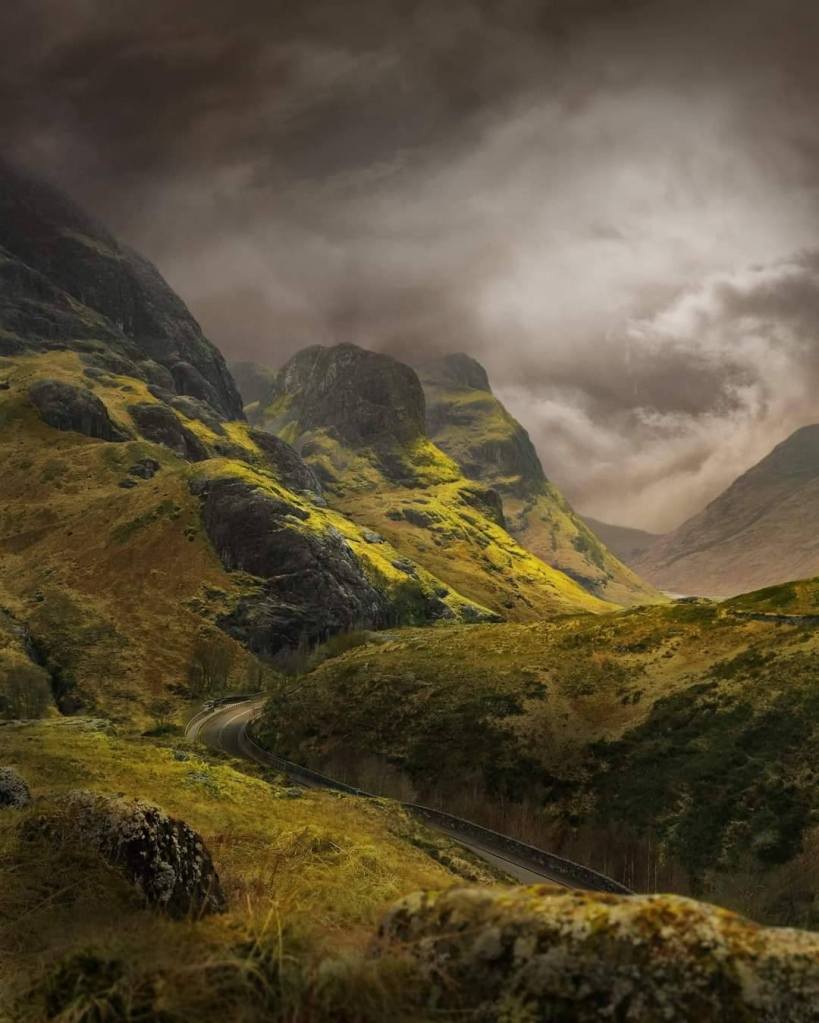
The township of Uig, which seemed to have numerous lunching venues when we googled, is almost in shutdown. It’s the departure point for ferries to Uist and Harris. Cafes, tea rooms, restaurants, pubs — it was exciting trying to decide till we got there and nothing—not even the public toilets down near the ferry terminal, is open.
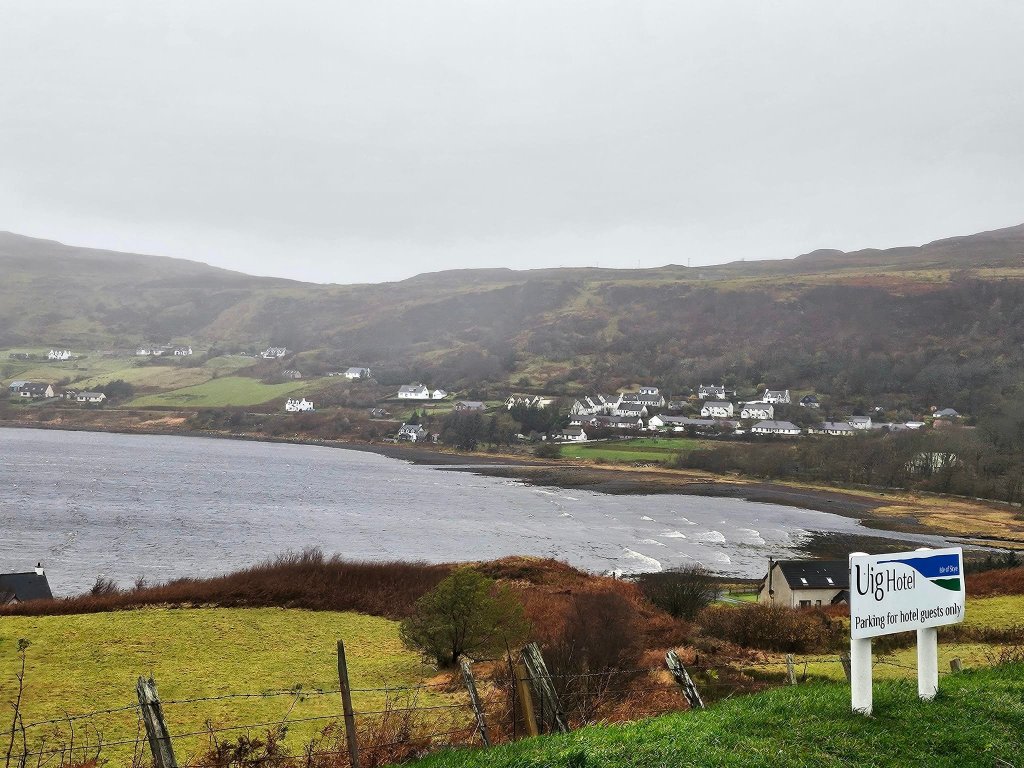
Uig would be a good place to go on a diet, but eventually we find a post office (!), selling Yellowtail Chardonnay (from Australia), postcards and delicious sausage rolls.
Kilmuir, in northern Skye, is the town that was cited when I studied Linguistics as having the highest proportion of native Gaelic speakers in the world. Our final intended port of call is Kilmuir Graveyard where Flora MacDonald, who rescued Bonnie Prince Charlie after the failed Jacobite uprising at Culloden is buried. A friend took this photo on a nicer day:
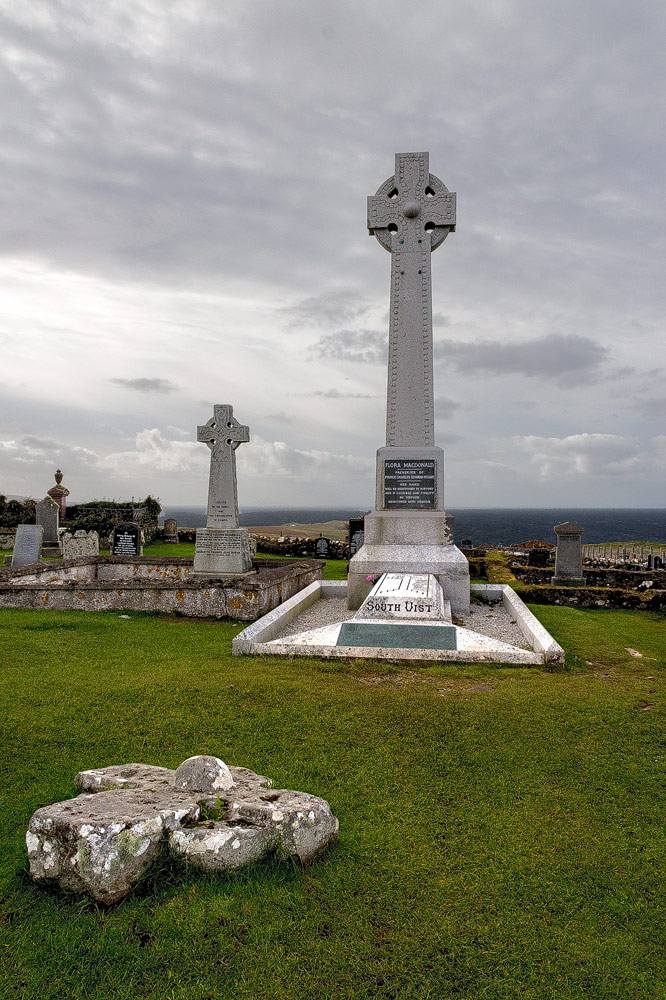
We owe Flora respects seeing that it was John Macleod of Talisker who dobbed her into the British troops (yes, the Macleods hedged their bets and didn’t go to Culloden, preferring to wait and see which side won). However, my brother has done enough driving and non-sightseeing in the rain, so reluctantly, we return to Portree (by the way from the Norse or Gaelic for ‘King’s Port’). Here is an interesting link to a site with more information about Kilmuir Graveyard:
https://www.undiscoveredscotland.co.uk/skye/kilmuirgraveyard/index.html
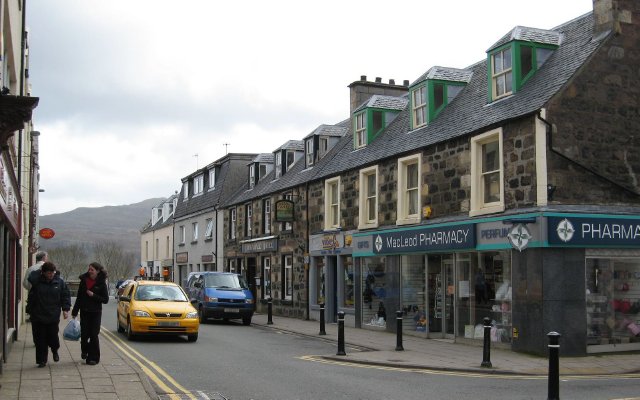
Back in Portree, we visit a few shops clustered around a central square. Most souvenir shops and cafes are closed, but we feel some proprietary vibes towards the chemist shop:
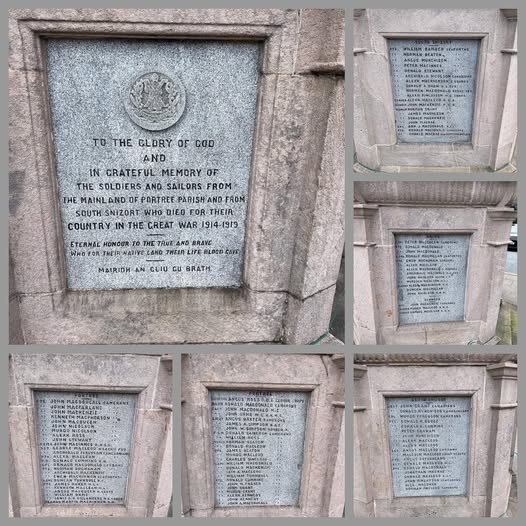
The War Memorial in Somerled Square is also a rather poignant reminder of the Remembrance Day just past, surrounded by soggy red poppies and bearing the name of more than one Macleod. A thin white column headed by a small seated lion is set on an elaborate six-sided stone plinth.
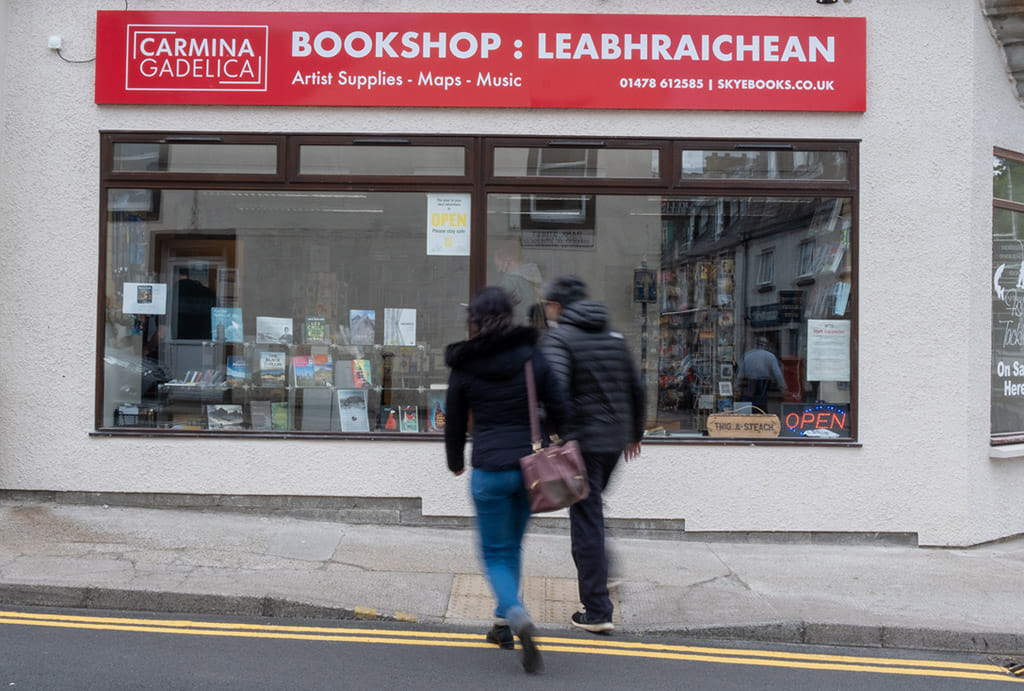
The rain’s coming in fast again, so we find a well-stocked bookshop just up the hill from the harbour and we waste a couple pleasant hours and quite a few pounds. ‘Carmina Gadelica’, a Latin name, can be translated into English as ‘the Song of the Gael’. It has an extensive range of local-interest books and stationery. I breathe again the bibliosma of old story books and it is easy to imagine that out there, amongst the analogues of old castles and burying grounds, waterhorses are rising from the lochs to snatch children, squid are capable of attacking a policeman and Bonnie Prince Charlie indeed impressed his good looks upon an unborn child without leaving his royal carriage (a similar phenomenon to me taking photos without leaving the car ).
The Isle of Skye is pervaded by a subtle spiritual atmosphere. It is almost palpable, even as we stand moistly under a tarped pergola near the Harbour Fisho, just around the corner from our cosy hotel room, and listen to the locals banter with the proprietor.
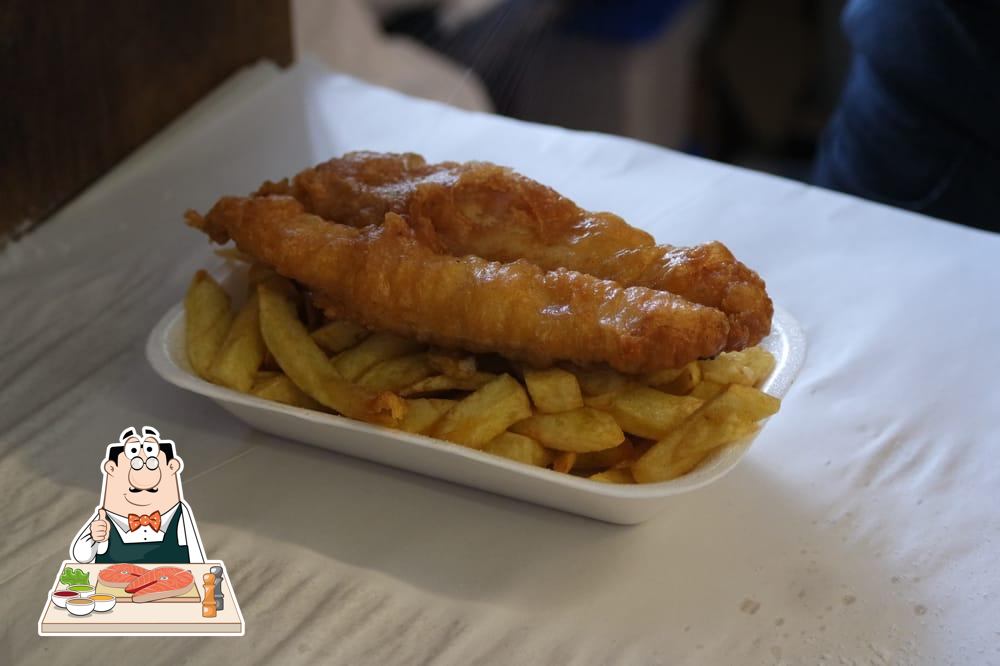
Wind-driven rain and the smell of the sea in the material air lend credence to the ghostly something in the air of the imagination. The Isle of Skye is Scotland at its most Scottish. The land of my people.

 Margaret R Kelly
Leave a comment