36 Hours in Reykjavik: The Cool Capital
“Greenland is actually white because it’s full of ice,” my 3rd Grade teacher said, “And Iceland is actually green!” Then she stood in front of the chalkboard, smug and self-satisfied, as we broke out the Lakelands. It’s a widespread fallacy perpetuated by the experiences of summer visitors.
It is in winter when the crowds have gone, and the ‘Arctic hotspot’ vibe goes into hibernation, that Iceland lives up to its name. Daylight’s a fleeting visitor and it can be cold and windy and snowy and rainy, with no puffins or whales to watch, and little chance of riding the Icelandic horses. However, its southern shores are slightly more temperate than up north, and there are potentially Northern Lights and an ice-covered landscape which is always, jaw-droppingly beautiful.
We booked for an early January departure on a package tour, but if you are in a group and someone is confident driving on the ‘wrong’ side of the road and in snow, hiring a car and using the capital city, Reykjavik, as a base for day trips would be a cheaper alternative in winter. Research budget-friendly accommodation with car-parking away from the city centre if pursuing this option.
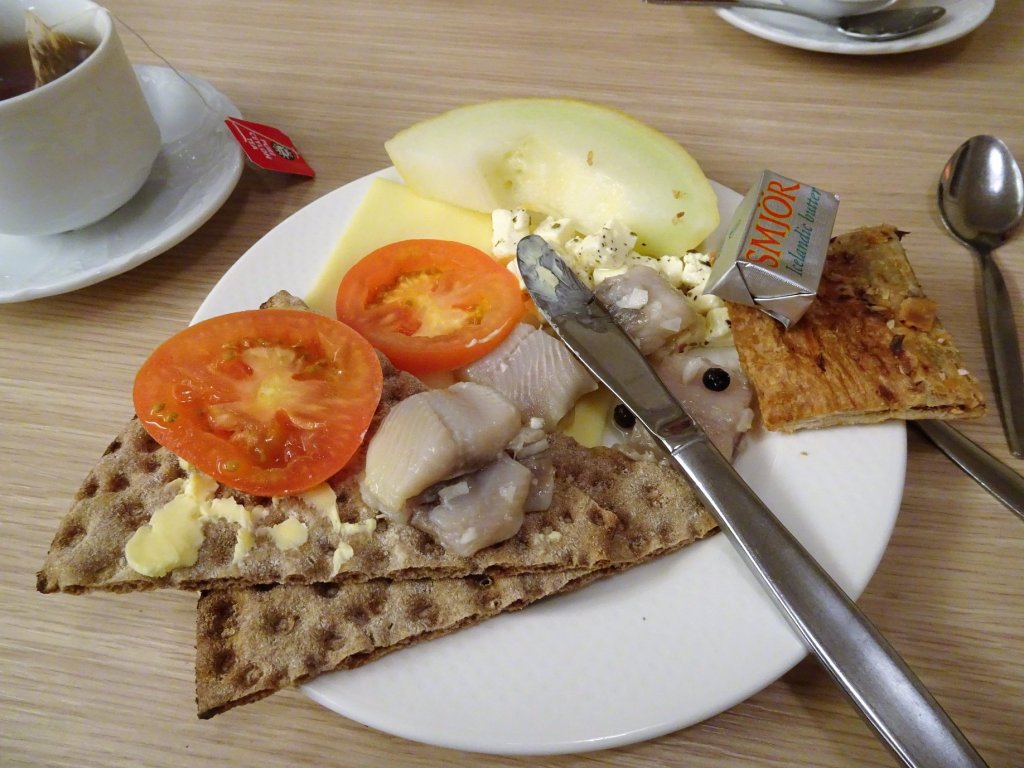
We snag a soft, pink January morning for our day of exploring Reykjavik. After a Nordic breakfast of ‘Skyr’—a tangy crème fraiche/yoghurt-from-heaven— and cardboard flatbread topped with a smear of ‘Smjor’, greenhouse tomatoes and pickled artichokes and herring, my friends and I wave one of our number off on her excursion to the Sky Lagoon, a geothermal luxury spa retreat near Reykjavik which provides virtual experiences, such as conferences overlooking the Eiffel Tower or relaxing in a cozy ski lodge. Another friend is jetlagged and fuggy, so the remaining three of us set out for a day on the town.
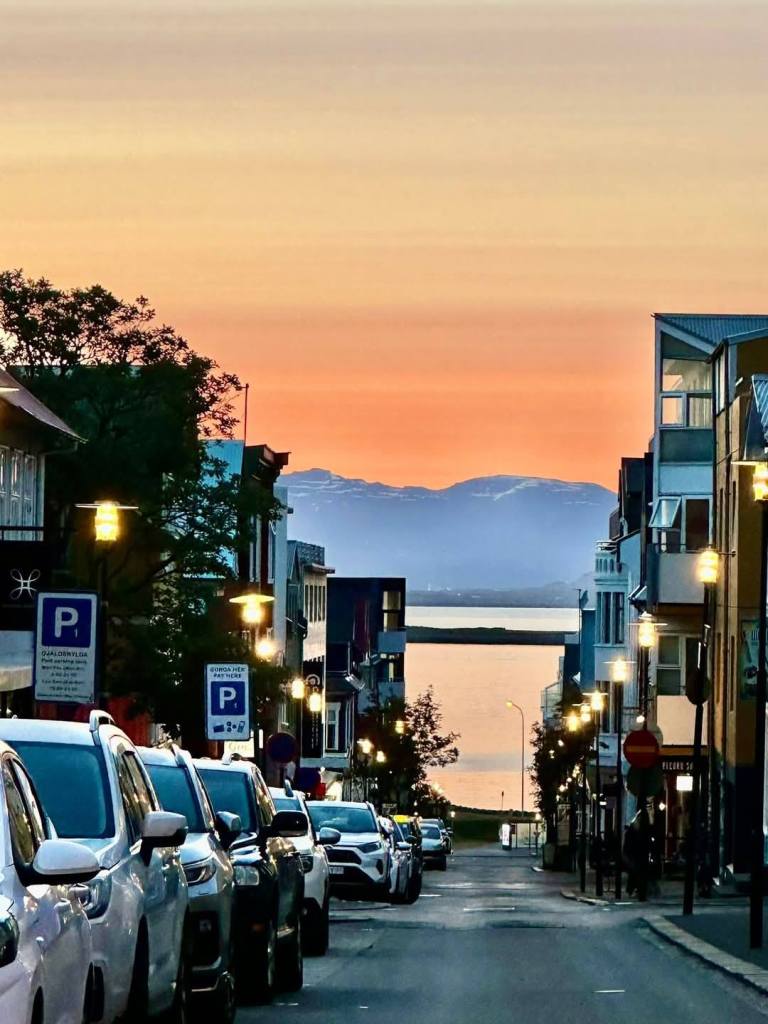
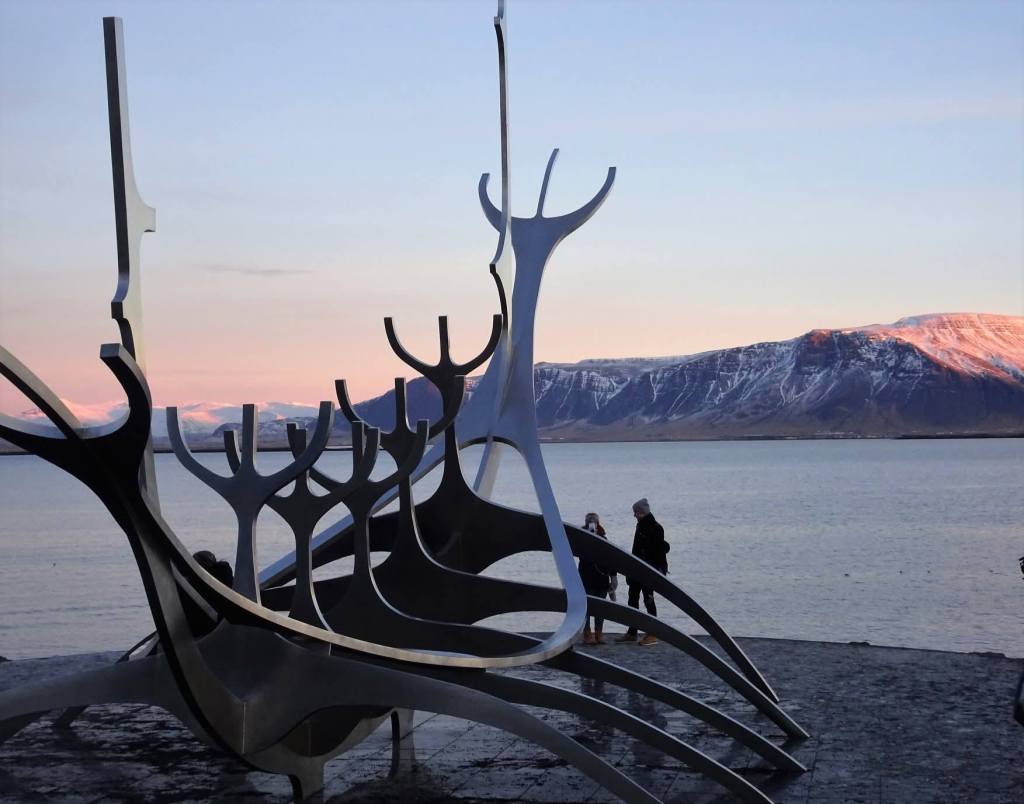
We wander to the waterfront to absorb the mild moistness of a cold, crimson dawn near the photogenic ‘Solfar’ (=Sun Voyager) sculpture. It symbolises hope and discovery. There are public buses, but Reykjavik’s a walkable city. It has character if explored on foot—-the tough northern kind that doesn’t take any touristy nonsense. Lingering Christmas decorations are understated and not at all gawdy. There’s little security and a minimal police presence. Nothing points to fear or violence. Even on a subsequent summer visit to Reykjavik, when tourists outnumbered locals, I felt safe.
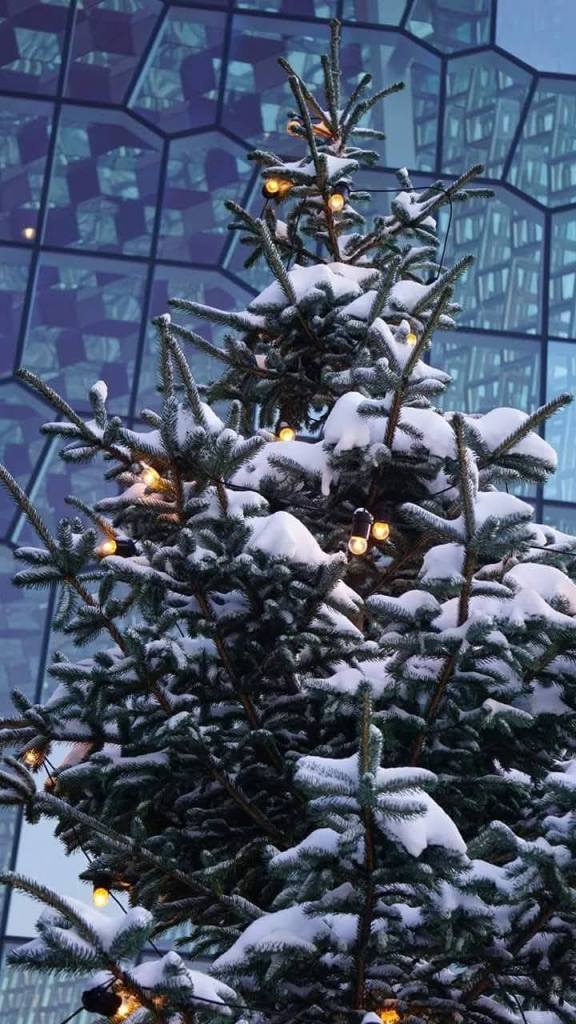
We stroll along the harbour and look up in awe at the eye-catching Harpa Concert and Conference Hall with its dramatic glass façade made of quasi-basalt which reflects the light like a kaleidoscope. There’s a preponderance of poodle-owners amongst the passers-by. Icelanders seem always willing to answer a question about their city or culture in impeccable English. They claim to believe in elves, trolls and ghosts – the hidden people living in the lava fields. But perhaps this is a way of explaining a history of natural catastrophes and loss.
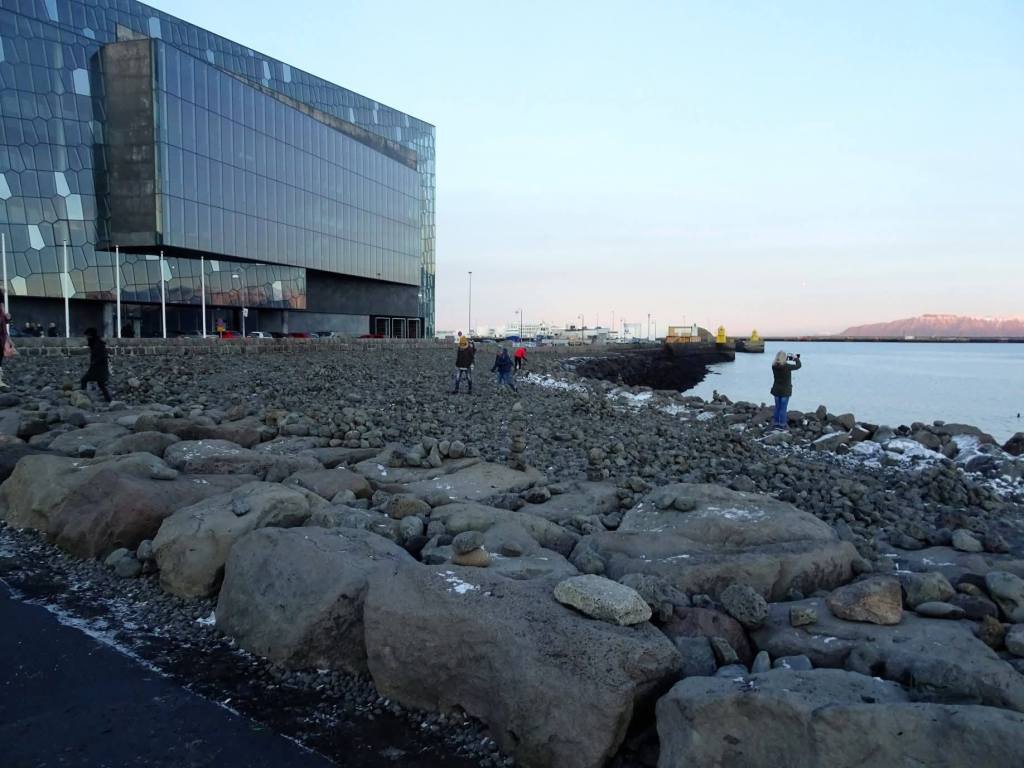
Harpa, hosting its first concert in May, 2011, ‘resembles the volcanic crystalline structure of basalt and looks to be rising from the water’, a lady walking an Icelandic Sheepdog informs us proudly. Of course it does; after she tells us.
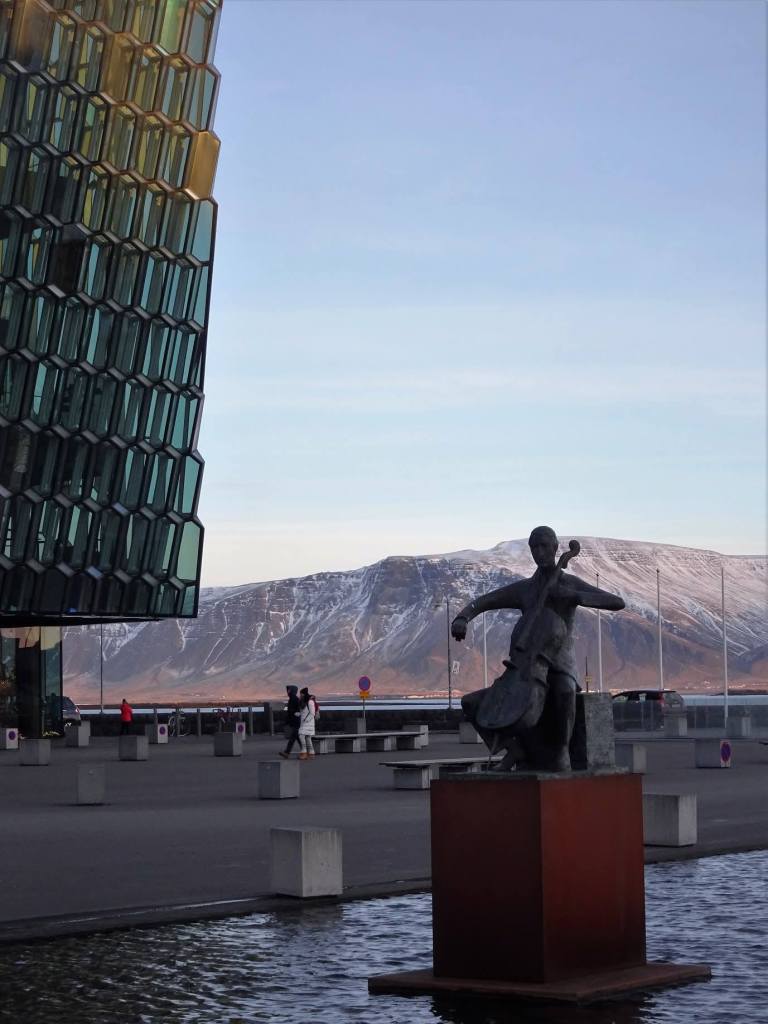
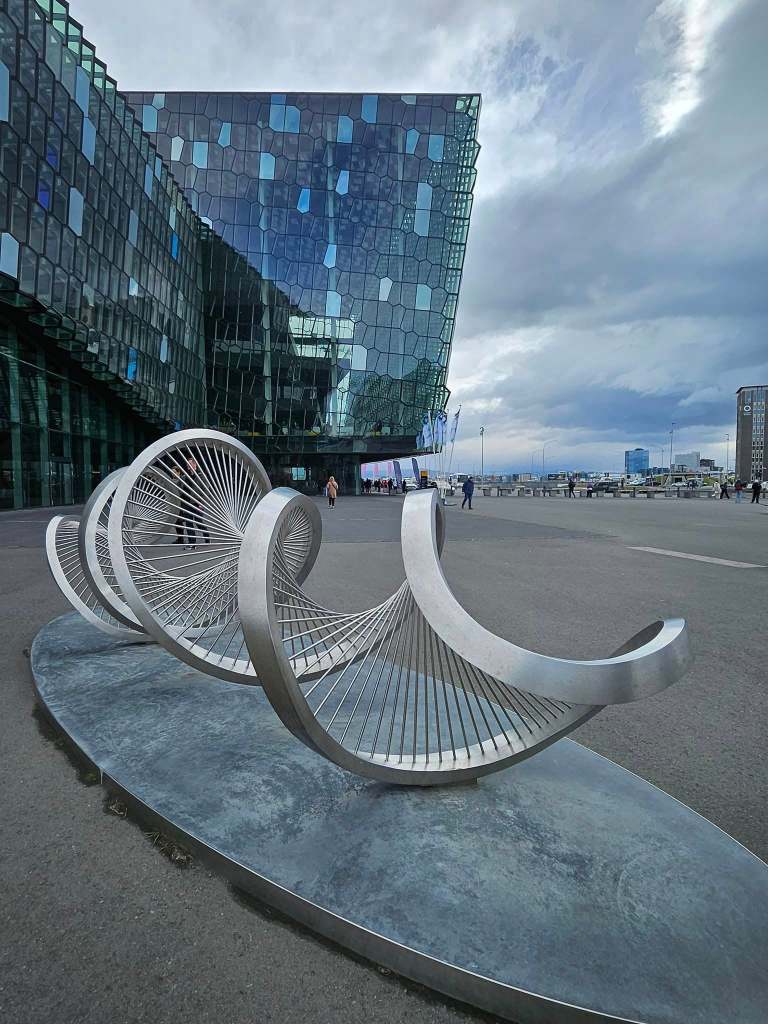
Its environs are scattered with interesting music-themed sculptures. A stainless steel Aeolian wind harp for instance and the likeness of a famous Icelandic cellist who rises from a pool.
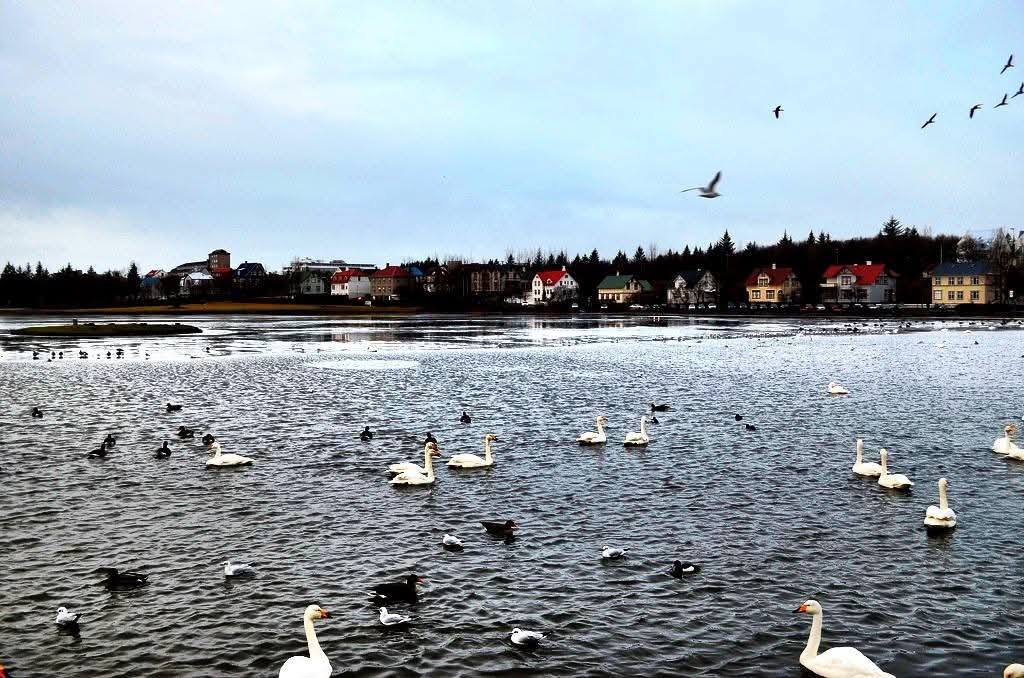
The ocean is as much a part of Reykjavik’s identity as its Viking heritage. Water’s omnipresent, from the fishy smells and salty breezes to the breathtaking views across the bay where a distant column of smoke marks a smouldering volcano. The many water birds, including the ducks, geese and swans at the Tjörnin, also known as ‘the Pond’, near the city hall, are not perturbed by the cold.
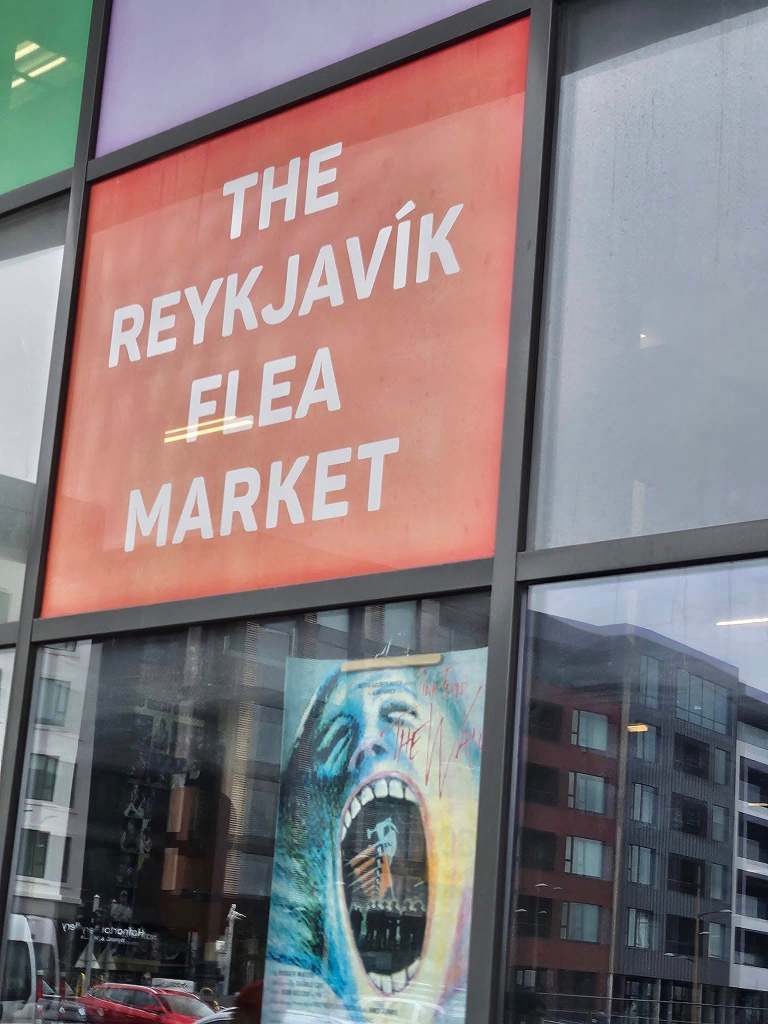
We shop for over an hour at the big indoor Kolaportið markets set slightly back from the ‘old harbour’. It’s the only flea market open in winter; a place for cheaper souvenirs than you’ll find in the downtown shops, although most stalls take only cash. Everything in Iceland, except for smoked salmon and the free electricity supply, is exorbitantly expensive compared to Australia.
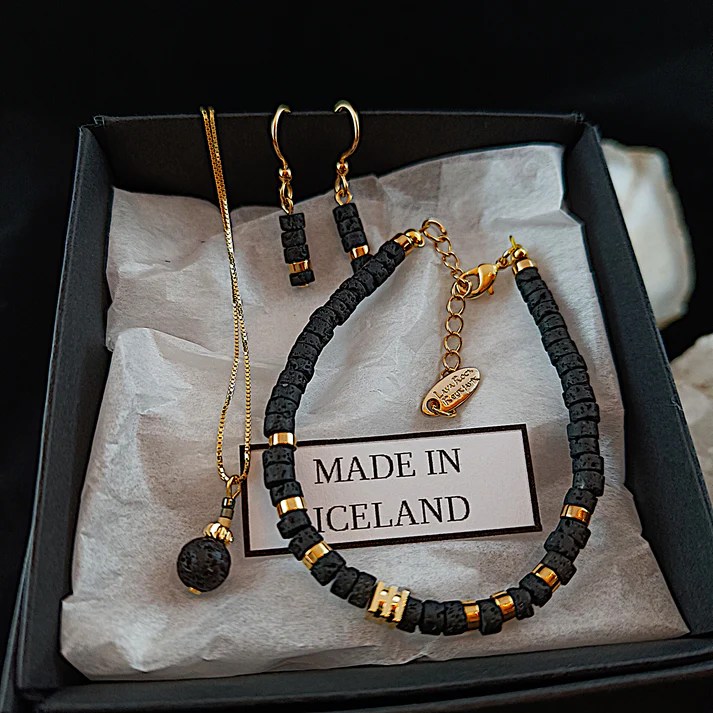
I buy lava jewellery and a rechargeable fan which is essential because we hadn’t even been able to open the window in our hotel room the previous night, let alone turn the aircon off ‘stifling’.
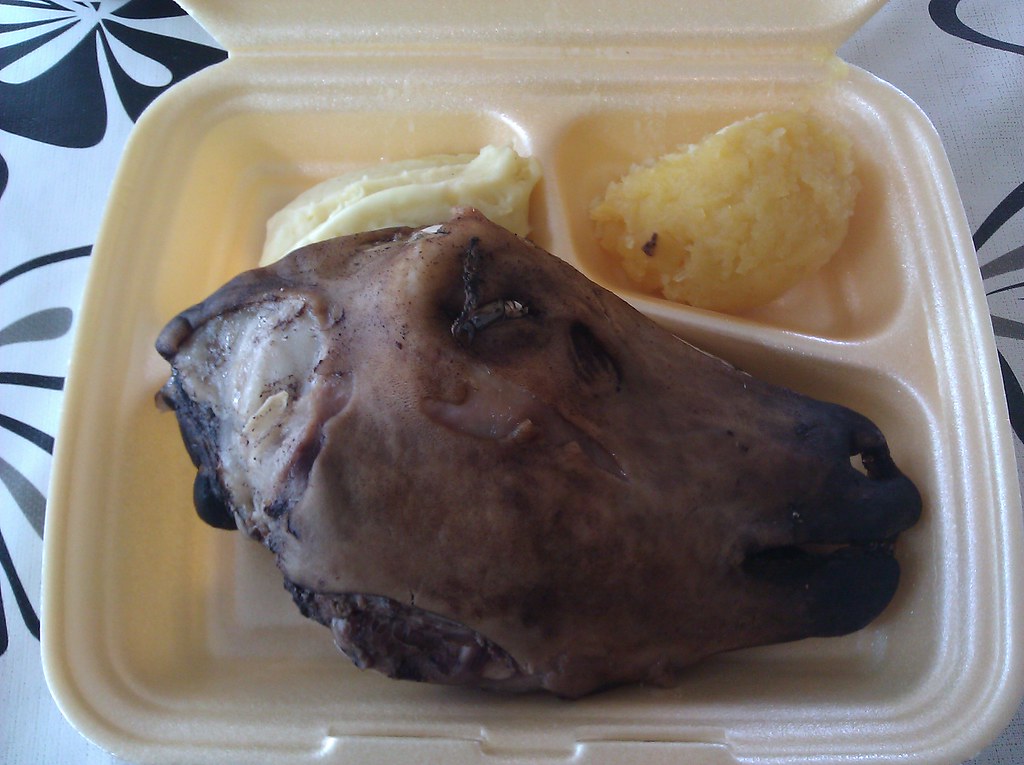
The market offers a wide range of Icelandic handicrafts, antiques, vintage clothing, books, records, local artwork, and traditional Icelandic foods such as fermented shark, Svið ( halved sheep heads) and seagull eggs. It’s open from 11am to 5pm on Saturdays and Sundays. Check labels when shopping for knitwear that a garment’s not been made in China , even though the stall-owner may be sitting there knitting industriously.
We emerge into a soft, cold rain and decide to grab a palatable bite to eat— long hot dogs with mustard and a sweet brown sauce plus crunchy cooked onion bits— which cost the equivalent of about AUD $13 each, from the world-famous Bæjarins Beztu Pylsur hotdog stand.

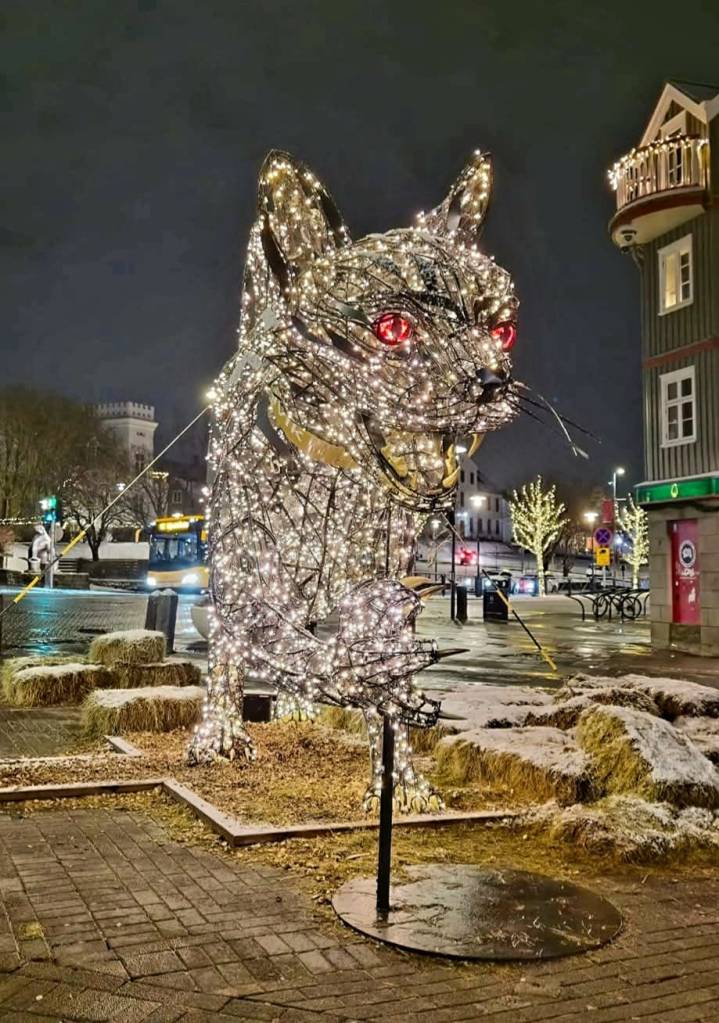
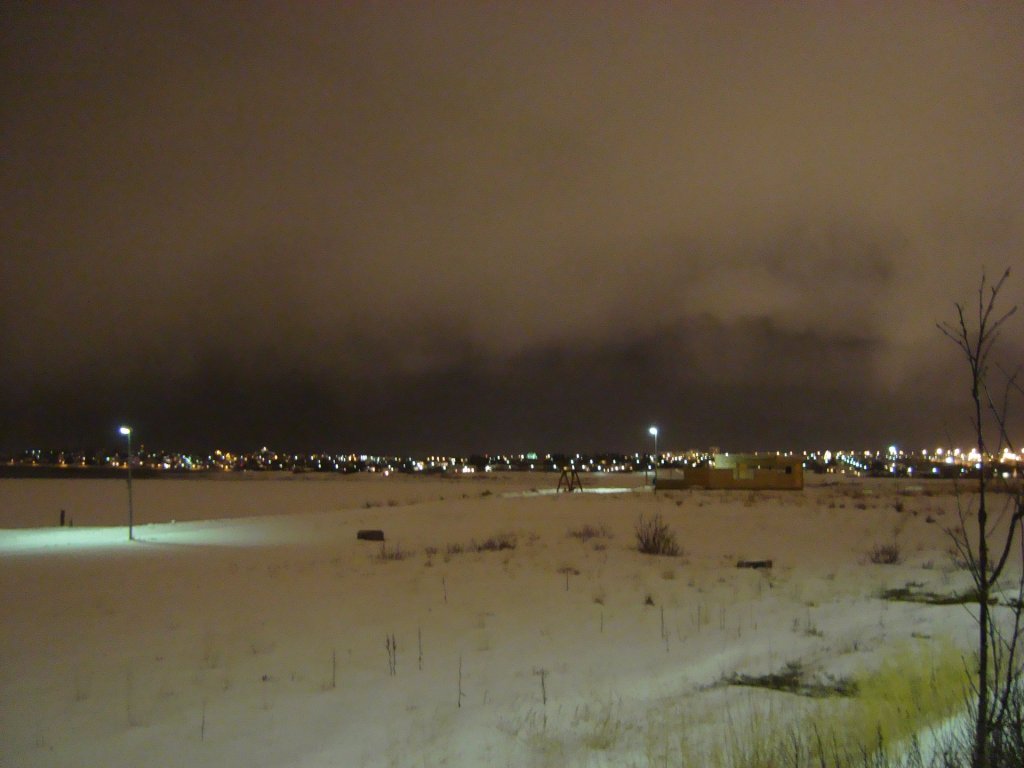
In the square opposite the hot dogs’ booth, stands a festive-season light sculpture about 5 meters tall and 6 meters wide. Jólakötturinn, the Yule Cat, a fearsome black moggy with glowing eyes, is the pet of the mythical ogress, Grýla, and her sons, the Yule Lads. He stalks the snowy hillsides around towns looking for children who aren’t wearing new clothes for Christmas; then eats them (Photo taken at night for effect).
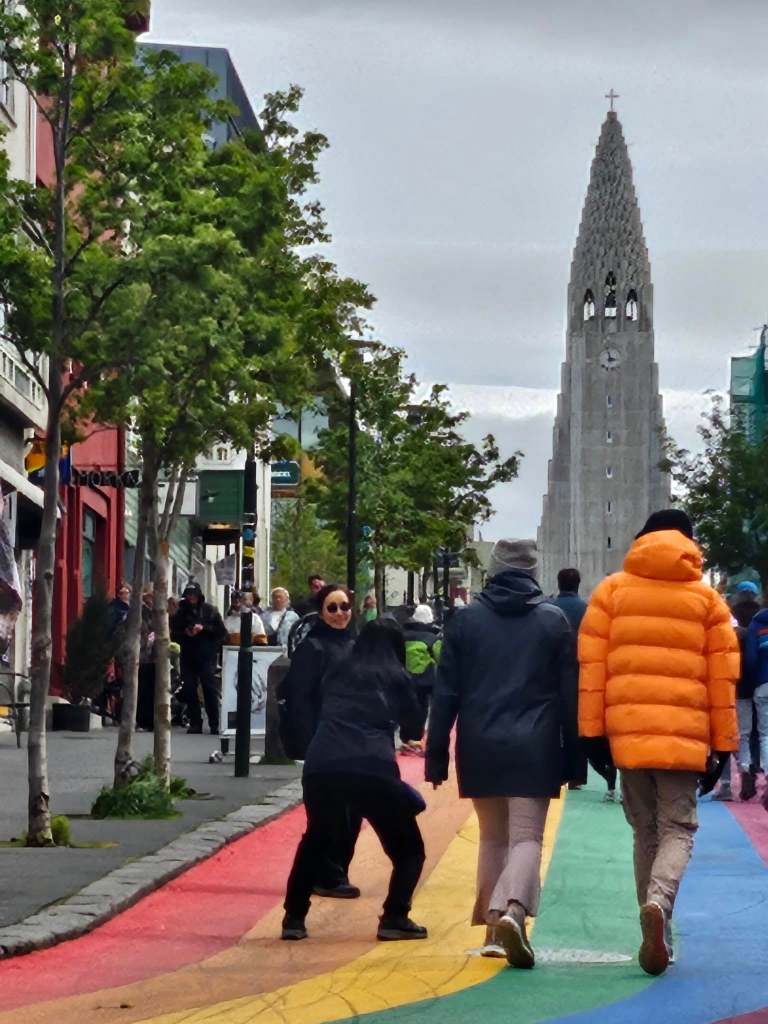
We slog up the photogenic Skólavörðustígur, or Rainbow Street.
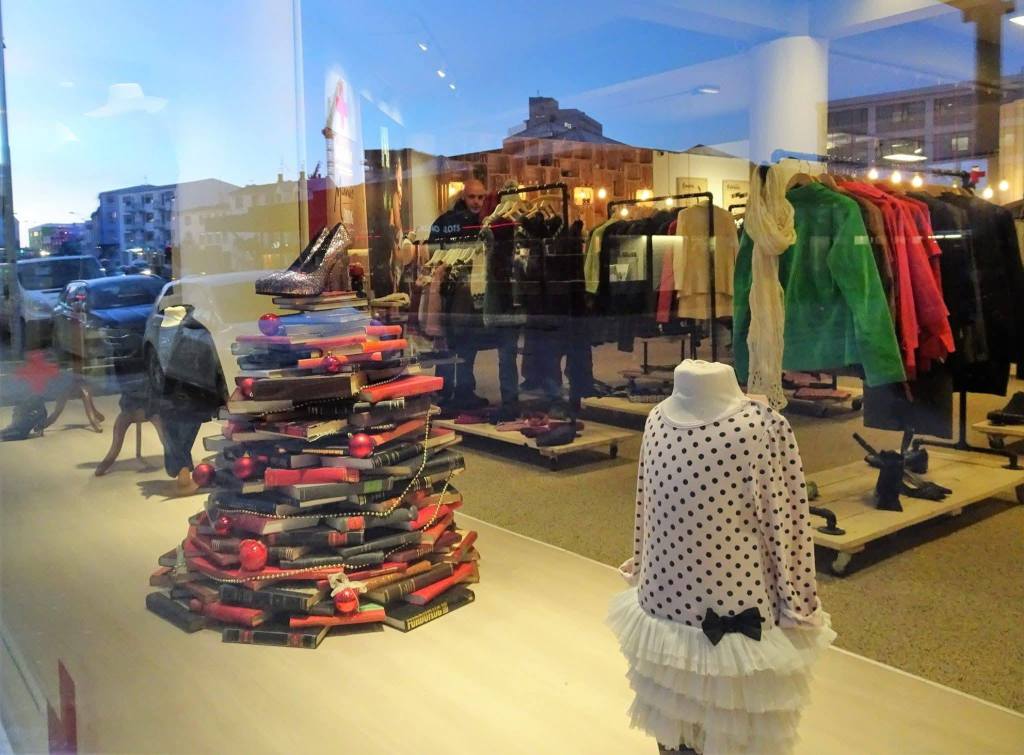
I’ll rarely get a chance to wear it in Ipswich, but I can’t resist buying a genuine Icelandic jumper from one of the boutiques lining the pedestrian street because the Christmas tree in the window is made from books. I’m sure my friends think me crazy.
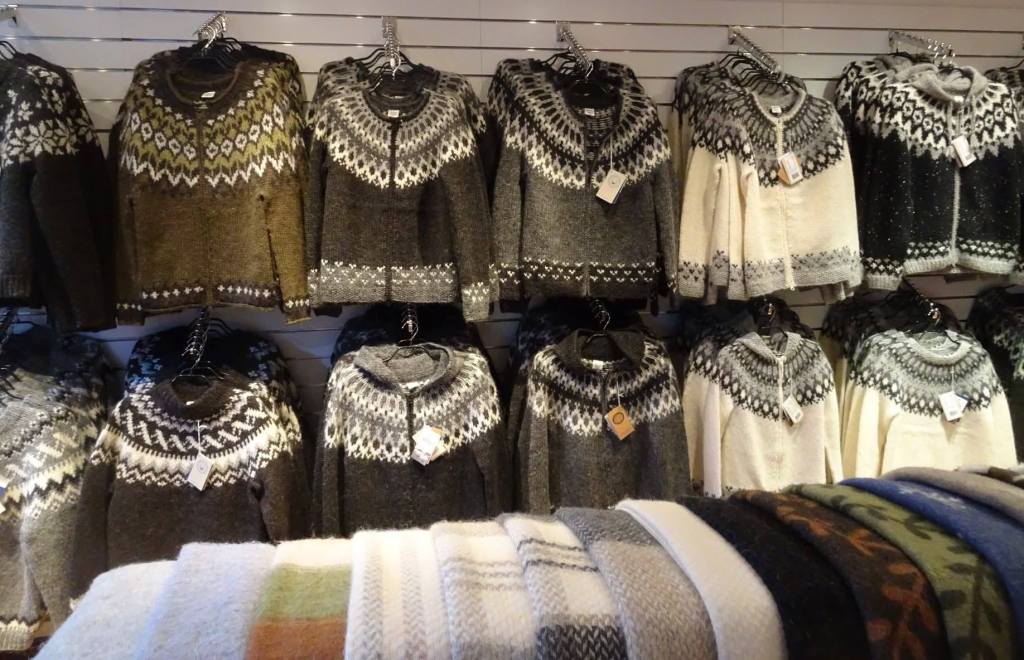
The jumper sets me back more than an extra nights’ pre-tour accommodation and a trip to the Sky Lagoon combined would have.
We continue upwards to the Lutheran Church you see on Instagram, the Hallgrímskirkja, which was designed to catch the filtered light.
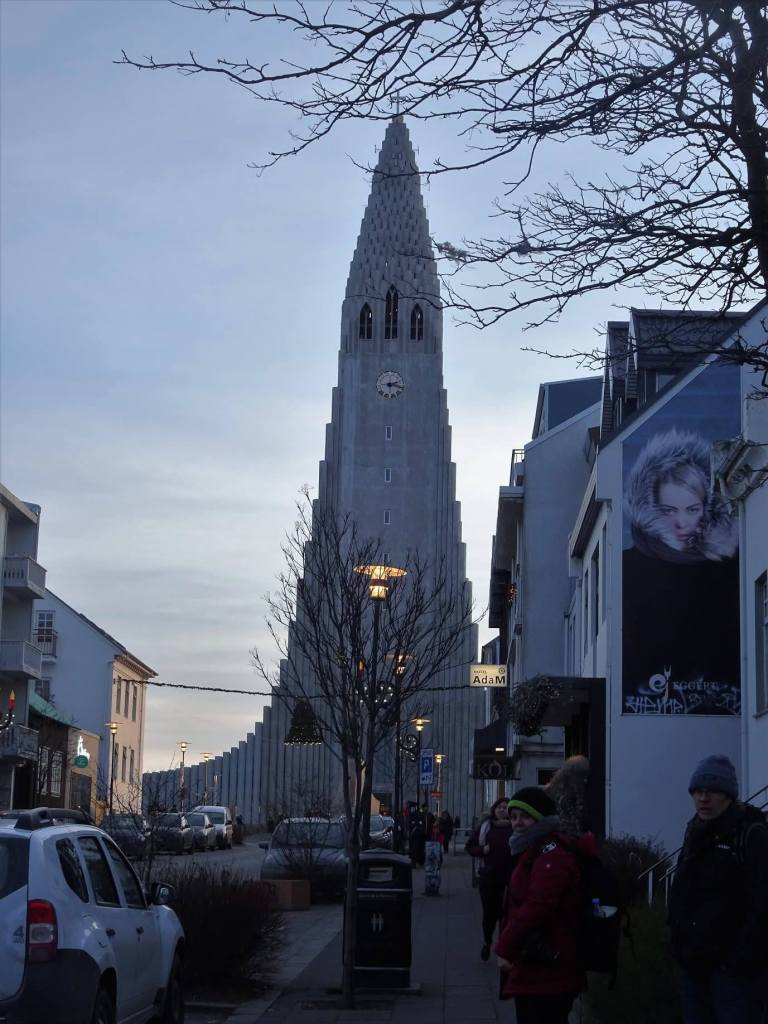

The distinctive exterior’s another artistic interpretation of Iceland’s basalt columns.
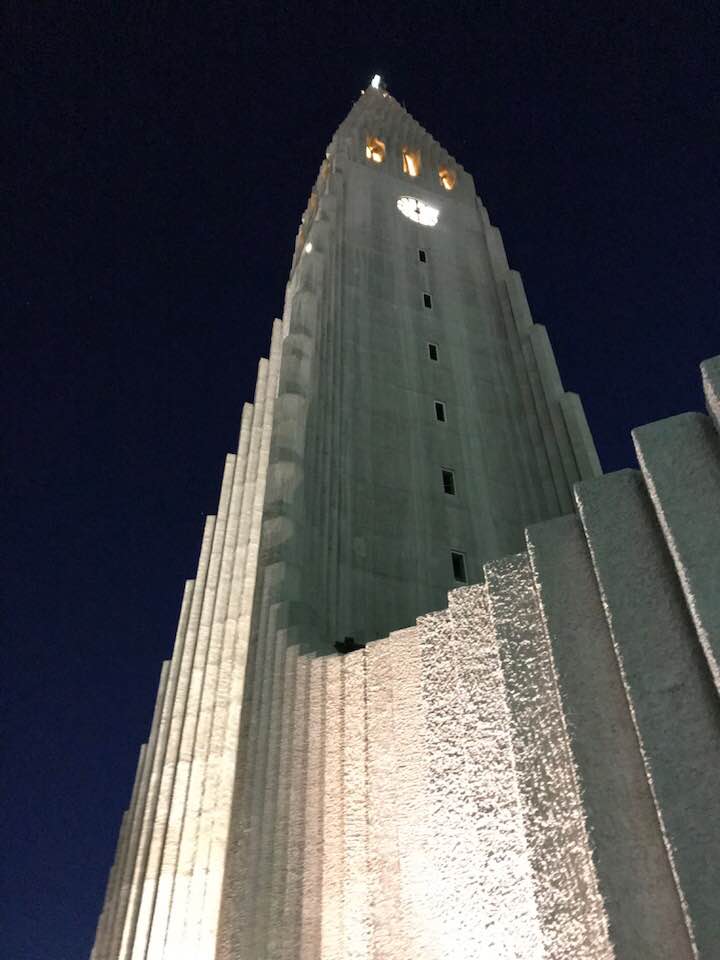
[Photo Credit: K. Rourke]
It’s the tallest church in Iceland, offering a good vantage point from which to observe that even in the middle of the city, there are no massive towers or skyscrapers. There is always, in fact, a sense of spaciousness. Public toilets, for example, have more legroom than the average Aussie facility.

Many buildings in Reykjavik have corrugated iron siding painted in a rainbow of colours.
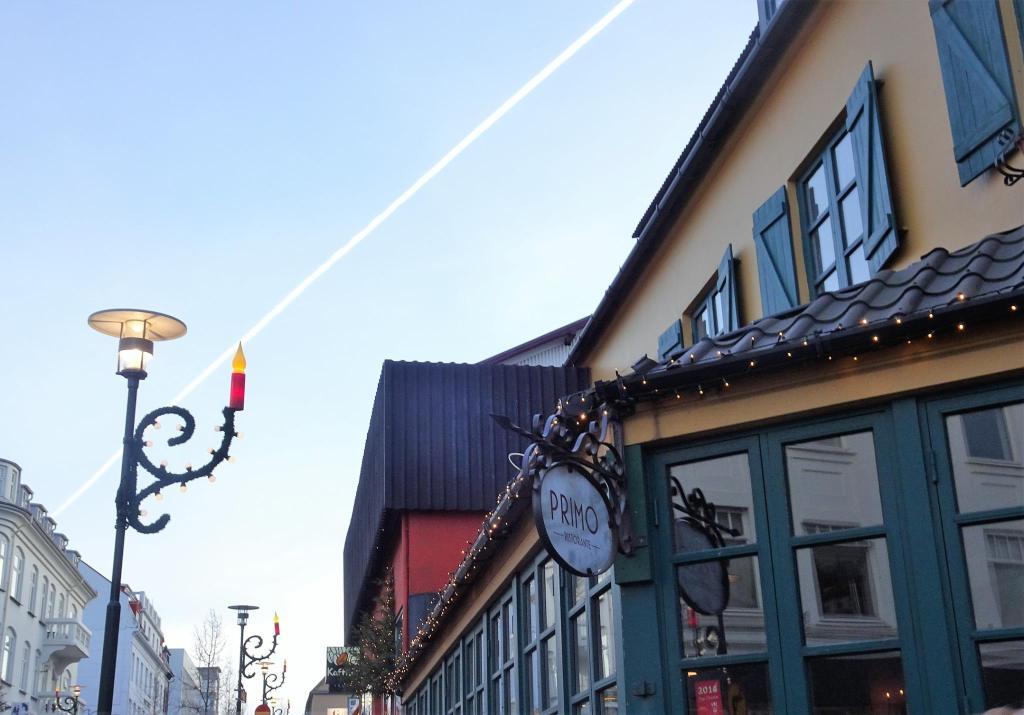
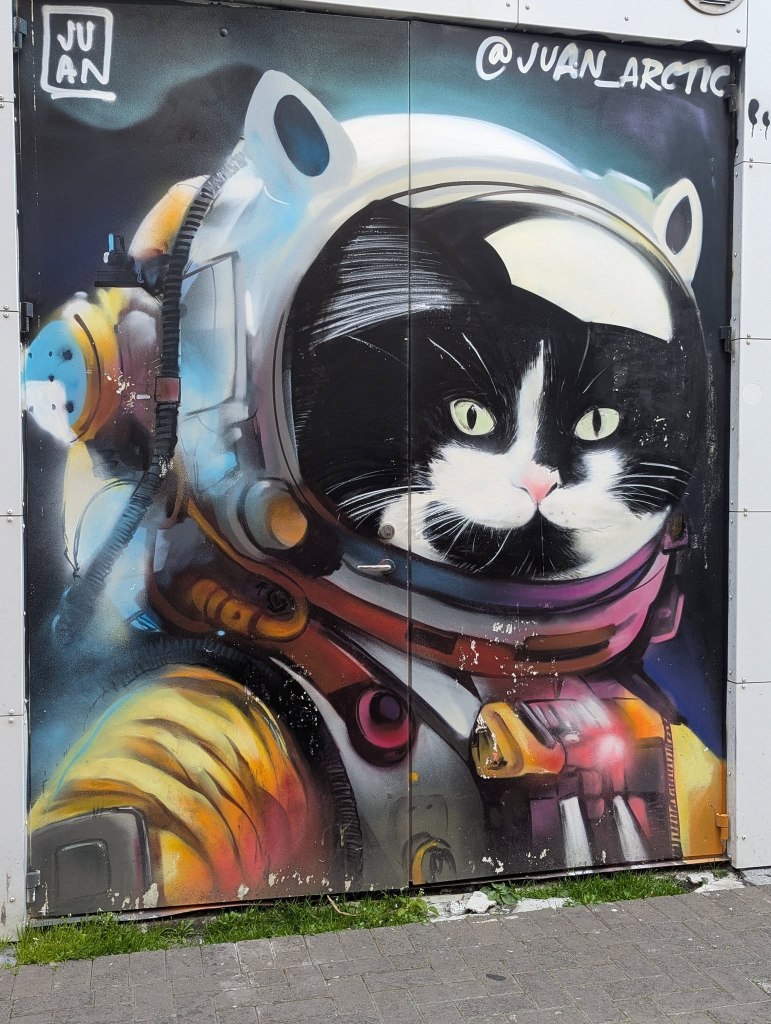
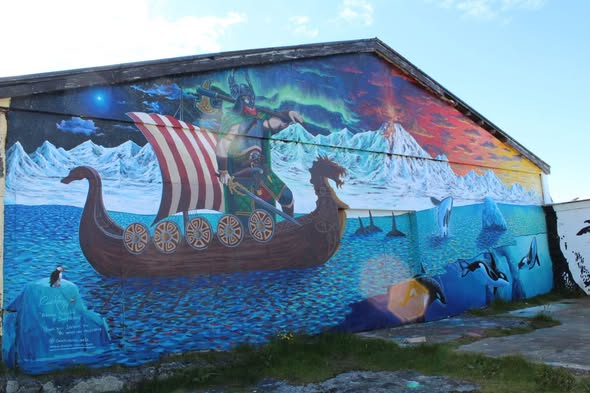
The lack of trees has long complicated the building process, so concrete and iron have been a necessary tool. Instead of creating an oppressive, utilitarian feel, the architecture still manages to be soft and vibrant, with clear traces of Scandinavian influence throughout. The street art is prolific and always elegantly eye-catching.
My friends go to the Saga Viking Museum, but I head for the Phallalological Museum dedicated to penises
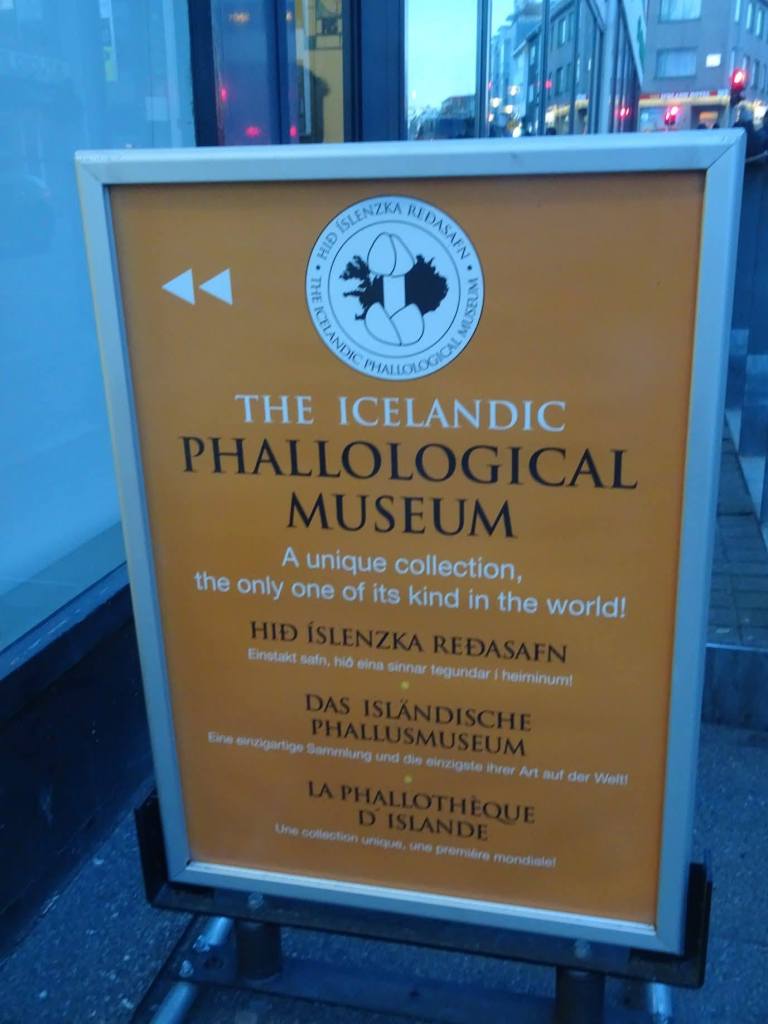
— huge, flaking, mounted and pickled ‘dorks’ (which is the correct term for whales’ members). There are even fleshy bits belonging to supposed elves and sea monsters.
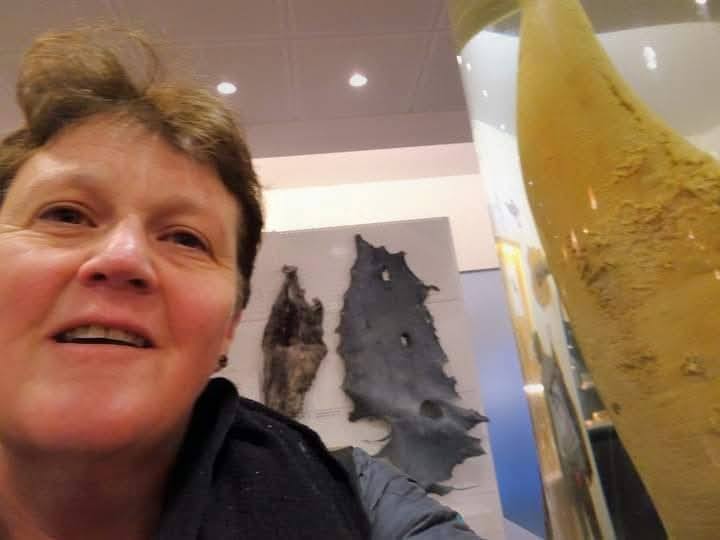
It would’ve been more zoologically educational if not as ‘gram-worthy, to have gone to Whales of Iceland— an engaging exhibit that celebrates the majestic cetaceans inhabiting Icelandic waters.
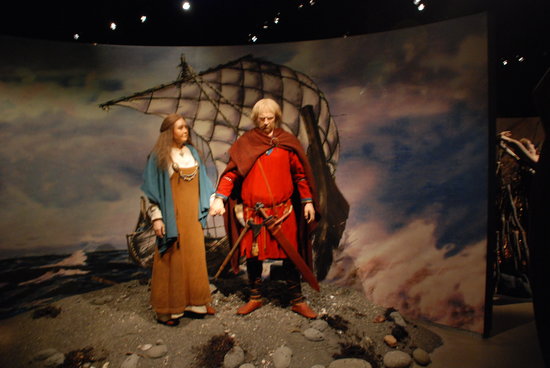
In hindsight, I’d even have preferred to accompany my friends to the Saga Museum

where I was enchanted on my summer visit by dioramas depicting the discovery and settlement of Iceland
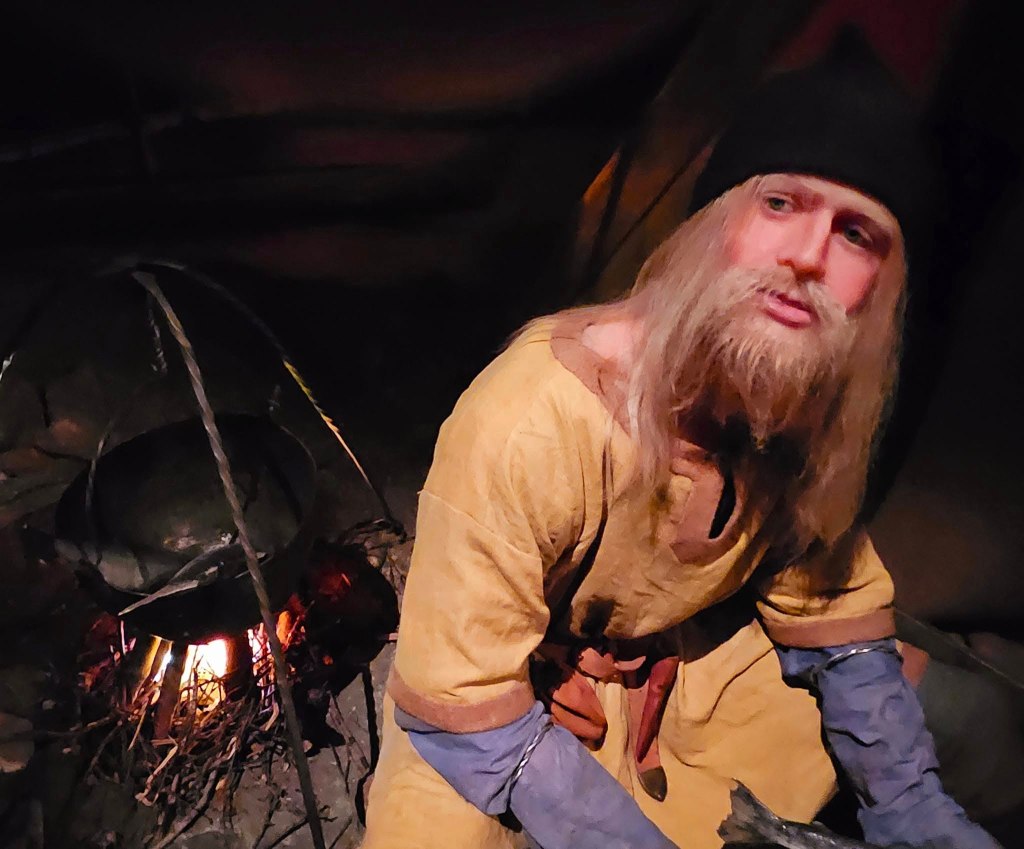
and touching, trying on, smelling and hearing real Viking artefacts.
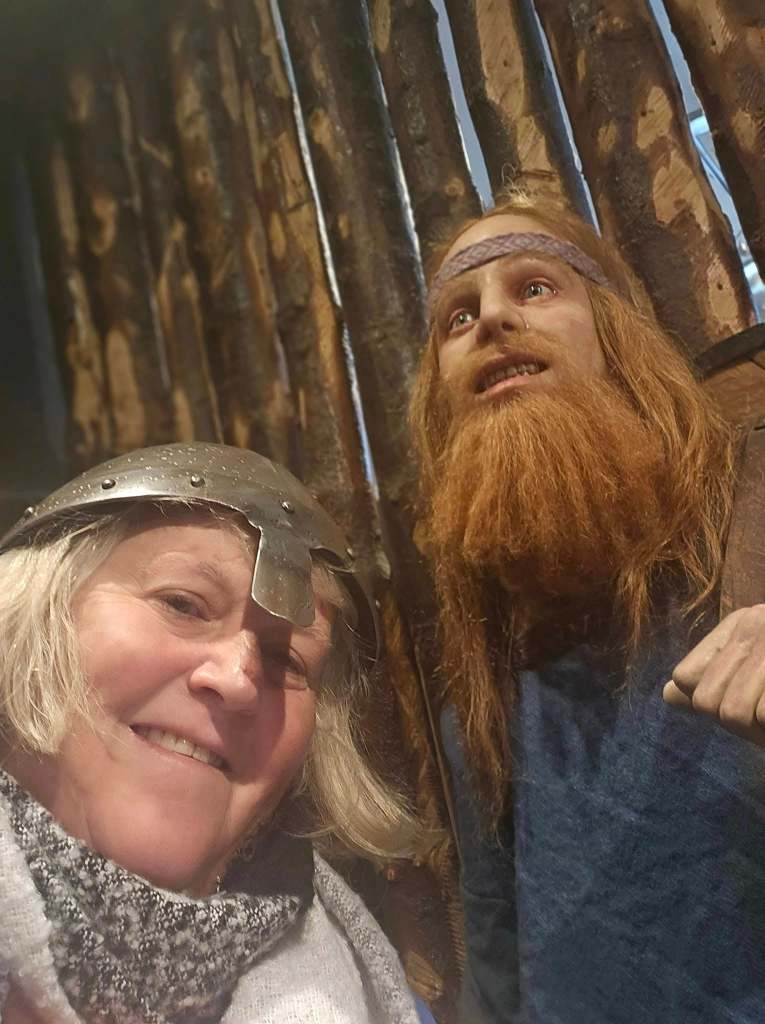
The gift shop also has a wide range of Viking paraphernalia.
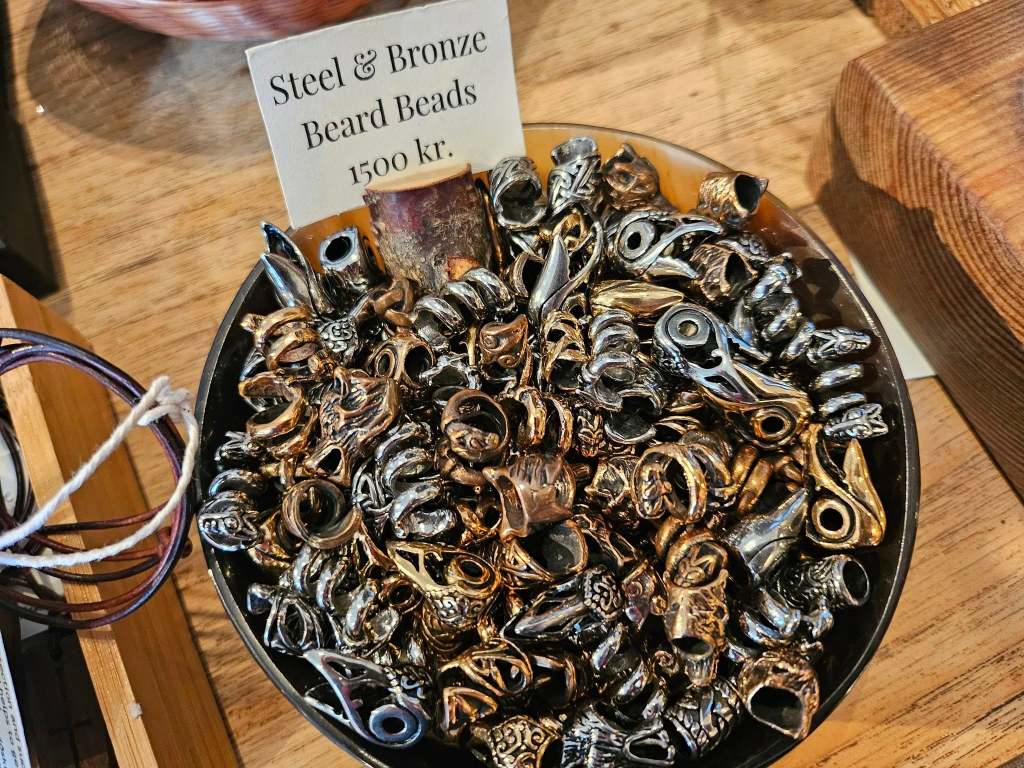
Icelanders—all 333 000 of them— proudly make constant allusion to Viking ancestors, from whom everyone is descended. The moistness, seabirds and spaciousness of Reykjavik are somewhat reminiscent of Dublin, which shouldn’t be surprising, as Irish DNA is as plentiful as Scandinavian. The Vikings brought Irish slave women to populate Iceland and establish their colony because Norwegian ladies refused to move to such a cold and distant outpost.
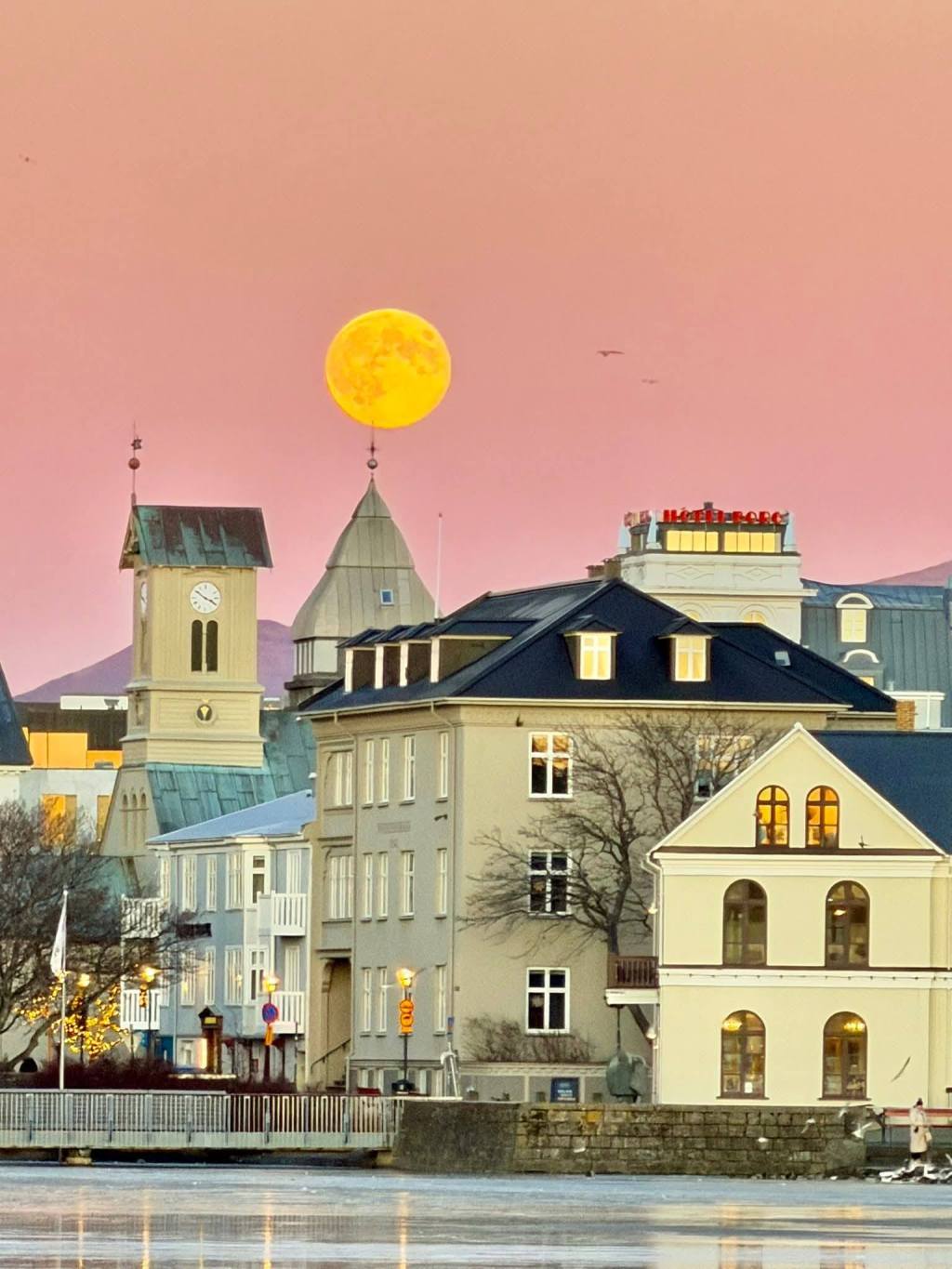
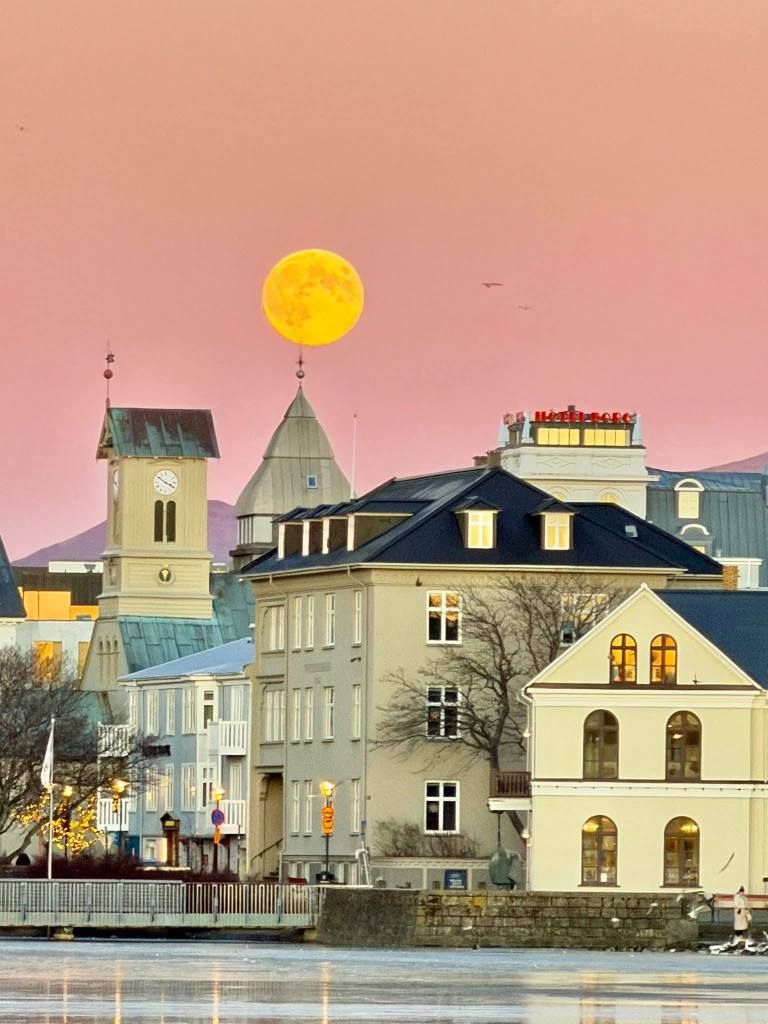
A full, yellow moon rises in a marmalade sky as families of skaters skim the ice at historic Ingólfur Square.
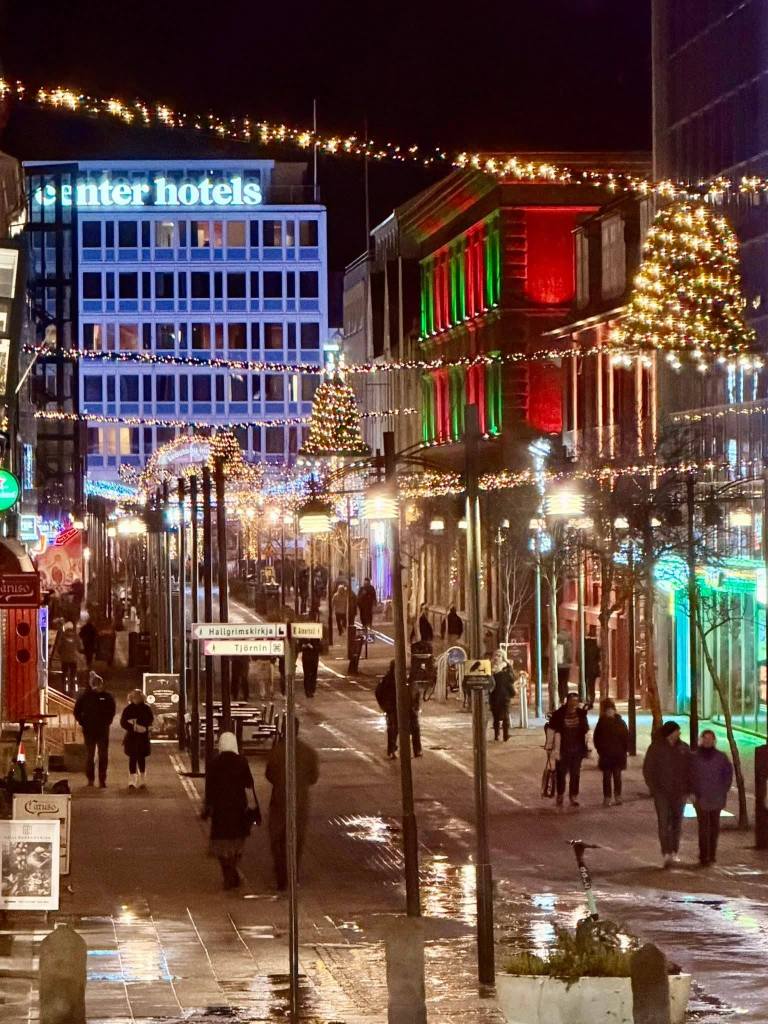
I wander ‘home’ to our overheated room at the Centerhotel Laugavegur. Laugavegur is the main street of Reykjavik— a 19th-century-era attraction that draws crowds with its array of bars, restaurants (some selling whale meat and puffin dishes), and exclusive boutiques, souvenir shops selling stuffed puffins (toy ones) and several art galleries.
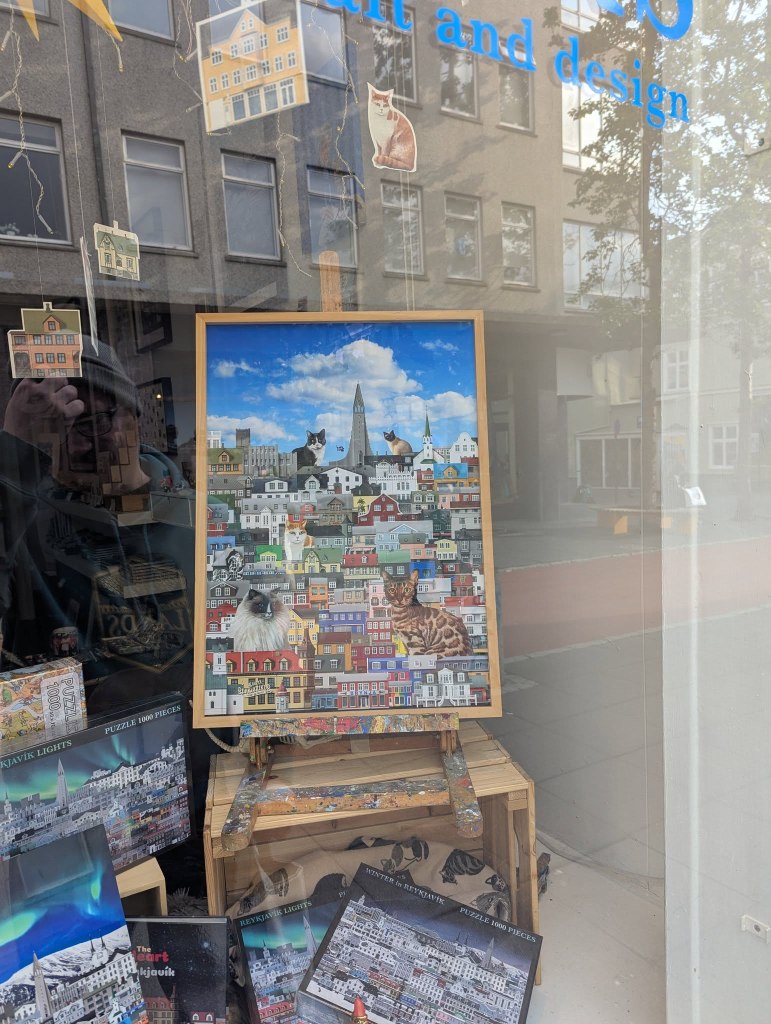
My favourite is Art Gallery 101, a cooperative of 14 local artists, selling contemporary fine art, jewellery, craft and sculpture including works in oil, acrylic, photography, mixed media and clay and glass. I like the naiive art; specially the cat pics.
My friends are content to dine at the rather ordinary, but overpriced Loa restaurant in our digs. The soup’s delicious, but at more than $30 Australian, maybe a delicious indulgence.
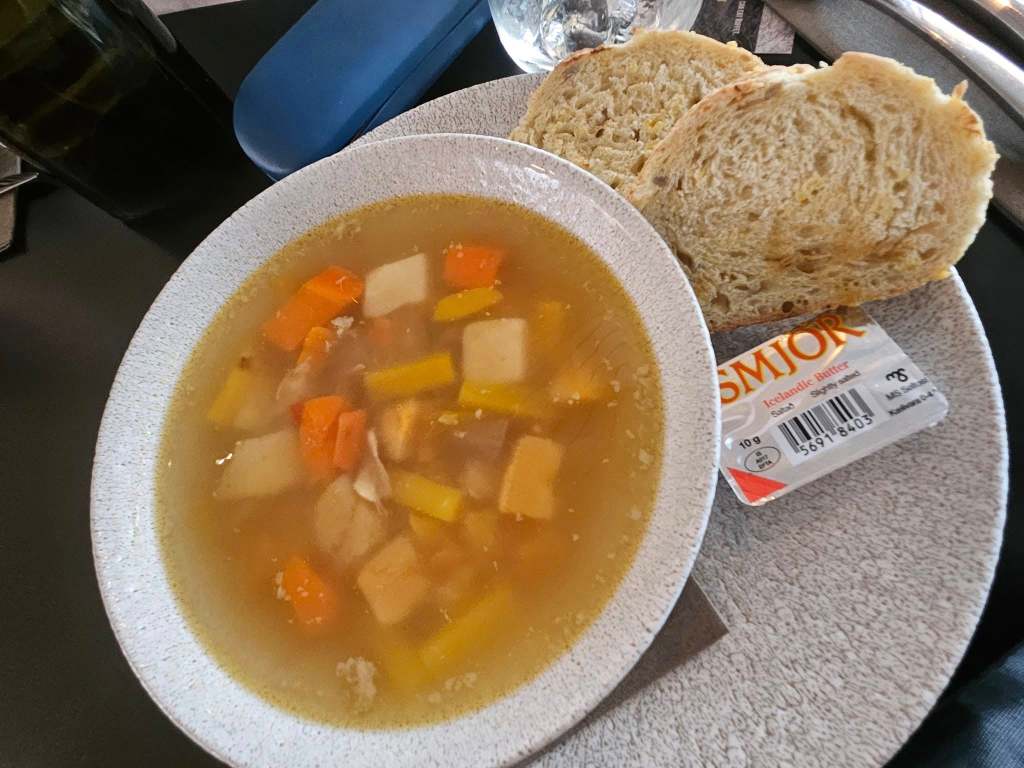
From the waiter I learn that if you order water in a cafe or restaurant, you don’t have to pay for it. He brought tap water, which ultimately comes from pure mineral springs.
Having been offered a ride with a German couple, I dined the previous evening in an authentic cultural/historical experience— Ingólfsskáli Viking Restaurant, [ https://ingolfsskali.is/ ] named after the first settler in Iceland. It’s about a 45-minute drive east of Reykjavík.
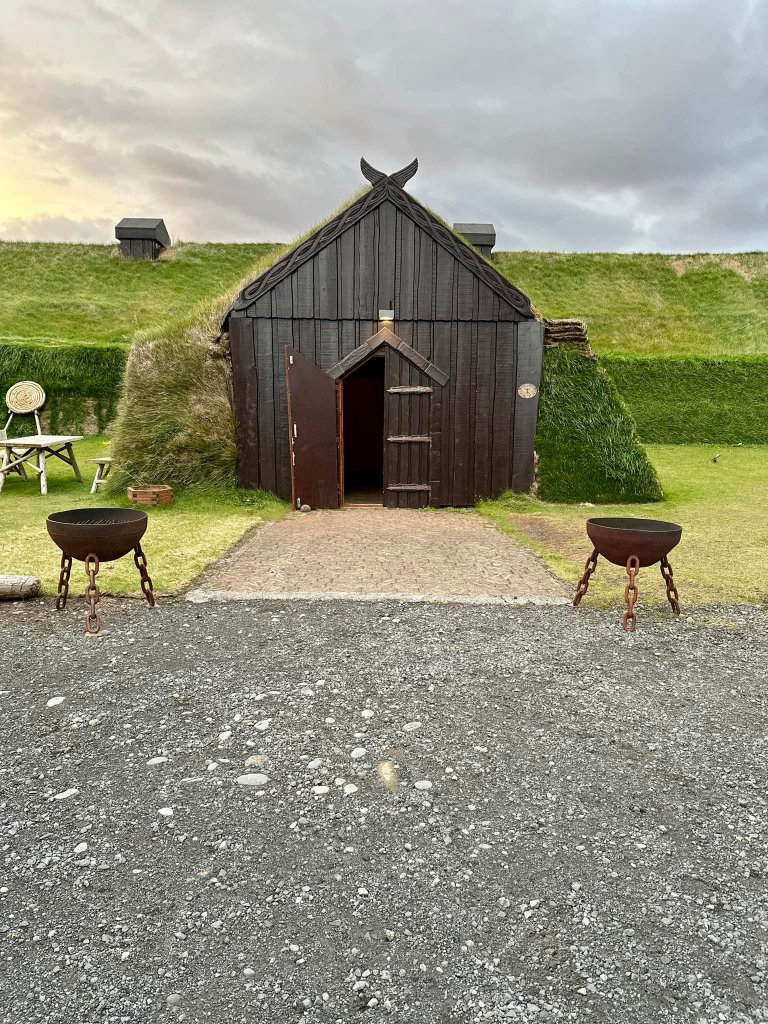
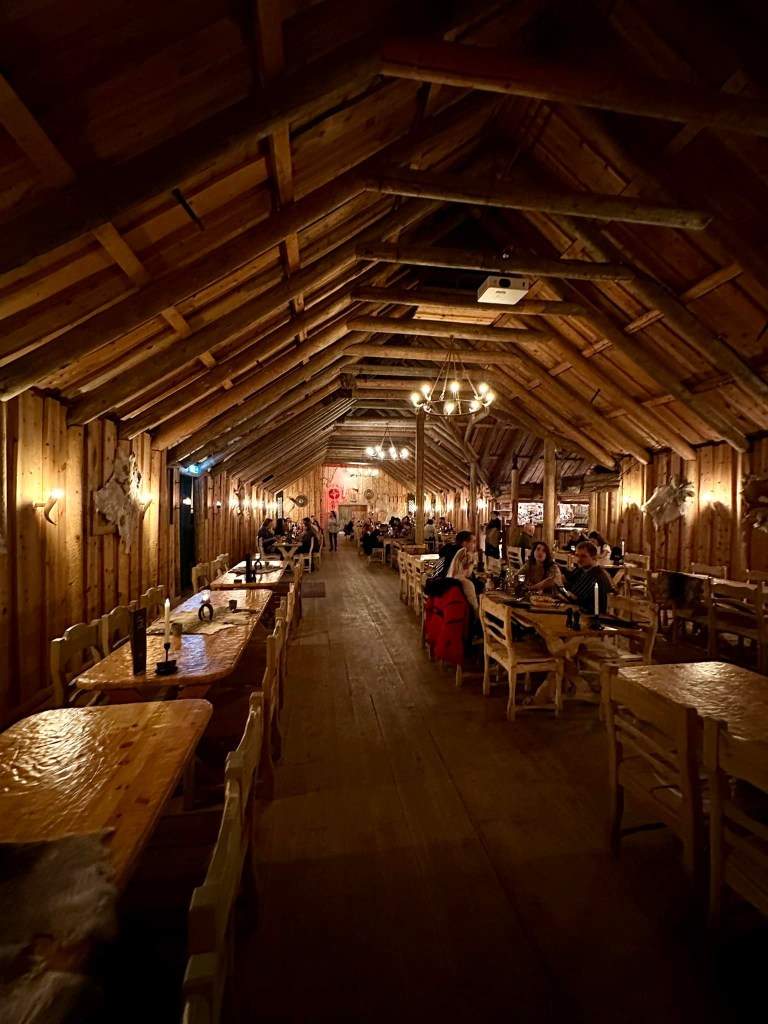
It was as if I had stepped straight into a saga museum diorama — complete with a traditional turf-insulated longhouse, roaring fire, and hearty Viking fare. Costumed up with shield, sword and helmet, drinking mead from a horn and sitting on the carved wooden throne in semi-darkness, it was as if I’d stepped straight into a feasting hall from one thousand years ago.
If you’re a whisky fan, you must try a local Icelandic whisky called ‘Flóki’. It’s smoked with sheep dung. No trees mean there is no peat in Iceland.
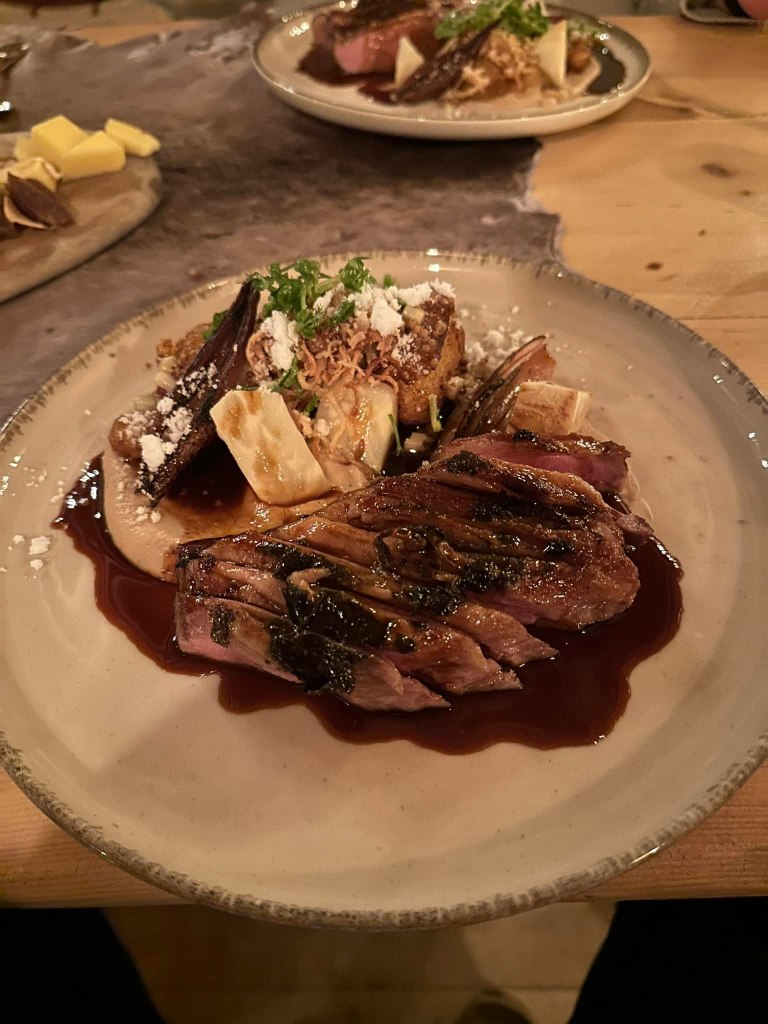
The stockfish entrée and the main course signature dish— Icelandic lamb shank— were delectable, and for those with a more adventurous palette, the charcuterie board featured horse, fermented shark and animals hunted by the owners! There is also a kids’ menu that is more conventional. Outside, there was axe throwing and archery set up to round out the experience. Each activity cost about AUD$25, though it was way too wet and windy to try them. Also across the road, was a paddock of friendly Icelandic horses. I couldn’t help but wonder if they were for meat at the restaurant.
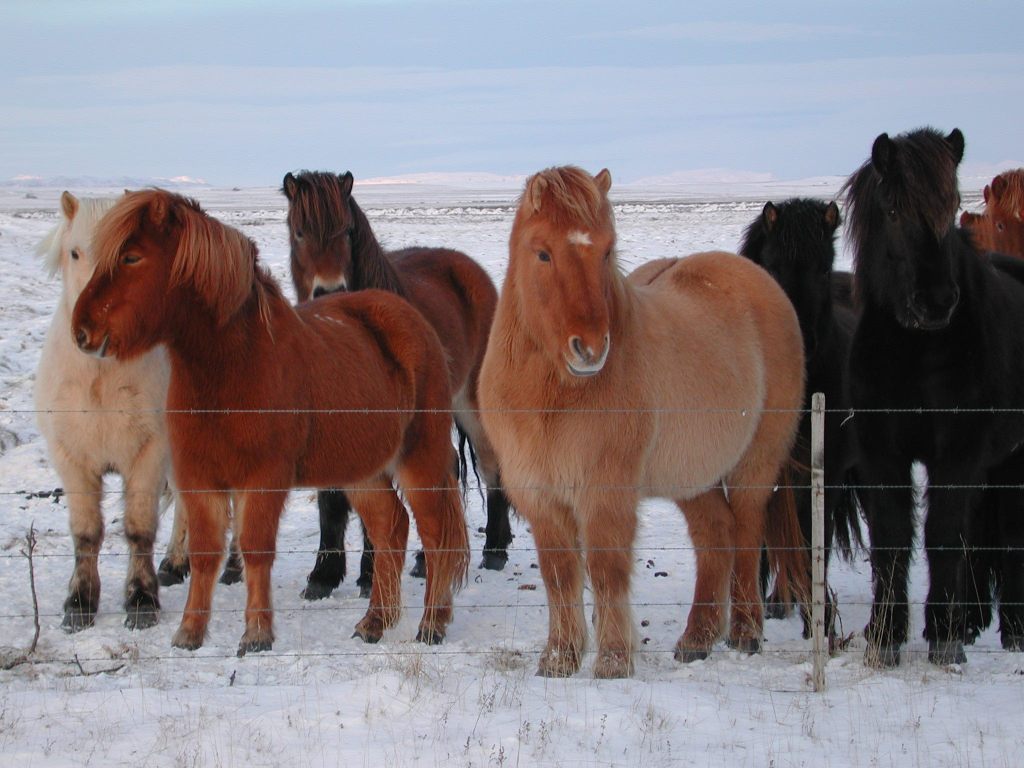
There are no organised ‘tours’ to the restaurant from Reykjavik, but If you’re self-driving along the South Coast, this is an easy (and memorable) detour. The total cost of two courses and drinks was just over AUD$200. Skál to that. It was comparatively cheap compared to the dishes offered at the restaurant in our hotel.
There are no McDonald’s stores in Iceland, but there’s a plethora of other unique culinary experiences in Reykjavik. Brauð & Co, is a bakery known for its exceptional bread and pastries.
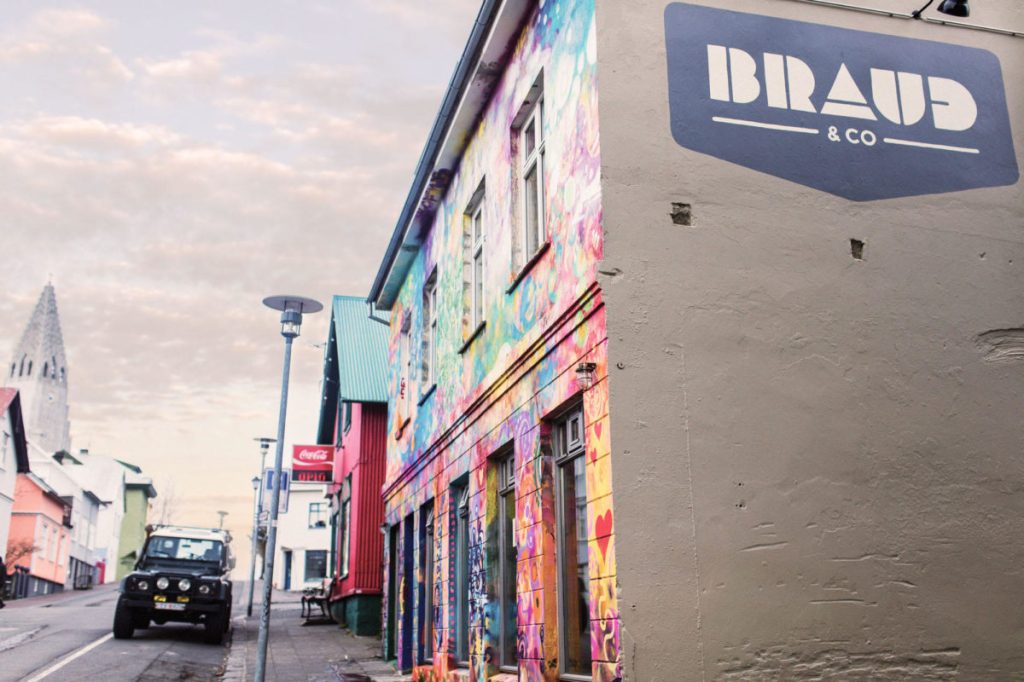
The shop, housed in a small building adorned with colourful graffiti, offers a variety of freshly baked goods including stone-ground sourdough, blueberry and liquorice bread, rye bread, croissants, pretzels and buns. The cozy dining area can accommodate only a few people at a time, so you may need to take your purchase away.
The following morning, we embark from the hotel before daylight on our Intrepid Tour [ https://www.intrepidtravel.com/au/iceland/premium-iceland-winter-166646 ] . It’s snowed in the night and we make another visit to Hallgrímskirkja, and one to the Höfði or ‘Treaty House’ which was the site of the 1986 Reykjavík Summit. U.S. President Ronald Reagan met with Mikhail Gorbachev, marking a significant moment in the Cold War.
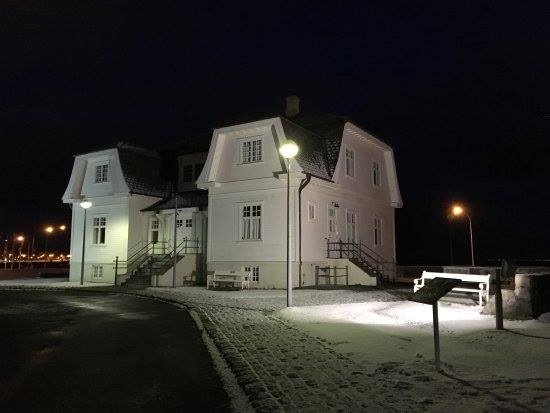
They signed a treaty there on non-nuclear proliferation the following year. It also has symbolic inlays of bricks from the Berlin Wall.
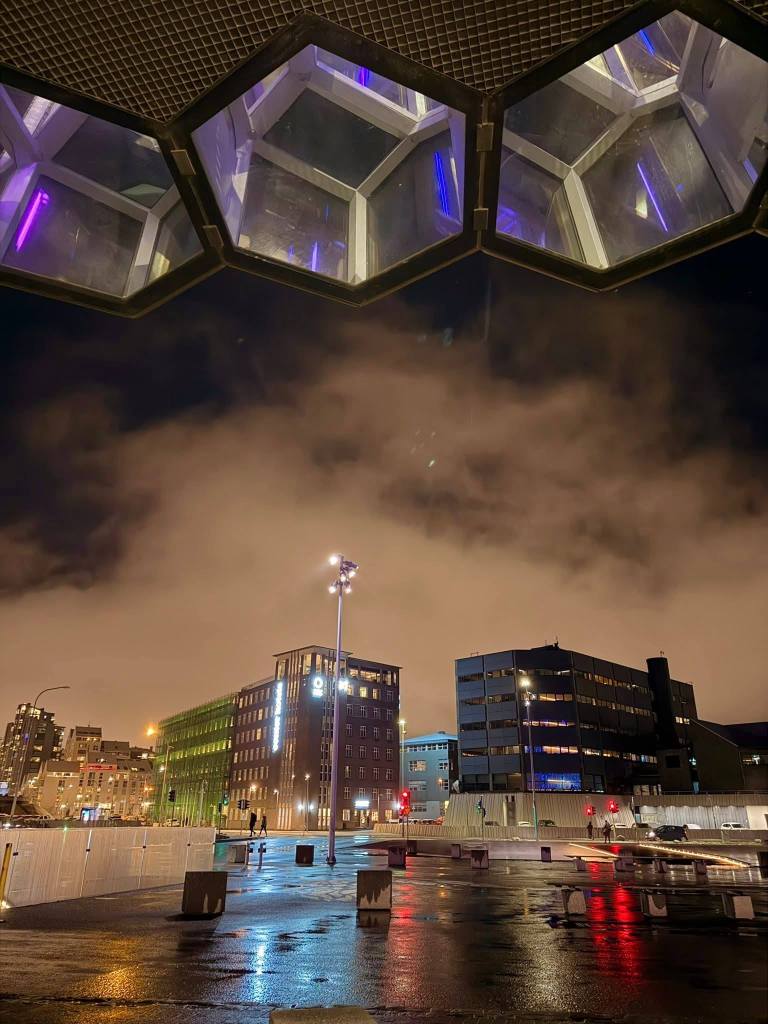
Reykjavík, is essentially a quaint small town clinging to one corner of a largely uninhabited island, but is also a vibrant destination with a rich history. No other country so small can boast a Nobel laureate for literature, and it also boasts the oldest parliament in existence.
There’s something for everyone. Visitors with more than a day to explore could also visit the National Museum to delve into Iceland’s Viking heritage and check out the shop for beard beads, Viking Warrior fridge magnets and exquisite hand-embroidered mittens and Icelandic knitwear.
The Bryggjan Brugghus microbrewery is well worth a stop for beer-drinkers and the Maritime Museum showcases Icelanders’ coexistence with the sea and sustainability. The Perlan glass dome offers stunning panoramic views of the sea and hills. Additionally, the geothermal Blue Lagoon spa near Grindavik, has a display which showcases volcanic activity in Iceland.
Getting There:
There are no direct flights from Australia to Reykjavik, so you will need to fly from elsewhere in Europe. We flew from Edinburgh after Hogmanay on Icelandair (0870 787 4020; www.icelandair.co.uk) and one of my friends flew on Iceland Express (01279 665220; www.icelandexpress.com) via Copenhagen. Both airlines fly to Keflavik, from which there is a cheap bus service that ferries passengers into Reykjavik and drops them at their hotels. Icelandair is a budget airline on which you pay extra for luggage and snarl at passengers who obviously have over-limit carry-ons that aren’t checked. Finnair, with whom I flew to Helsinki from a crowded and chaotic Keflavik Airport, was much more peaceful and my German friend flew Lufthansa return from Frankfurt, of course. We had early flights and nowhere was open to grab a bite to eat. Neither Finnair or Iceland air serve meals unless you pay extra. If you’re flying out of Keflavik late, note that all shops and eateries are again closed after 6pm.
 Margaret R Kelly
Leave a comment