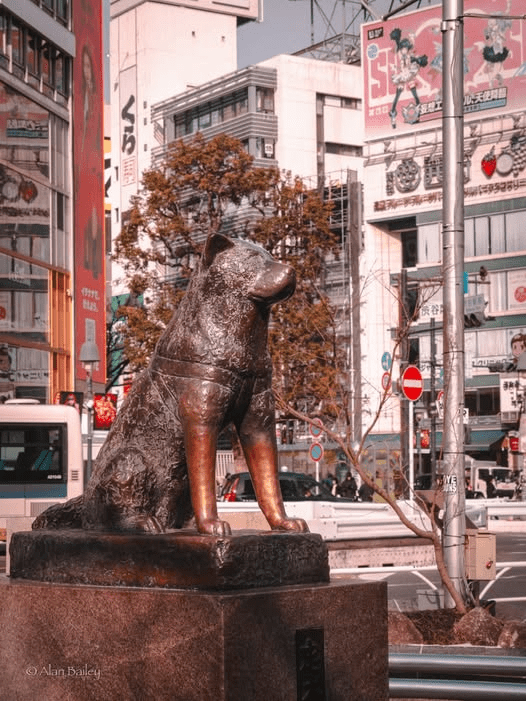
This is the statue of Hachiko, Japan’s equivalent of Scotland’s Greyfriars Bobby (photo copyright Alan Bailey). It’s at Shibuya Station in Tokyo, beside the must-see ‘Shibuya Scramble’ pedestrian crossing (best viewed from the Shibuya Sky Building), a great shopping district (a mega Don Quijote store and a huge new shopping precinct called Miyashita Park) and the place to go if you want to stroll to Meiji Jingu Shrine.
To see the Hachiko statue, use the Hachiko Exit (Hachiko-guchi) at Shibuya Station. It is located on the northwest side of the station and opens directly onto Hachiko Square. If arriving via the subway, follow signs for Exit 8.
They’re always changing things around, but the best tip is to follow the signs.
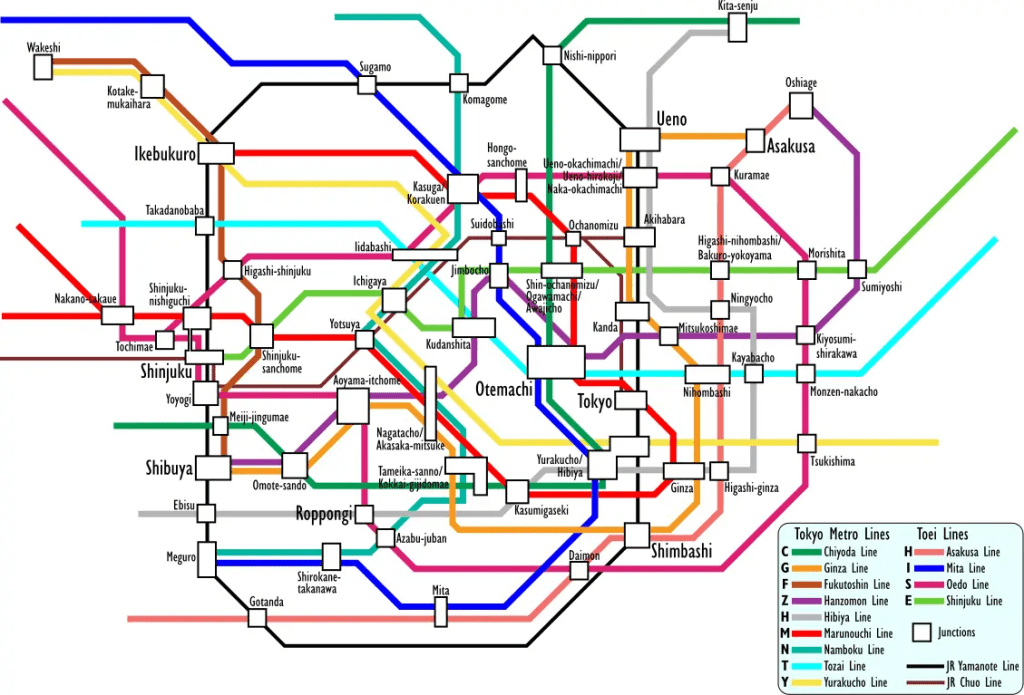
This is very simplified. A free Subway Map in English is available at most subway stations and also posted on the wall of every subway station. I find the hardcopy maps are easier than untangling spaghetti on my phone, but you can download an app with maps to your phone. You may have to answer a survey to get free access.
Japan Travel by NAVITIME is especially helpful for English speaking tourists visiting Tokyo, as it provides guides and articles written by foreign authors residing in Japan. The app also allows users to create their own travel plans with their favorite spots, and provides recommended itineraries for areas throughout the country.
But some options are only available with the paid version. You may want one that works offline, so the Tokyo Metro Guide and Planner is excellent for that, although you lose information about current delays and interruptions to service.
The paper map below’s an oldie, but a goody. I bought it before a trip with my kids in 1997 and kind of worked out where I wanted to go well in advance of my trip.
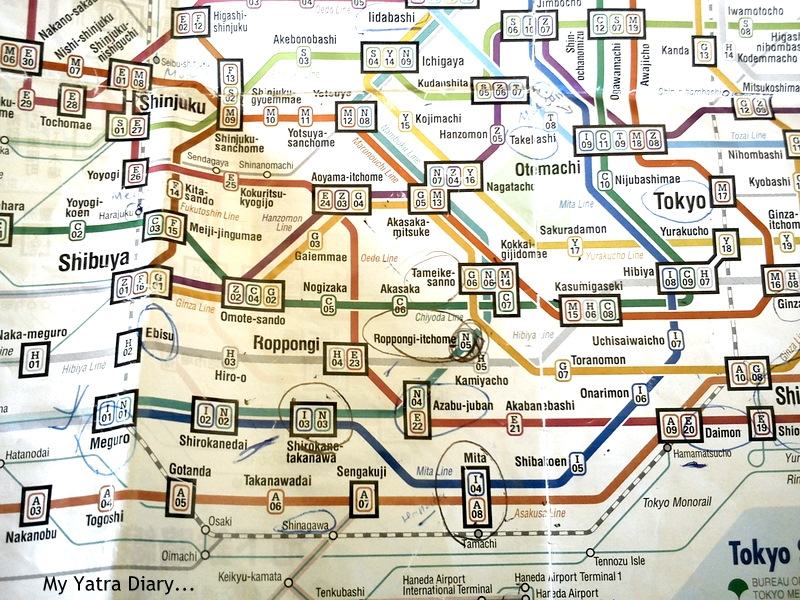
Make sure you google apps in English and read the information about what’s available for your type of phone and the benefits and pitfalls, but if you plan to spend a few days in Tokyo, I think this would be a good way of starting your pre-trip ‘homework’ in the modern world.
Multiple Lines
The largest operator of subway train lines, Tokyo Metro, provides 9 train lines covering 195 km of track between 180 stations.
A range of network operators run other train lines throughout the city, each requiring different tickets that can be purchased from ticket machines near the ticket gates.
Toei is another major subway train operator in Tokyo, operating 106 stations connected by four lines: the Asakusa Line, the Mita Line, the Shinjuku Line, and the Oedo Line. The Oedo lines forms a loop around the city, and the Asakusa Line directly connects with other train lines that will take you all the way to Narita or Haneda Airport.
There are several JR (Japan Rail) lines where you can use your JAPAN RAIL PASS, if you’ve deemed it worthwhile to get one; the Keio line will take you out west to the hiking area of Mt Takao and connects directly with the Toei Shinjuku subway line; and Odakyu will take you southwest towards the hot spring town of Hakone, as well as conveniently connecting to the Chiyoda subway line too.
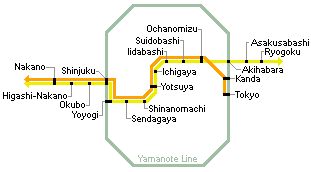
The Chuo Line (中央線, Chūō-sen above) is the only JR line to cross the circle of the Yamanote Line.
Two types of trains run on the Chuo Line in central Tokyo: rapid trains (kaisoku) and local trains (futsu). Many of the trains have other names as well. The Rapid train to Kofu and Matsumoto for instance, is called The Azusa.
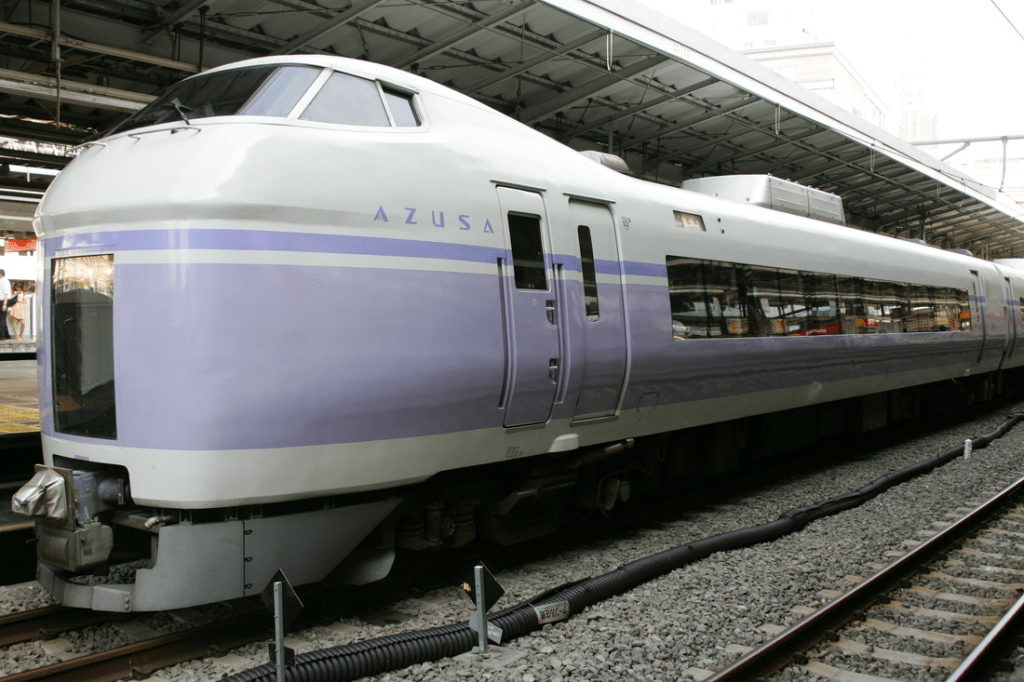
The rapid trains on the Chuo Line stop only at Shinjuku, Yotsuya, Ochanomizu, Kanda and Tokyo stations, while the local trains stop at all stations between Shinjuku and Ochanomizu and then continue to operate on the Sobu Line to Chiba. The Sobu Line is a much cheaper option than the Narita Express or the Keisei Skyliner between Tokyo Station and Narita.
How Do I Buy Tickets?
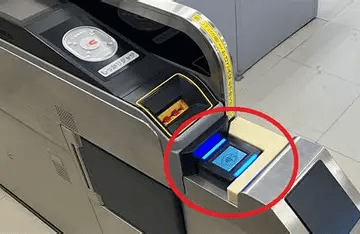
There are a variety of options for getting around the Tokyo subway. Every station has multilingual ticket machines where you can buy a one-way fare ticket using cash or credit or debit card (check for your bank’s international transaction fees first), or you can use a rechargeable transport IC card to swipe in and out of the ticket gates.
You can buy an IC card. There are several sorts, which can be confusing. PASMO, Suica or ICOCA???
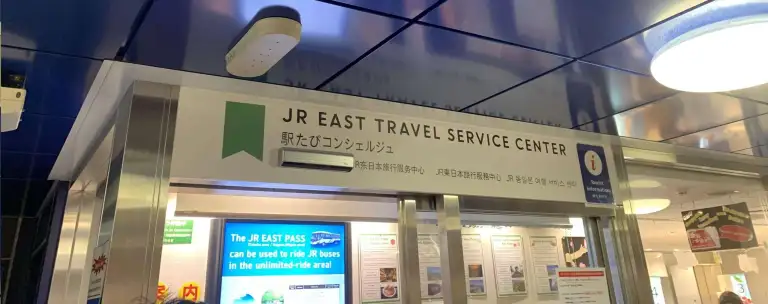
For a visit of several weeks, a Red Welcome Suica card (available at JR EAST Travel Service Centers and dedicated machines at major airports/stations —Haneda, Narita, Tokyo, Sendai, Shinjuku, Shibuya, Ikebukuro, Ueno, Yokohama Station, Sendai Station, Narita Airport Station, Narita Airport Terminal 2 Station, Tokyo Monorail Haneda Airport Terminal 3 Station).
Note: You cannot use it to swipe for non-local transport or to buy long-distance rail tickets.
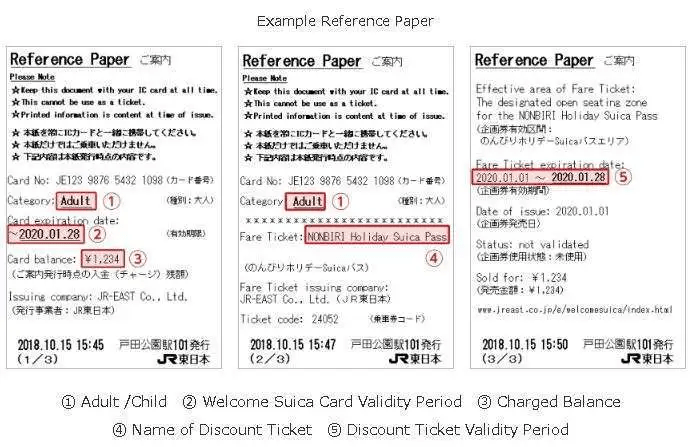
This is valid for 28 days from the time you first swipe it. The entire amount you recharge for the first time can be used as fare or shopping money. If you buy a green Suica card, you pay a 500 yen ‘deposit’ which is non-refundable, but you can use it for up to ten years. Probably worthwhile if you are making multiple trips. You MUST carry the Reference Paper that they give you for your Welcome Suica Card with you to show validity and details if asked. There will be no validity date on the card itself.
Re-charging Your Card
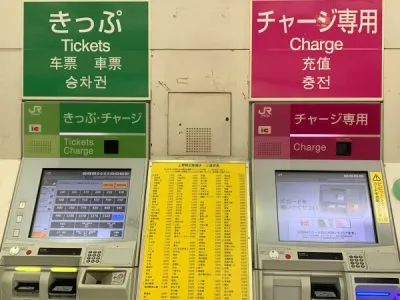
The pink machine on the right is used to top up both red and green Suica cards at a JR Station. Charging a Welcome Suica card is a straightforward process. Simply insert your Welcome Suica card into the designated slot on the machine and follow the on-screen instructions to add funds to your card. These machines provide a user-friendly interface, making it easy for travelers to navigate the charging process even if they’re unfamiliar with Japanese.
For your first top-up, you add in increments of 1000 yen, but can only put up to 20 000 yen on a Suica card which is about AUD$200 (or a bit more at the moment). After that, you can add however much you like up to the 20 000 yen limit. This is sensible because when the card expires or you go home, you’ll lose any credit that’s left on it. It’s non-refundable. Alternatively, you can also recharge your Welcome Suica cards at staffed station ticket counters, known as “Midori no Madoguchi,” where attendants are available to assist with any inquiries or assistance needed. They don’t always understand English though. Additionally, many convenience stores in Japan offer Suica card charging services,
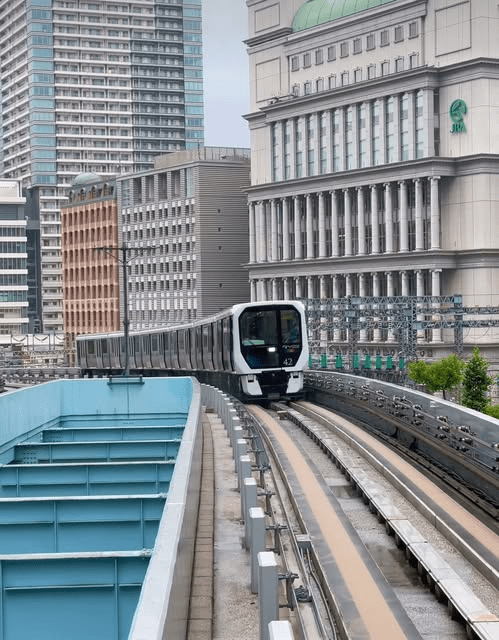
This card can be used on train lines in the Tokyo metropolitan area as well as for subways, buses, the Tokyo Monorail that connects Haneda Airport with Tokyo, and in the Sendai, Niigata, Aomori, Morioka, and Akita areas and parts of the Hokkaido, Tokai, West Japan and Kyushu areas, but note that trains, such as the Keisei Skyliner, which have reserved seating, require you to buy a ticket. You can use your Suica card to pay for the ticket though if buying at ticket counters.
*If you have an iOS phone (I don’t), there is also an app you can download from the Apple Store. Information is available at:
https://www.jreast.co.jp/multi/wsmlp/
Subway Passes
Tokyo Metro and Toei have teamed up to offer 24-, 48- and 72-hour subway passes for tourists that can save you some yen if you’re using the trains for sightseeing, as well as being super convenient if you’re in Tokyo for a number of days. Be mindful that the Tokyo subway lines are not operated by JR Railways so you cannot use a JR Pass. Don’t lose the tickets though!
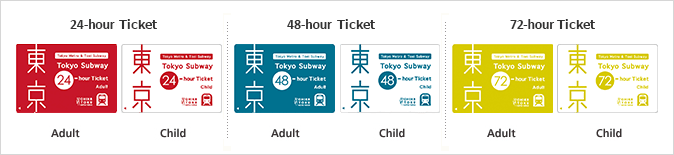
Tokyo Subway 24-hour Ticket – Adult: 1,000 yen, Child: 500 yen
Tokyo Subway 48-hour Ticket – Adult: 1,500 yen, Child: 750 yen
Tokyo Subway 72-hour Ticket – Adult: 2,000 yen, Child: 1,000 yen
You can buy them at major station ticket machines. Beware of companies selling them online. There is always a surcharge.
Scared of navigating the trains in Tokyo?
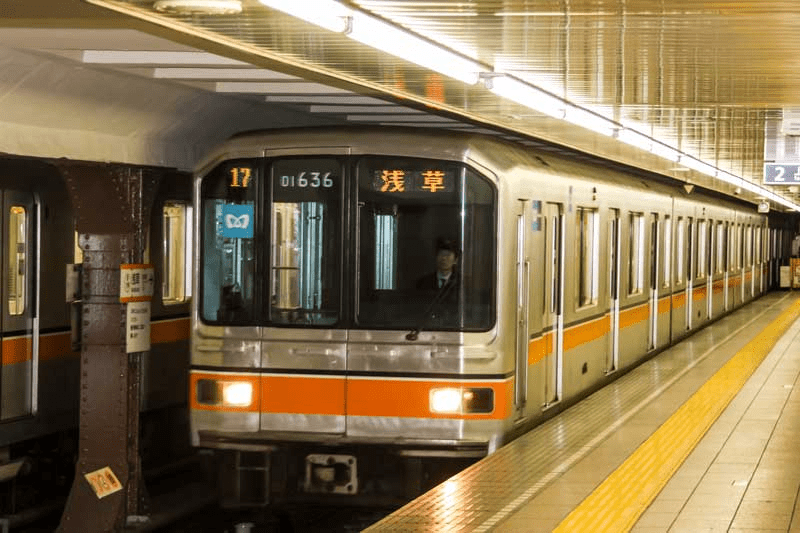
The good news is that the Tokyo subway system is bilingual. If you can understand English, you’ll cope with all the announcements and will be able to read all the signs. Definitely use a map. Even Google maps is good, specially to get from your accommodation to the nearest station where you can hopefully see a network map. Also, you’ll find bilingual maps of the station.
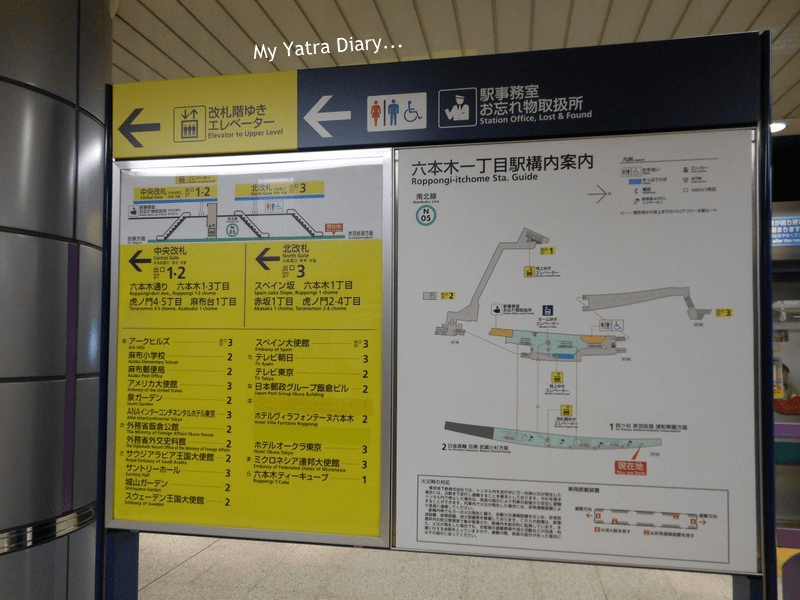
The lines are colour-coded. Look for the colour of the line (s) you need to catch to go to where you want to get off. You may have to change trains several times. For instance, to get from Shinagawa to Maihama, which is the station for Tokyo Disney, you’ll catch a train for Tokyo, probably, but not necessarily, on the green Yamanote line and then change for the pink Keiyo line. That’s the easiest way, but if you like to test yourself, there are a number of interesting routes you could plot. Give yourself plenty of time. This is not Ipswich where the trains to the city only run every half an hour. Take time to find the right signs.
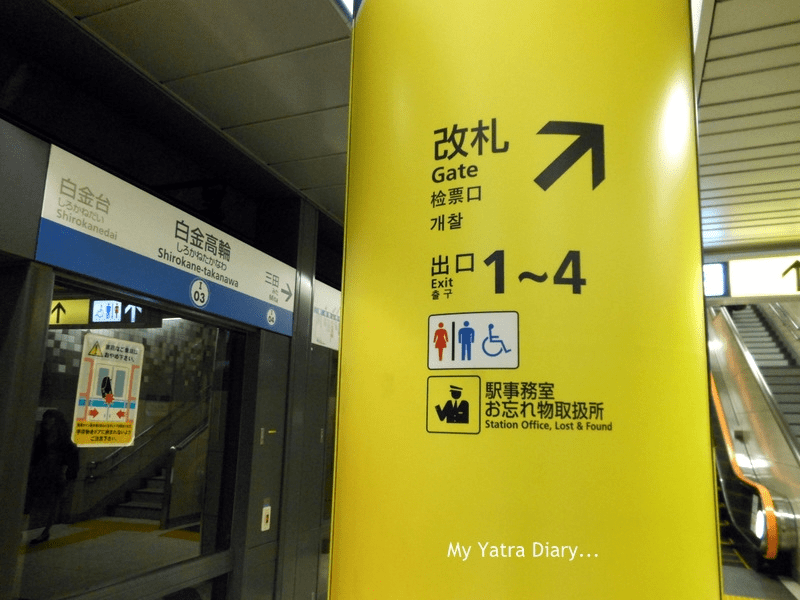
The train lines have letter codes and the stations have number codes. Pay attention to the station initials and numbers to find the next one you need to go to.
Once you are at the platform look for a sign on the wall opposite to make sure the train is going the right way.
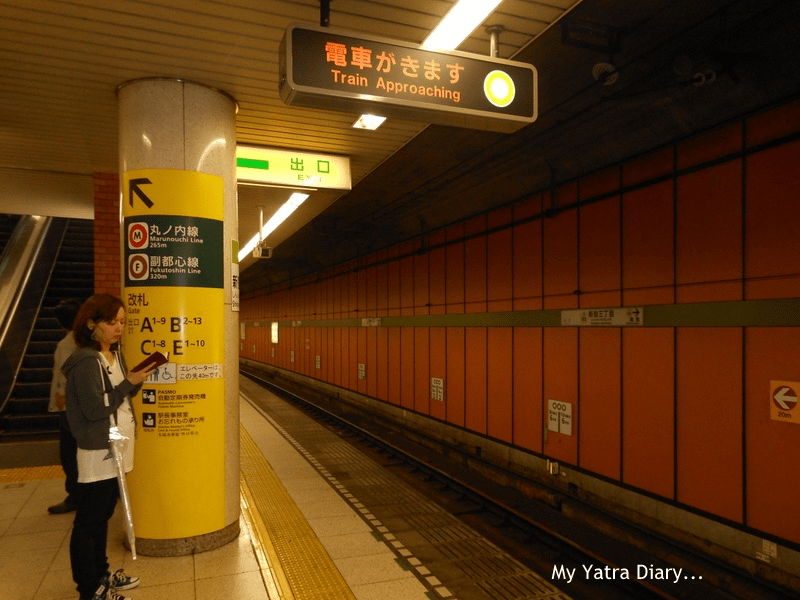
The location signs are located on the wall of the platform opposite where you stand (across the track) they show the direction of travel for the train and the name of the next station with an English translation. You can read signs on platforms from within the train and there’s also an electronic board in many trains showing you the station you’re at and how many stops until your destination.
Some stations, such as Shibuya are major hubs served by multiple lines, each with different station codes. Key identifiers include G-01 (Ginza Line), Z-01 (Hanzomon Line), and F-16 (Fukutoshin Line). The station is also a central hub for JR East lines—Yamanote, Saikyo, and Shonan-Shinjuku lines.
Lets say you are at station G02 but need to go to G09 (Ginza Station): it’ll have a line going left and right from G02 and show the next stop is G03 or G01. If you need to go to G06 you’ll want the next stop to show as the train going to G03. The numbers should be increasing. If the numbers are going down you are on the wrong platform. It will become clear when you are there, I’m sure.
Follow the letters/numbers. Also don’t stress if you are on the wrong train! I’ve found myself on the wrong train a few times. Just get off at the next stop and figure where to go from there.
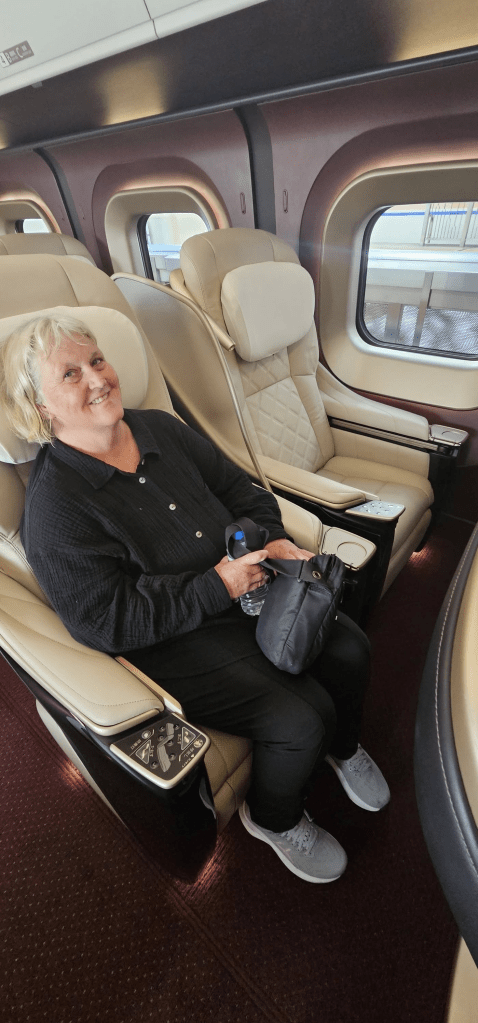
Okay. That’s not on the Tokyo subway. We upgraded to ‘Gran’ class on the Shinkansen.
The Tokyo trains are only a nightmare if you don’t get your head around the basics of how the system works before you arrive and do your mapping homework before you set out to go somewhere. They are neat, well-organised, cost efficient and quite user-friendly. Be as polite as you can when interacting with locals and consider that maybe a younger person has had less time to forget the English learned at school. Speak slowly and clearly but not as if they are a moron and thank them profusely. Not every Asian is Japanese either. LOL!
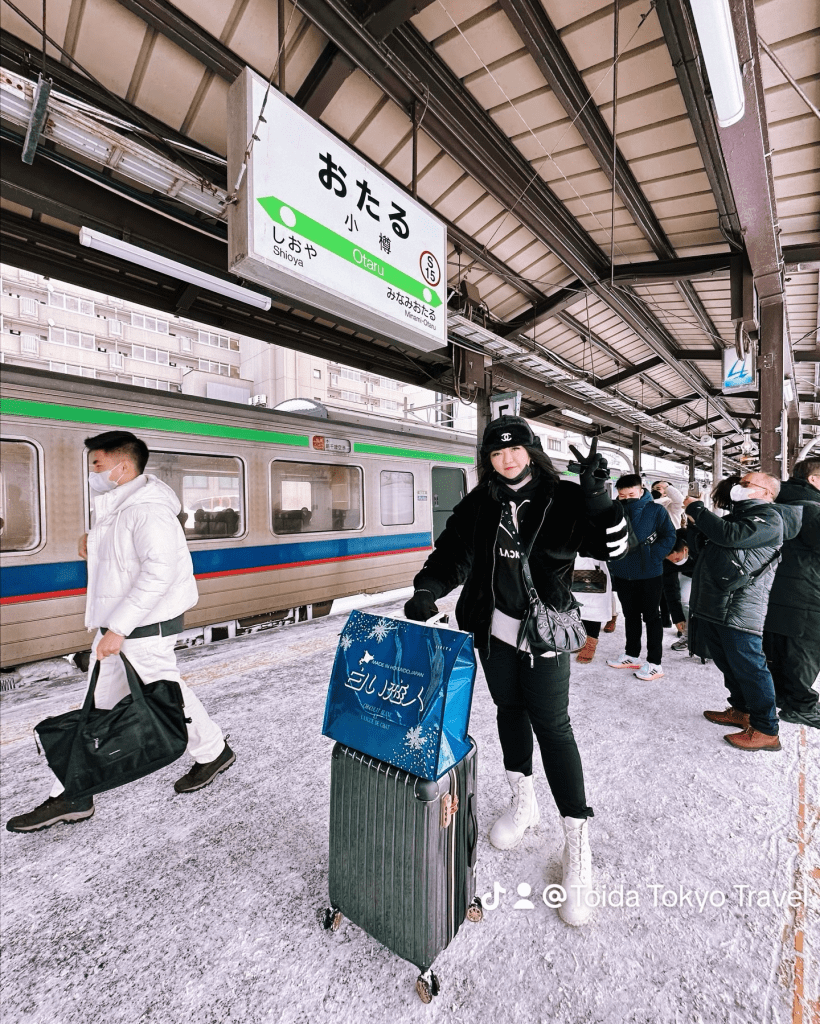
Biggest tip? Avoid commuter rush hours.from 7:30 AM to 9:30 AM (inbound) and 5:00 PM to 8:00 PM (outbound) on weekdays.
In Tokyo, the trains don’t run all night. Most trains and subways start operating around 5:00 AM and stop running between midnight and 1:00 AM.
 Margaret R Kelly
Leave a comment