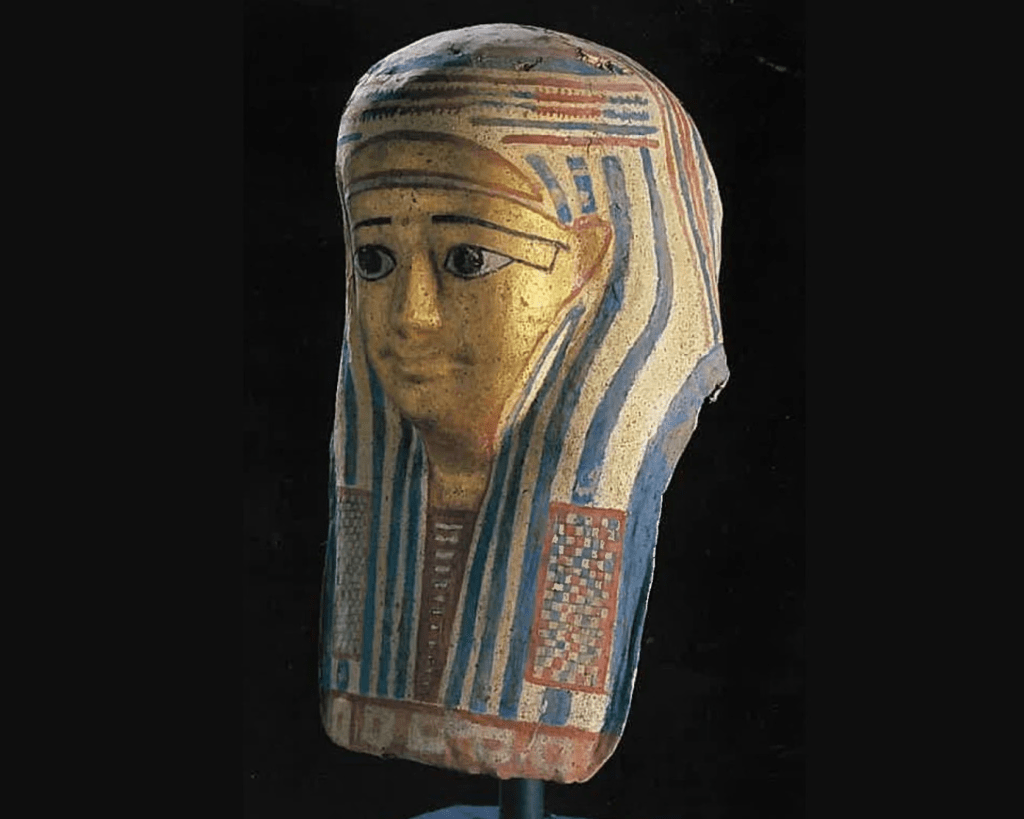
You may, when watching the news in February, have heard about the theft of some priceless Egyptian treasures from a private museum near Brisbane. If so, like me, you may have wondered what sort of place has valuable artefacts in a situation from which they’re stealable. The ‘cat burglar’ actually had the cat carving in his possession when he was arrested and the other stolen objects were returned undamaged several days later, so all’s well that ends well. But our curiosity had been tweaked.
We’re big fans of Marc Fennell’s series entitled ‘Stuff the British Stole’, so at the time of the Egyptology heist, I was struck by the irony of the fact that the objects were probably stolen from the Egyptians initially anyway. Apparently all the realia and objets d’art on display at the Abbey Museum at Caboolture, between Brisbane and the Sunshine Coast though, are there these days with the permission of their countries of origin. These ‘origin countries’ include Great Britain, Mesopotamia, Egypt of course, China, Japan, Burma, Indonesia and many countries in Europe.
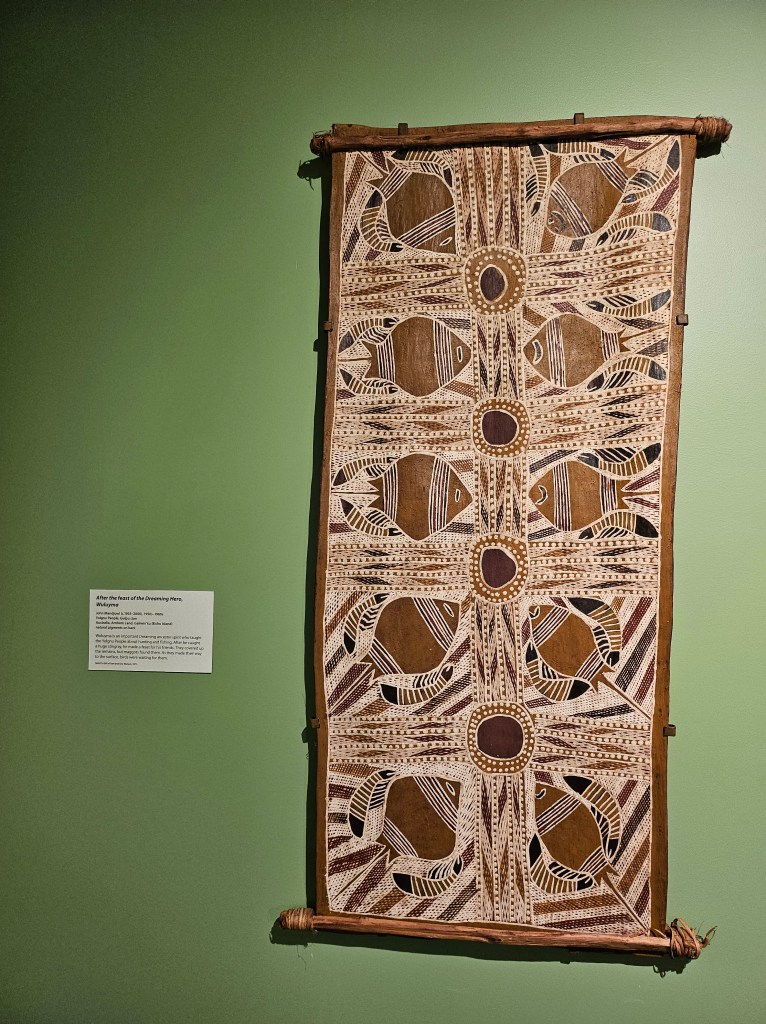
Oh and there is some very detailed non-local Aboriginal spiritual artwork in the art gallery section which currently has a display on art relating to deities and worship. Most of it seems to be maybe Orthodox Catholic (?), and priceless,…not in a give-the-Vatican-a-run-for-its-money way, but in an aren’t-you-glad-you’re-with-AAMI sort of way. I bet the insurance company heaved a sigh of relief when that 2600-year-old cat carving, the jewellery and the masks turned up.
I’m fascinated by cultural heritage. It represents the living memory of human civilisation, connecting our past with the present while informing our future. The legacy of physical artifacts, traditions, values, and knowledge passed down through generations encompasses two primary dimensions: tangible heritage (physical objects and sites) and intangible heritage (practices, expressions, knowledge, and skills). Together, these elements create a complete cultural identity that reflects a community’s history, values, and unique character.
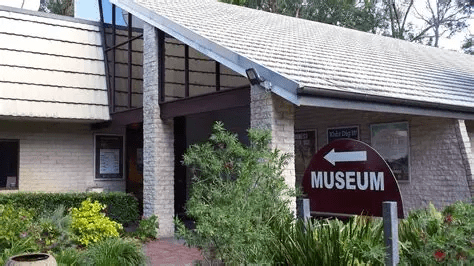
The Abbey Museum houses collections of artifacts and artworks that represent tangible cultural heritage on a smaller scale than massive monuments or buildings. These objects—ranging from ancient tools to modern art pieces—provide physical evidence of human creativity, technical skill, and cultural expression across time. It strikes a perfect, easily understood balance between tangible heritage and information about intangible heritage.
It was founded by followers of a Father John Ward. He had a huge private collection of historical knickknacks and set up an outdoor folk village in England in the 1930s. After World War II, it was all crated up and taken to Cyprus by Revd John and his wife Jessie. People couldn’t afford the luxury of visiting museums in England. When his wife died, some of the good Reverend’s followers brought it to Australia. Other objects and artworks are continually being donated, sponsored and bought.
You may also have heard about the mediaeval festival that is held there every July featuring jousting tournaments, reenactments, and themed food. Yes. That place!! Hubs was keen to go to that last year till he learned that attendees were not permitted to take photos. He wanted action shots of galloping horses and impaled knights.
We took a detour on our way home to Ipswich to have a quick squiz at this Abbey Museum without the jousting, and ended up spending over two hours in its thrall plus eating time at the cafe (the gluten-free blueberry muffins are droolworthy) because the actual displays are interesting. There are no restrictions on phone photos or flashless camera photography, although many displays are in glass cases which reflect you back at yourself and make the photos disappointing because there’s a fat, frumpy, old ghost in the way. Nevertheless, who needs photos when this is a very different experience from the usual folk museums in Australia that are filled with yellowing wedding dresses, butter churns and junked Fergie tractors? There’s nothing you can really say, ‘Oh, Gran had one of those. I’ll take a selfy with it.’
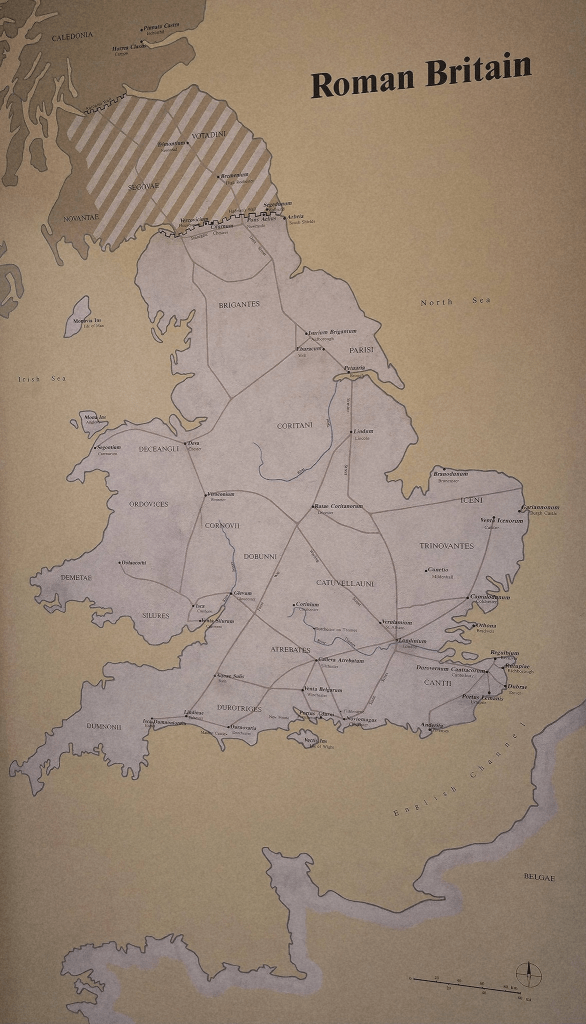
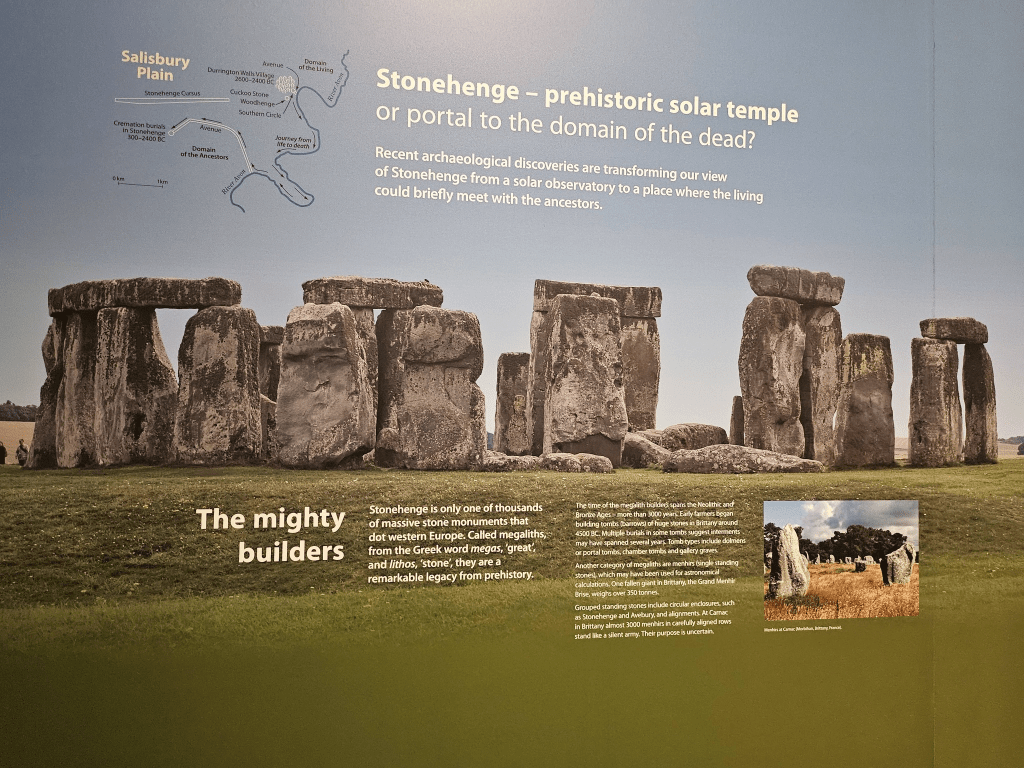
The ‘museum’ part is like a walk through a timeline of British history—a twisting timeline with walls and strategic lighting. Exciting! The history of Great Britain is the heritage of so many Australians, but most of us know very little about it. Even though I was familiar with it through having studied linguistics, I learned a great deal. Missing pieces slotted in to my knowledge set like the stones of a henge being tipped into their holes.
The written explanations are perfectly balanced between contextual information for the artefacts displayed and mere labels that assume you already know everything. There is no information overload (Military and Colonial Museum, Maryborough content-writers, take note if you read this) and there are no fake wattle and daub huts or plastic replicas of irrelevant things, or bananas for size comparison. Every artefact is either genuine or has a purpose in the display. Nothing seems to be highlighting the creativity or personal tangential obsession of some modern egoist. My own little personal obsession is maps. Those on display are clear and pictures in displays are perfectly balanced with easily interpreted written information.
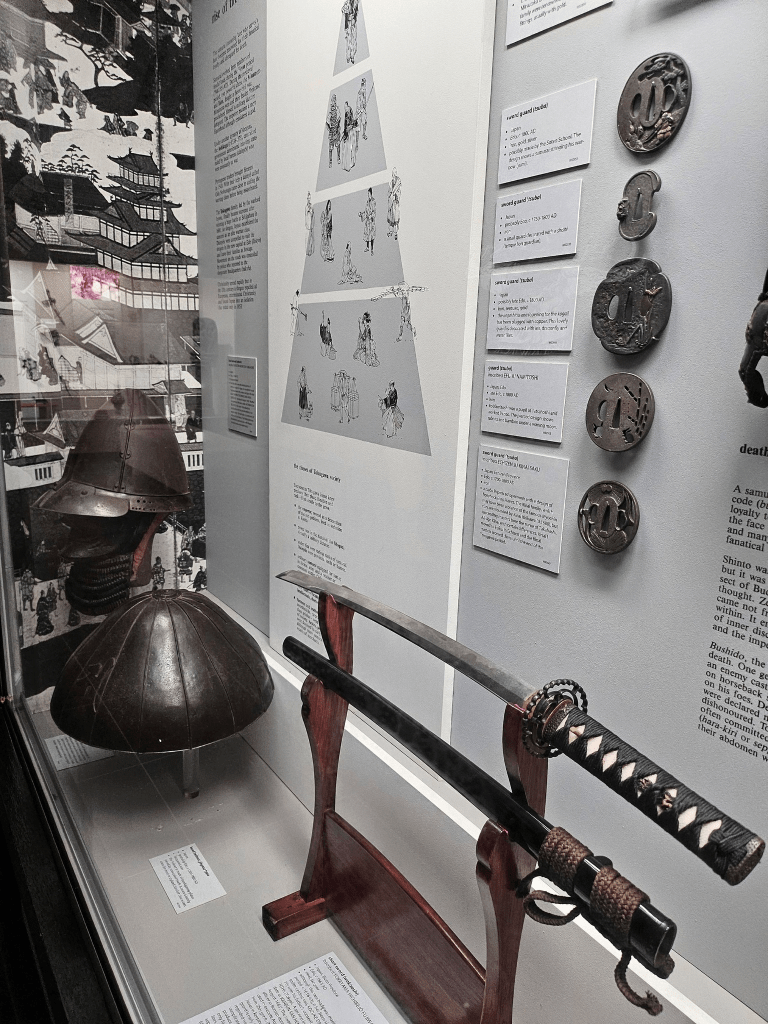
No wonder so many school groups visit The Abbey! It’s teachable. Such a fun worksheet to make, methinks from a teacher’s point of view.Today, being a school holiday, was very quiet. Perfect timing. The head curator, Mr Michael Strong, even had time for a chat. He pointed us towards the section of Roman road paving, naturally protected by glass on which you can walk. 😃 At the end of your meander through British history, you find the displays dedicated to artefacts from the histories of other cultures—REAL Samurai swords and armour, for example. I couldn’t detect the usual colonial bias which was refreshing.
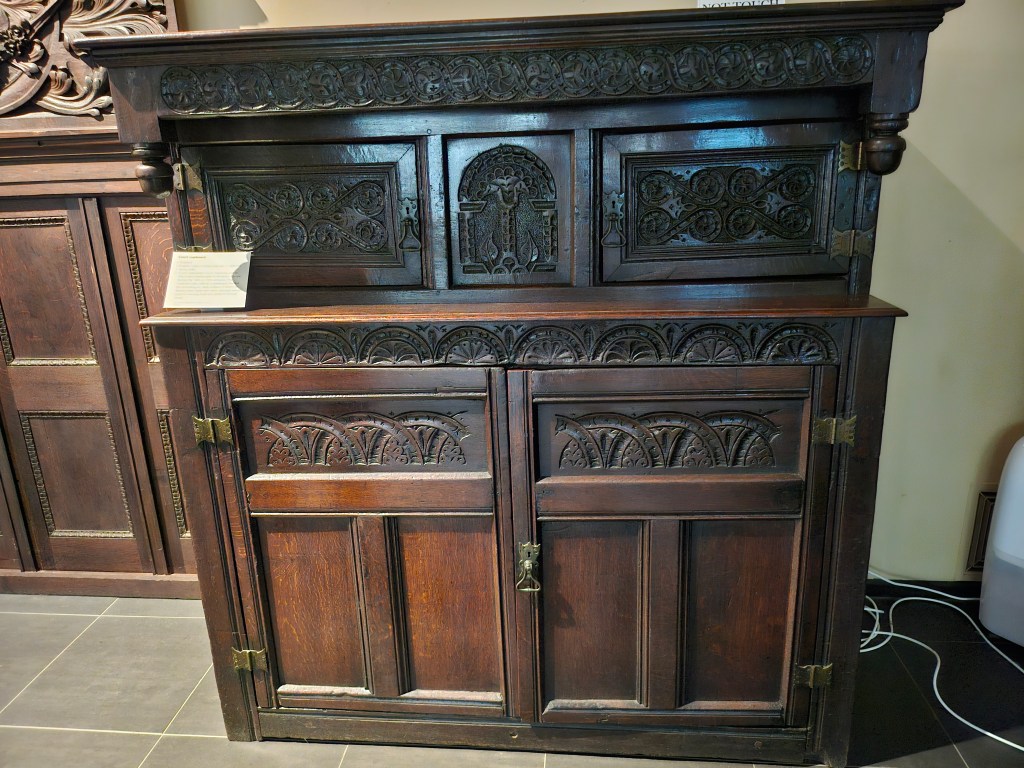
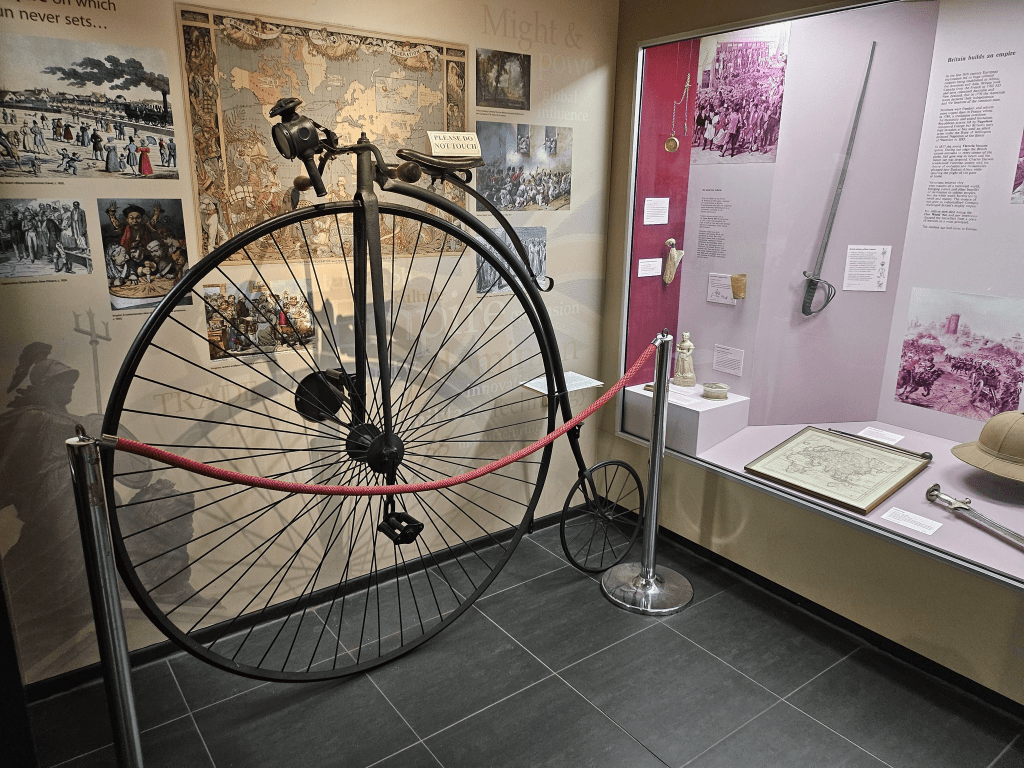
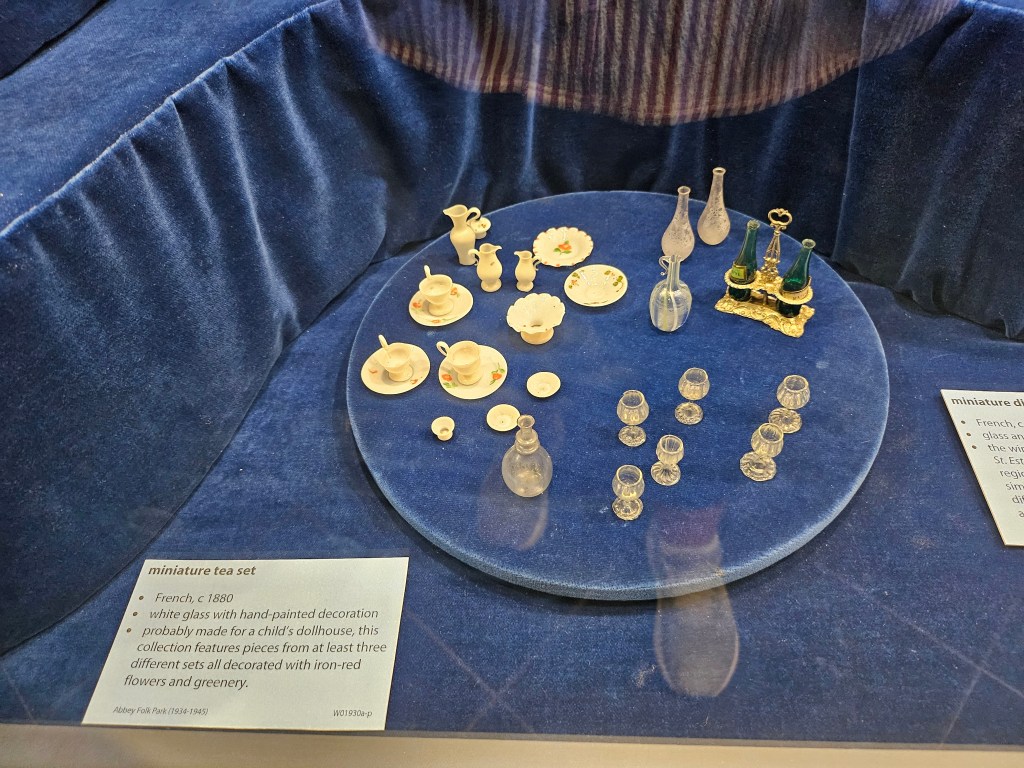
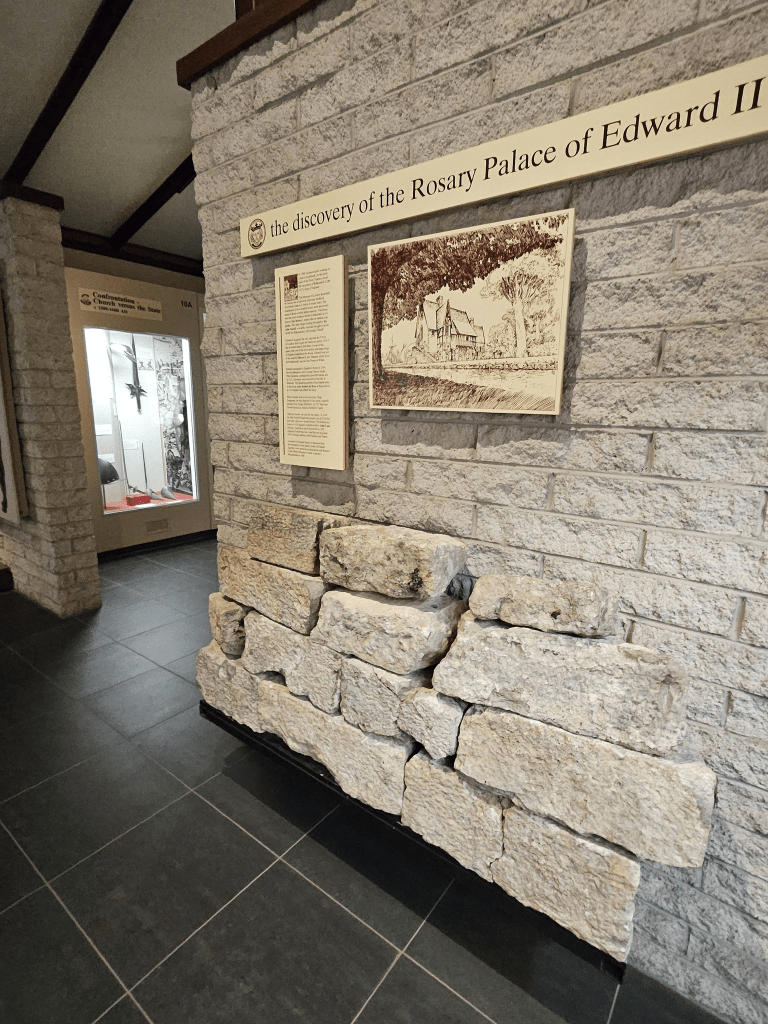
My favourite artefacts were the section of wall excavated from King Edward II’s Rosary Palace, the tiny 18th-century porcelain dolls’ teaset, the penny farthing bike (my great grandfather apparently had one), the court cupboard from the Stuart or Tudor period (Mum had a similar one) and the delicate blown glass apothecary bottles … not in chronological order, sorry. Touching the blocks in that section of His Majesty’s wall was particularly mind-tingling. Imagine who else may have been in its vicinity! My ancestors, the Despensers (Spencers) were pretty good friends with Edward, for example …not boyfriends, but manipulators.
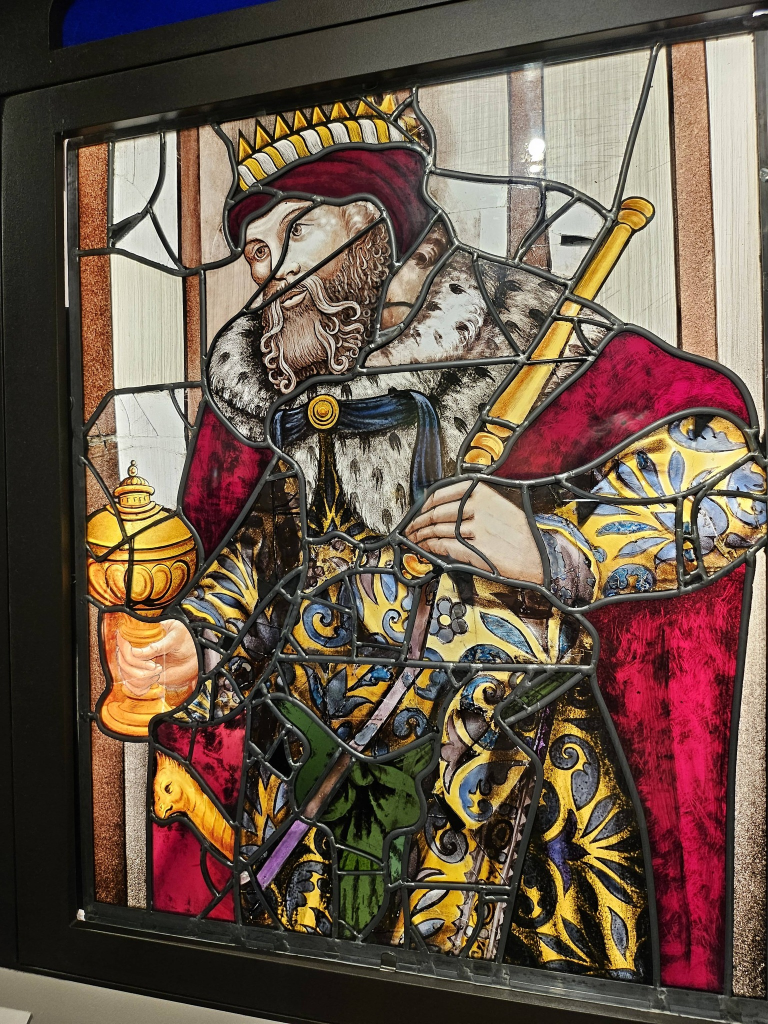
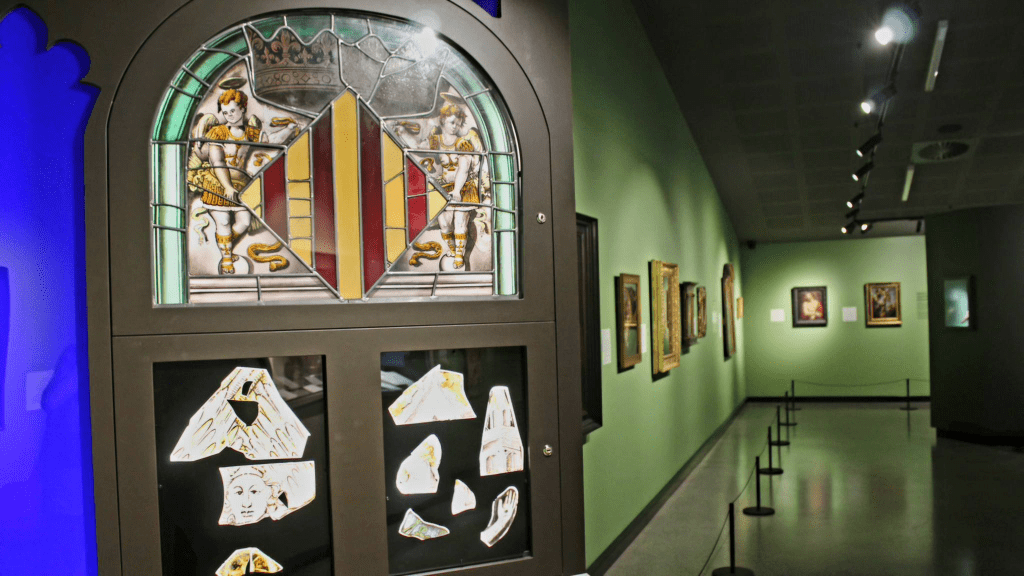
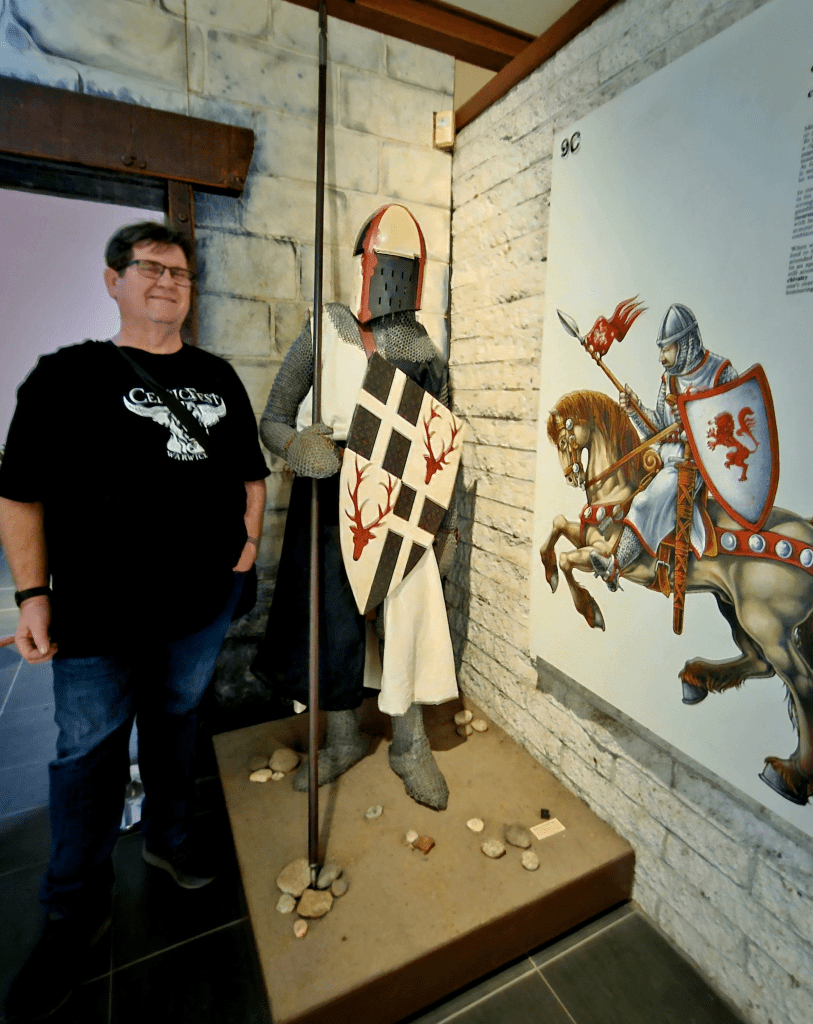
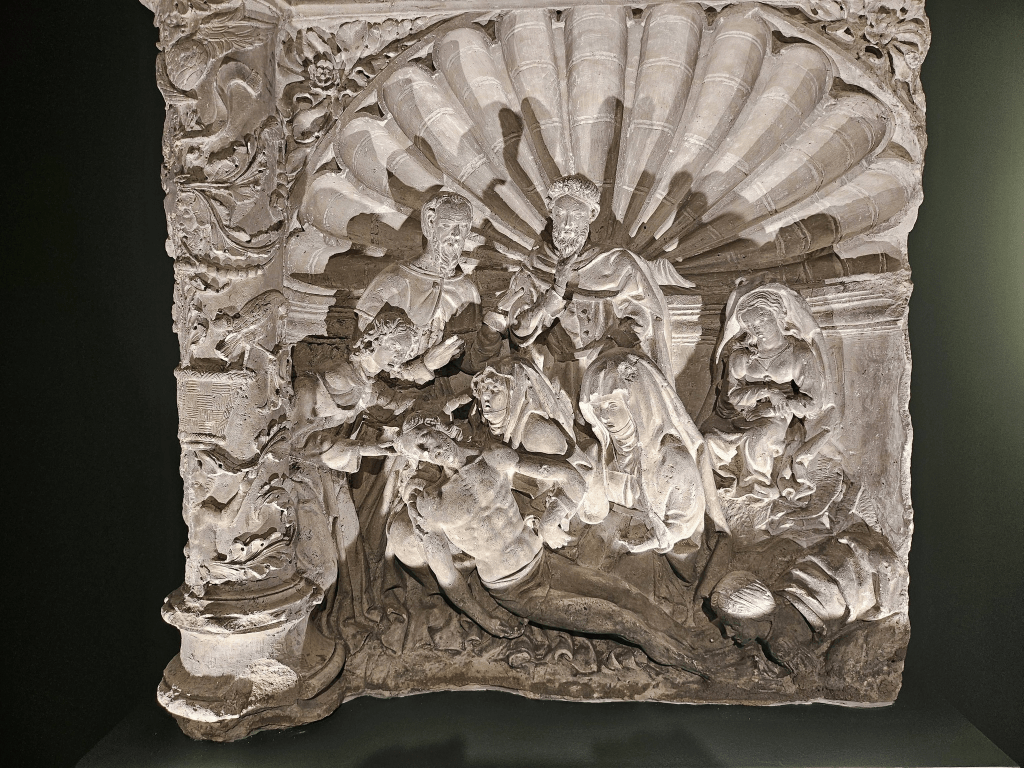
Hubs liked the metal javelin thing that knights used to stick it to each other. The stained glass displays and the exquisite ‘Lamentation of Christ’ stone carving were the most attention-worthy pieces of art, but I felt I needed many more hours just to study everything in the art exhibition, entitled ‘Inspired Images: The Art of Faith’ before I passed judgement. The art part’s partly funded by the Qld government so you need to get their money’s worth. You should go for that if not any other reason.
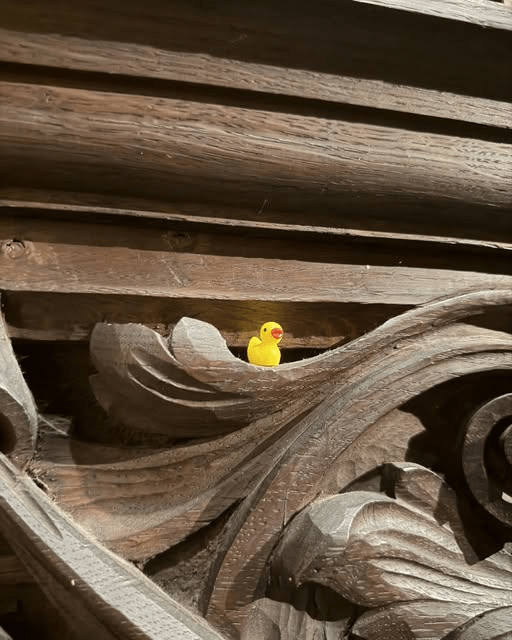
The biggest thrill for me was spotting the actual cat that had gone missing (I think). If you’ve got kids, there seems to be some sort of rubber-duck spotting thing happening which may keep up the interest. I saw a couple of random duckies which wouldn’t otherwise have a reason to be there.
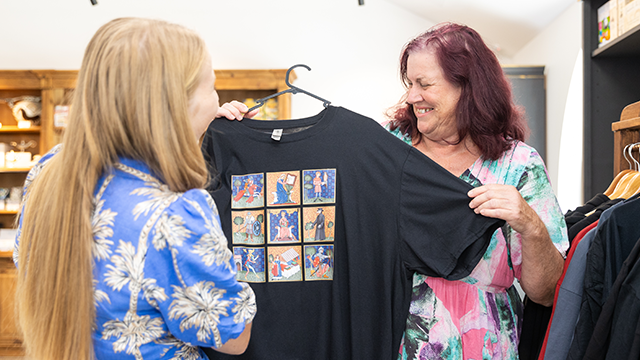
Entry to The Abbey Museum of Art and Archaeology was $15 for an adult and $9.50 for me as a concessioner. I’m getting to the stage where ticket-sellers can just tell I’m old without me having to pull my card out. Check the website for opening hours—we did. Oh and there’s a giftshop with t-shirts and replicas etc.
 Margaret R Kelly
Leave a comment