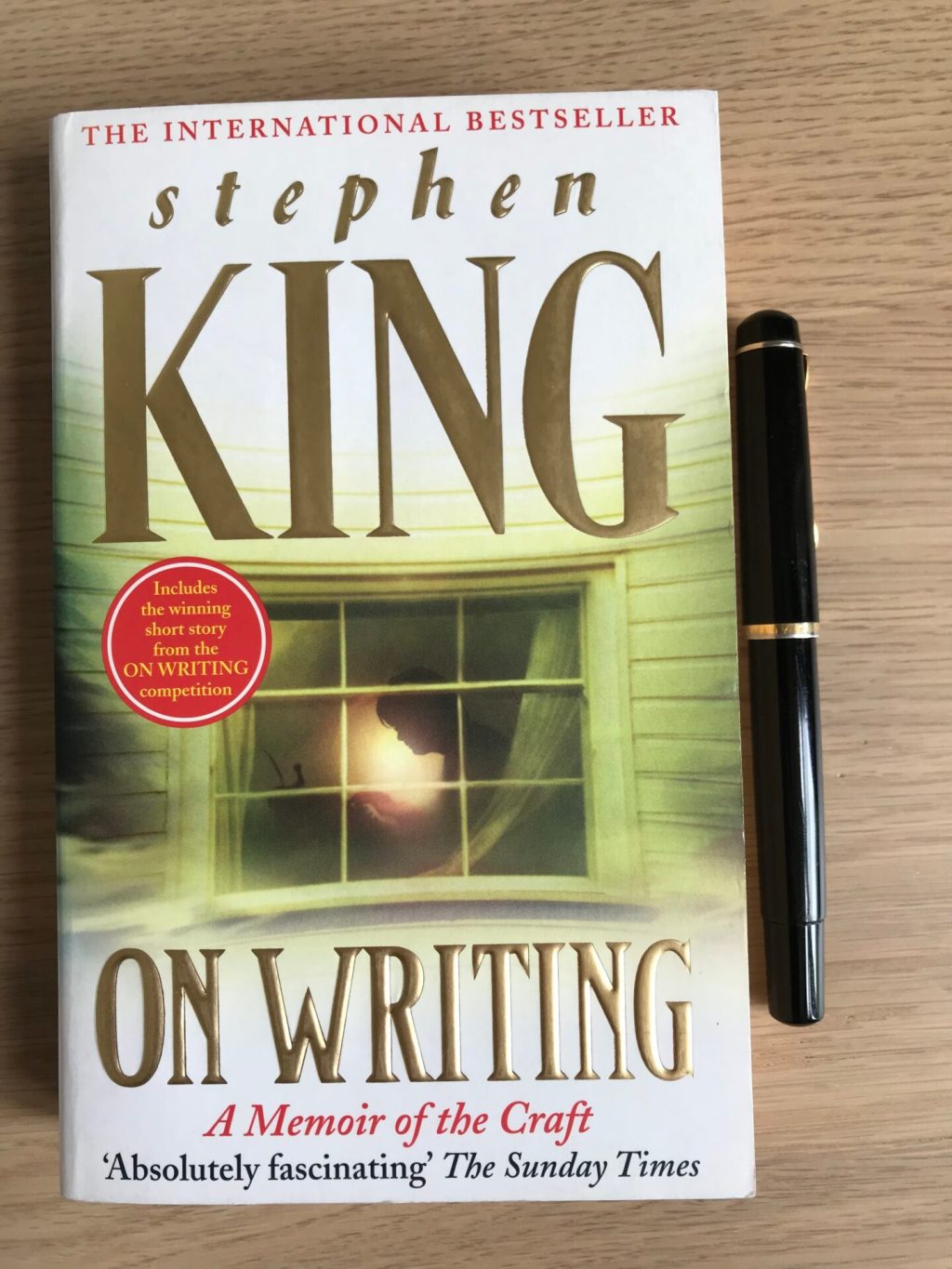
Welcome to my first book review. I have two confessions to make up front. The first is that my greatest introversion-driven two-pronged aspiration has been, for over sixty years, to be a writer and to live in a ‘chambre de bonne’—a garret room with a view over Paris.
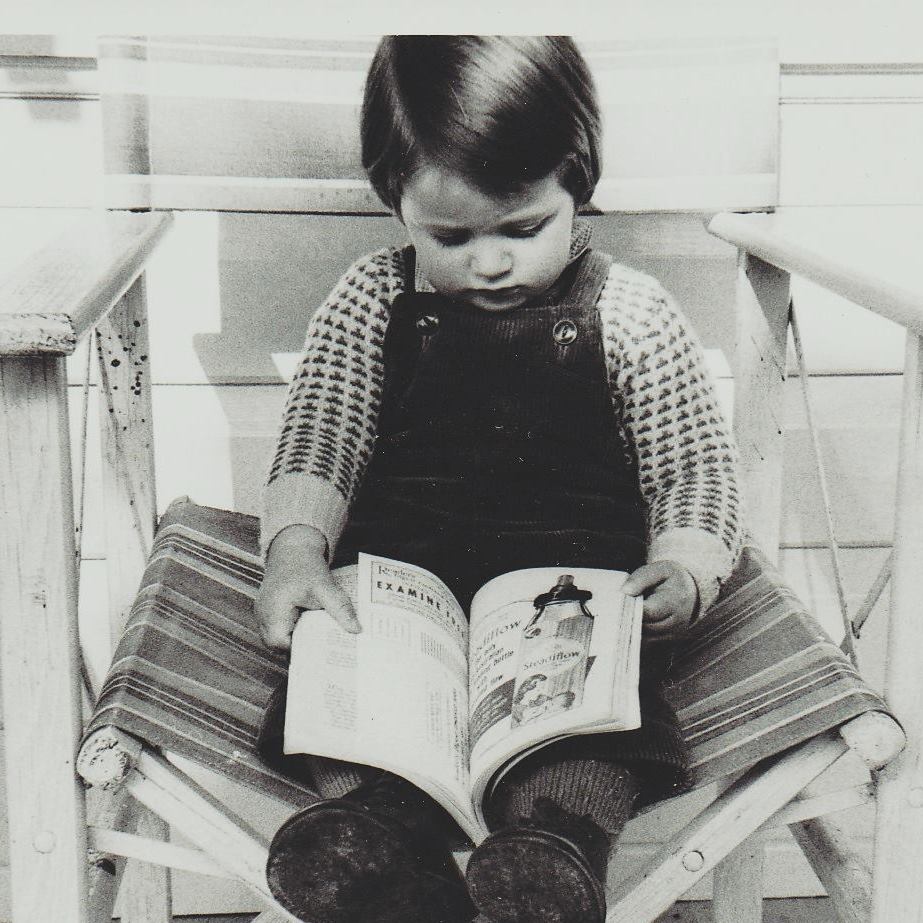
There’s a picture of me somewhere on this link, as a two-year-old holding the Readers’ Digest upside-down on my grandparents’ veranda in New South Wales. I’d learned to hold books right-way-up and was annotating my favourites clumsily before I started school. I’ve maintained the habit of scribbling in books my whole life, which is why I now find borrowing from libraries frustrating.
In the Disney movie, Ratatouille, Linguini was living in the sort of Paris apartment I’d always coveted. I got to experience such a room with a view over the Sorbonne University and the Pantheon’s domed roof in 2018 when my friend, Kerry, made us a posh booking and then got sick and couldn’t accompany me. I did a lot of walking and a lot of journal-writing in English and French, lived the ambience and wished Kerry was there to share the realisation of half of my dream—the easily realised part.
Having got that out of my system, sort of, I decided to manifest the ‘being a writer’ part of the ambition during the Covid hiatus. Actually, well before Covid struck, I’d finished a first draft of a first manuscript, but I didn’t start to concentrate metacognitively on ‘technique’ or what readers enjoy until Covid gave me time and mental space. I’ve just finished my thirteenth draft of that same manuscript and several other first drafts, because I also got the gastric version of long Covid—IBS— and had to give up teaching.
One real-author hack I’ve noticed, which has been reinforced by several professional writers administering courses I’ve done (a big shout-out to everyone at and endorsement of the Australian Writers’ Centre ) is that it’s de rigueur for real authors to have websites on which they give stuff away and blog cheerily about their writing, as if administering a website doesn’t taking them away from that real business of being a writer.
The only problem is that this author website needs to be up and running before you pitch to your first agent or publisher because, if you were to spread the Vegemite of self-promotion at just the right thickness, the person with your future in their hands’d almost certainly look for your website to see whether you’ve ‘a following’ and if you’re marketable. Please feel free to interact often and nicely all over my website and they’ll think I already have fans.
So, here I am, not surrounded by links where you have to spend money, writing templates, spoiler alerts for my next novel or free downloadable novella extracts, but instead giving away travel memoirs which I hope are entertaining as well as informative re costs and how-tos, my thoughts on life as an old person which I also publish bloggishly on my Facebook pages AND in this section, free book reviews. I also have an author Facebook page—Margaret R Kelly, Author and Travelling Raconteur which you can follow—and a personal page with lots of cat and food photos. It’s under my maiden moniker, Meg Blomfield (Meg Kelly) and is blocked unless you’re a friend. I’m not adverse to lots of friends, provided I’ve had some interaction with you somewhere, sometime and you are not a widowed American officer in the armed forces.
I read A LOT of books and I always reflect on the ones I enjoy, in order to understand the reason(s) for my enjoyment. I concur with Stephen King that it’s a good practice for a reader aspiring to be a writer, (Whoops! Yes folks, that is a tip), and it’s an easy step from there to recommend the good ones. I also analyse books that don’t grab me to ascertain why they don’t work but am less likely to review them.
My second confession is that Stephen King is one of my favourite novelists. This is not really a confession. Everyone who knows me knows that. From the get-go with Carrie, he had me hooked on the way he could take you into protagonists’ heads, although some of his later books left a sad patina of disappointment, for which I excuse him. Anyone’d get writers’ block, or more specifically, a lack of time for revision and perfection, under continual pressure to churn ‘em out.
Basically, On Writing’s self-help for people who snub their noses at self-help. And nobody snubs self-help better than literary wannabes, which is why there’re so many books written by writers about writing. Too many! Most of these books have black and white covers with unceremonious (and decidedly un-self-help-y) titles such as Writing and The Writing Life and A Writer’s Diary. Meh … it’s search-engine optimisation.
King takes us into his own thoughts so powerfully in On Writing though, that when I finished, I wiped a couple of tears from my eyes and started again from the beginning, hoping to soak in every word. That is not hyperbole; it’s how affective this book is. I plan to read it again and again because I no longer have a memory, and my forgetory functions perfectly.
A lot has been written about the creative processes of famous people. For the same reasons that How to Win Friends and Influence People by Dale Carnegie was an instant bestseller, even semi-passionate writers like to poke around in other writers’ studios, dig through their pasts for clues of the development of their genius, and hear about the day when it all clicked. We do that because we’re secretly hoping some of that creative brilliance will rub off on us. Maybe we can avoid the hard work in learning how to write creatively.
The writing processes of Stephen King, or any other famous writer, however, won’t necessarily work for the reader, who — if he or she or they really wants to write — should figure out a writing process of his, her or their own. In other words, I’ll never be Thomas Hardy or Virginia Woolf or Stephen King merely by emulating their routines and rituals, but I live in hope and keep practising critical analytical reading and writing all day most days as well. One of the things that I find so great about King’s book is that he emphasises almost exhaustively the importance of finding the type of writing that you’re good at and sticking to it.
The book is full of King’s tell-it-like-it-is style and peppered with what he terms ‘colorful’ (sic) language [and I emphasis the ‘sic’, prescriptive Australian spelling Nazis, so you don’t take umbrage and tell me to add a ‘u’ to that word in quotation marks. Please note that King’s American and that’s how they spell it. My use of one ‘dit’, instead of two “dit dits” which is the Australian format convention for dit-ditting, should also be proof of my level of applied literary knowledge]. It’s useful to highlight lines in On Writing such as: ‘timid writers like [passive verbs] for the same reason timid lovers like passive partners. The passive voice is safe.’
The book is also a breezy, humorous recount of the events and interactions in King’s life that have shaped him and his own experience as a writer. He describes how the inextricable bond between life and writing helped him recover from a near-fatal accident in 1999.
King has written over sixty books, some of which are somewhat disappointing to be honest, after his early run of name-making blockbusters, but as King says, if you want to be a writer, then you have to do two things—write a lot and read a lot. You should take this advice and read this one book, even if you read no others.
 Margaret R Kelly