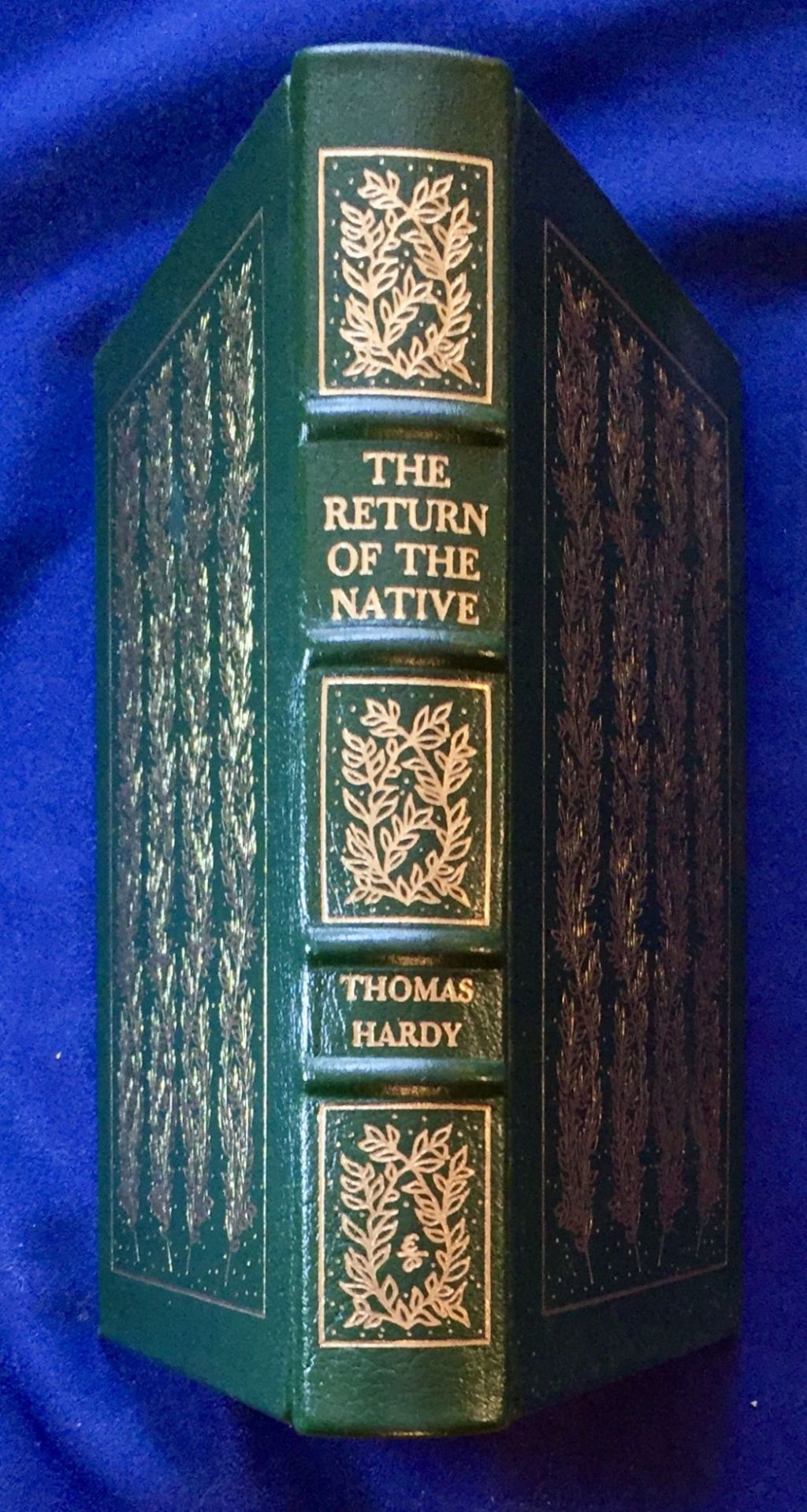
GENRE: CLASSIC TRAGIC BRITISH LITERATURE
This book was a so-called classic— one of the books they ‘make you read’ at school that everybody loves to hate.
I, however, loved it. I recently reread it because I couldn’t remember why and became lost in the description of the bleakness of Egdon Heath, which was in itself like an omnipotent protagonist which(who?) formed the lives and personalities of the characters. I was fascinated by the glimpses into the historical context of the time that it afforded and the emerging character of the Reddleman, who, far from being a scary character, every now and then appeared out of nowhere to save the day.
I learned a lot about writing technique from Hardy.. It is mainly his descriptive powers which make this a great read. He describes the heath, the wind, firelight dancing on people’s faces, a storm, an eclipse, all revealing the power and beauty of the English language without lapsing into purple prose. Not a page went by where I wasn’t awe-inspired by Hardy’s command of the written word. I found myself frequently lingering on a page and rereading passages. We weren’t allowed to highlight, but if we were, my copy of this book would’ve been easily filled with yellow back in the day.
The characterisation in the book is also mesmerising. Eustacia Vye’s, quite simply, a narcissist. That was not how people were defined at that time. She may have been seen as self centered, heartless, tempestuous and hedonistic. Hardy shows this rather than telling us.
She passes her days dreaming of passionate love and the escape it may bring from the small community of Egdon Heath. Hearing that Clym Yeobright is to return from Paris, she sets her heart on marrying him, believing that through him she can leave rural life and find fulfilment elsewhere. But she is to be disappointed, for Clym has dreams of his own, and they have little in common with Eustacia’s. Their unhappy marriage causes havoc in the lives of those close to them, in particular Damon Wildeve, Eustacia’s former lover, Clym’s mother and his cousin Thomasin. The Return of the Native illustrates the tragic potential of romantic illusion and how its protagonists fail to recognise their opportunities to control their own destinies.
 Margaret R Kelly