GENRE: CONTEMPORARY LITERARY FICTION
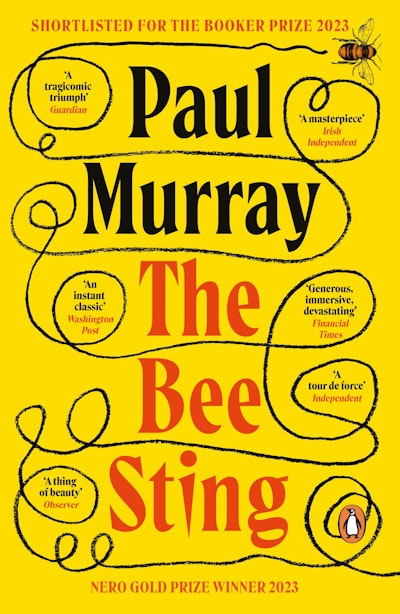
The Bee Sting would have to be one of my all-time favourite novels. It’s a poignant and unflinching portrayal of a family—the Barneses— in turmoil. They reside in a small town in Ireland during a time of financial chaos and against a background of climate change and environmental stress.
It delves into existential themes like failure, regret, and the complexities of familial dynamics. Characters grapple with the concept of luck and fate. Murray poses thought-provoking questions about the consequences of our choices. Is it possible to rewrite one’s narrative, or are we doomed by our past? Each character’s attempts to break free from societal norms expose their vulnerabilities.
Dickie, once a thriving car dealer, now finds his business on the brink of collapse. Instead of facing reality, he retreats to the woods. He spends countless hours building a bunker with an eccentric handyman named Victor. Imelda, his wife, battles despair and embarrassment. To cope, she sells jewellery online, a sign of their crumbling status. Their teenage daughter, Cass, struggles through her last exams while drinking to excess. Meanwhile, their twelve-year-old son, PJ, devises an escape plan from his family’s dysfunction.
Each family member wrestles with their own issues. They reflect on the events that led them to their current predicament. The novel reveals how a single incident—a fall on the tarmac, a chance encounter—can change everything. A slice of bad luck leads to a butterfly effect that spirals through their lives. Murray captures this interweaving of fates with sharp humour and insight. Themes of fortune, failure, and personal identity play out against a backdrop of economic decline.
Through its complex characters and darkly humorous tone, the novel offers a searing critique of Irish society while exploring universal themes of love, loss, and the enduring power of family bonds.
This book is not just written; it is crafted. The story’s layered revelations keep readers engaged as does the dark humour. Each character’s struggles illuminate broader societal themes, while their individual arcs resonate deeply. There are multiple points-of-view, many of them those of minor characters who aren’t Barneses, but somehow become entangled with them. Language and writing styles shift between characters, yielding unique insights. Imelda’s sections lack punctuation, mirroring her chaotic, fragmented thoughts. This stylistic choice pulls readers into her tumultuous mind. As the narrative progresses, we see how their lives intertwine through the lenses of memory and trauma.
As the novel progresses, the Barnes family’s past is gradually revealed through flashbacks, exposing a web of lies, betrayals, and unfulfilled dreams. Dickie’s hidden sexuality, Imelda’s abusive childhood, and the tragic loss of Frank, Dickie’s brother, cast long shadows over the present.
The story reaches a crescendo as multiple crises converge.
The novel concludes with an ambiguous ending—a tense standoff in the rain-soaked woods, leaving the reader uncertain of the characters’ fates. The final scenes are impactful, though deliberately left open to interpretation and this is part of the literary appeal of the novel.
 Margaret R Kelly