One of the great joys of travel is having in-person encounters with great art and architecture. This little ripper—the Vigeland sculpture park is a fine example. Steps alert if you are a little unfit. This park is not really wheelchair friendly and Oslo was having a heatwave when I visited so it was a test for the Rexona.
In 1921, Gustav Vigeland struck a deal with the city of Oslo. In return for a great studio and state support, he’d spend his creative life beautifying Oslo with this sculpture garden which is named after him. From 1924 until his death in 1943 he worked on-site, designing 192 bronze and granite statue groupings — 600 figures in all, each unique. He designed them and then his team of artisans made them in the studio, something which wasn’t made clear by our guide, but which I discovered at the nearby Vigeland Museum. You’ll see the complete collection of Gustav Vigeland’s work including the plaster originals for the park’s sculptures.
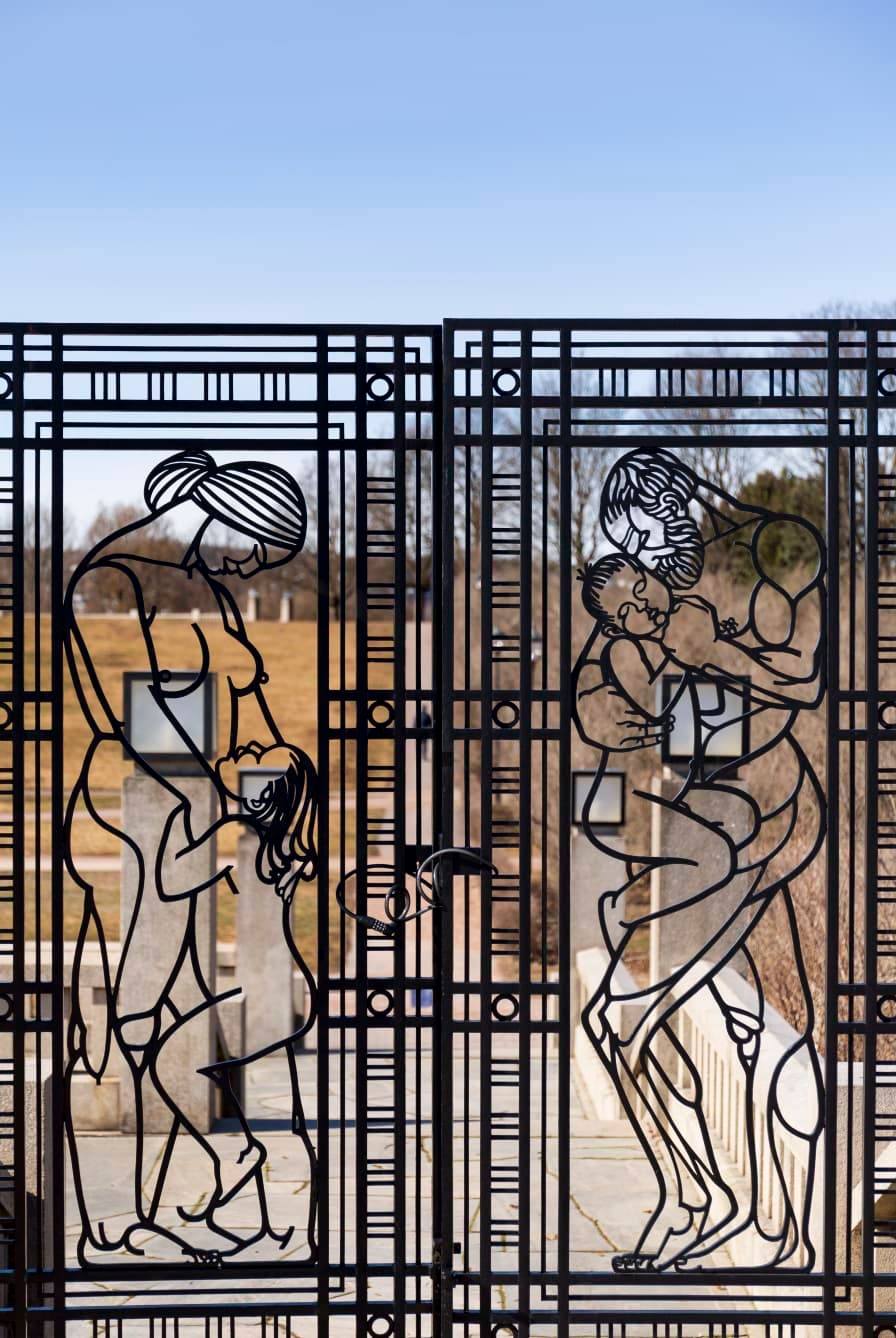
The most striking thing about these statues is they’re all stark naked. Even the wrought iron gates depict naked figures. This isn’t the soft-focus beauty of nubile nymphs, but the stark reality of boobs, bits and butts. These people are naked Homo sapiens. And it’s Norway and very cold in winter. You kind of get used to it when you’re in the park for a couple of hours. The reason he made them all naked is so that they’ll be timeless.
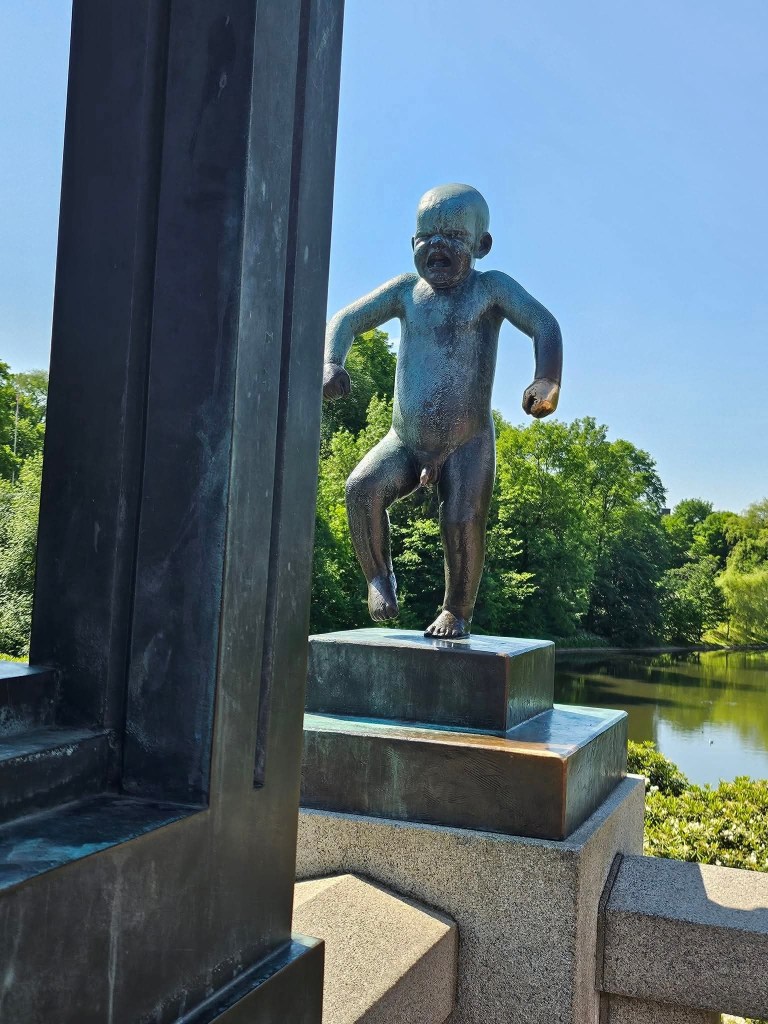
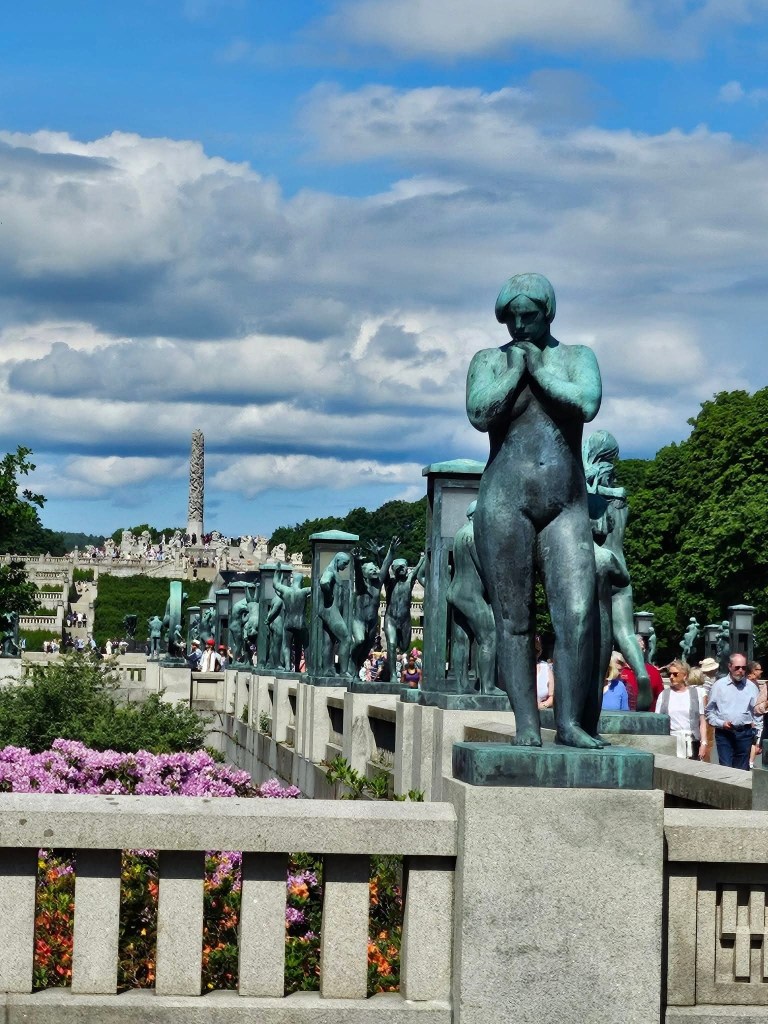
You cross a bridge lined with statues, including the famous Angry Boy. He stomps his feet, clenches his fists, and screams — just like two-year-olds have since the beginning of time. (It’s said Vigeland gave a boy chocolate and then took it away to get this reaction.) Touch his hand (the shiny one) and he’ll bring you good luck, supposedly.
Next comes a huge fountain, where water — the source of life — cascades around the statues. Vigeland consciously placed his figures amid the park’s landscaping to show how mankind is intimately bound up with nature.
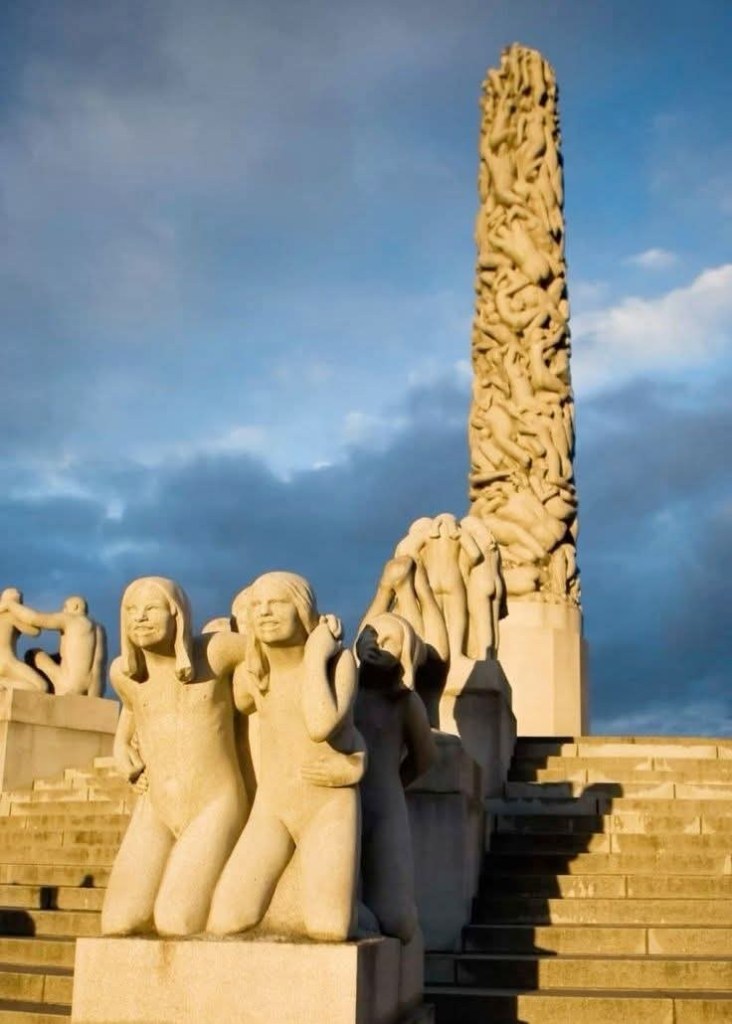
Then there’s this 46-foot-high granite pillar surrounded by 36 free-standing statues. Here, Vigeland explores a lifetime of human relationships. A mother bends over to care for her kids. Two lovers nestle nose to nose. A father counsels his son. An old man cradles his emaciated wife. The monolith itself teems with intertwined figures.
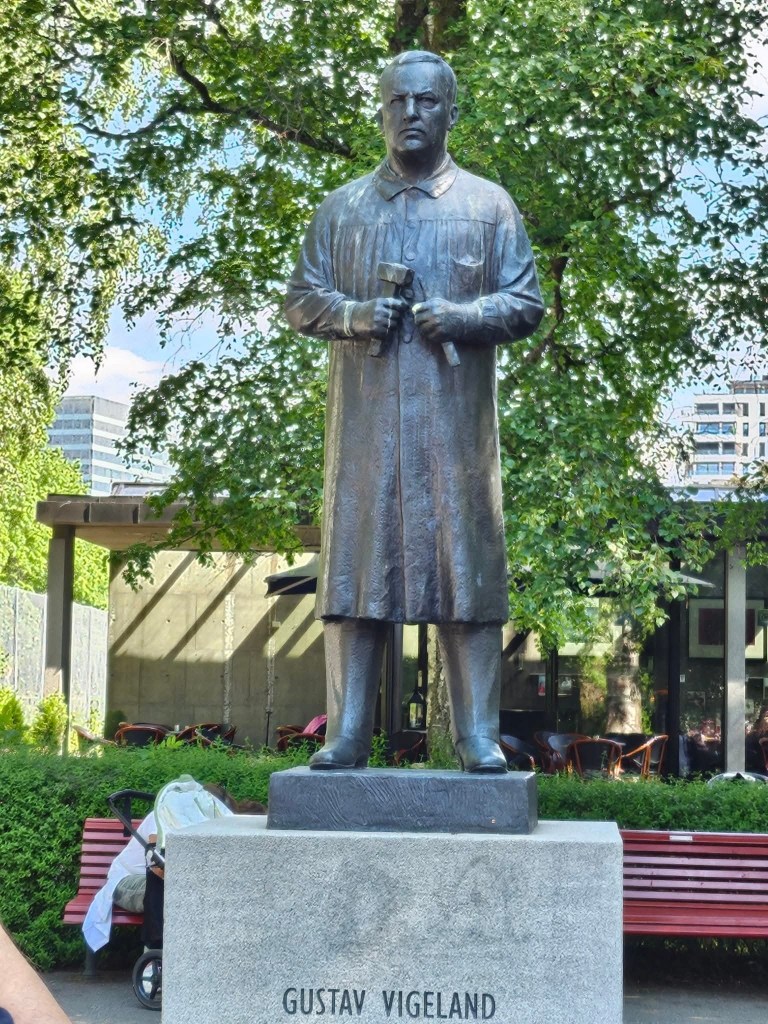
The last figure Gustav Vigeland made is of himself. With all his clothes on.


Leave a Reply