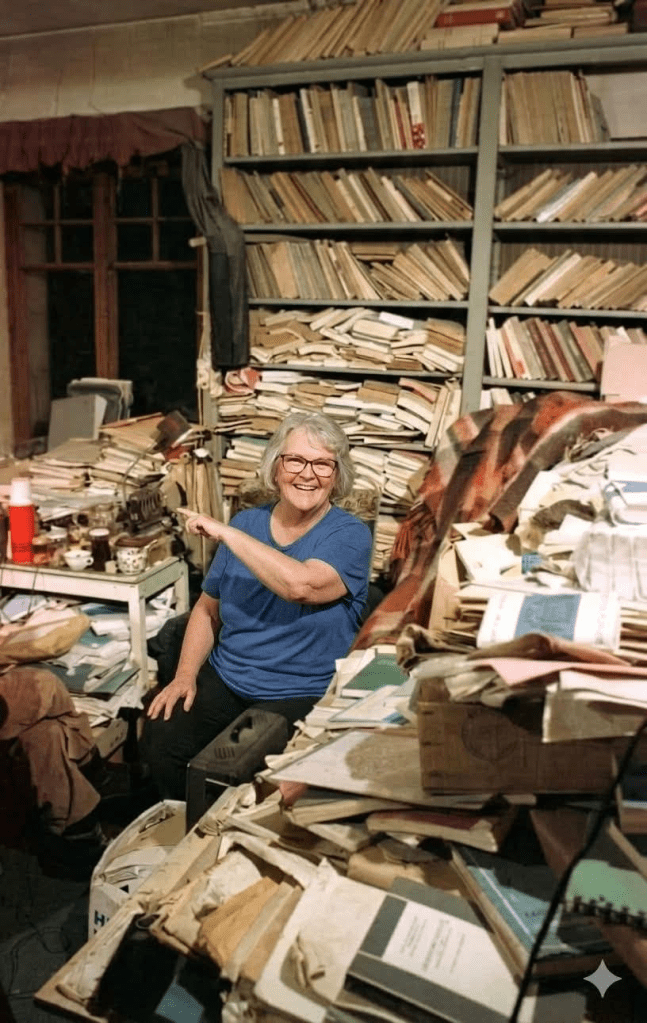
This week, I used AI to generate a photo of myself in Piaget’s study. He was one of the pioneers of cognitive behaviour theory, and also an all-round messy bastard. My brain has started to look a bit like this as I learn more and more about writing.
I’ve been somewhat unwell and also trying to write a short story for a competition, which is one of those things writers are supposed to do to get their name out there. That and maintain a website and post to social media every day. I’m sure Thomas Hardy never did that. And George Orwell sequestered himself on a Scottish island to avoid networking with other writers (which I love doing when it’s productive critiquing, but abhor when it’s just idle chit-chat or ‘let’s all write at this cafe’).
My main reason for entering writing competitions is to improve, and at this stage, to give other writers someone to beat so they feel good about themselves. We all deserve that. If it were to win, I’d be announced at a Writers’ Festival in the beautiful Bunyah Mountains next month, so I have an excuse to drag my photographer husband away for a weekend of nature photography.

It won’t win, so this short story will, when modified, be a useful insert into my second novel. It’s simmering along at a much better pace, by the way, because I’ve learned so much. And look at me trying to insert interesting pictures on my website.
After finishing my 16th draft of my first novel, I missed the opportunity window to submit to Penguin this week too, even though it was on my calendar. Kicking self, but maybe Penguin was not meant to be. My writing wouldn’t look exciting with just an orange and white cover.
I look back to my first draft of the novel now and hang my aching head in shame that I thought that proficiency in academic writing can transfer across to proficiency in storytelling, even though I spent years at UNE teaching students English for Academic Purposes and years in schools teaching kidlets to write something I could read.
So many rubrics that I struggled to understand because they were all laid out in pictures and graphs. I was never good with those unless I could colour them in. You should have seen my Year 10 Maths book!
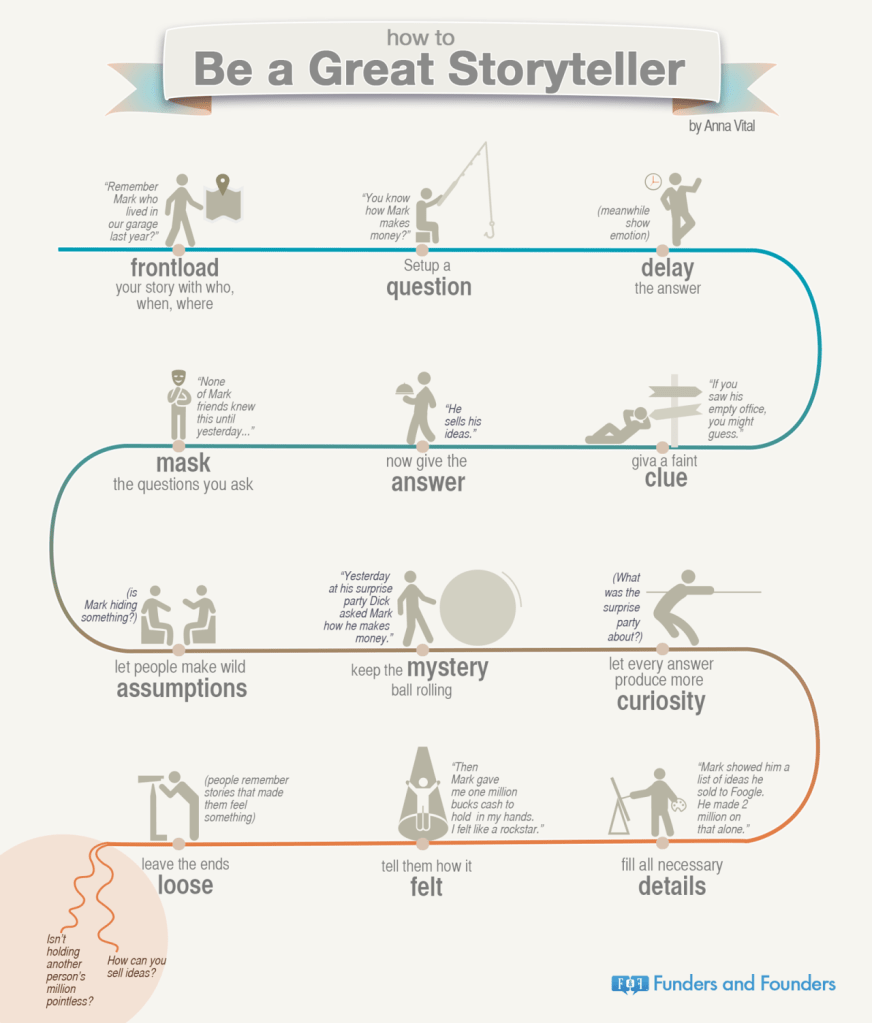
There is a formula for writing scientific research which is so much easier to interpret in writing: State the thought succinctly. Quote everything using the ‘experts’ who came before you. Have a theory and hypothesis as the rationale for your endeavor. Add to the current state of knowledge in some way. Observe. Remain in the mystery, unbiased for any particular result. Let the results lead the way. I find them much easier to follow when they’re just not crammed with annoying little stickmen.
And only in the end, in the conclusion, now that you have established devotion to the project and some credibility, can you share your interpretations of what it all means. Years of work reduced to as few words as possible only to be critiqued by panels of experts who often think it would be fascinating to add another variable into the mix. You learn to stand your ground. Data collection is painstaking and it sux. But, a publisher may well be a different kettle of fish. I’d change anything for these people.
Much of the formula for academic writing is a recipe for being fully alive; learning from others, approaching each moment as precious and new with the lens of curiosity rather than predictability. Most importantly, allowing experience to teach and grow us as writers, much like the interventions we use to shape the variables in our experiments. These are also elements of good storytelling. I don’t regret/begrudge having all this to bring to the table late in life.
I don’t understand wannabe writers who don’t read and read metacognitively (ie thinking about how the author created that reaction inside you). How can you know what constitutes good writing? Why do you want to get lost in the mystery, excited to see what comes next? There’s no shortcut to good writing (or if you know of one, could you let me know please).
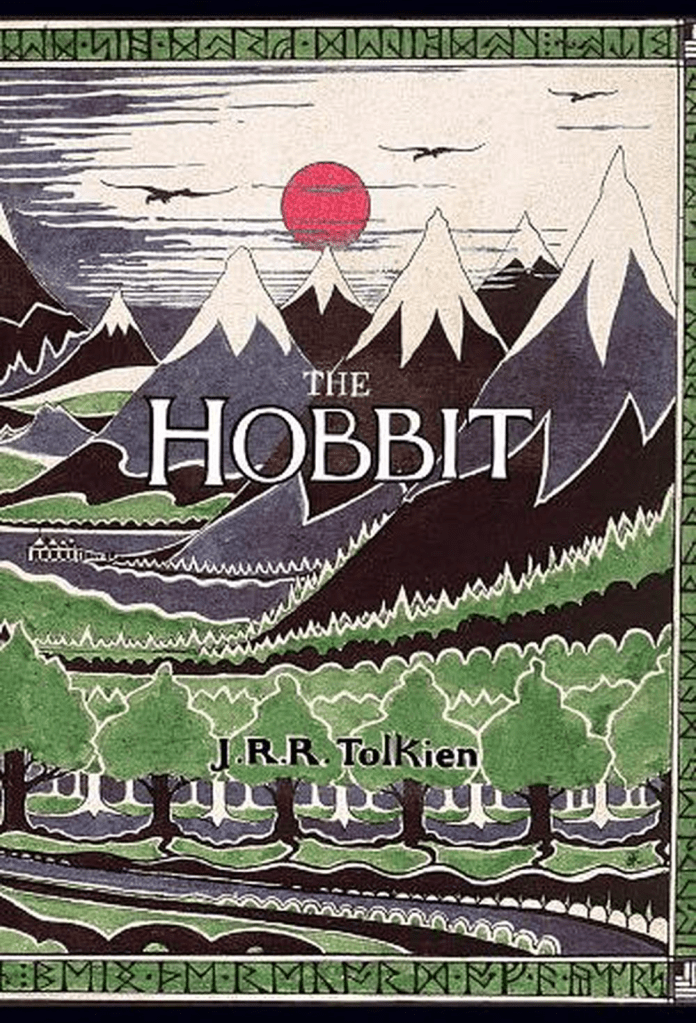
Think of what readers like, not what you want to get out there. To bring a bit of teacher psychology into the mix, we are all vicarious learners. It is so much easier to learn from someone else’s adversity rather than having to feel the burn from the hot stove on our own flesh. We are inspired by movement from victim to victor. We yearn to know how they did it. We want details so we can ascribe meaning to the act. Information creates new neural networks in the brain, new paradigms for what is possible for us. If Bilbo Baggins could do it, so can we. Not that I’m saying I enjoy Tolkien’s writing, but it’s important to also read books you don’t like and analyse why. And Dad had it on his bookshelves, so why not?
In essence, all captivating storytelling chronicles change. But we live in a world of soundbites and fleeting attention. This is where creative writing differs from scientific writing. We must keep the reader engaged. Ideally each page starts with a beginning hook followed by a middle build that keeps the tension. The page culminates with a payoff, some emotional change, before introducing an ending hook to keep the reader motivated. I suck at doing this, so I just aim for doing it in each chapter. So many big words—protagonist’s problem, midpoint, climax, denouement … ‘hero’s journey’, ‘voice’, genre … I became so entangled in all these ‘elements of good writing’ that it was like losing sight of the forest for the twigs and leaves on the trees.
The entire book may describe the hero’s journey, but the journey itself needs to explore many highs and lows along the way because this is the formula of life. Life’s fraught with hooks. Adversity is inherent in real life, even though social media wants to portray easy abundance. It is only the challenges that push our back up against the wall, that get us out of our comfort zone, that hold the capacity to uncover the higher gear where we come to know ourselves as greater than we previously thought… the payoff.
Like theory, cohesive writing starts with a litmus test. This is the author’s epiphany that is the impetus for the book. It should challenge our current mindset in some way. My epiphany was meeting a man called Lionel in the Outback who made me promise to write about him. I didn’t think I could and then I realised I had to change
In essence, all captivating storytelling chronicles change. If I burned the entire contents of Piaget’s study, how many nights of yarning round the campfire would I get do you think?

However, we should also give the loudest shout-out to palpable writing, by which I mean writing that makes readers feel things. Palpable writing parallels conscious awareness. First, we must ground the scene using as many senses as possible, but with an economy of words. Encoding of sensate experience is the vitality of aliveness. Once grounded, compelling writing explores the nuances of relationship. All learning happens in relationship. If one gear of the watch changes, all the other gears must operate differently as a result. All change starts inwardly. How does one character’s change result in change for the others?
Dialogue shows, it doesn’t tell. It is moving to show what the characters want. Intentions and desires say a lot about who we really are at that point of our journey. But wants are often not needs. It is equally engaging to let the reader know whether or not the character gets that want. How does the result shape the character? The experiment of life.
People tell me I have a way with words. Words are spoken thoughts. As such, according to quantum physics, they have the ultimate power to call the formless into form. They are the energy of creation if you like. This was known to many early religions. Biblically, God said, “let there be light,” and the light appeared. Intricate storytelling foreshadows seemingly meaningless dialogue having profound later impact. Thoughts become things. This is a vicarious lesson that could elevate collective consciousness if it, again, became common knowledge.
Well, it’s time for this sicko to go to sleep perchance to let my thoughts soar again.
 Margaret R Kelly
Leave a comment