There has been a lot of rain (for the western plains). Outback New South Wales is bejewelled with spring flowers. Not so western Queensland which is languishing in drought. Our three-week ‘glamping’ trip through western New South Wales and western Queensland in our campervan wasn’t planned specifically as a wildflower trip, but seeing the arid parts of New South Wales in bloom was the icing on the cake of a wonderful adventure, even for me who lived there for a number of years.
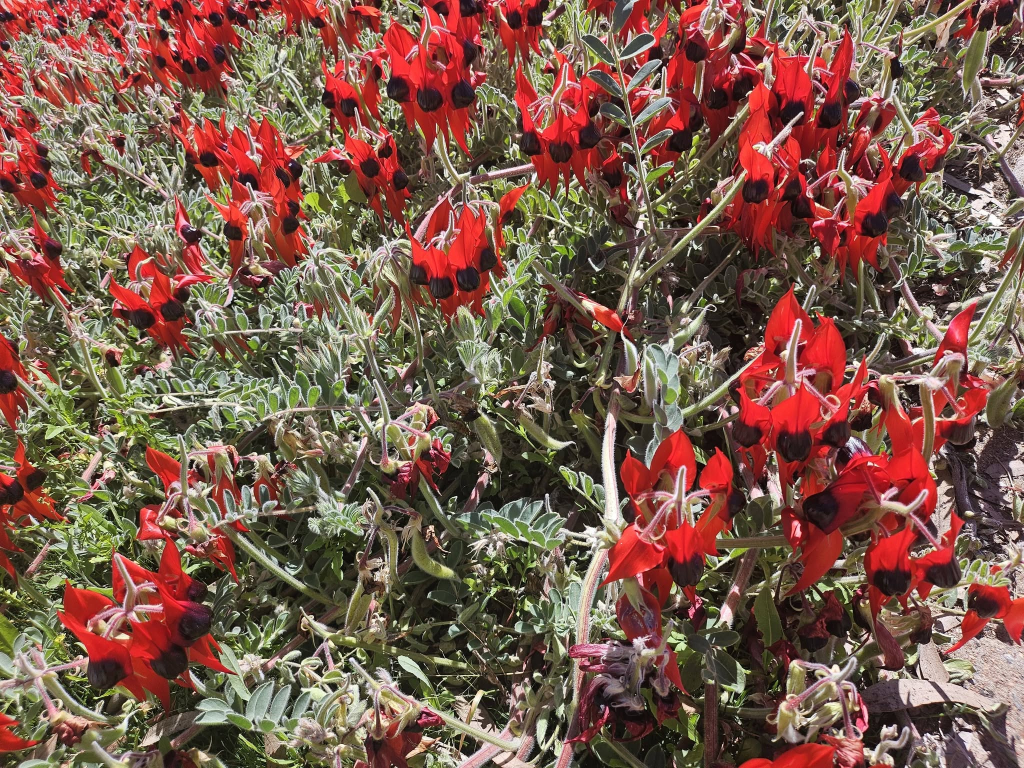
Sturt’s Desert Pea, Broken Hill
The fact that I had never seen the plains so alive highlights that wildflower seasons in Australia are not fixed events on a calendar — they are weather-dependent, and the gap between a modest year and a spectacular one can be considerable. In places, the contrast between the arid red soils and the coloured flowers was dazzling and I can understand the mad rushes on Western Australia and the Flinders Ranges for ‘wildflower season’.
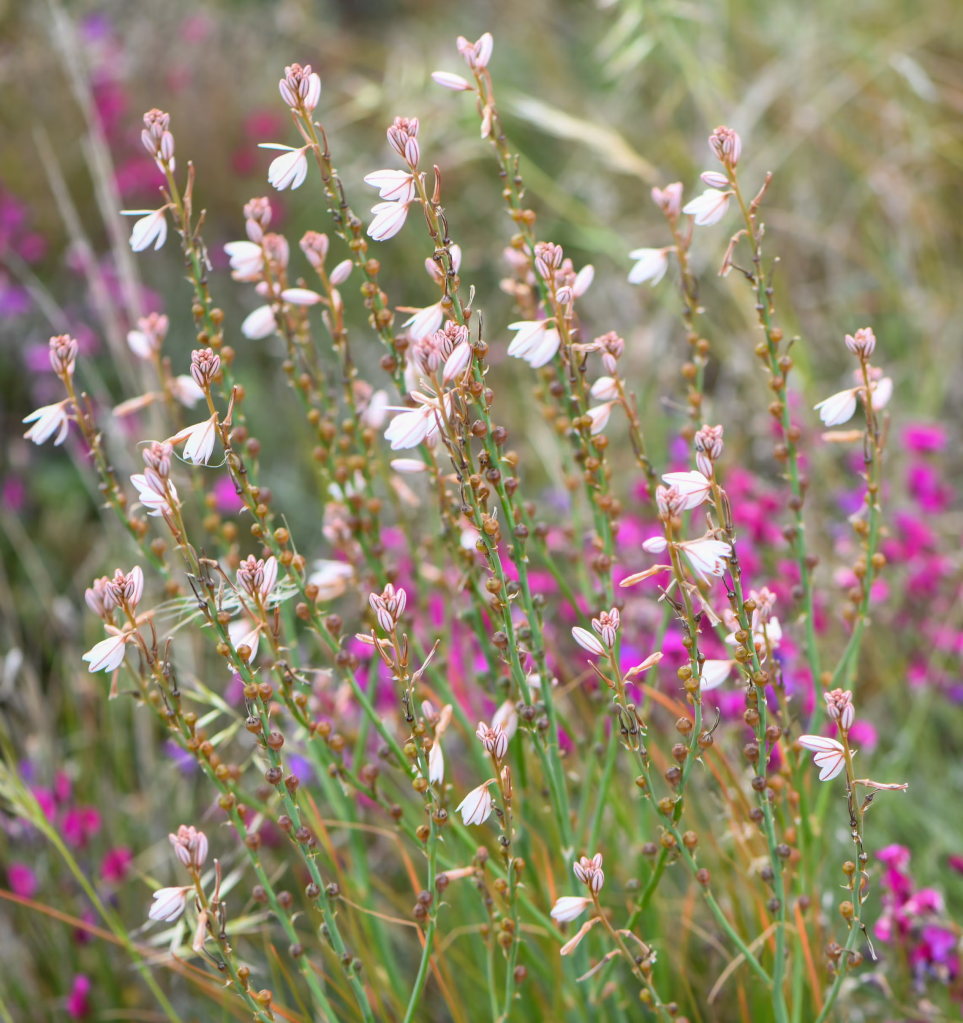
Nature’s bouquet near Balranald,starring onion weed and Darling Pea
Plants attract wildlife up the foodchain and birds (which are my husband’s favourite photographable subject), both waterfowl and waders, were abundant on inland rivers and lakes. Raptors drawn to roadkill were also plentiful. It was, in twitching parlance, a ‘good’ season.
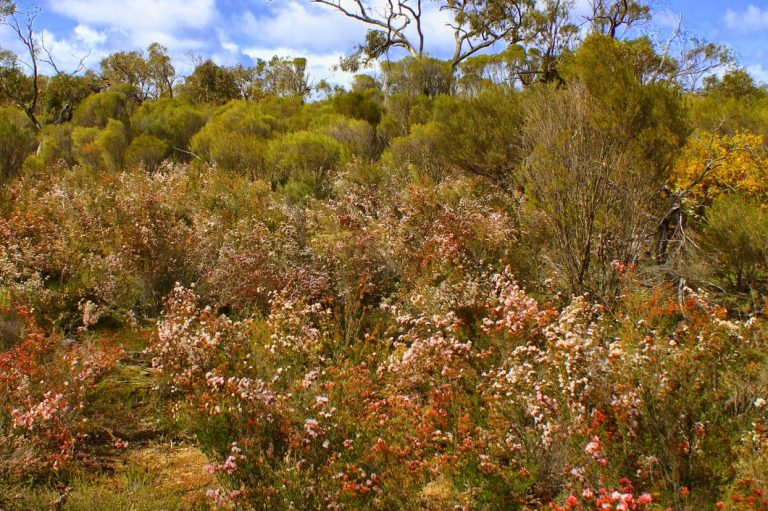
Near Wentworth
While Hubs was turning his camera lens on birds and landscapes, I casually opened the window or got down in the table drains to take phone photographs of flowers. It’s like collecting ooshies or pokemon as a couple.
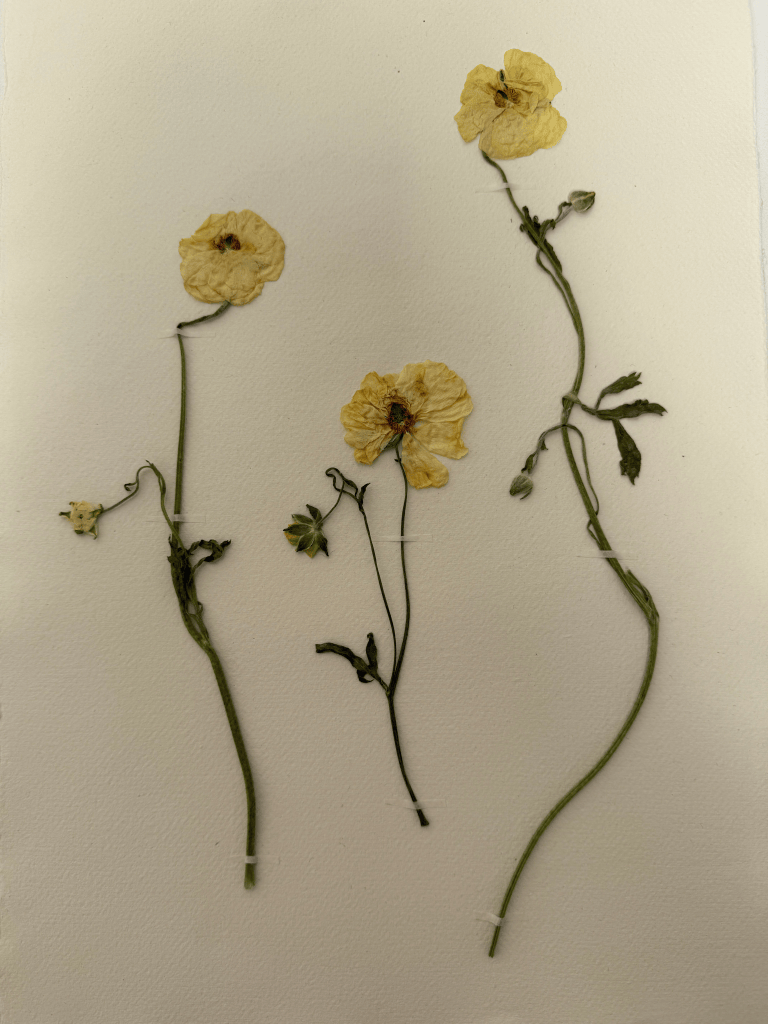
As a wee lass, I remember picking wildflowers and pressing them carefully between pages of books to later make ‘pictures’ like the one above, so I resurrected the habit on this trip. Books are readily available in outback book exchange libraries. It was like Christmas, after I came home, as I took my hastily gathered ‘weeds’ out of the books I’d stored them in under the mattress in the campervan and placed them carefully flat between pieces of weighted paper.
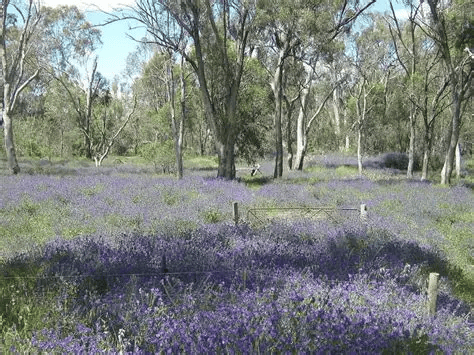
Paterson’s Curse near Hay
Driving, we hardly ever left the bitumen. Our low-slung camper would be prone to bottoming out. And we aren’t the hiking kind, but for everyone, the single most important thing to understand about photographing wildflowers in Australia is that picking native flowers, trampling off-track to reach them, or disturbing the soil around them causes damage that can last years. In national parks and many conservation areas, picking wildflowers is illegal, and fines apply. Even in roadside areas where there is no formal rule, the etiquette is clear: take nothing, leave nothing, and stay on established tracks.
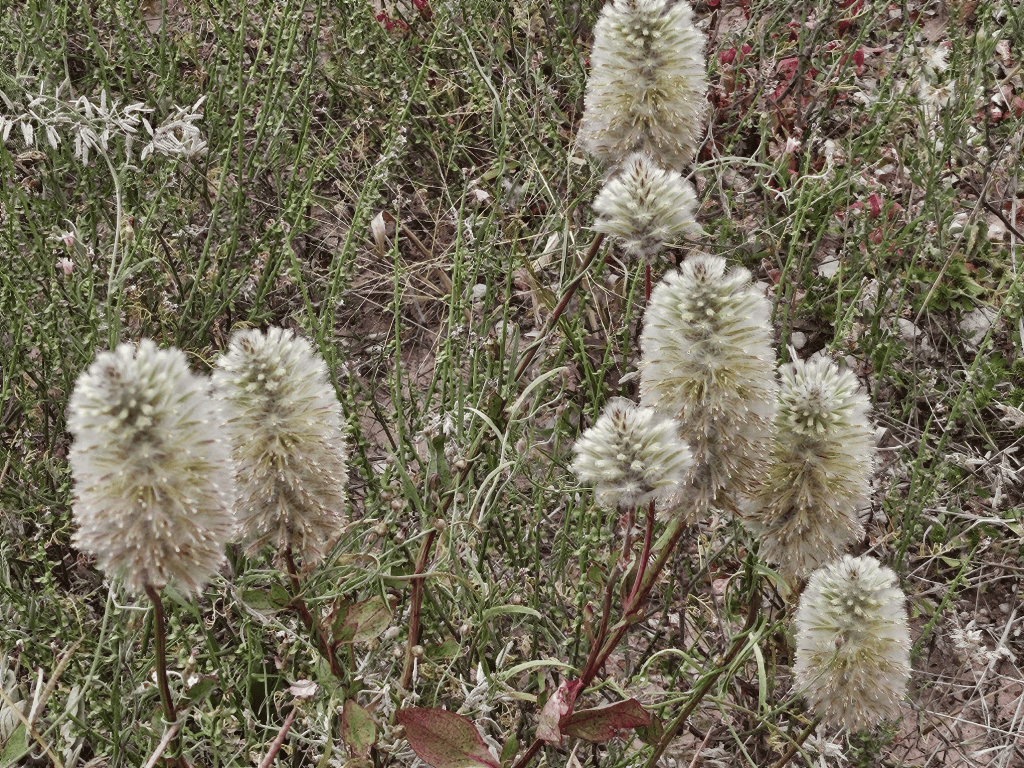
Mulla Mulla at the entrance to The Underground Motel, White Cliffs
HOWEVER, many so-called ‘wildflowers’ are introduced ‘pest’ species which are just as eye-candyish as the natives. I have no compunction about collecting lots of these ‘weeds’ for pressing. It’s helping the Australian ecosystem.
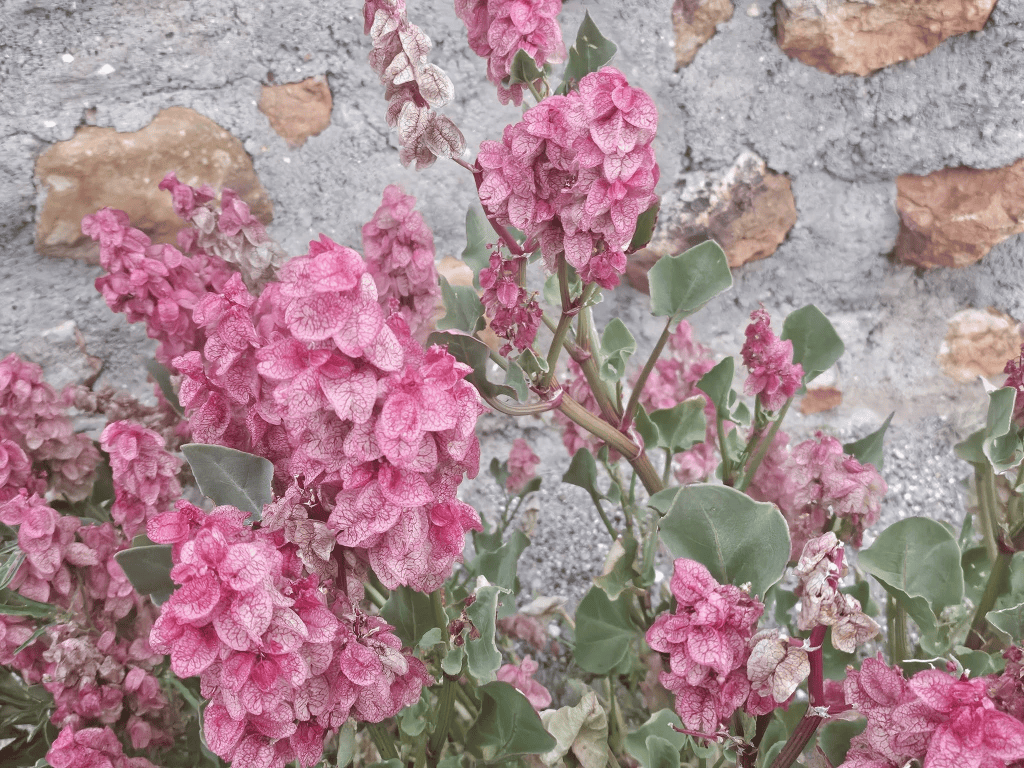
The Introduced Rosy Dock at White Cliffs
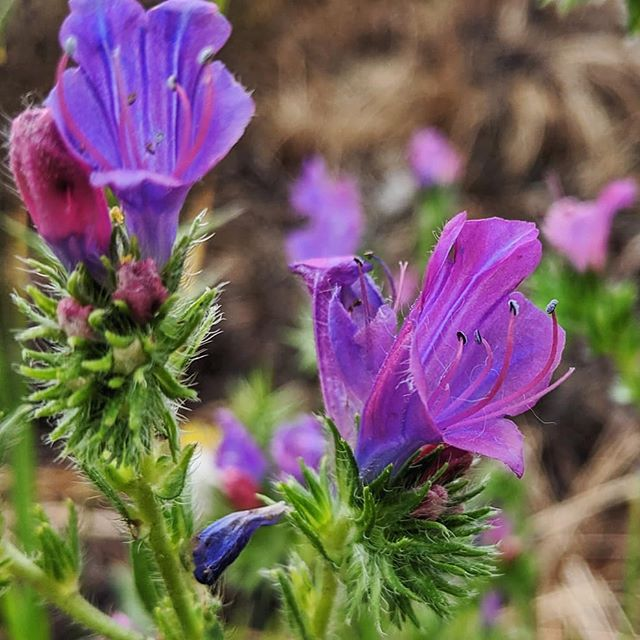
The ubiquitous ‘Salvation Jane’ aka Riverina Bluebell, which most people know as Paterson’s Curse, is a carpet of purple in places, particularly pretty under the trees along the banks of the Murrumbidgee at Hay and also around the garden and lake at Yanga National Park where it combines with Oxalis to beautify an old tractor in the scene below. I didn’t pick anything there because of the National Park thing.
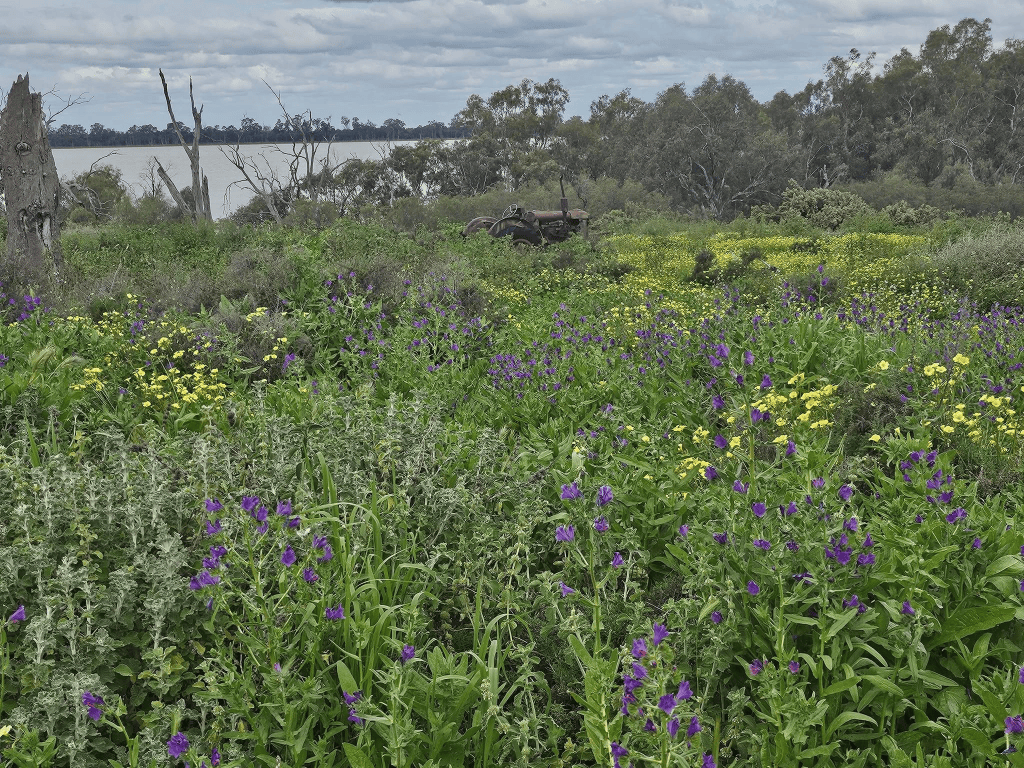
. ‘Why’s it called Salvation Jane?’ my husband asked as I plucked daggy purple flowerheads along the Murrumbidgee. ‘Because the individual flowers look like the bonnets worn by Salvation Army women,’ I was able to reply. There’s nothing salvation-like about a plant that’s poisonous to livestock, particularly horses. It deserves to be squished.
Instead of being bare dirt, White Cliffs is ablaze with red rosy dock. It’s fleshy and didn’t press too well, turning grey, so I’m glad I have some memorable photos.
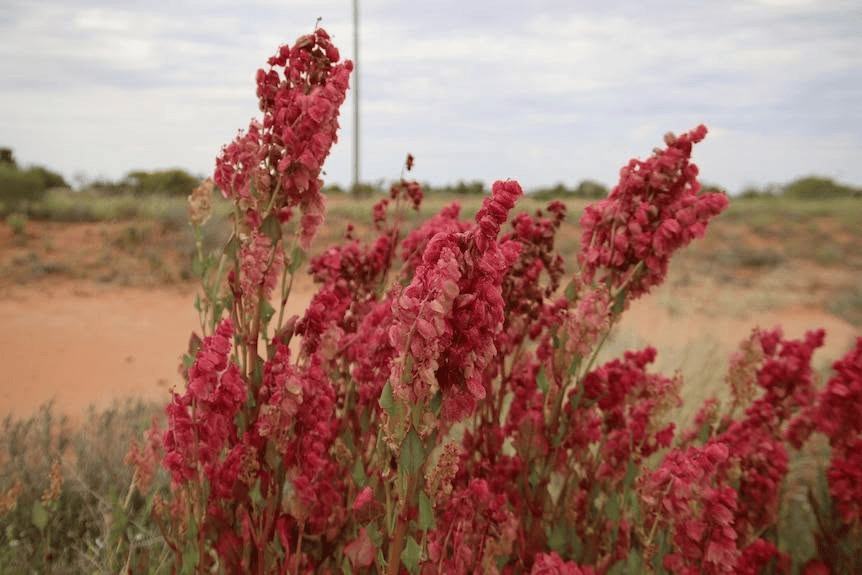
A clump of Rosy Dock
Rosy Dock’s from northern Africa. Known also locally as ‘Ruby Hops’, it’s become a problem in Australia because it outcompetes native flora which in turn, leads to reduced biodiversity. This can be seen in White Cliffs, where I must admit to finding it stunning… and collectable.
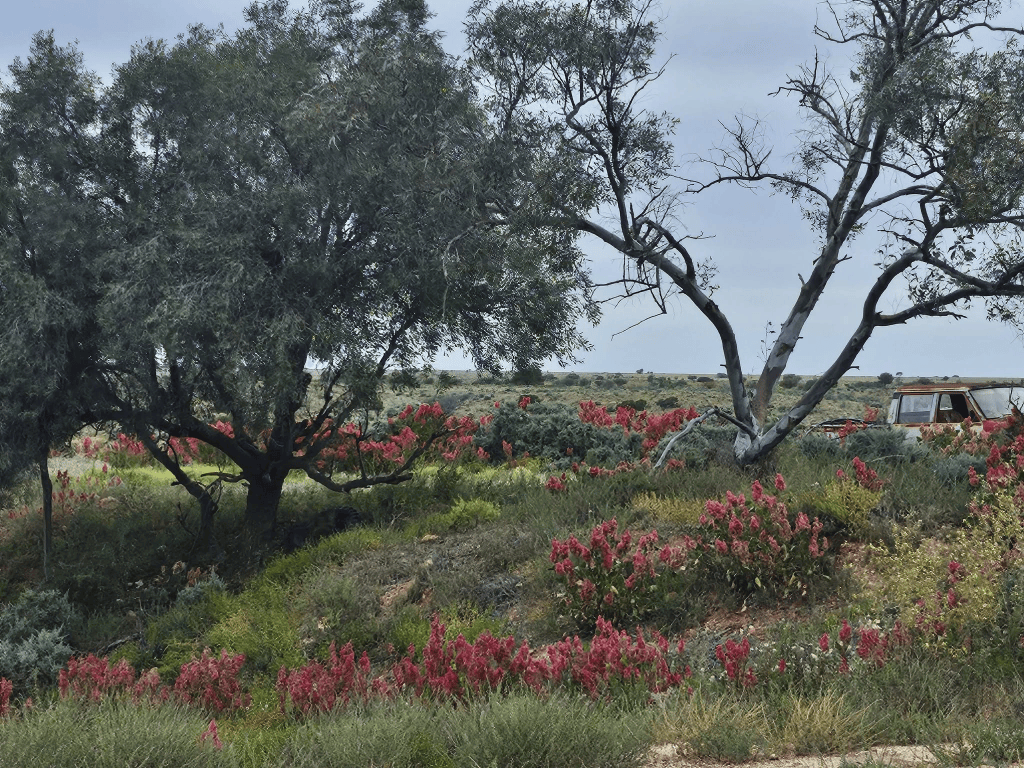
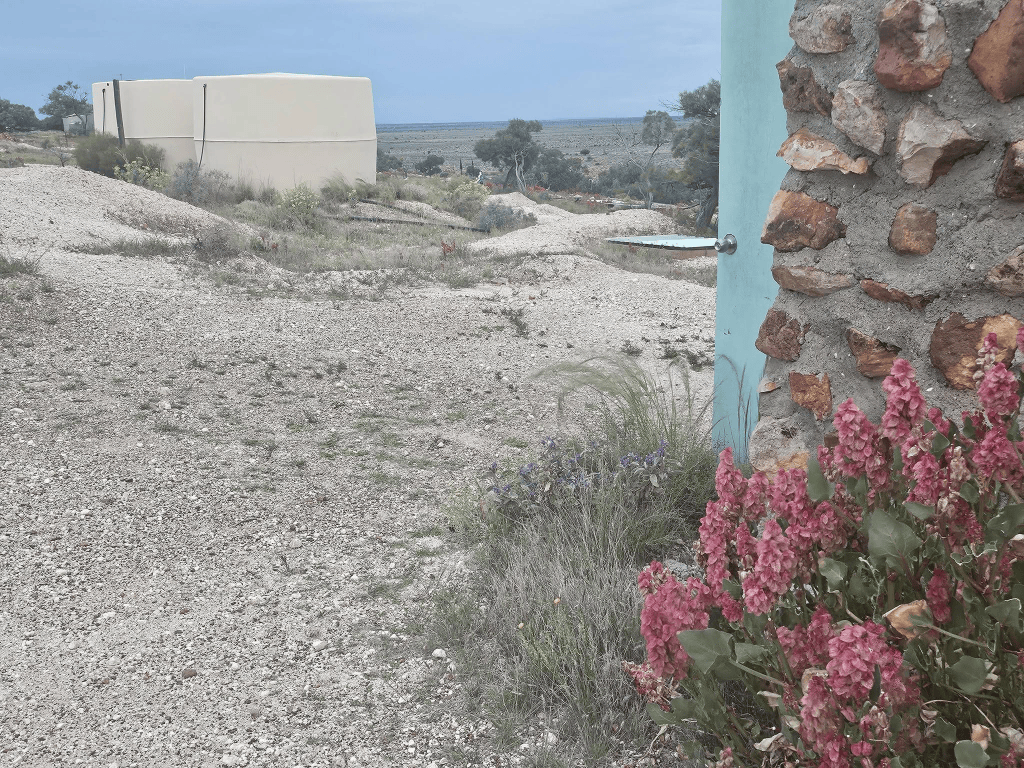
Rosy Dock on the roof of the Underground Motel, White Cliffs
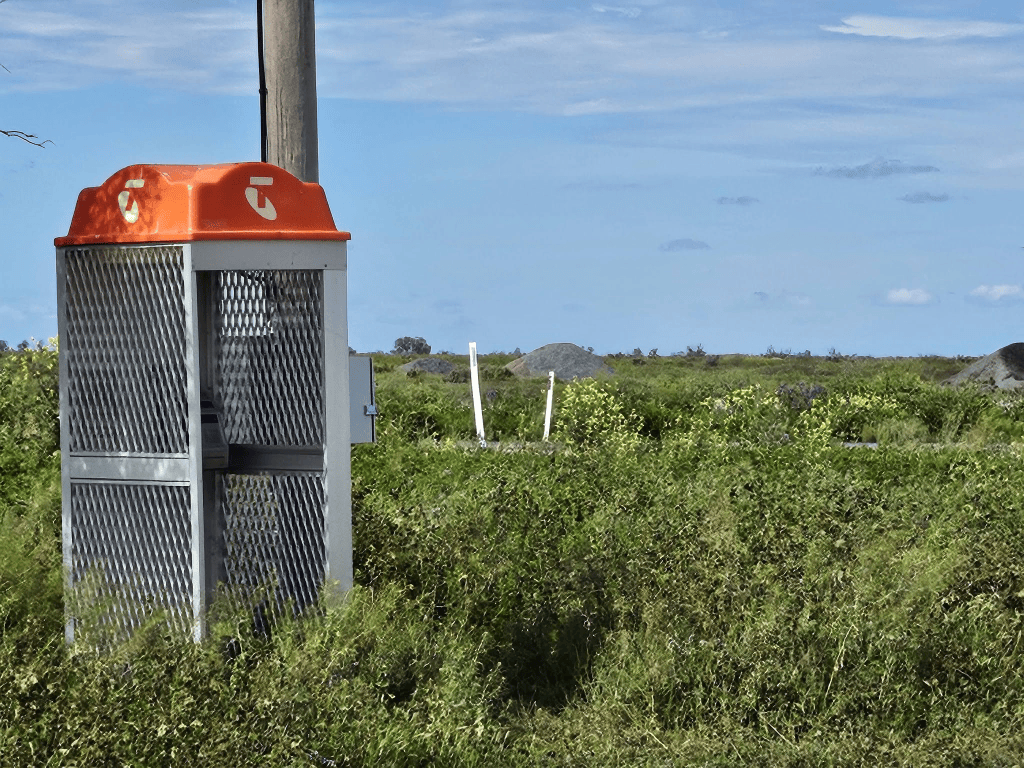
Hoary mustard, or buchan weed can be seen near the tanks in the above photo. It was first found to have invaded Australia at port Lincoln in 1880 and these days, turns roadsides around Parkes and Dubbo into rivers of gold, makes the phone box at Hatfield a decorative centrepiece, and transforms riverbanks near Bourke, Brewarrina and Walgett into something less drab. It also presses well.
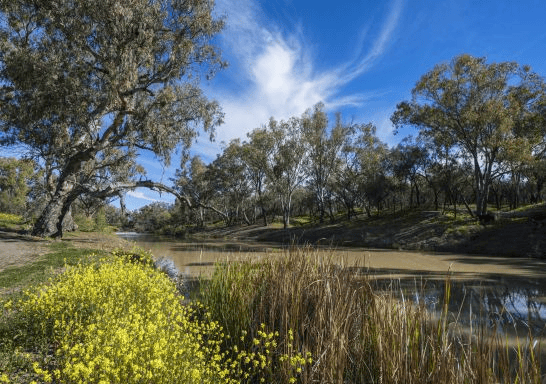
Hoary Mustard
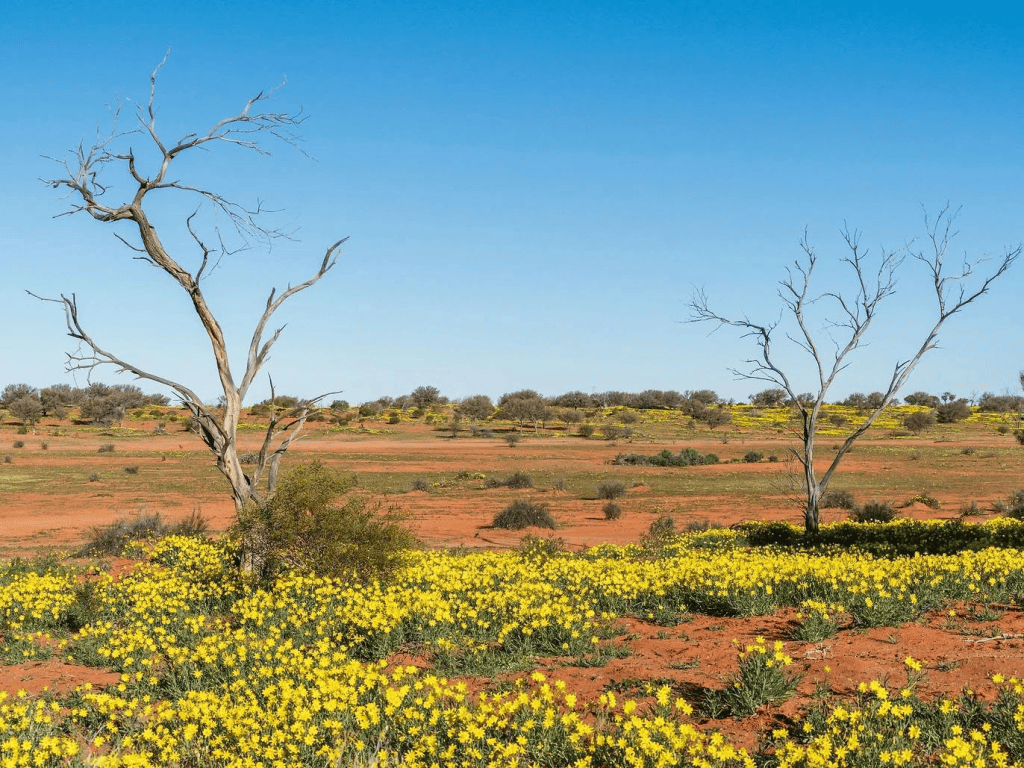
Golden Sunray daisies near Silverton—natives so I didn’t pick any
The outback may conjure visions of red dirt and sweeping desert, but follow the rivers and you’ll find pockets of greenery thriving with birdlife and open floodplains that burst with colour after rain. Located at the junction of the Warrego and Darling rivers, Toorale National Park is just an hour’s drive from Bourke, and offers dramatic naturescapes straight out of a watercolour painting. As hubs sprang from the vehicle to take shots of kites wheeling round roadkill in this area, I was feasting my eyes on golden sunray daisies, bluebells, billy buttons and introduced capeweed (from South Africa).
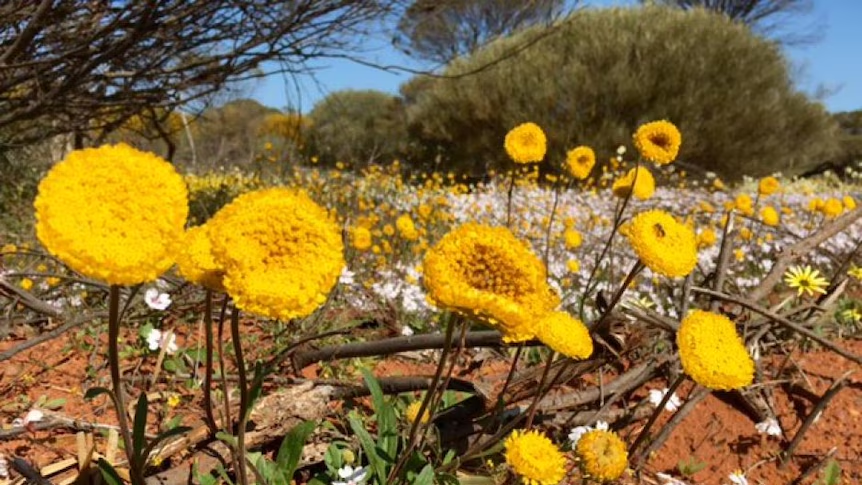
Billy Buttons between Bourke and Cobar with one capeweed flower and a backing of everlasting daisies
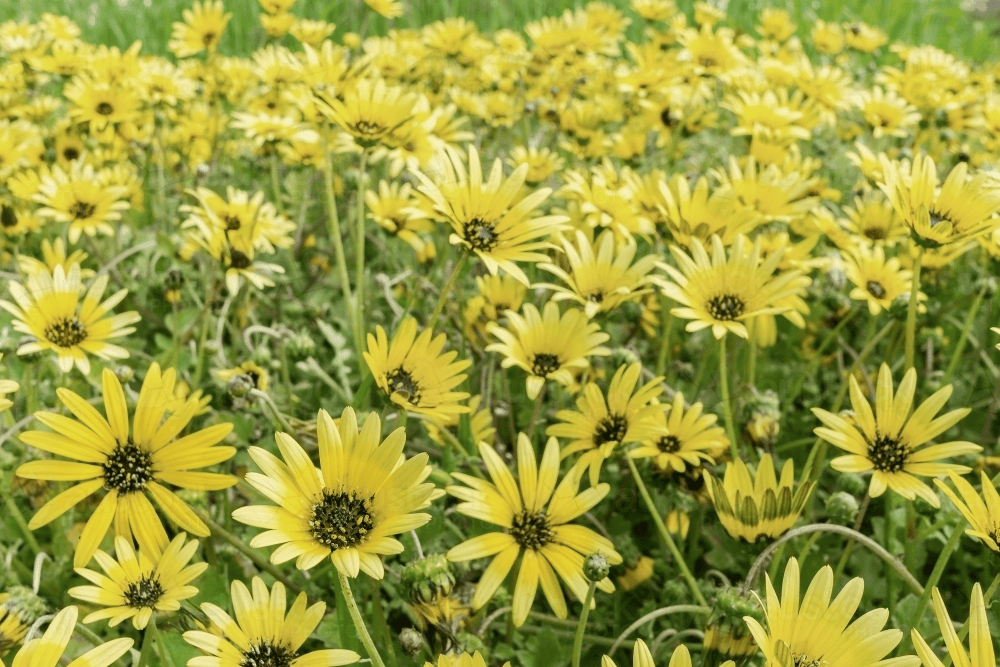
Capeweed in West Wyalong
Capeweed and its cousin, gazanias, add beauty to verges in the central west of NSW, but are are big threat to productive farmland.
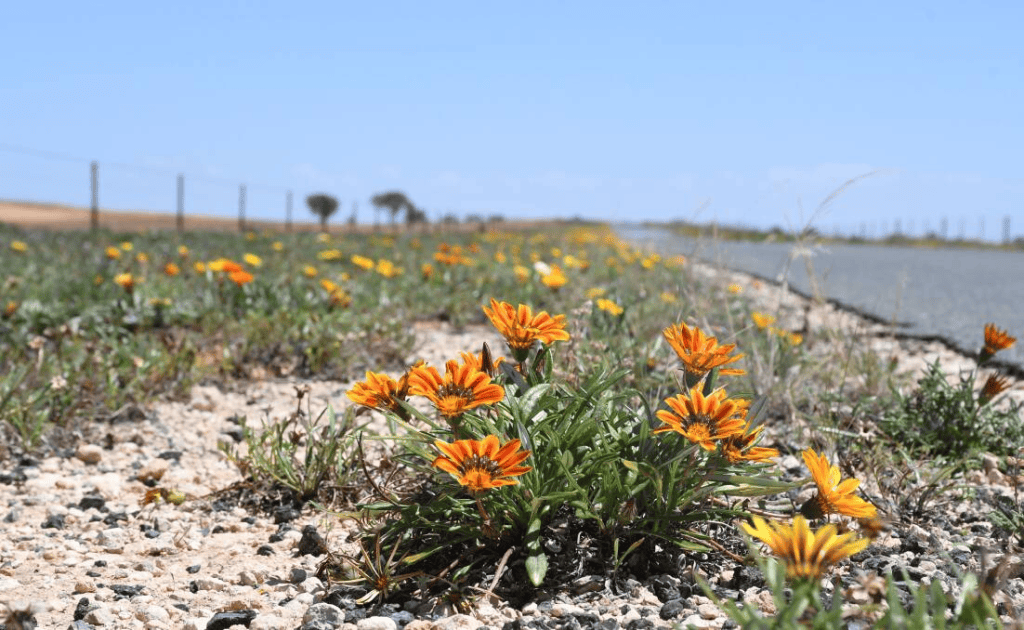
Gazanias between Rankins Springs and Hay
Another yellow ‘pest’ which adds beauty to roadsides and grassy areas is creeping sorrel or oxalis. Matter of fact, I came home to an infestation of it which is about to meet my friendly lawn mower. I don’t know if they’ve realised it’s not a good garden plant at Yanga National Park near Balranald.
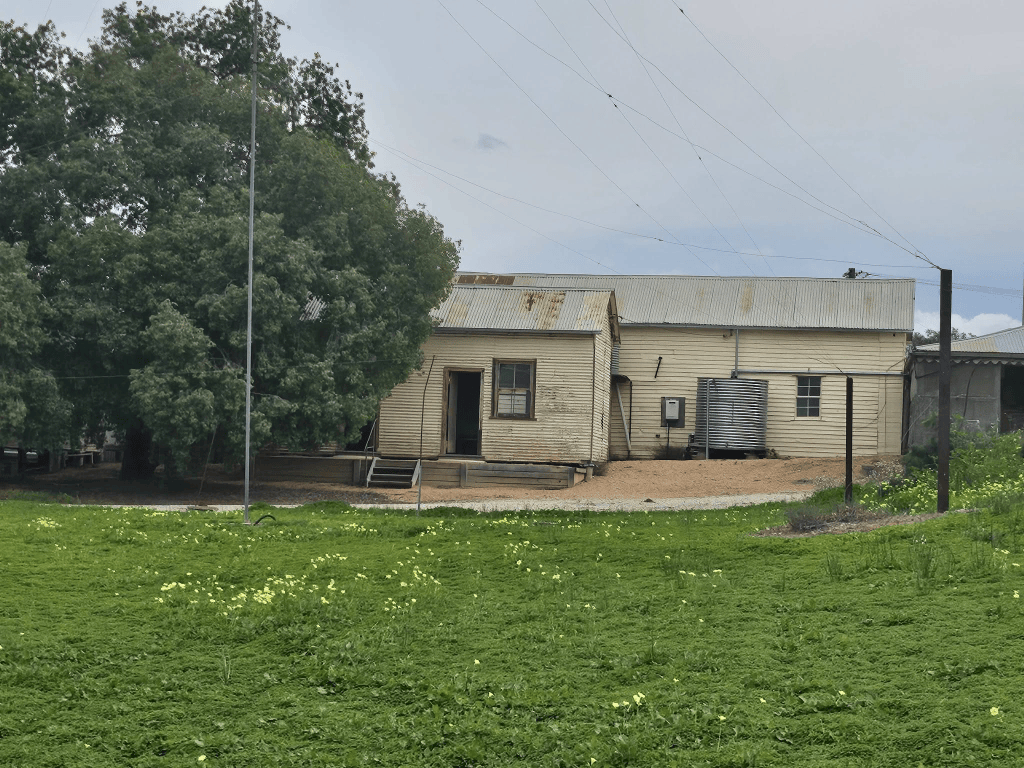
Oxalis sitting pretty at Yanga National Park
We took a day trip to Menindee from Broken Hill. Mexican thistle, with its pretty cream flowers, and also bindweed, with its pastel pink blooms, somewhat like morning glory, are prevalent where the lakes are receding rapidly.
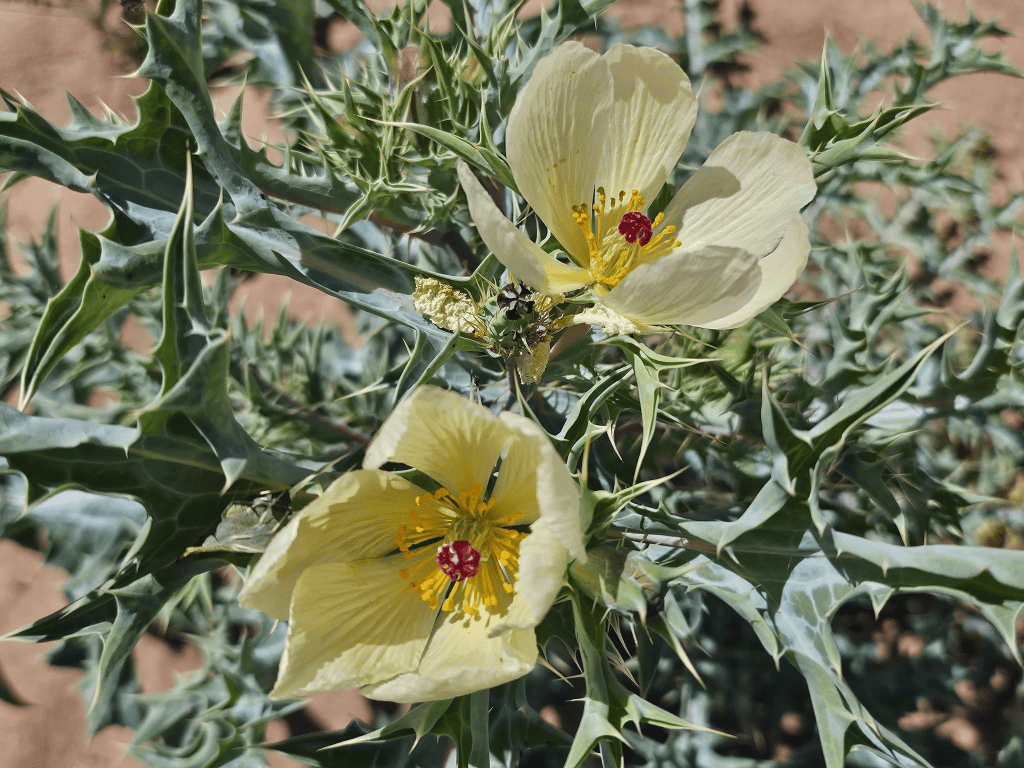
Mexican Thistle at Sunset Strip near Menindee
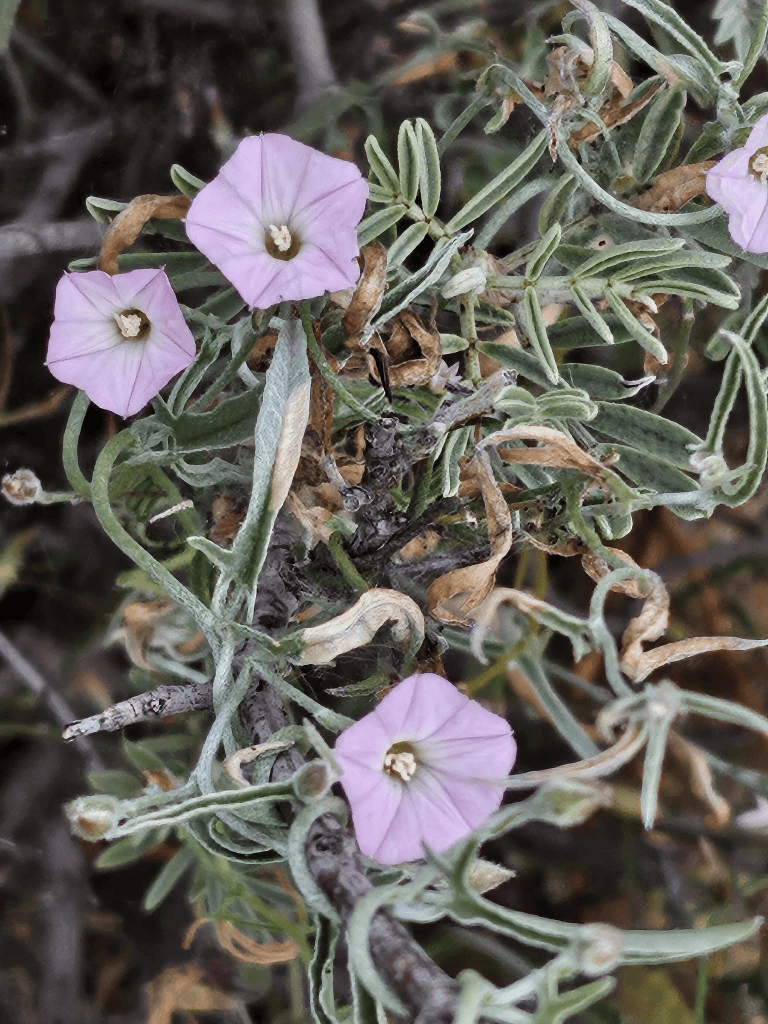
Bindweed, Menindee
Another Mexican native (I think), the white mallow, like a hibiscus, is also found in this area.
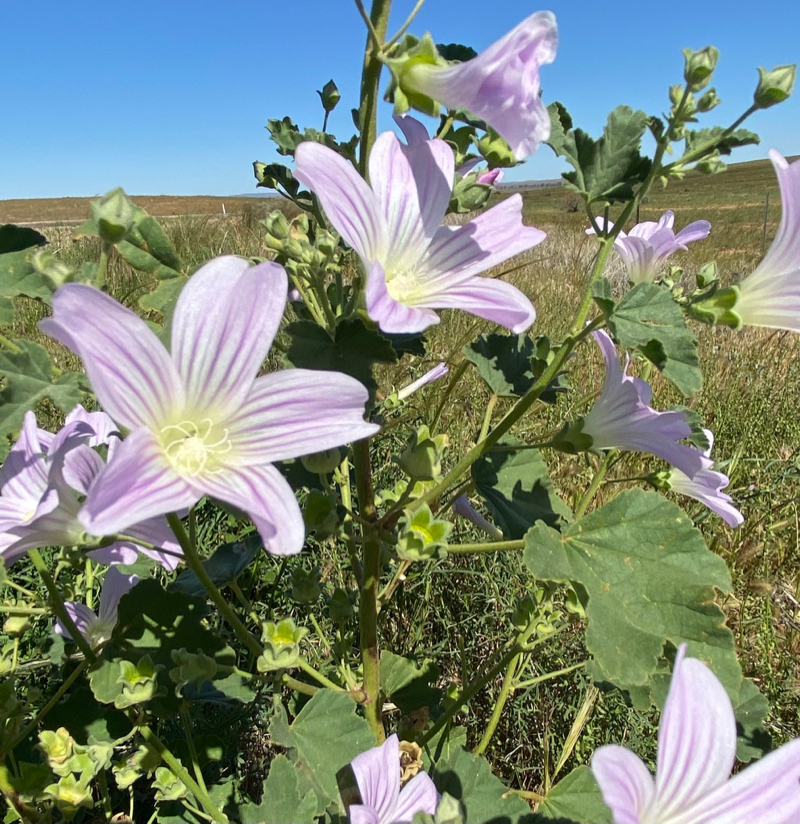
White Mallow (a picture I prepared earlier when I was living in Ivanhoe)
The emu bush flowers around Ivanhoe are reddish and are traditionally used as bush medicine to treat colds, chest pain, diarrhoea and fevers. We watched the sunset in Ivanhoe from a walking trail surrounded by emu bushes in flower, some mulla mulla, like soft foxtails, and the occasional bush tomato. The slight fragrance was reminiscent of my years spent living in Ivanhoe.
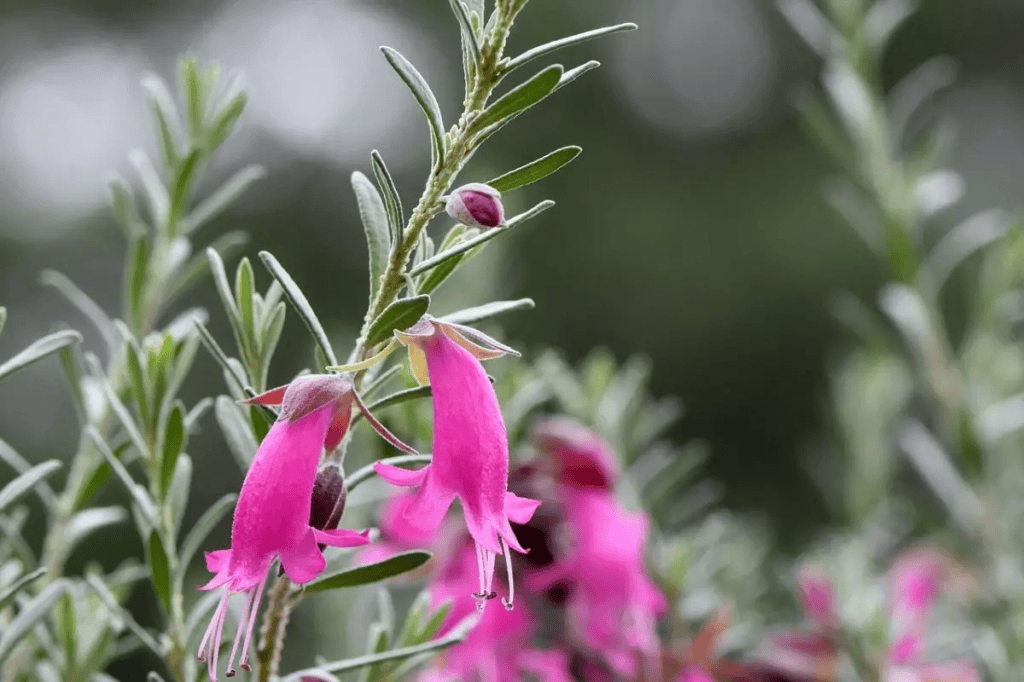
Emu Bush
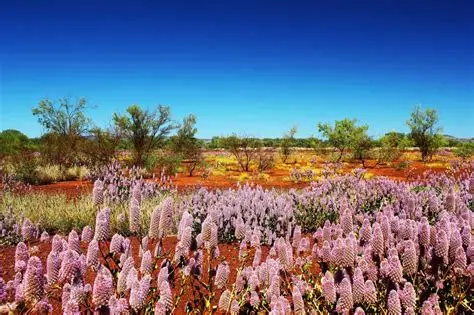
Mulla Mulla out-the-window shot near Cobar
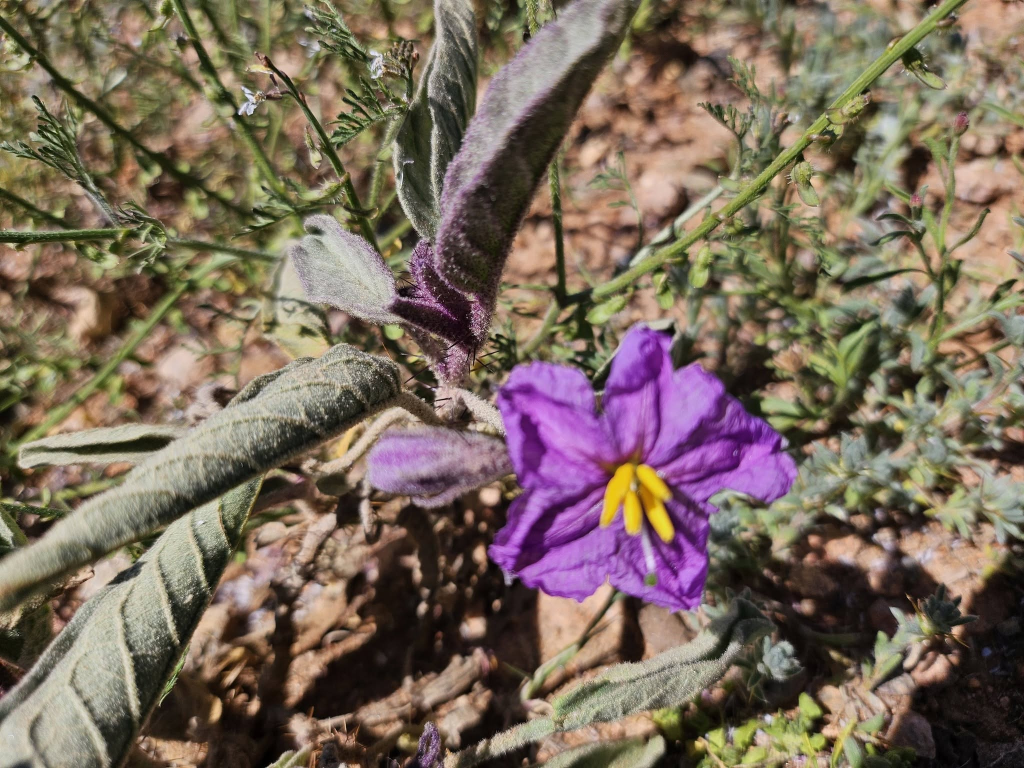
Bush tomato (I think! It’s a nightshade family member so don’t take my word for it. )
Roadside drifts of Darling Pea, introduced onionweed, everlasting daisies and flowering saltbushes also lend a cheery aspect to Ivanhoe and the Hay Plains closer to the Murrumbidgee Irrigation Area.
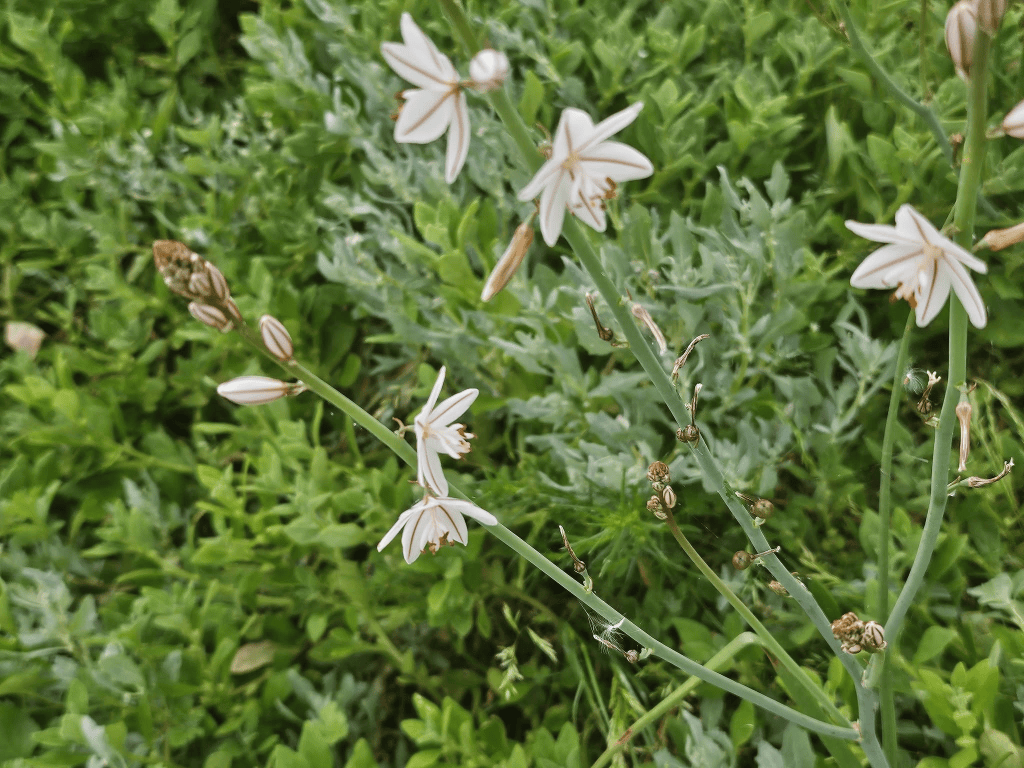
Onionweed
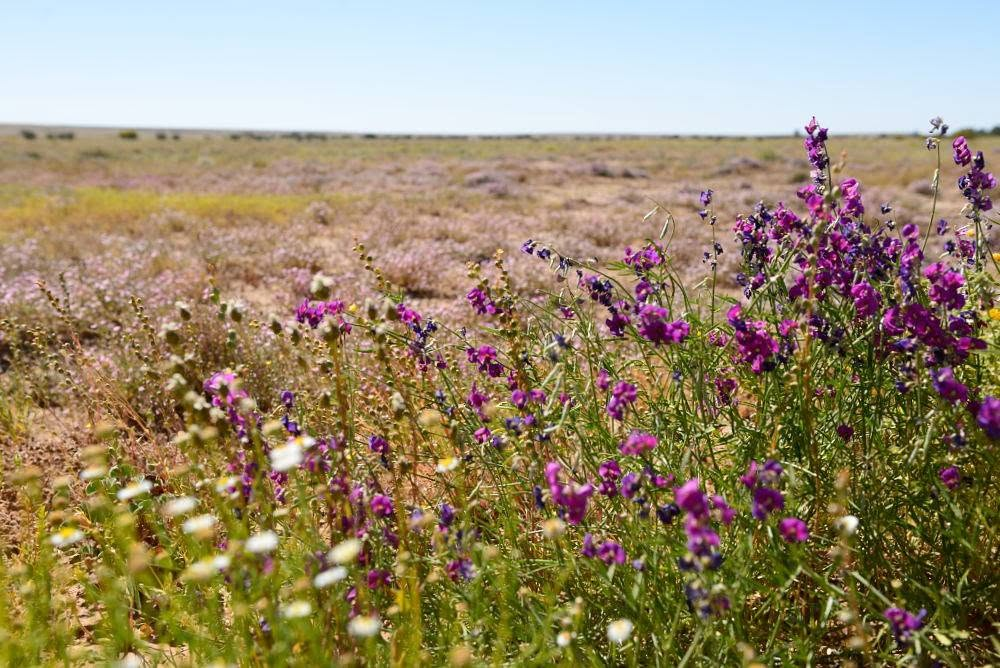
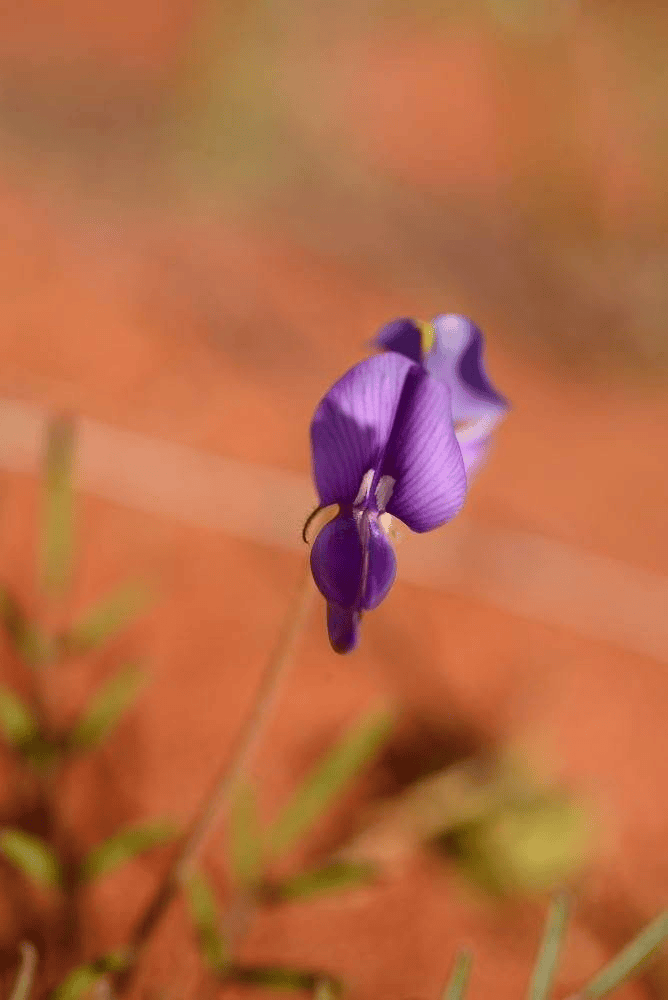
Darling Pea near Silverton
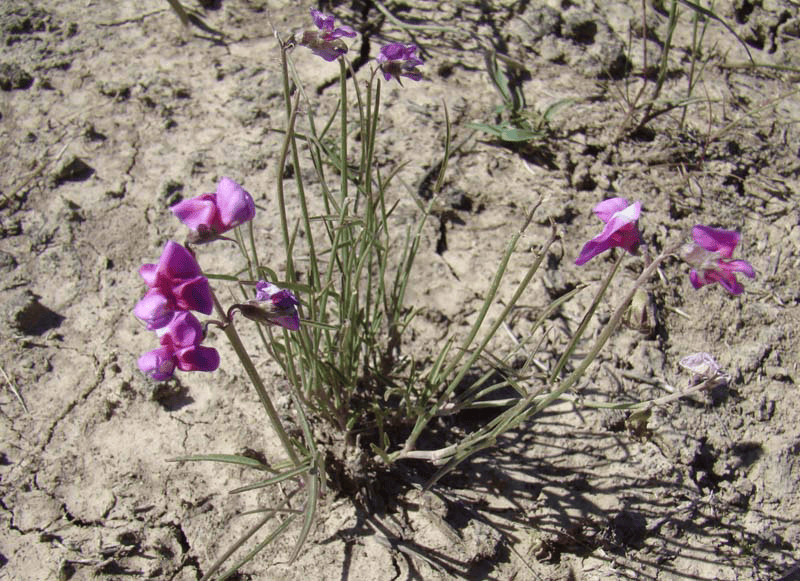
Darling Pea near Ivanhoe—a lighter mauve than the ones further west
The saltbushes themselves can be interesting in flower. The bladder saltbush is my favourite. You can pop the ripe seedpods like bubble wrap. It made dog walks in Ivanhoe doubly as destressing for me when I was an overhyped teacher. Unfortunately, saltbush leaves are rather ‘fleshy’ and would not be a totally successful press. I used to pick them in Ivanhoe for saltbush lamb Sunday roasts.
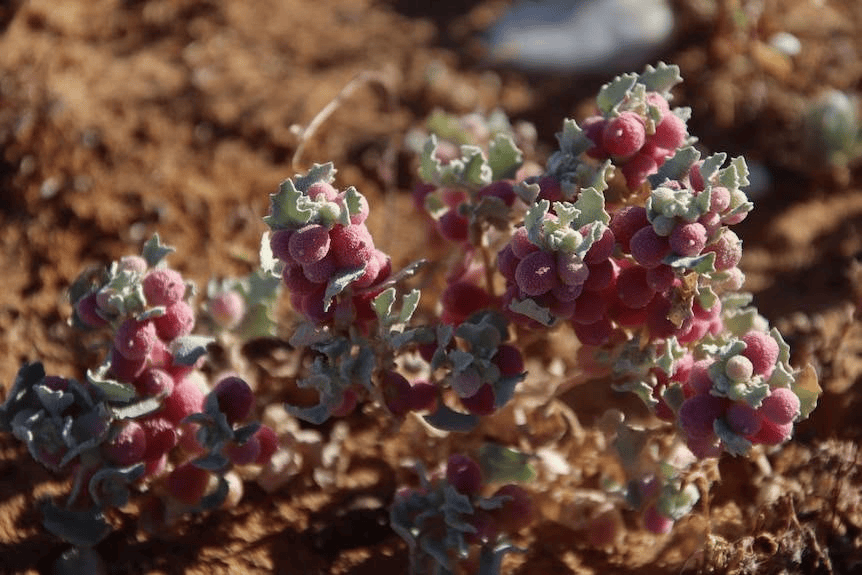
Bladder saltbush
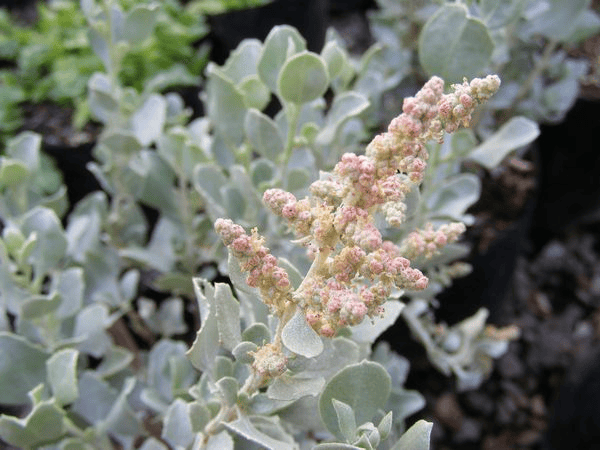
Old Man Saltbush
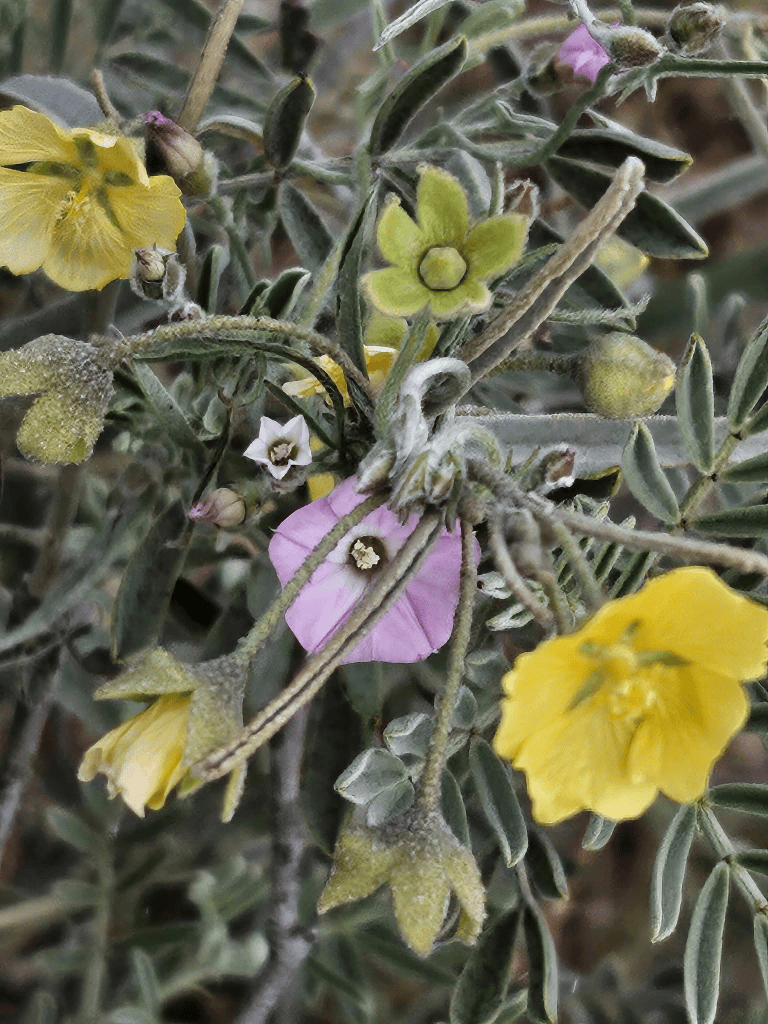
We stopped at Hatfield, between Ivanhoe and Balranald to nose around the old pub and I encountered a species of yellow native pea which the AI ‘eye’ on my phone tells me is Miles Dogwood, more commonly found near Roma in QLD. If anyone can verify this for me, I’d be grateful. We had a species of yellow pea growing near Barraba too when I was a kid.
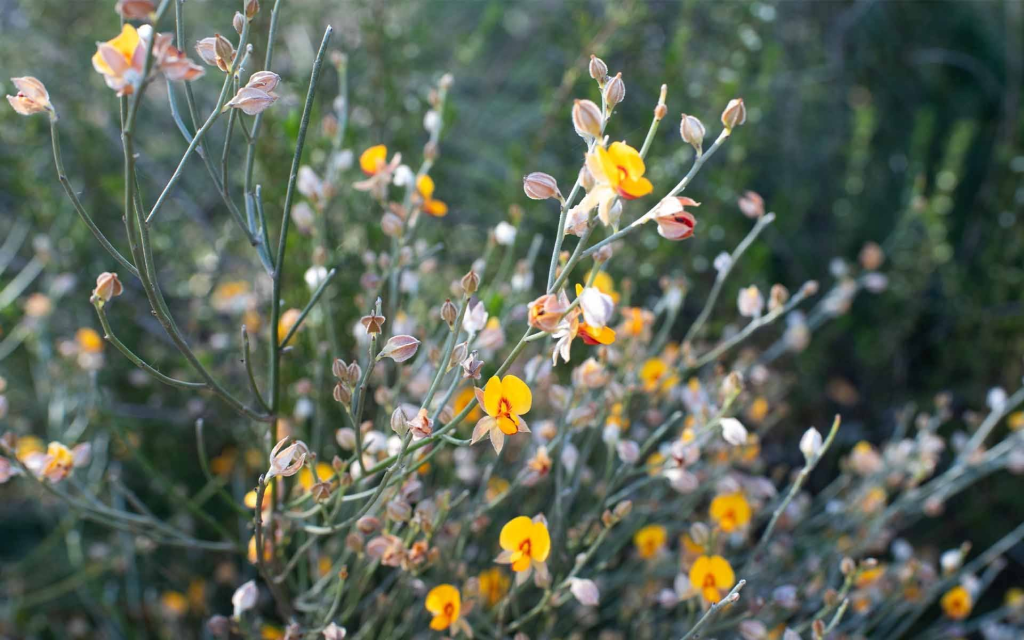
What sort of pea am I?
At one point between Wentworth and Broken Hill, the salt bushes were like islands in lakes of blue statice, or sea lavender. My out-the-window shot was blurry. I used to pick the statice flowers when I lived in Ivanhoe because they would survive for months in a vase without dying. They also seem to have pressed very well (I did not decimate this whole clump, I promise).
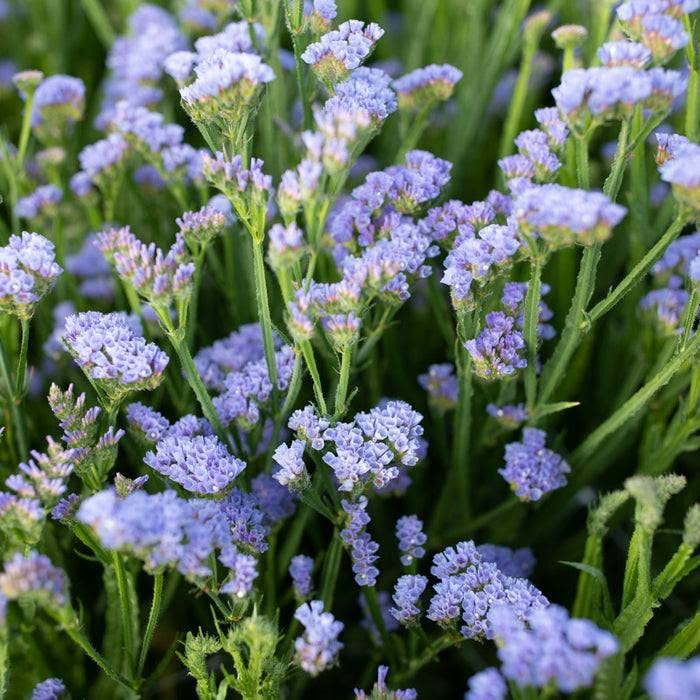
Blue Statice at a rest stop near Wentworth
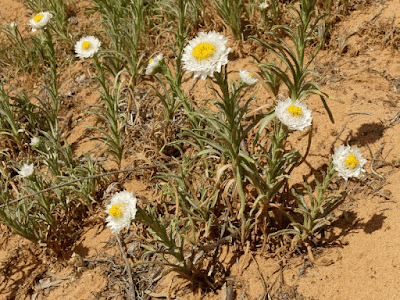
Poached egg daisy near Wentworth
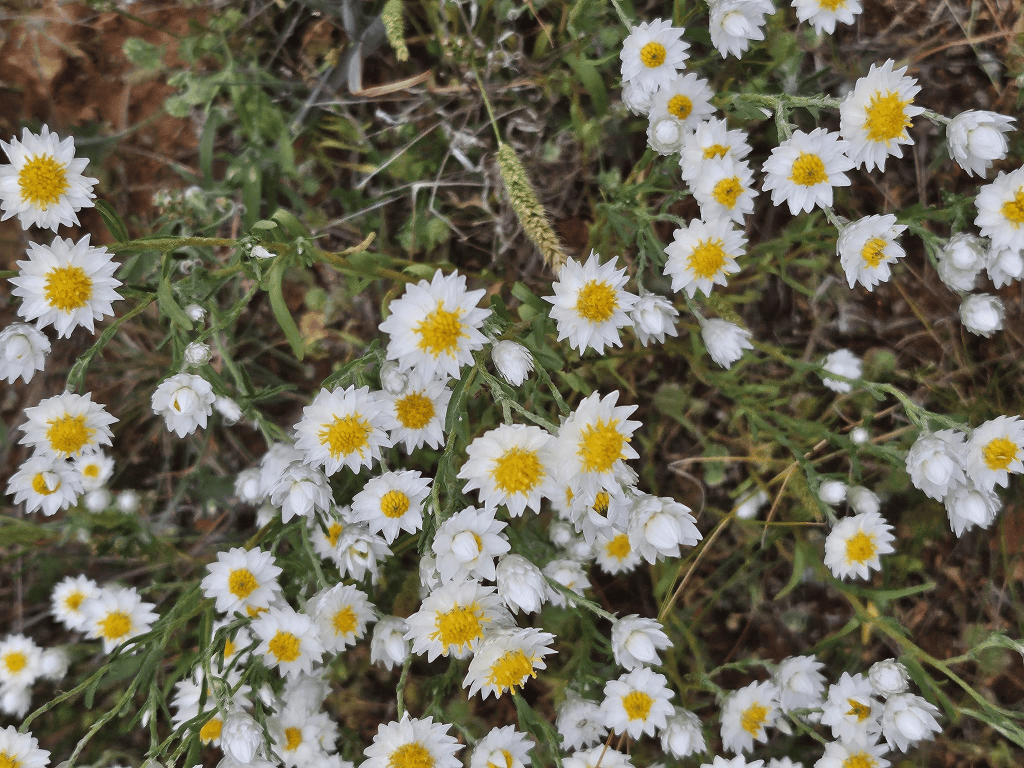
Around Wilcannia, the ubiquitous saltbushes rise through snow drifts of flannel flowers (I think although I’m not sure that it’s their natural habitat) and white paper daisies.
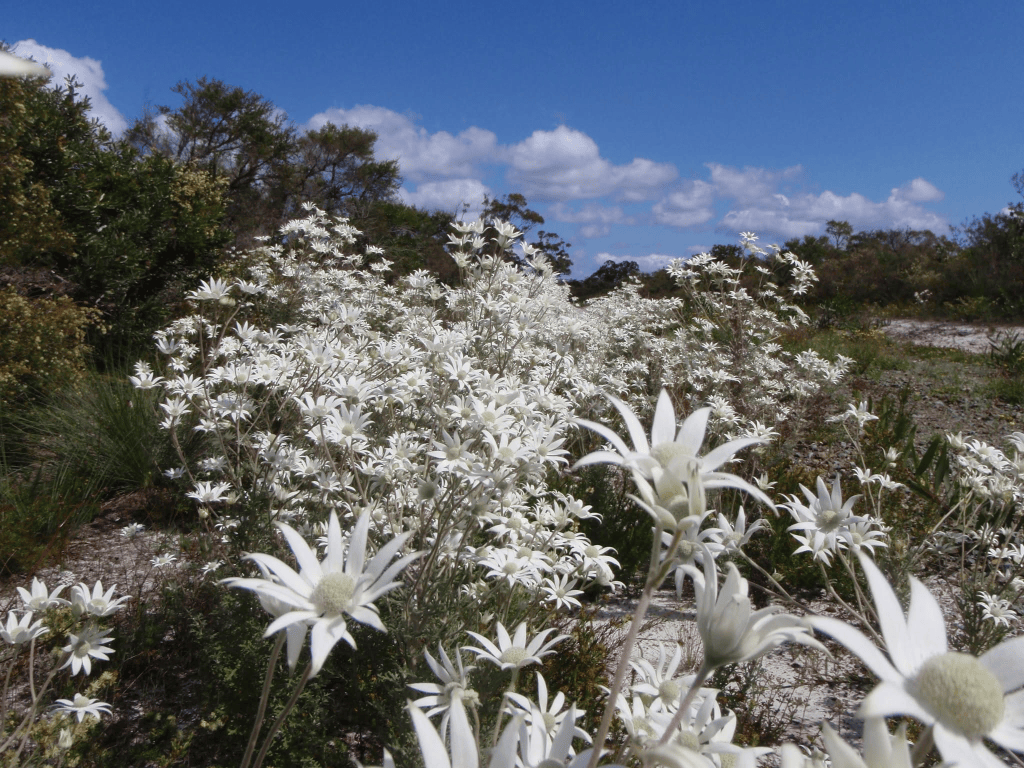
Flannel Flowers???
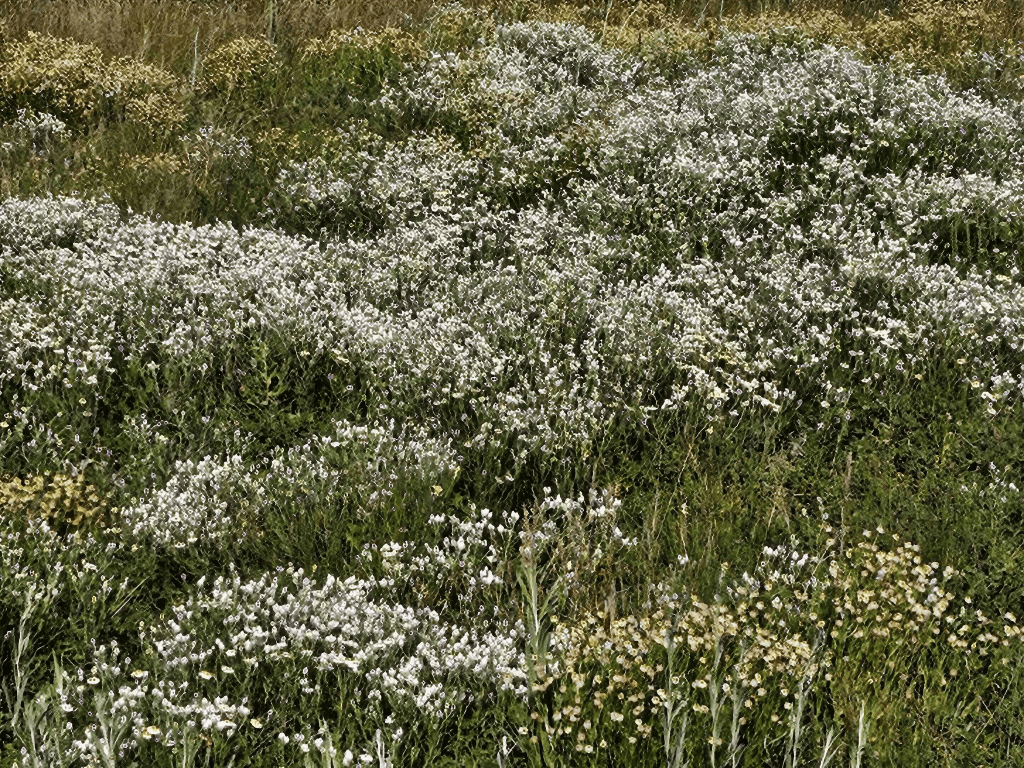
“Snow” effect on White Cliffs side of Wilcannia
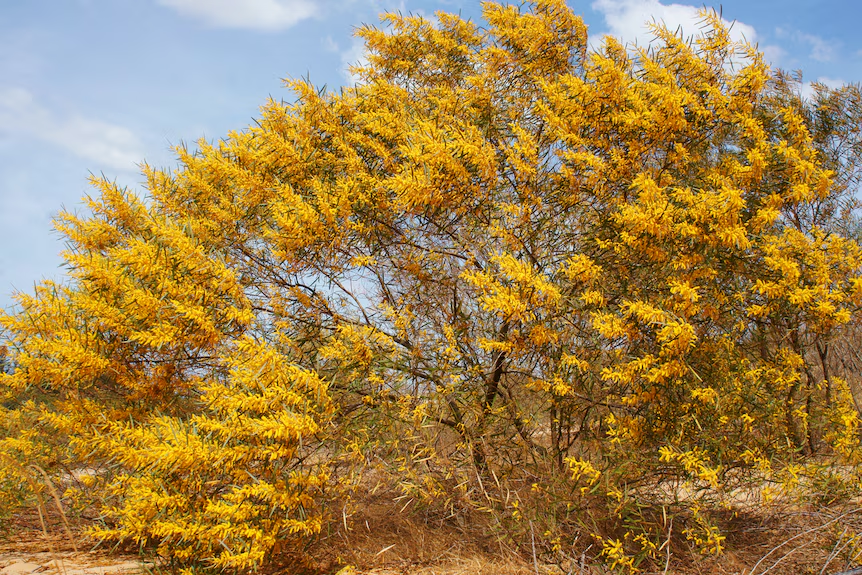
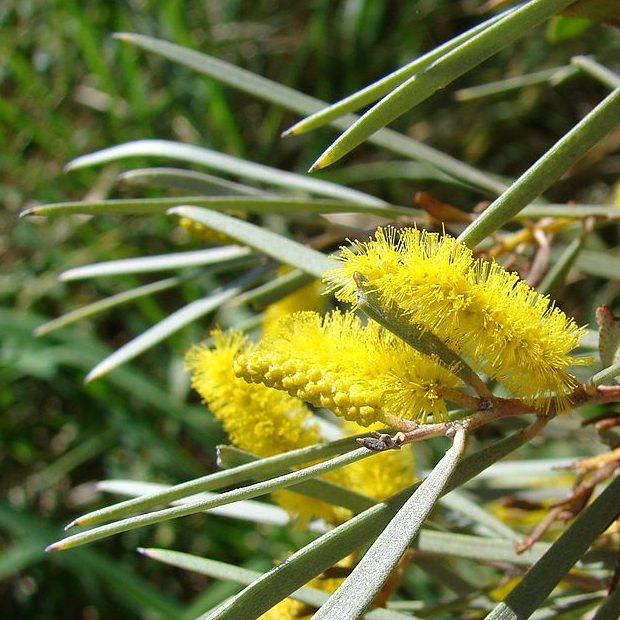
The roadside verges of the mulga scrub throughout the Outback are threaded by golden mulga wattle in bloom.
Don’t forget to look up if you are under trees. You may see some early-flowering gums
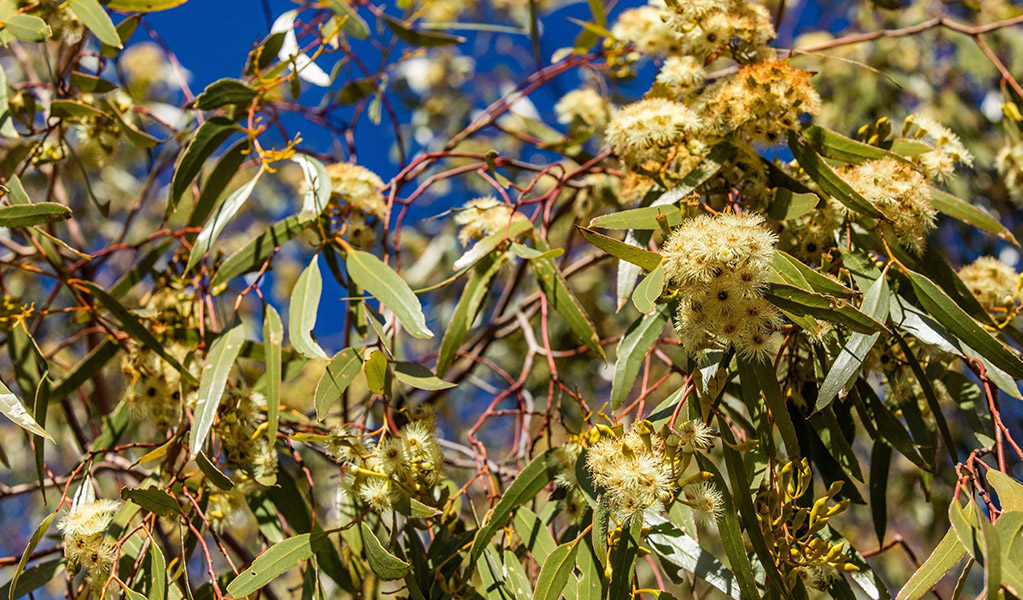
Near the Brewarrina Fish traps : Yapunyah(?) Gum
Wildflowers, as Gina Jefferies sang, will bloom on their own often in the harshest conditions.
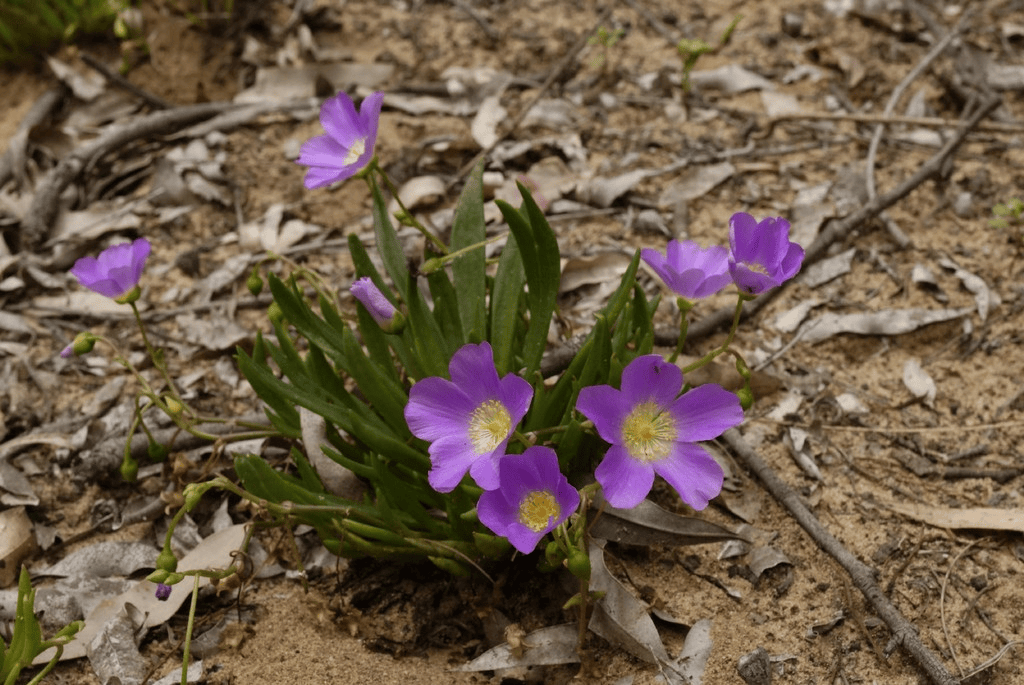
Parakeelya (spelling?) growing beside a mullock heap in Lightning Ridge
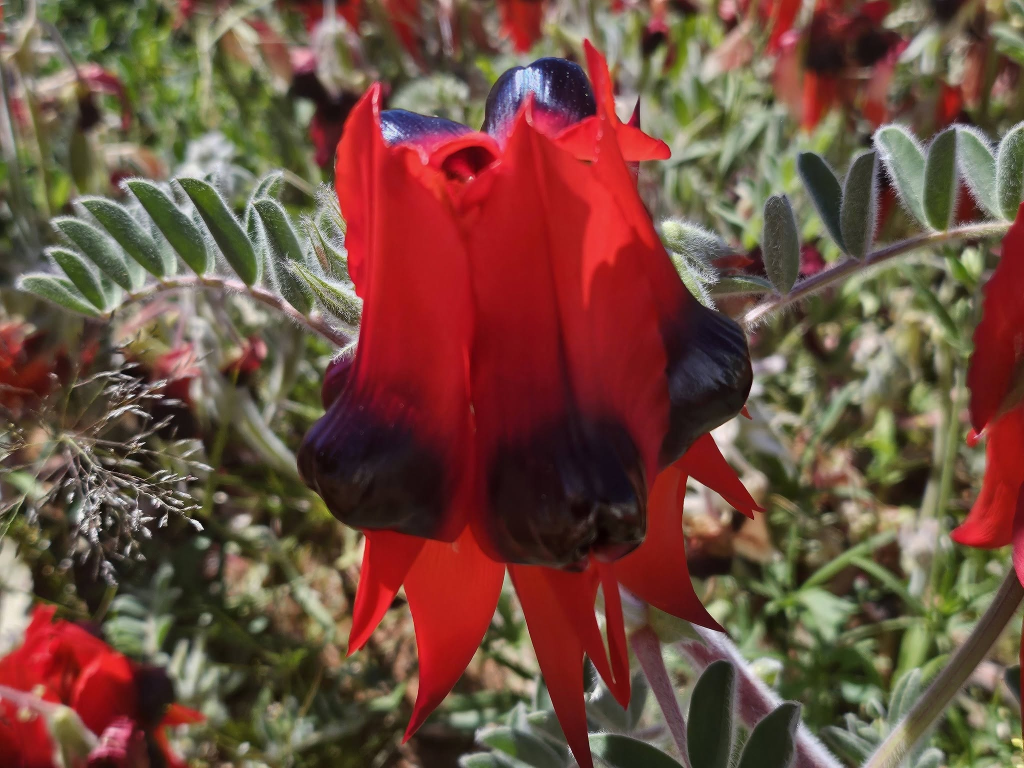
My piece-de-resistance photographically is a ‘garden’ of Sturt’s Desert Pea growing on the footpath in Broken Hill.
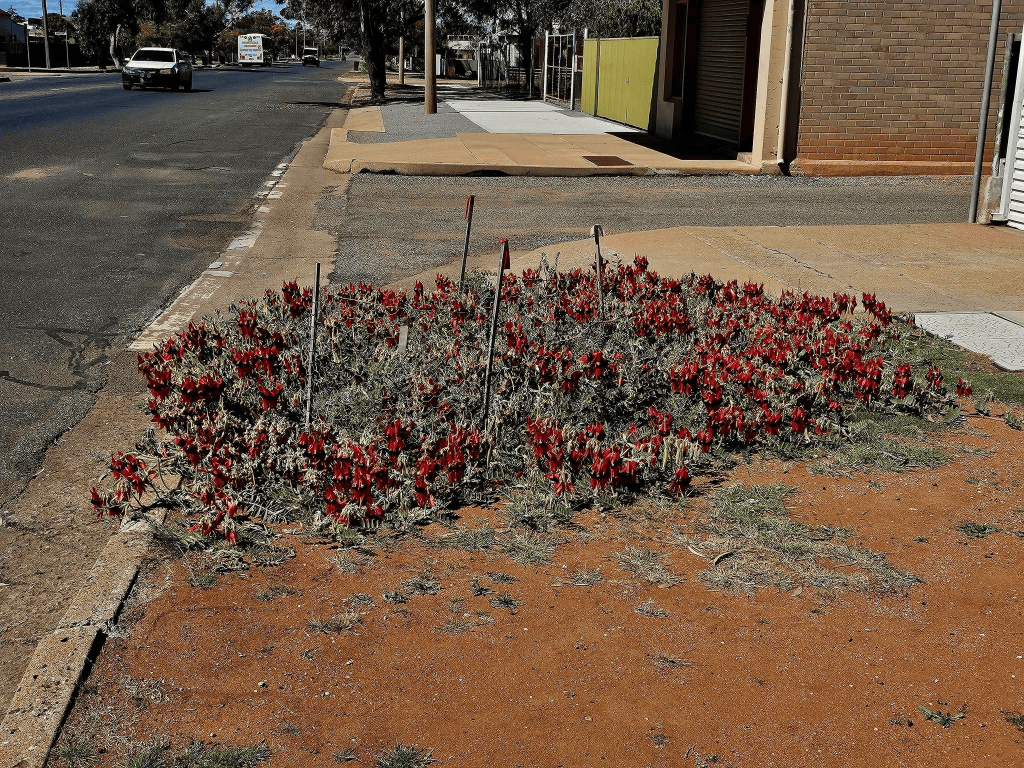
Sturt’s Desert Pea, Broken Hill
For couples travelling together, the rhythm of driving between bloom/bird sites, stopping whenever something catches the eye, and spending evenings locating constellations in a canopy of stars in small regional towns fits naturally into a relaxed pace. Wildflower/bird travel is cheaper tourism than visiting paid attractions and is also forgiving of the kind of flexible itinerary that older travellers often prefer. Unless they’re the spreadsheet-nerd type who has to have everything locked in …
The distances involved in an outback trip, are real and should be planned honestly. Long stretches of highway between sites are part of the experience, but they are not for travellers who find extended driving tiring. Breaking journeys into manageable daily legs of two to three hours behind the wheel, with proper rest stops, makes the difference between a rewarding trip and an exhausting one. Having a co-pilot who can navigate, spot ‘shots’ and share the driving load matters considerably on these routes.
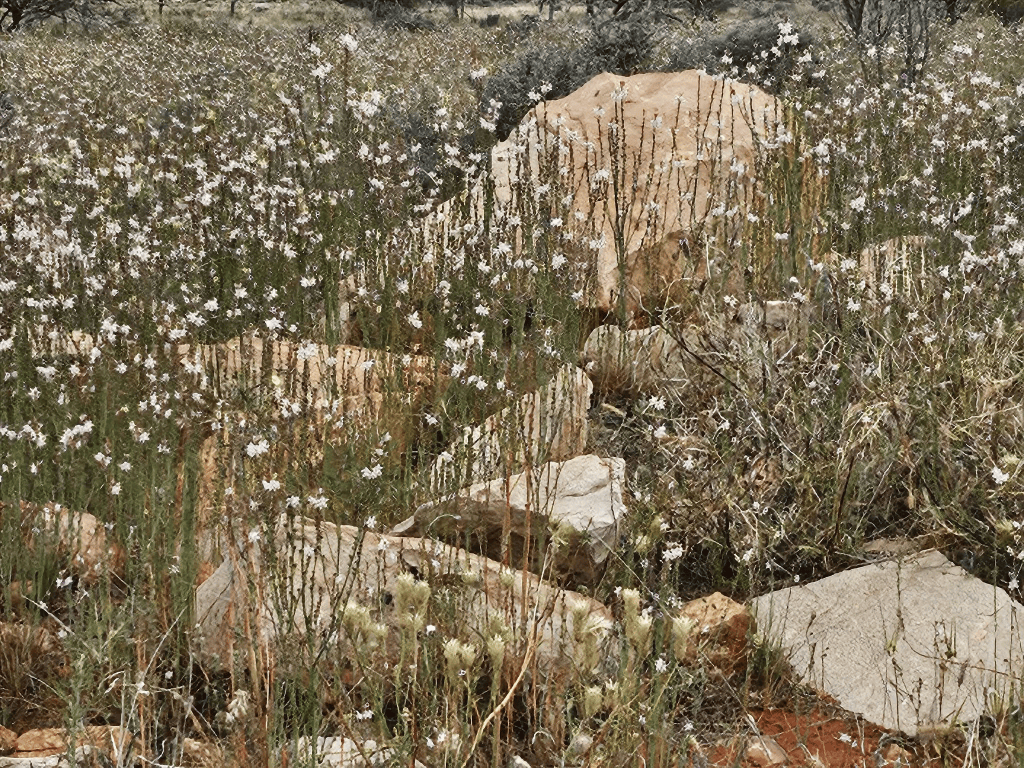
Onion Weed and Mulla Mulla, Menindee Road Broken Hill
The broad principle of treading lightly in wildflower country extends to where you park, where you walk, and how you behave around other travellers who have come to the same place for the same reason; not that there were many— NSW’s not like Western Australia or the Flinders Ranges where roadside bloom areas can become congested on weekends during peak season, but still, pulling off the highway safely and leaving room for others is basic courtesy. Midweek travel, where your schedule allows, will give you quieter access to popular sites and a more peaceful experience overall.
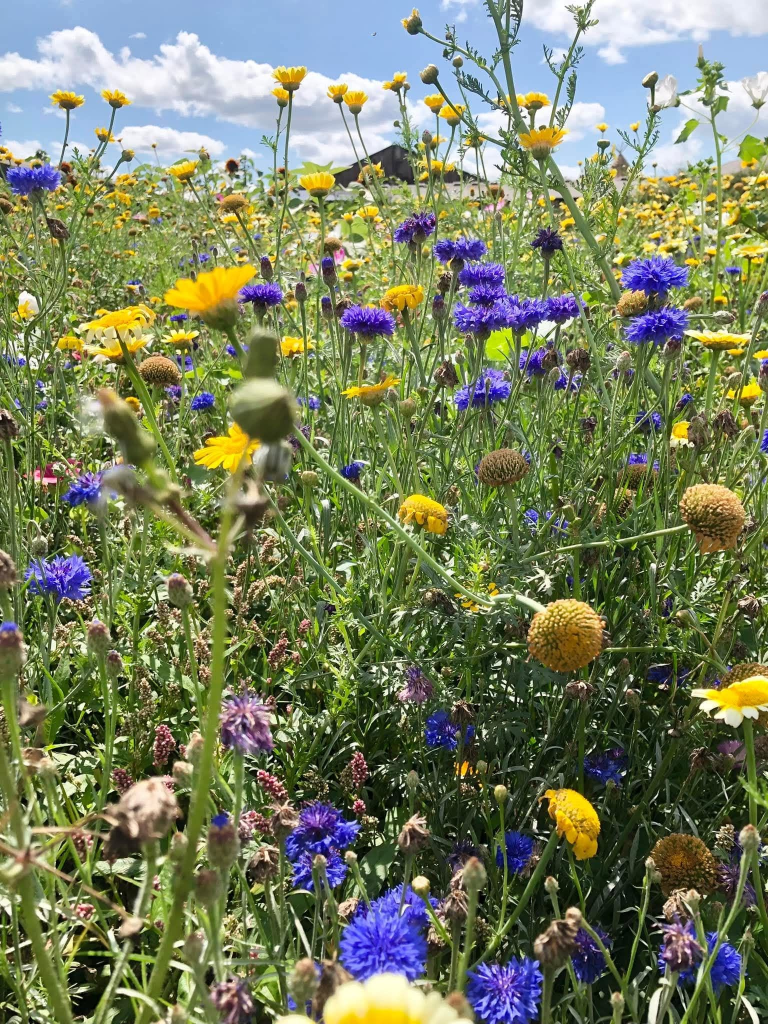
Blooming Good trip if I say so myself.
 Margaret R Kelly
Leave a comment