
I’m not a funny person; that’s ‘funny’—haha, not ‘funny’ peculiar because I’m definitely that, but I’ve been known to write funny texts. I enjoy making people laugh. Comedy writing isn’t writing joke after joke. It’s a series of syntactical decisions and learning and practising comedic tools. Anything can be funny—essays, memoir, novels, stories, Facebook posts, psychiatric intake forms—if you’re brave enough.
You don’t need to be born with a sense of humour or have had anything funny happen to you. You can write funny if you can use a dictionary. And if you can, say goodbye to clichés, generalities, and purple prose, and rewrite every boring line so readers get a surprise. Comedy is a release of tension—a piece or a sentence builds that tension, and the reward is at the end, with a surprise or funny word or dramatic reveal.
- UPGRADE YOUR WORD CHOICE Word choice is about the words you choose, how/where/when you use them, and how you word them (wording). To write funnier, choose funnier words. Words with hard consonants are funny (‘duck’), and the three funniest letters are ‘p’, k,’ and ‘y.’ Funny words don’t have to be English words; essayist R. Eric Thomas writes about being born “avec jazz hands.”
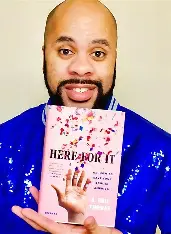
Play with and disrupt regular wording. For example: “escaping from a treed car,” is more interesting than the straightforward and unfunny “I escaped from a car stuck in a tree.” How can you make words and sentences a little weird? A little off?
Comedy happens when things get weird. So, use words in ways we don’t use them. For example: I hadn’t seen that dude for an eternity of Sunday sermons.’ It’s also about economy of language and making every word count. Comedy also comes from surprise, from the unexpected—it’s anti-predictive. You can surprise in one word and in a conjunction, like Edward Hoagland in his essay “The Courage of Turtles,” “The river was salty, but it was also bottomless…”
A lot of us use the same 100 words all day, every day, like “circling back on that email” and “cheers.” To get out of your word rut, read and watch things you don’t usually read or watch. Make a note of funny words, phrases, descriptions, and quotations from the shows you watch, the writing you read, Facebook gags and the conversations you eavesdrop on. What makes you laugh, and why? Note the hyper-specific word choice, the unusual sentence structure, and the bonkers and the wonky, e.g., “Frank was like a mix of Goofy and Madonna,”. I have three notebooks so far, just filled with things that have struck me as funny. I’ll never use most of what I’ve written except to inspire me.
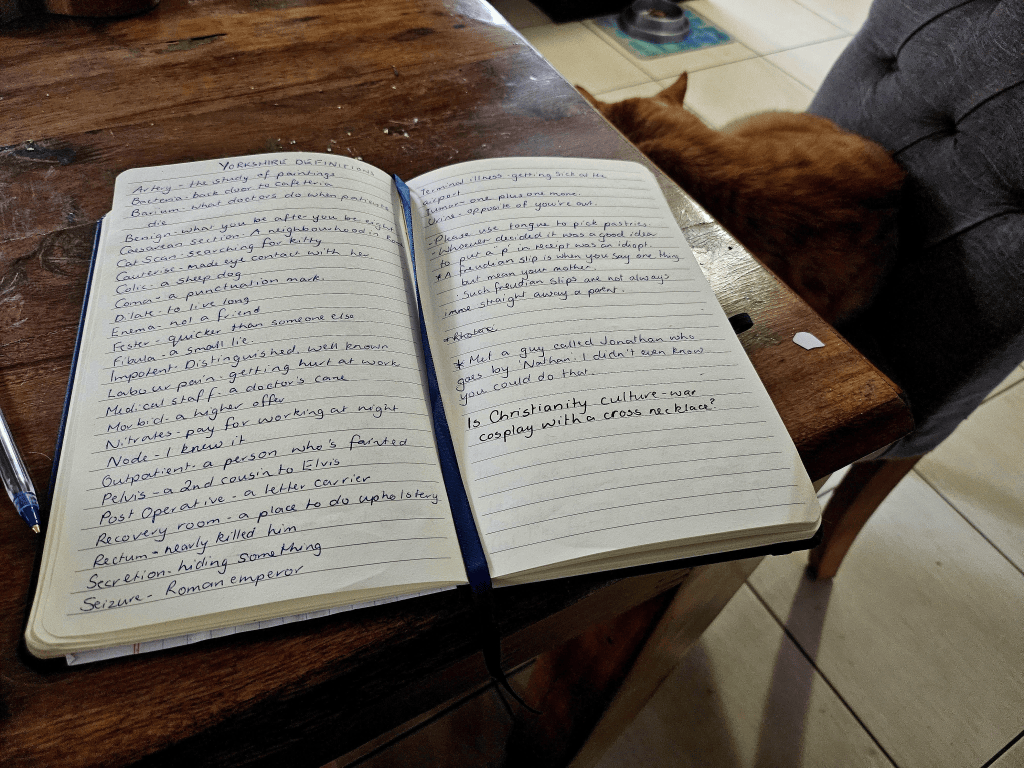
Don’t worry about using every or any note you take. The point is to upgrade your vocabulary and your sense of what’s possible with language, and to have a long list of funnier words to use in your writing so you can replace all general words like “colourful” with funnier words like “puce.”
2. BE SPECIFIC
Is the word “car” funny? No. But “Sigma Scorpion?” Somehow, yes. Never again write “car”; write “refurbished Prius.” “Refurbished Prius” evokes a particular and precise image, place, character, personality, and place to fart in peace. Spice up your word choice with specific details. The more specific you are, the stronger you communicate and the stronger the reader’s reaction. You can overdo it, so don’t string too many adjectives together and avoid using adverbs wherever possible.
Memoirist and poet Mary Karr writes in The Art of Memoir, “If I wrote vaguely enough, I risked nothing. No one could understand what was going on.” There is no voice or style or humor in vagueness. No one can see you or the situation or what you’re writing and joking about. General, vague, neutral description can’t illustrate or invigorate a sentence, scene, person, etc. Instead, bring everyone and everything to life with specifics that animate the scene.
You know how the personal becomes universal through specificity? A scenario can become funny through graphic specificity. Because humour is aural but it’s also visual. Also because comedy depends on understanding, and empathy is the prerequisite to comedy. Don’t crack jokes; create mental images that resonate. Readers can visualise these, recognise them, remember them, and relate to them and think I know just what you mean.
So, don’t try to be funny, try to be specific. Try to be accurate.
For whatever object or person you’re writing about, it shouldn’t be just “anything” or “anyone.” The goal is to articulate a thought or experience in a way that is so specific you’ve never seen it described your way before. OK?
USE UNEXPECTED DETAILS
Once more, with feeling: Comedy comes from surprise. It comes from going where others fear to tread. For example, I often refer to the symptoms of menopause that no-one else mentions—ninja chin hairs and balding beavers.
Stephen King, one of my favourite authors, had me hooked when, way, way back in The Stand, his protagonist found a corpse in a ‘comfort station’ and referred to it as a ‘sweet treat’.
To get more specific and unexpected: use a thesaurus for synonyms, antonyms, and rhyming words. Try onelook.com, wordhippo.com, and The Synonym Finder. (But don’t go overboard like Joey Tribbiani in Friends when he uses a thesaurus to replace every word in his recommendation letter for Chandler and Monica to adopt children. His original sentence “they are warm, nice people with big hearts” became “they are humid, pre-possessing homo sapiens with full-sized aortic pumps,” which he signed, “Baby Kangaroo Tribbiani.”) Use a dictionary. Your computer dictionary is fine if your hardcopy one is being used as a flower-press, but by opening that ‘real’ dictionary to look up one synonym, you may find other things on that page which are useful.
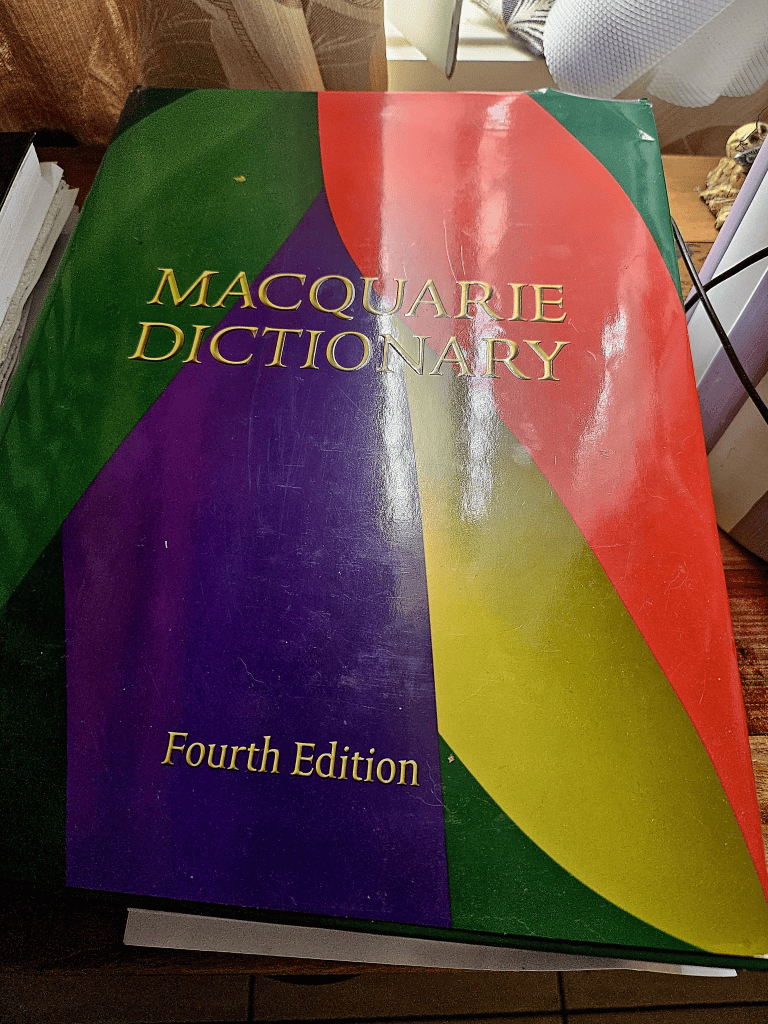
The dictionary offers us many gifts, that we cannot take for granted. There are so many exciting words we don’t use, while we overuse words that say nothing. Look up every word in a work in progress, even if you believe you know the definition, because within the definitions or in the examples, there may be better words—more specific or accurate or precise. Use the encyclopedia (the Wikipedia entry for a word probably says something interesting), and search online (e.g., look up “milk,” and you will get a laundry list of specific milks).
For a draft in progress, highlight the general, generic, vague, abstract nouns. “It”; “they”; “car.” Replace each with actual names or specific or unexpected details. A sentence with all general nouns like “I bought meat, milk, and baked goods” can become—using one of the tools above—“I bought Wagyu beef, raw milk, and sourdough starter.” Now we know the type of person who is buying these ridiculous items.
DELETE CLICHES AND TWIST IDIOMS
A line isn’t funny if anyone could have written it. Every sentence should carry your signature scent. For a work in progress, highlight every cliché and idiom (a familiar expression with formulaic language and figurative meaning that makes no literal sense but we say it anyway). Next, delete them. Your writing is already funnier without dead weight.
Parting with a cliché or an idiom is also an opportunity for a joke, to take the expected in an unforeseen direction. In her short story “Like Life,” Lorrie Moore describes a “guy who wears his asshole on his sleeve.”
A Comic I saw on telly twisted the idiom “One man’s trash is another man’s treasure” to be the joke, “One woman’s trash is another woman’s trained trash.”
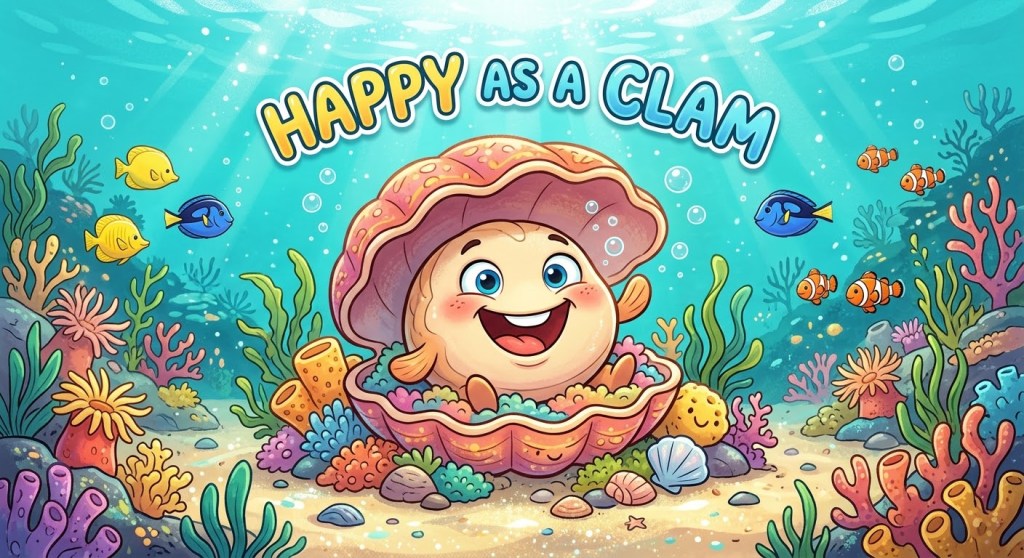
Or unpack an idiom and take the figurative literally. Since idioms don’t make sense, it’s funny to call that out. The idiom “Happy as a clam” unpacked is the joke “So, clenched up tight, full of grit, and if you get pried open, you’ll die?”
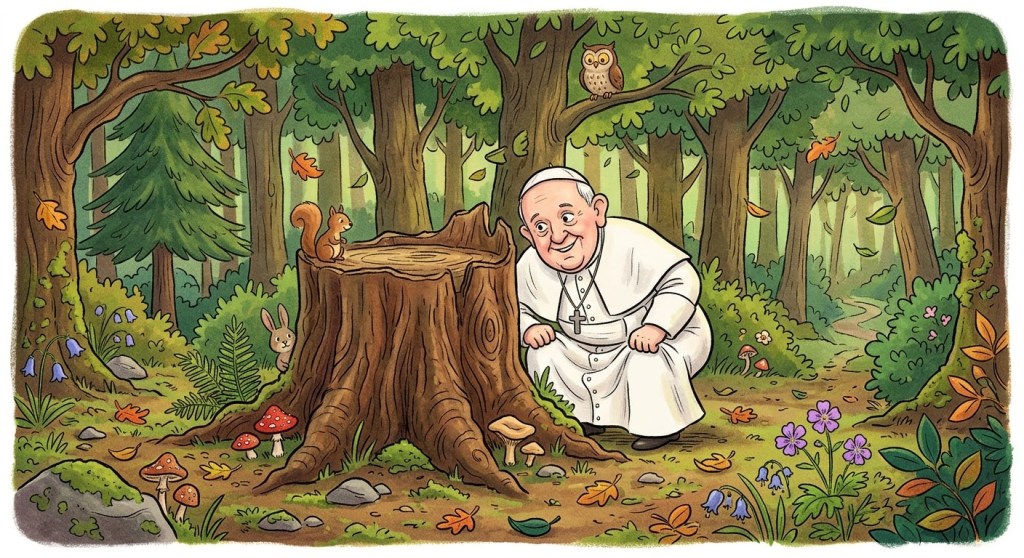
You’ve heard of mixed metaphors—try mixed idioms for extra surprise. “As the old saying goes, women are like snowflakes: they can’t drive,” Megan Amram writes in her satirical textbook parodyScience…for Her! that ridicules women’s magazines and gender stereotypes. We expect the line to compare women to snowflakes (i.e. one of a kind), but instead she sneaks in a stereotype to satirise it. My character, Frank, mixes idioms all the time. My favourite is a collaboration of ‘Does a bear shit in the woods?’ and ‘Is the pope Catholic?’ Yeah. Frank, in his excitement exclaims, ‘Does the pope shit in the woods?’ I guess you have to be there …
USE THE RULE OF THREE
Comedy is about creating patterns and breaking them. Three is the smallest number to create a pattern and break a pattern. Two items (i.e. adjectives, details, ideas) in a list isn’t enough. The rule of three can quickly turn a regular sentence into a joke. Readers expect the pattern to repeat again, and when it doesn’t, everyone is delighted and impressed. For Example: to say you like a toasted sanga with white bread, Colby cheese and corned beef isn’t funny. But if you say you like your toasted sanga with Colby cheese, corned beef and no ice cream, that’s a joke. Well almost …
To practice the rule of three, characterize someone with three personality traits. Take a real sentence—e.g. “I am a teacher”—and add two other adjectives/details/examples—e.g. “I am a teacher and a freelance writer and a freelance editor”—now, make the third random or obviously literally untrue or impossible, e.g. “I am a teacher and a freelance writer and a freelance saint [or freelance psychologist or freelance heroine].”
The rule of three ends on a punch line. Writing funnier is really about reordering sentences until they end on a punch line. “The crows seemed to be calling his name, thought Mark Marks.”
Don’t bury your best moments in the middle of a sentence or paragraph. Give readers space to laugh or think or feel. ‘Don’t end sentences on a preposition’ is an outdated grammar rule, but it’s also comedy advice; if you end on a specific noun or verb and not the vague and basic “it” or “that” or “of,” etc., your sentence is better than all the other sentences.
And don’t let a sentence or a paragraph trail off…
My most important take-out on this is:
Read your writing aloud to hear how the ends of sentences and paragraphs sound–do they sound like the end?


Leave a Reply