[Image: vecteezy.com]

I have struggled for many years to fit my ‘novel’ to the parameters of traditional creative writing. When I was doing the Australian Writers’ Centre’s Write Your Novel course, I struggled to cram it into the paradigm (framework) we were being taught, rebelled against providing ‘Trigger Warnings’ without scooping the barefaced, confrontational horror out of certain chapters and every writing minute, did battle against an overwhelming load of authorial imposter syndrome. This is my reflection on what I consider to be an ongoing process of trying to explain my ‘voice’ and reasons for writing as I have.
We’re living in what psychologists have called a “trauma-informed” era. From #MeToo revelations to pandemic grief to climate anxiety, we’re collectively struggling with experiences that overwhelm our ability to process them. Literature has always been one of our most powerful tools for making sense of the senseless, but trauma narratives require us to read and write differently—with patience for fragmentation, appreciation for silence, and understanding of why some stories resist being told.
When we read literature that deals with trauma, we’re not just consuming stories. We’re witnessing attempts to translate the untranslatable, to give form to experiences that shatter our understanding of how narrative should work. Post-traumatic stress disorder doesn’t follow the neat arc of beginning, middle, and end that we expect from stories. It circles back, fragments, repeats, and refuses resolution. The most powerful trauma narratives in literature mirror this psychological reality.
Another facet of trauma that I have confronted is that it is often collective, intergenerational, and will require innovative forms and structures to capture its full complexity.
Trauma extends far beyond clinical diagnoses. It encompasses the everyday violences of racism, sexism, poverty, and loss that shape so many of our lives. Literature doesn’t just reflect these experiences—it offers frameworks for understanding and, sometimes, healing.
[Joinframeapp.com]
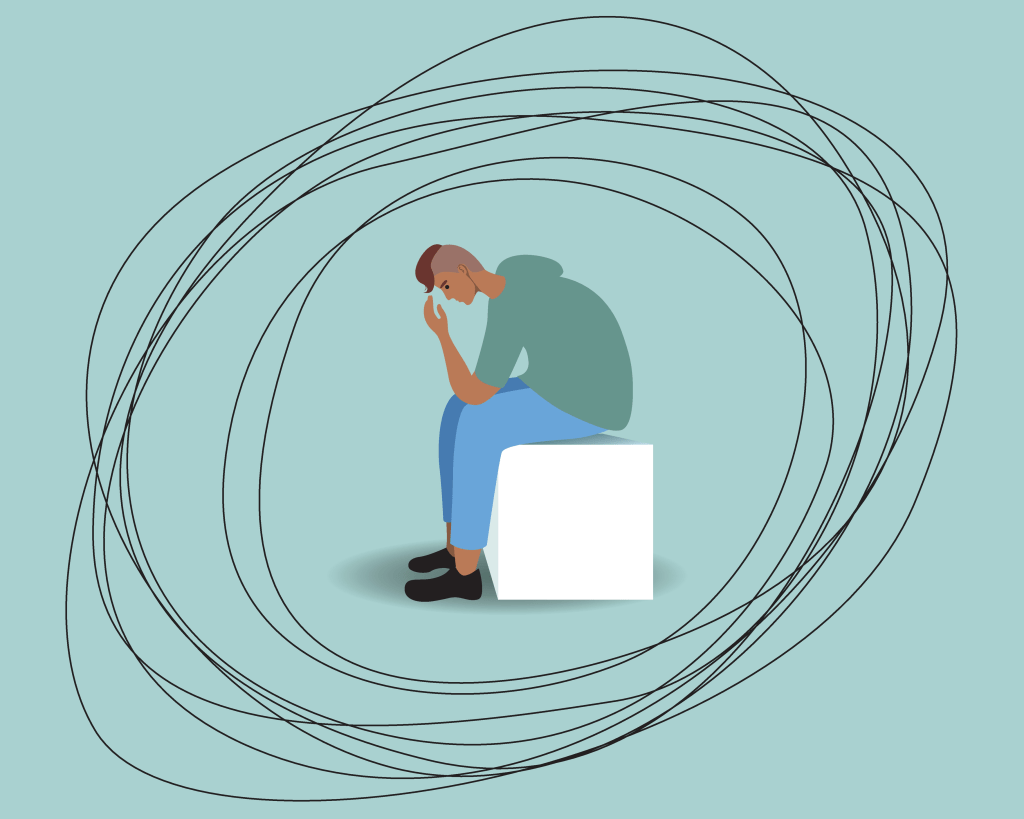
How Trauma Is Shown On The Page:
— Fragmented Time
Traditional narrative assumes chronological order, but trauma doesn’t work that way. I’ve been reading the books of some other trauma authors and can see this shown (rather than told) in Toni Morrison’s Beloved. Setting her narrative after the American Civil War, Morrison seeks to depict the limitations that enslaved women faced and to present a physical manifestation that was lacking in the world of literature. Beloved also explores the interior life of the formerly enslaved. The past isn’t past—it literally haunts the present. Morrison structures the novel to mirror trauma’s temporal disruption, with memories surfacing without warning, overwhelming the present moment.
Consider how Morrison writes: “It was not a story to pass on” appears repeatedly, yet the entire novel contradicts this statement by passing on precisely this story. The fragmentation appears even in individual sentences: “124 was spiteful. Full of a baby’s venom. The women in the house knew it and so did the children.” Notice how these short, declarative statements mirror the way traumatic memories surface—in fragments, without explanation or context. This contradiction captures trauma’s paradox—the need to remember and forget, to speak and remain silent.
— Embodied Memory
Trauma narratives often focus intensely on the body because trauma is stored physically. In Carmen Maria Machado’s Her Body and Other Parties, the narrator’s body becomes a site of both violation and resistance. Machado writes, “The plague was not as interesting as the way we lived with it. The way it settled into the creases of our lives.” Later, she observes, “I had spent so much time trying to make myself smaller, trying to erase myself.” The prose itself seems to contract and expand, mimicking the physical experience of trauma’s impact on how we inhabit our own bodies.
Bessel van der Kolk, in The Body Keeps the Score, explains that trauma is stored in the body before it becomes narrative. Literature that authentically portrays trauma often reflects this embodied reality through sensory detail, physical description, and attention to how trauma lives in gesture and posture.
I feel that through numerous re-writes I have become an expert on ‘Show, don’t tell’ which is something developing writers are constantly told.
— Silence and Gaps
What’s not said in trauma narratives is often as important as what is. In Edwidge Danticat’s Breath, Eyes, Memory, the protagonist, Sophie, learns about her mother’s rape not through direct telling but through inherited nightmares, fragments of conversation, and her own body’s responses. Danticat writes, “My mother was as silent as the night. The only sound was that of the crickets, singing their same old song.” Even when the truth emerges, it arrives obliquely: “There are secrets you cannot keep.”
These silences aren’t artistic choices—they’re psychological necessities. Trauma often exists beyond language, in spaces where words fail. The most powerful trauma narratives honour these gaps rather than trying to fill them with explanation.
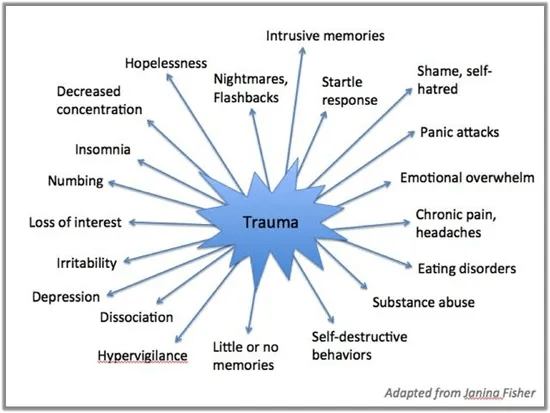
It helps to construct, or use someone else’s, mind map of the ways in which trauma might manifest in your character(s). [National Center For Health Research]
Reading Trauma Narratives
— Expect Non-Linear Structure
When reading trauma narratives, release your expectations for chronological storytelling. Authors like Claudia Rankine in Citizen or Ocean Vuong in On Earth We’re Briefly Gorgeous use fragmented, associative structures because that’s how traumatic memory functions. Vuong writes, “Sometimes being offered tenderness feels like the very proof that you’ve been ruined.” Rankine said, “You are in the dark, in the car, watching the black-tarred street being swallowed by speed.” These aren’t flaws in storytelling—they’re authentic representations of how trauma disrupts our sense of time and causality.
— Pay Attention to Repetition
Repetition in trauma literature isn’t redundancy—it’s how the psyche processes overwhelming experience. When Elie Wiesel repeats, “Never shall I forget” in Night, he’s not being poetic: “Never shall I forget that night, the first night in camp, which has turned my life into one long night, seven times cursed and seven times sealed.” He’s demonstrating how trauma burns certain images into memory with photographic permanence while other details fade completely. The repetition forces readers to experience something approaching the obsessive return of traumatic memory.
— Notice What’s Missing
Gaps, ellipses, and sudden shifts often point to the hidden presence of trauma. In Roxane Gay’s Hunger, she writes about sexual assault through metaphor and implication before addressing it directly: “I was twelve, and then I was not.” Later, she explains: “There is no before. There is only after.” These approaches aren’t evasions—they’re accurate representations of how trauma survivors often approach their own experiences, circling around the unspeakable before finding ways to name it.
— Understand Triggers as Literary Devices
Authors working with trauma often embed triggers deliberately—not to retraumatize readers, but to create authentic emotional responses. When reading these works, it’s important to recognise your own responses and care for yourself accordingly. Many contemporary trauma narratives include content warnings not as limitations but as invitations for informed consent.
[ourmental. health]

When Reading and engaging with trauma narratives:
Create boundaries. A DNF (=Did Not Finish) is not a failure. You don’t have to finish every book. If a narrative becomes overwhelming, it’s okay to step away.
It’s also okay to step away if the writer’s style doesn’t gel with you or if they relate experiences to which you can’t relate. Gina Chick’s memoir, we are the stars is my latest DNF, and yet it has had rave reviews. It was not overwhelming. I simply could not relate to her experiences and she loves to overdo the purple prose and the telling rather than showing.
Process with others. Book clubs (if you can find one in which members will tackle trauma narratives), online discussions, or conversations with friends or within a support group can help you integrate difficult material.
Balance your reading. Follow reading heavy trauma narratives with reading lighter material. Your psyche needs variety. I have tried also in my writing, to balance the trauma and tragedy with comedy. This form of literary writing is called ‘tragicomedic’.
Honour your responses. If a book triggers strong emotions or memories, that’s information worth paying attention to. Consider whether you need additional support.
Healing Through Witnessed Pain
One of the most impactful aspects of trauma literature is its capacity for what psychologists call “witnessing.” When authors like Jesmyn Ward write about losing loved ones to systemic racism and poverty, or when Cheryl Strayed chronicles grief and self-destruction in Wild, they’re not just telling personal stories—they’re creating space for readers to feel less alone in their pain. Ward writes in Men We Reaped, “This is a ghost story. It is about the people I have loved who are dead.” Strayed, reflecting on her mother’s death, says, “How wild it was, to let it be.” These simple statements carry the weight of transformation—the movement from speechless grief to witnessed truth.
Research shows that one of the most effective treatments for PTSD is narrative therapy—helping people construct coherent stories from fragmented traumatic experiences. Literature provides models for this kind of meaning-making. It shows us that survival is possible, that meaning can emerge from meaninglessness, and that we’re not alone in our struggles to make sense of senseless experiences.


Leave a Reply